
Loading, please wait...
LOT 0019
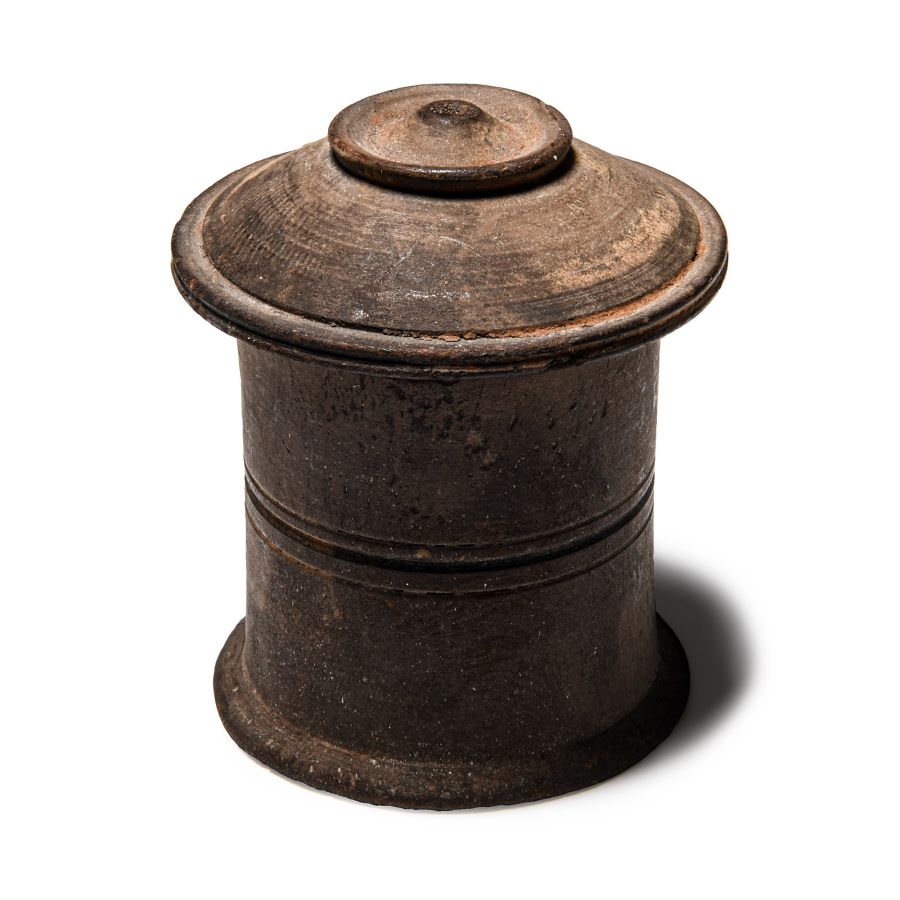
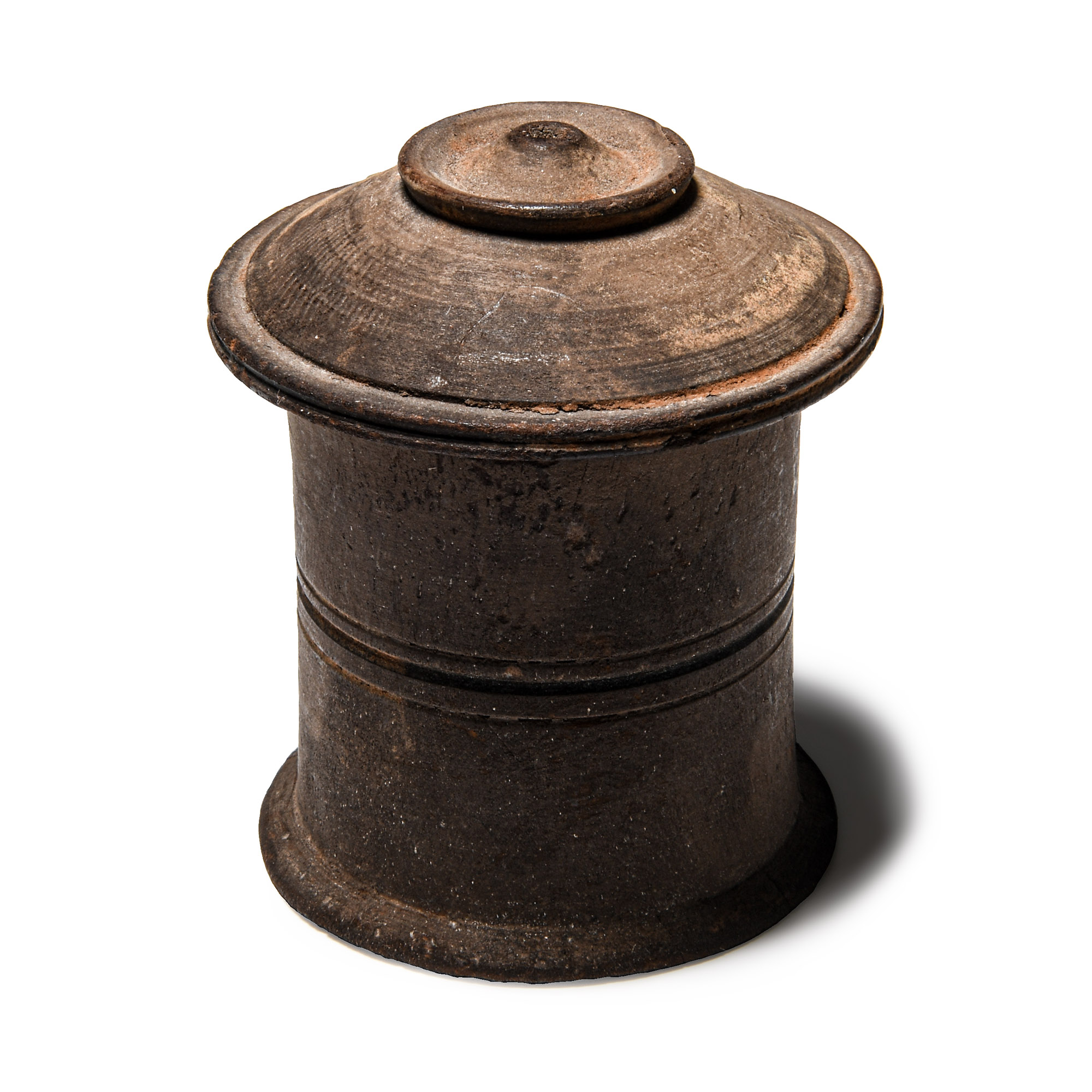
Egyptian Decorated Wooden Pyxis
LATE PERIOD-PTOLEMAIC PERIOD, 664-30 B.C.
2 7/8 in. (60 grams, 73 mm high).
Lathe-turned body and separate lid, incised bands to the equator, flared base, and fillet to the domed lid.
ProvenanceEx UK collection, 1930-1940s.
LiteratureCf. similar item (lacking lid) in the collection of the British Museum, London, under accession no.1982,0729.305; for a lathe-turned example see Vandier d'Abbadie, J., Les objets de toilette égyptiens au Musée du Louvre, Paris, 1972, pp.50-51, no.141.
CONDITIONTimeLine Auctions follows a vetting process to ensure the authenticity and legality of all items, reinforcing our commitment to integrity and responsible trading. Each antiquity, antique, and coin lot undergoes thorough examination by a vetting committee of at least ten external specialists, professional trade association members, scientists, and archaeologists: Our Vetting Process
AUCTIONS:
TimeLine is a leading auction house specialising in antiquities, ancient art, collectables, natural history, coins, medals, and books. Our auctions offer museums, collectors, historians, and enthusiasts the opportunity to acquire unique and historically significant pieces.
LOT 0019
Egyptian Decorated Wooden Pyxis
Estimate £400 - 600€460 - 700 (for guidance only)$540 - 810 (for guidance only)
-
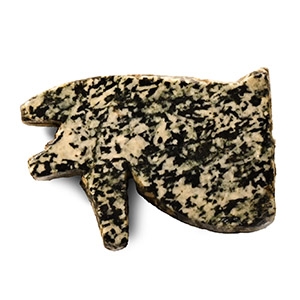
Egyptian Diorite Wedjat Eye Amulet
Late Period, 664-332 B.C.Sold for (Inc. bp): £72
With transverse piercing for suspension. 7.55 grams, 30 mm
From the old Belfort collection, expert Jean Roudillon. Ex Hotel des Ventes de Belfort. Property of a French collector.
The wedjat-eye amulet represents the healed eye of the god Horus, featuring both human and falcon elements. The name wedjat in ancient Egyptian means ‘the one that is sound.’ According to Egyptian mythology, Horus' eye was wounded or taken by the god Seth and restored by Thoth. The wedjat-eye amulet was thought to protect its wearer and bestow the power of recovery and regeneration onto them. As such, it was used by both the living and the dead. -
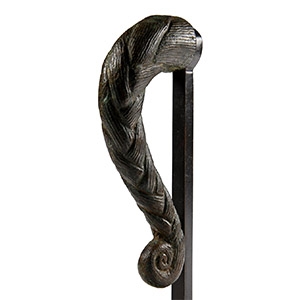
Egyptian Bronze Braided Sidelock of Harpocrates
Ptolemaic Period, circa 332-30 B.C.Sold for (Inc. bp): £624
Accessory from a statue, S-curved with braid detailing to the surface and coiled end; mounted on a custom-made display stand. 372 grams total, 14.3 cm high including stand
Jean P. Bourgis, Beaulieu Sur-Mer, France; acquired 1980. -
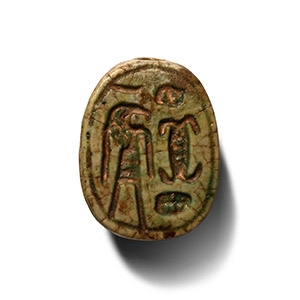
Egyptian Steatite Scarab with Thoth Standing
New Kingdom-Late Period, 1550-332 B.C.Sold for (Inc. bp): £286
Underside with standing figure of Thoth facing the symbol for the goddess Neith. 1.65 grams, 14 mm
Ex North London gentleman's collection, 1990s. Property of a Cambridgeshire, UK, gentleman.
Thoth was revered for his association with knowledge, writing, and healing. In a funerary context, Thoth was probably linked to his role as the recorder of the final judgment, which determined whether the deceased had lived a life of virtue. A positive report ensured the rebirth of the deceased in the eternal Afterlife. Neith was a prominent deity in ancient Egyptian mythology, revered as a warrior and mother goddess. Her cult gained significant importance during the Ramesside dynasties when she became closely associated with the sun god. Neith was known for her fierce protection and maternal guidance.
