
Loading, please wait...
LOT 0061
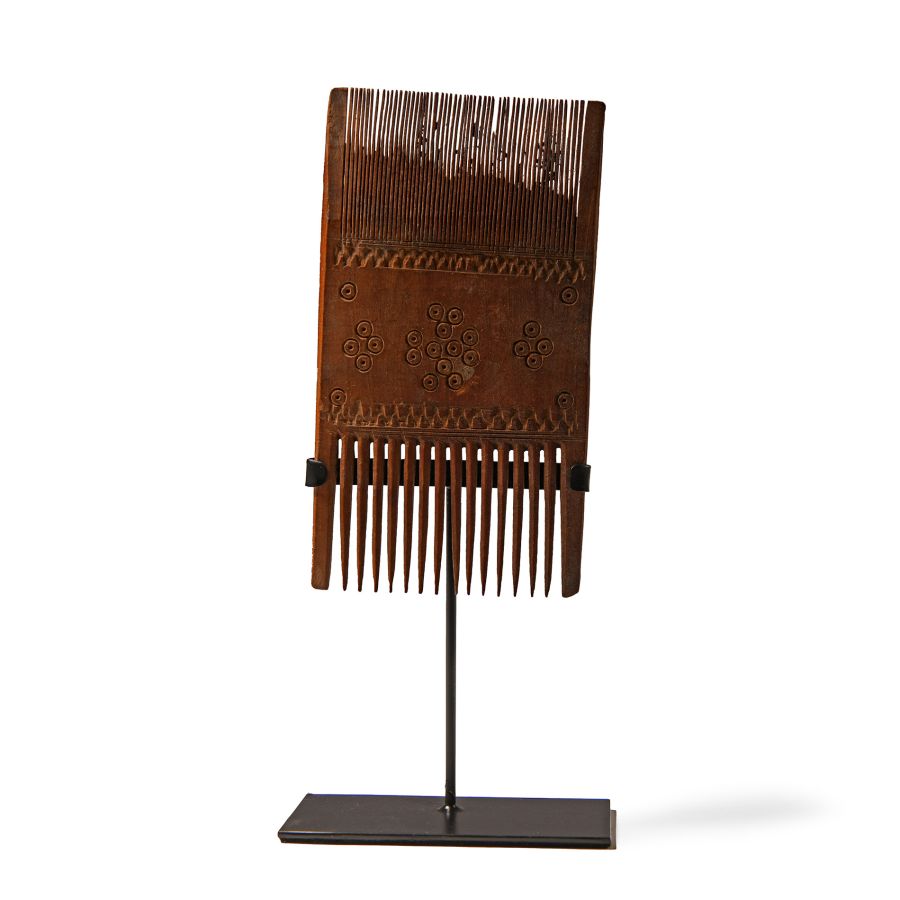
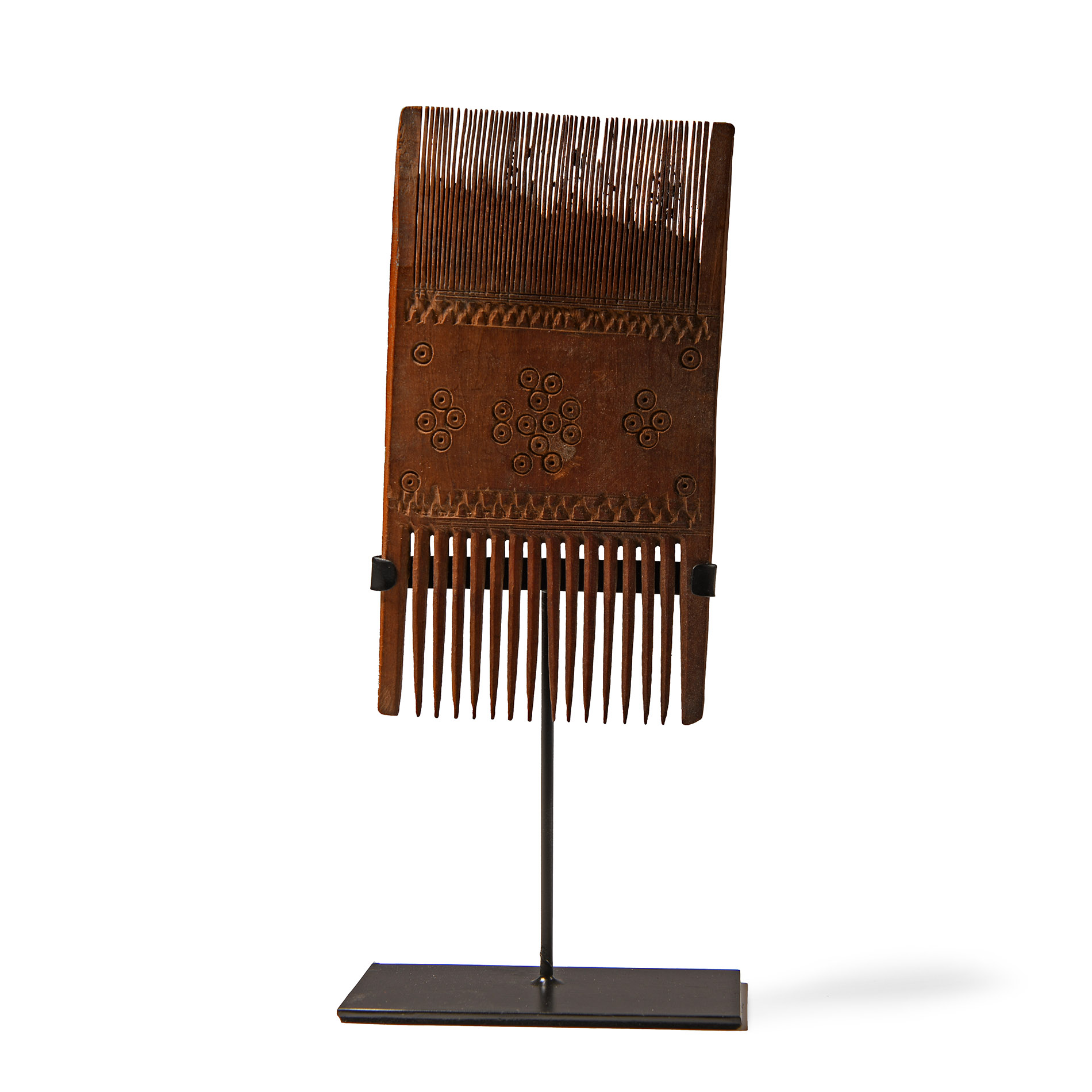
Egyptian Decorated Wooden Comb
COPTIC, 3RD-7TH CENTURY A.D.
8 in. (111 grams total, 20.4 cm including stand).
Rectangular in plan with fine-cut teeth to one short edge and coarse-cut to the other; obverse with regular pattern of ring-and-dot motifs, zigzag borders; mounted on a custom-made stand.
ProvenanceEx J.P. collection, 1960s.
Private collection London, UK, 1980s.
From the private collection of J.L., Surrey, UK, 2000s.
Cf. Petrie, W.M.F., Objects of Daily Use, Warminster, 1974, pl XX, no.19, for a comb of similar proportions with circle-and-dot decoration.
CONDITIONTimeLine Auctions follows a vetting process to ensure the authenticity and legality of all items, reinforcing our commitment to integrity and responsible trading. Each antiquity, antique, and coin lot undergoes thorough examination by a vetting committee of at least ten external specialists, professional trade association members, scientists, and archaeologists: Our Vetting Process
AUCTIONS:
TimeLine is a leading auction house specialising in antiquities, ancient art, collectables, natural history, coins, medals, and books. Our auctions offer museums, collectors, historians, and enthusiasts the opportunity to acquire unique and historically significant pieces.
LOT 0061
Egyptian Decorated Wooden Comb
Estimate £600 - 800€700 - 930 (for guidance only)$810 - 1,080 (for guidance only)
-
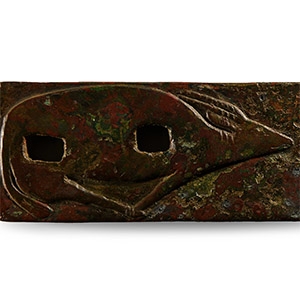
Egyptian Bronze Base with Ibex and Hieroglyphs
Late Period, 664-332 B.C.Sold for (Inc. bp): £442
Rectangular with two sockets to the upper face, low-relief recumbent ibex; incised hieroglyphic text to one short sidewall and remains on both long sidewalls, giving a dedication to 'give life, health, a long [lifetime......]'. 205 grams, 11.7 cm
Galerie Orient-Occident, Paris, 1990. Parisian private collection. with Pierre Berge, 2 February 2017, lot 85.
The bound ibex is a frequent image in ancient Egyptian art and a prized foodstuff. The animal's presence on this base symbolises the finest offerings to the once-attached deity. -
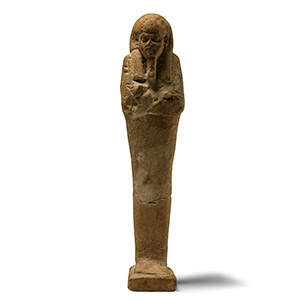
Egyptian Faience Shabti for Horemakhbit
Late Period, 664-332 B.C.Sold for (Inc. bp): £416
Of long, slender mummiform shape, wearing a tripartite wig and holding a pick and hoe, with a dorsal pillar bearing a hieroglyphic dedication to 'the Osiris, Horemakhbit'; repaired. 102 grams, 15.7 cm
Ex M.S. Ciappara collection, Norfolk, UK, 1939-1950.
Shabti figures were created to carry out heavy manual tasks on behalf of a person in the afterlife. The body of a shabti was usually in the form of a mummy and often depicted with tools in their hands, such as baskets, picks, and hoes. During the Late Period, it was customary to be buried with hundreds of shabtis. -
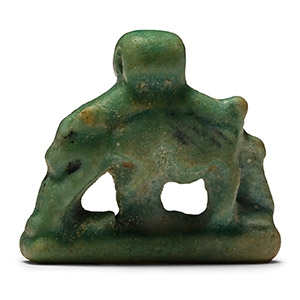
Egyptian Faience Amulet of Nut
Late Period, 664-332 B.C.Sold for (Inc. bp): £98
Amulet of a sow representing the goddess Nut; suspension loop on top. 2.63 grams, 24 mm
From the Florence Rosetti collection, UK, circa 1950s. Property of a Cambridgeshire, UK, gentleman.
This miniature sow pendant features a loop at the top and was worn as an amulet. The sow is often associated with the sky goddess Nut, who was believed to give birth to the stars every night, and then consume them at dawn. Despite the sow's reputation for devouring its offspring, Nut, in this form, was revered as a nurturing and safeguarding deity. A sow-shaped amulet was likely intended to offer protection to its wearer.
