
Loading, please wait...
LOT 0062
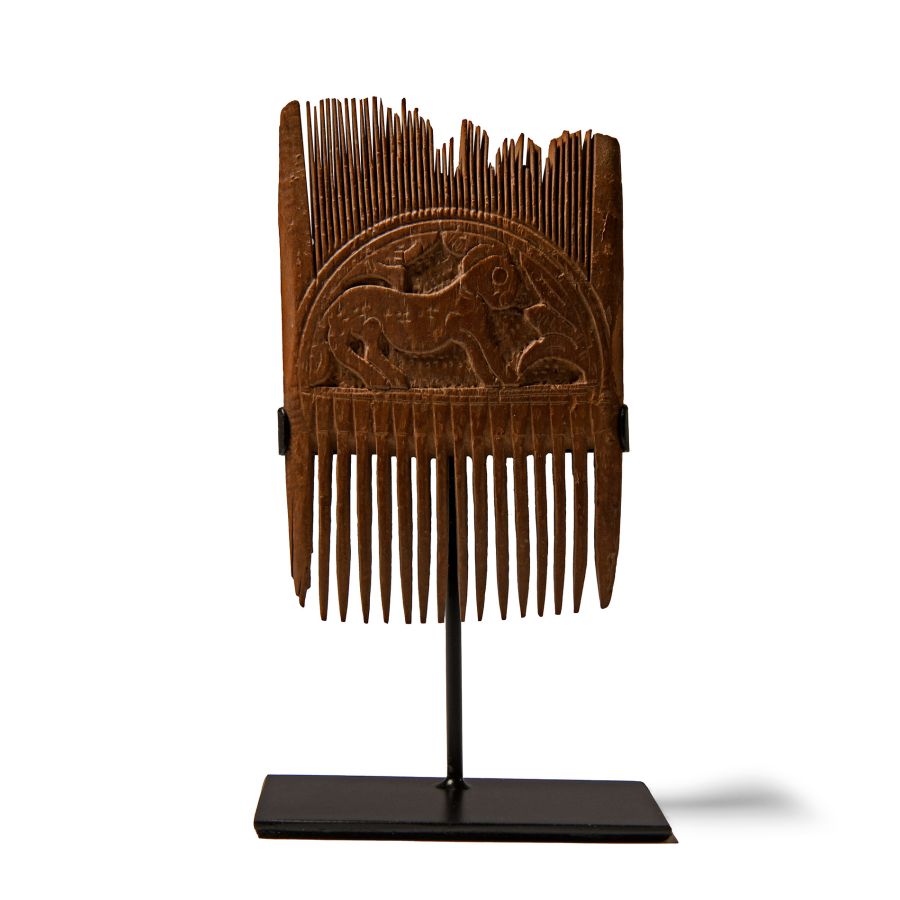
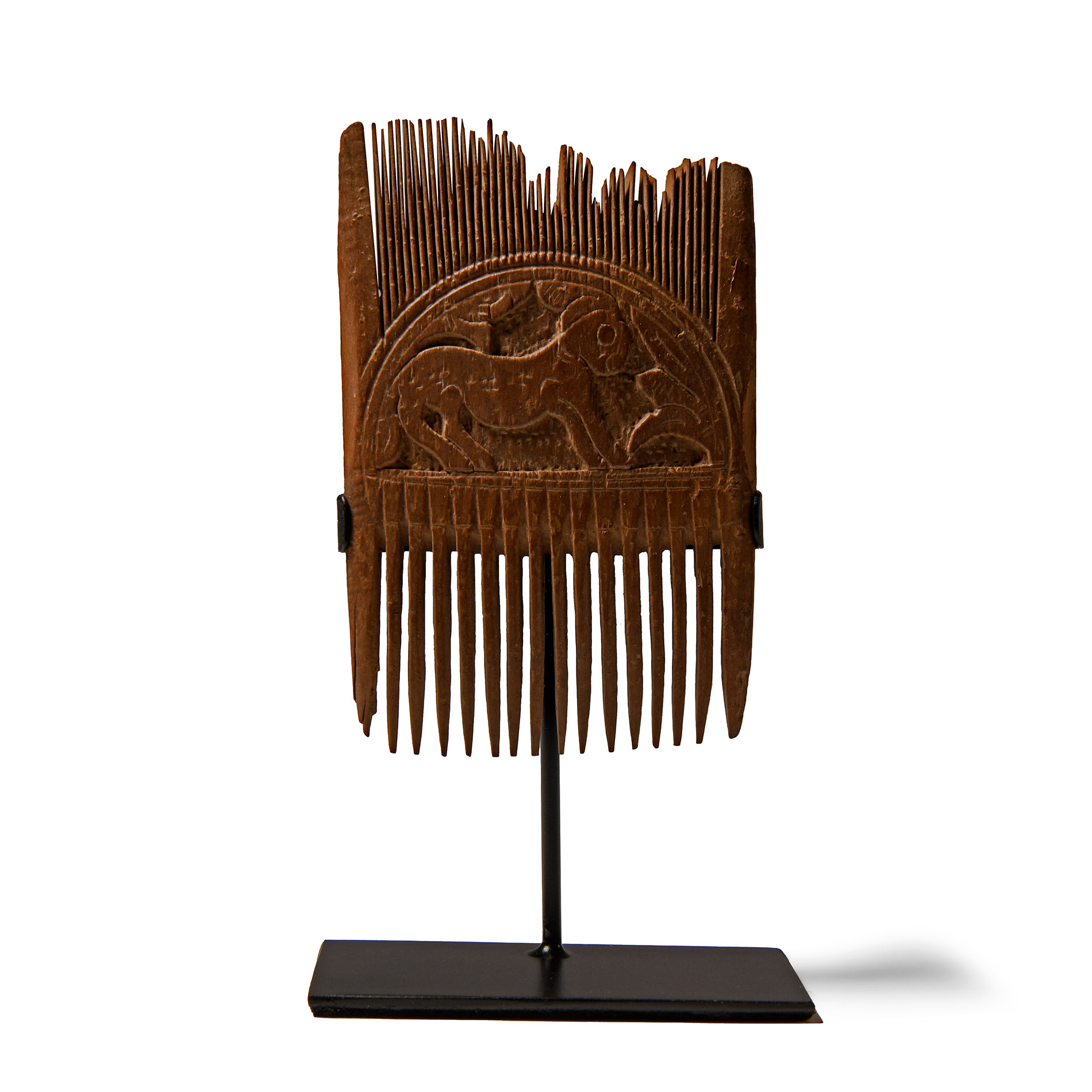
Egyptian Decorated Wooden Comb
COPTIC, 3RD-7TH CENTURY A.D.
5 in. (73 grams total, 12.8 cm including stand).
Rectangular in plan with fine-cut teeth to one short edge and coarse-cut to the other; reserved low-relief image to each face of a D-shaped cell and ram running amid vegetation on a textured field; mounted on a custom-made stand.
ProvenanceEx J.P. collection, 1960s.
Private collection London, UK, 1980s.
From the private collection of J.L., Surrey, UK, 2000s.
Cf. Petrie, W.M.F., Objects of Daily Use, Warminster, 1974, pl XXI.
CONDITIONTimeLine Auctions follows a vetting process to ensure the authenticity and legality of all items, reinforcing our commitment to integrity and responsible trading. Each antiquity, antique, and coin lot undergoes thorough examination by a vetting committee of at least ten external specialists, professional trade association members, scientists, and archaeologists: Our Vetting Process
AUCTIONS:
TimeLine is a leading auction house specialising in antiquities, ancient art, collectables, natural history, coins, medals, and books. Our auctions offer museums, collectors, historians, and enthusiasts the opportunity to acquire unique and historically significant pieces.
LOT 0062
Egyptian Decorated Wooden Comb
Estimate £600 - 800€700 - 930 (for guidance only)$810 - 1,080 (for guidance only)
-
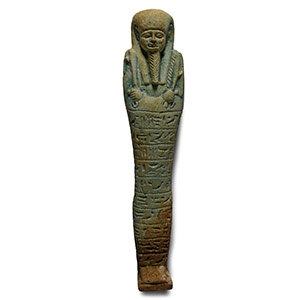
Large Egyptian Blue Glazed Hieroglyphic Shabti for Ta-Amun
Saite Period, 26th Dynasty, 664-525 B.C.Sold for (Inc. bp): £1,430
With finely modelled facial details, a plaited beard, holding a hoe and the cord of a seed bag at the left shoulder and a pick at the right, ten horizontal bands of hieroglyphic text to the lower body. 140 grams, 18 cm
Acquired on the German art market, 1989-1995. with The Museum Gallery, 19 Bury Place, London, WC1, UK, 1998-2003. Property of a London based academic, 2003-present. -
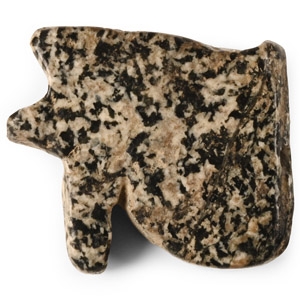
Egyptian Diorite Eye of Horus Amulet
Late Period-Ptolemaic Period, 664-30 B.C.Sold for (Inc. bp): £59
Carved wedjat amulet with angled suspension hole. 7.08 grams, 26 mm
Ex M.S. Ciappara collection, Norfolk, UK, 1939-1950.
The wedjat-eye amulet represents the healed eye of the god Horus, featuring both human and falcon elements. The name wedjat in ancient Egyptian means ‘the one that is sound.’ According to Egyptian mythology, Horus' eye was wounded or taken by the god Seth and restored by Thoth. The wedjat-eye amulet was thought to protect its wearer and bestow the power of recovery and regeneration onto them. It was very popular and used by both the living and the dead. -
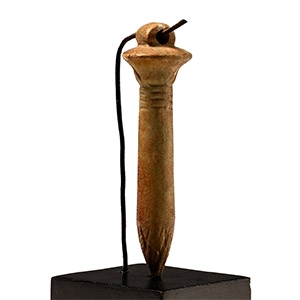
Egyptian Faience Papyrus Sceptre Pendant
Late Period, 664-332 B.C.Sold for (Inc. bp): £117
Amulet in the form of a wadj papyrus sceptre with suspension loop; with light encrustations; supplied with a wooden display stand. 7.15 grams, 64 mm (34.4 grams total, 94 mm including stand)
Ex Foxwell collection. Acquired from a London gallery. Ex Mr A.S. collection, 1990s. Property of a Bristol, UK, gentleman.
The papyrus column or wadj amulet is typically made out of turquoise feldspar or faience, as is prescribed in the Book of the Dead. The word wadj, meaning “green”, evokes concepts of well-being and vitality. Papyrus amulets were often placed around the neck of the deceased to ensure eternal youth in the afterlife. They were particularly popular during the Late Period (664-332 B.C.).
