
Loading, please wait...
LOT 0437
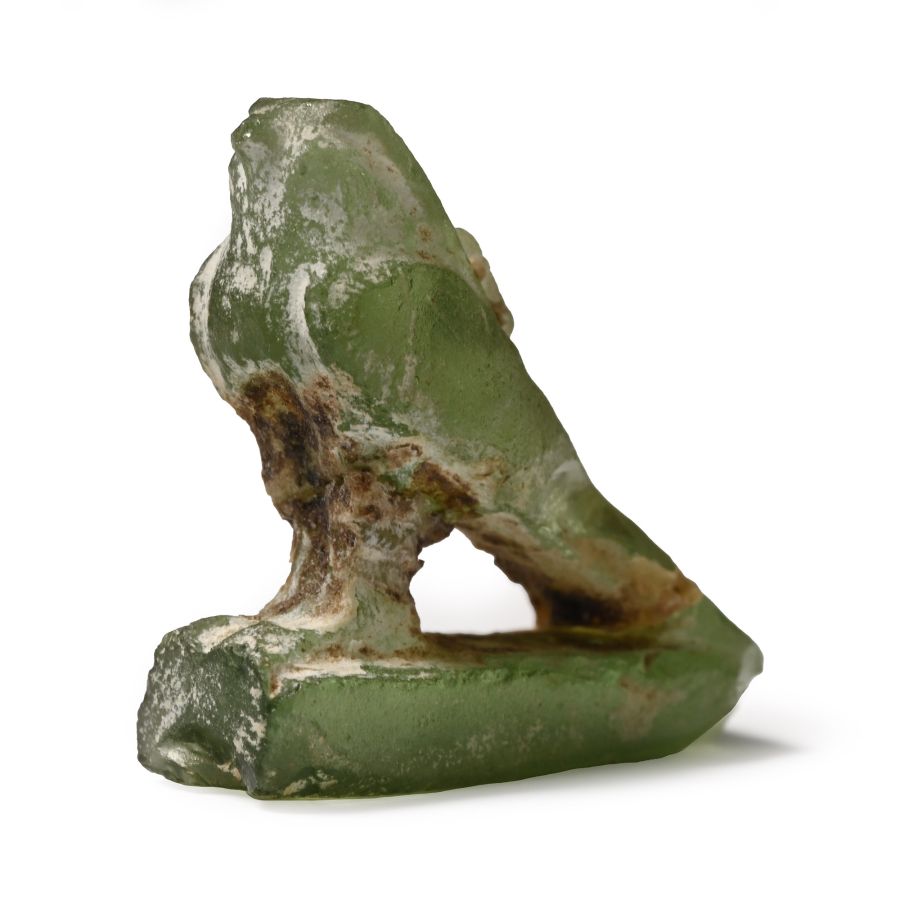
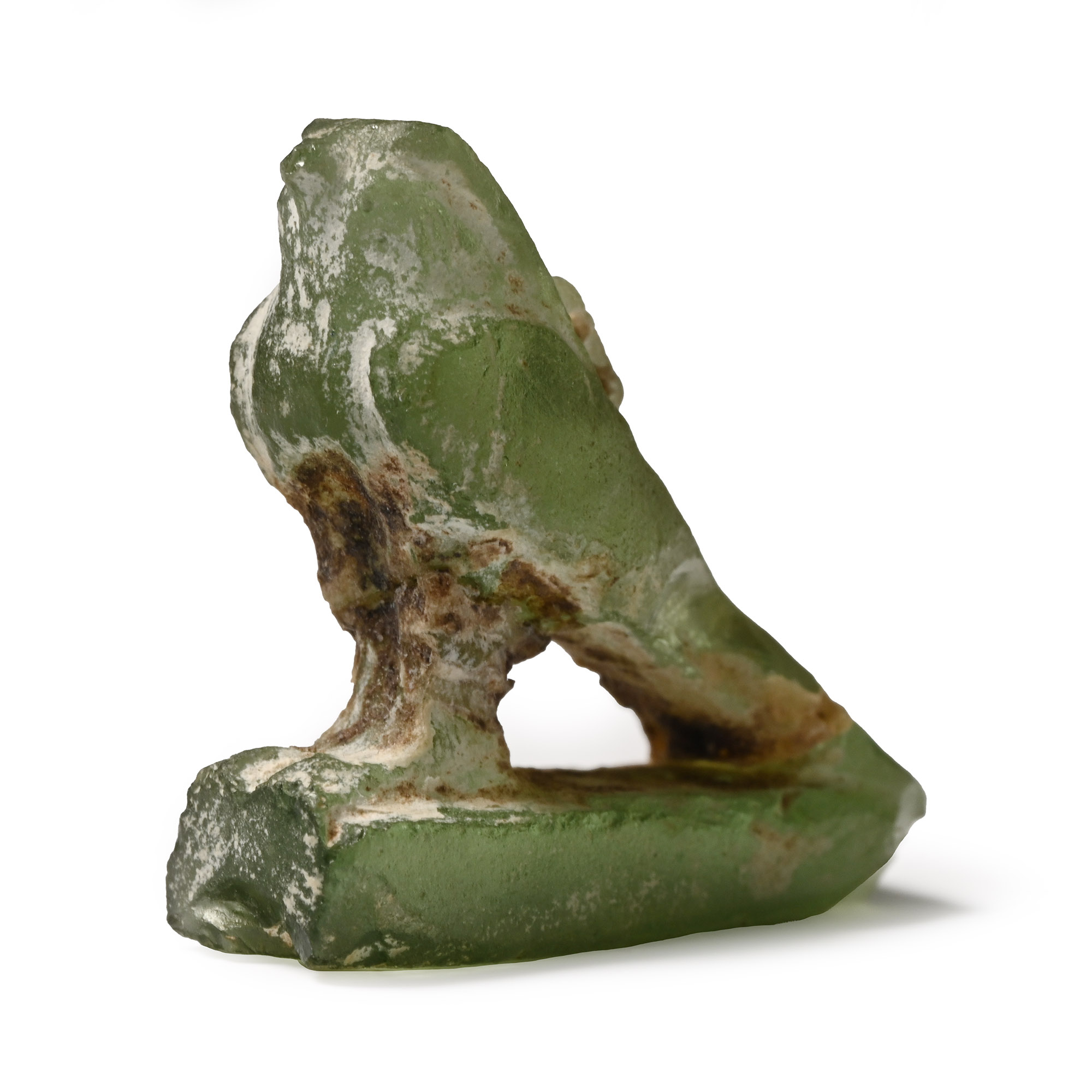
Egyptian Cut-Glass Horus Amulet
1ST MILLENNIUM B.C.
3/4 in. (3.3 grams, 21 mm).
Modelled in the round, a falcon perched on a rectangular base, with a pierced lug between the shoulders.
ProvenanceUK private collection before 2000.
Acquired on the UK art market.
Private collection, London.
This lot is accompanied by an illustrated lot declaration signed by the Head of the Antiquities Department, Dr Raffaele D'Amato.
Cf. Aufrère, S., Collections des Musées départementaux de Seine-Maritime, Rouen, 1987, pp. 111-112, nos. 158-159, for similar amulets in stone.
FootnotesFalcon amulets in ancient Egypt symbolised protection, kingship, and divine power. Often associated with the god Horus, the falcon represented the sky, the sun, and the living pharaoh. These amulets were typically placed with the deceased to ensure protection in the afterlife and to invoke the strength and watchfulness of Horus. Worn in life or death, falcon amulets reflected royal authority and divine guardianship.
CONDITIONTimeLine Auctions follows a vetting process to ensure the authenticity and legality of all items, reinforcing our commitment to integrity and responsible trading. Each antiquity, antique, and coin lot undergoes thorough examination by a vetting committee of at least ten external specialists, professional trade association members, scientists, and archaeologists: Our Vetting Process
AUCTIONS:
TimeLine is a leading auction house specialising in antiquities, ancient art, collectables, natural history, coins, medals, and books. Our auctions offer museums, collectors, historians, and enthusiasts the opportunity to acquire unique and historically significant pieces.
LOT 0437
Egyptian Cut-Glass Horus Amulet
Estimate £300 - 400€350 - 460 (for guidance only)$410 - 540 (for guidance only)
-
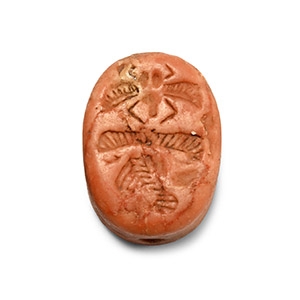
Phoenicio-Egyptian Orange Stone Scaraboid
1st millennium B.C.Estimate: £600 - 800 (+bp*)
Opening Bid: £300
Ellipsoid in plan with frieze comprising a large Maat feather, a winged sun disc, and a winged Khepri beetle. 13 grams, 27 mm
Ex collection of the late Mr S. M., London, UK, 1970-1990s. This lot is accompanied by an illustrated lot declaration signed by the Head of the Antiquities Department, Dr Raffaele D'Amato. -
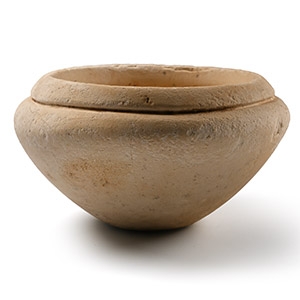
Egyptian Alabaster Bowl with Thickened Rim
3rd millennium B.C.Sold for (Inc. bp): £156
Comprising a squat conical body with narrow foot, groove beneath the thickened rim. 177 grams, 82 mm
Acquired in the mid 1980s-1990s. Private collection, Switzerland, thence by descent. Private collection, since the late 1990s. This lot is accompanied by an illustrated lot declaration signed by the Head of the Antiquities Department, Dr Raffaele D'Amato.
One of the most prestigious materials the Egyptians extracted was alabaster, more correctly referred to as travertine or calcite-alabaster. From the 1st through 3rd Dynasties, stone vessels were very popular items to include in the burials of pharaohs and nobles. No fewer than 30,000 stone vessels were found in the labyrinthine galleries below Djoser’s Step Pyramid at Saqqara, and Egyptian alabaster was used to make hundreds of those vessels. -
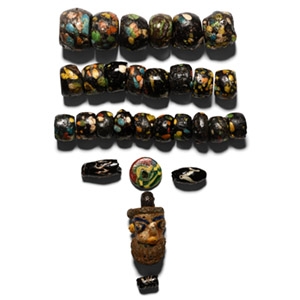
Phoenician Glass Bead Collection
6th-3rd century B.C. or laterEstimate: £1,200 - 1,700 (+bp*)
Opening Bid: £650
Comprising a group of crumb-decorated polychrome oblate beads and a centrepiece pendant formed as a stylised bearded head. 179 grams total, 12-42 mm
From the collection of a gentleman, acquired on the London art market in the 1990s. This lot is accompanied by an illustrated lot declaration signed by the Head of the Antiquities Department, Dr Raffaele D'Amato.
The Phoenicians, renowned seafarers and traders, were also skilled glassworkers. They produced a wide variety of glass beads using core-forming and winding techniques, with vivid colours and elaborate designs that reflect both technical mastery and cross-cultural influence. Among the most iconic Phoenician beads are glass 'head' beads, crafted in the form of stylised human or mythological faces. Typically, they feature exaggerated facial details like bulging eyes, large noses, beards, and headdresses, often with expressive or comic features. They were possibly worn as amulets to ward off evil or attract protection, though they may also represent deities, ancestors, or foreigners. These beads often incorporate Egyptian, Greek, and Near Eastern stylistic elements, reflecting the Phoenicians’ extensive trade networks.
