
Loading, please wait...
LOT 0546
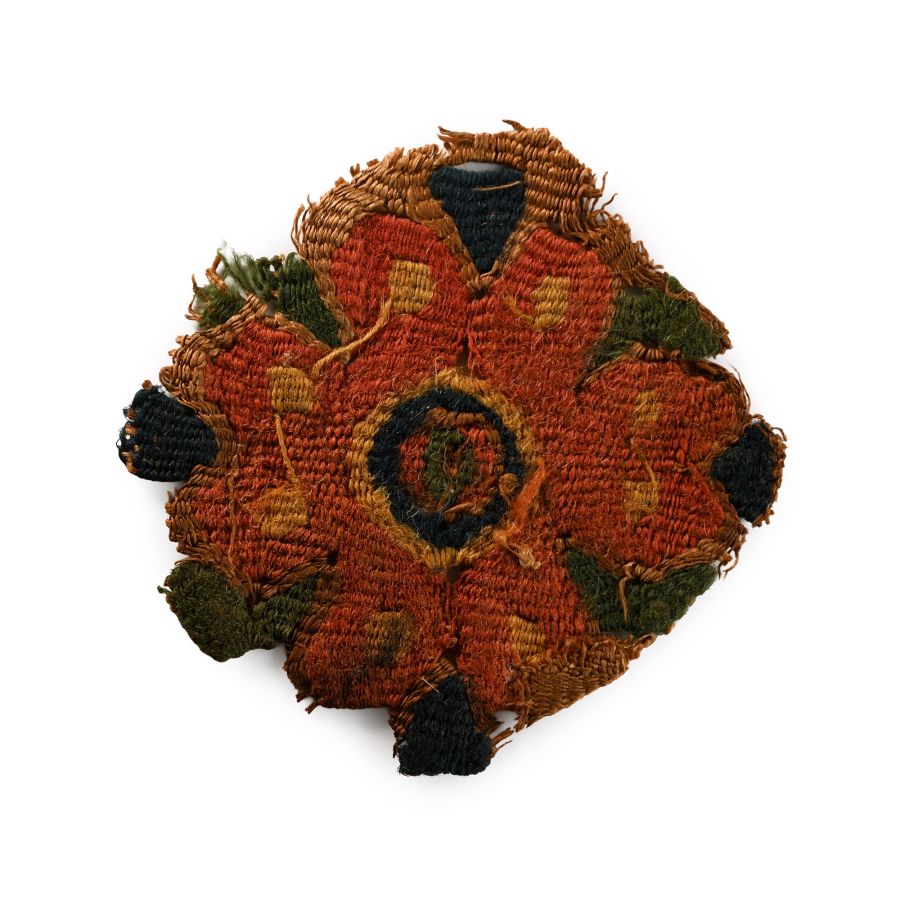
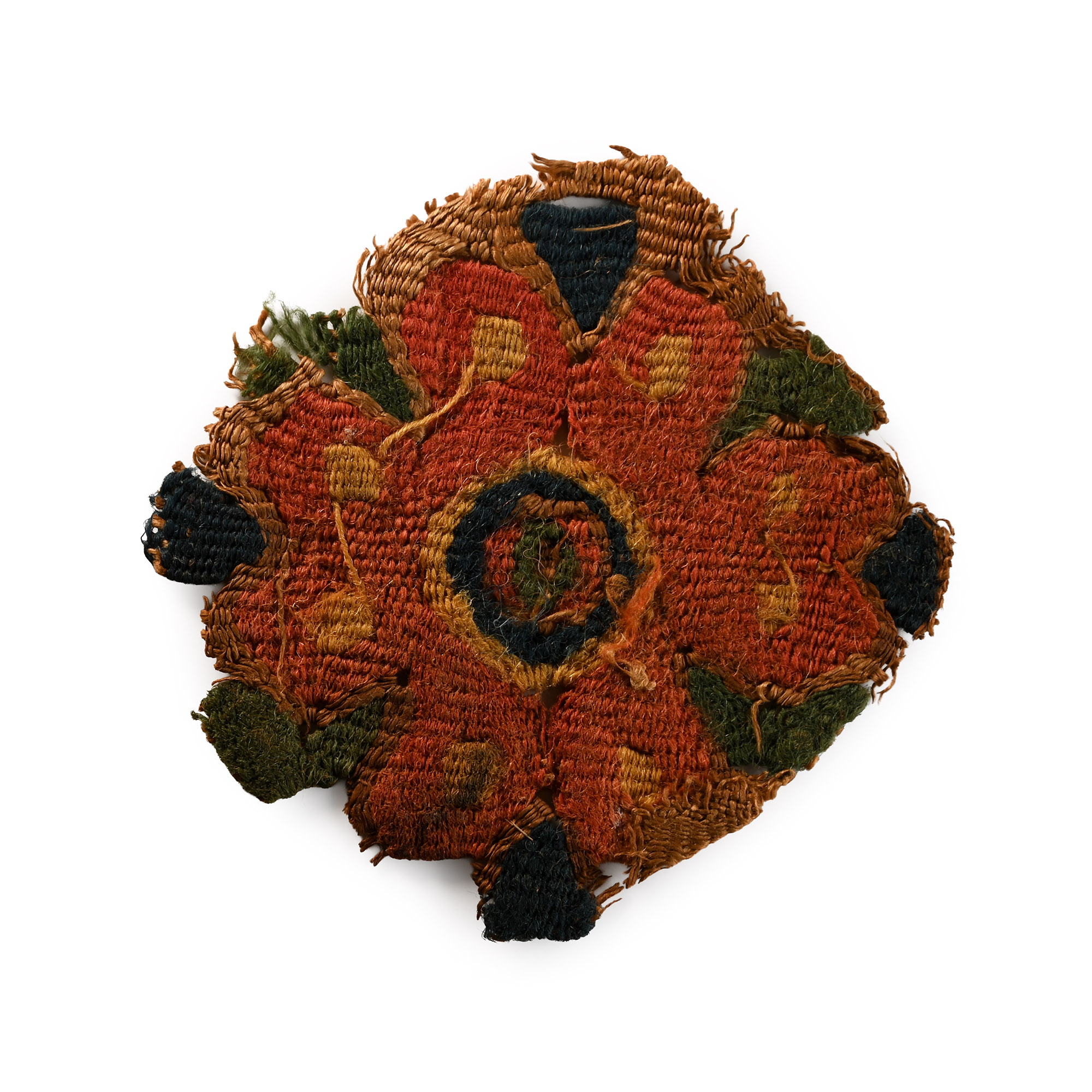
Egyptian Coptic Textile Fragment
CIRCA 5TH-6TH CENTURY A.D.
3 in. (11 grams total including package, 74 mm).
Central part of an orbiculus representing a six-petalled flower, S torsion, in red, yellow, olive green and blue wool. [No Reserve]
ProvenanceAcquired 1970s-1996.
Property of a North American collector.
London collection, 2016.
Cf. Del Francia Barocas, L., Museo dell'Alto Medioevo, Roma, I materiali Copti, p.102, no.13, for similar textiles.
FootnotesSimilar figures are widely presented in Coptic textiles, repeating a pattern in which flowers are usually paired with bird figures. This decoration is typical of tunics, but it was also used in large-scale textiles intended for domestic or funerary furnishings.
CONDITIONTimeLine Auctions follows a vetting process to ensure the authenticity and legality of all items, reinforcing our commitment to integrity and responsible trading. Each antiquity, antique, and coin lot undergoes thorough examination by a vetting committee of at least ten external specialists, professional trade association members, scientists, and archaeologists: Our Vetting Process
AUCTIONS:
TimeLine is a leading auction house specialising in antiquities, ancient art, collectables, natural history, coins, medals, and books. Our auctions offer museums, collectors, historians, and enthusiasts the opportunity to acquire unique and historically significant pieces.
-
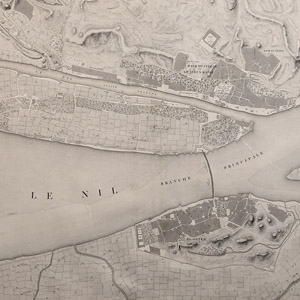
Very Large Egyptian Expedition Lithograph of the 'Environs du Kaire' (Cairo and district)
Early 19th century A.D.Estimate: £100 - 140 (+bp*)
Opening Bid: £50
Proof etching on laid paper of plate 16 from Vol .I of Description de l'Égypte : ou, Recueil des observations et des recherches qui ont été faites en Égypte pendant l'expédition de l'armée française. entitled Environs du Kaire. Plan particulier de l'île de Roudah, du vieux Kaire et du Gyzeh. 238 grams, 105.5 x 69.5 cm
From the collection of a North American priest. Acquired between 1981-1996. Property of a North American collector.
Produced between February 1802 and 1830 on the orders of Napoleon Bonaparte; published between 1809 and 1828. Just 1,000 copies were distributed to various institutions, printed on laid paper with an 'Égypte ancienne et moderne' watermark. The book is subtitled Recueil des observations et des recherches qui ont été faites en Égypte pendant l’expédition de l’Armée française, publié par les ordres de Sa Majesté l’Empereur Napoléon le Grand (Gathering of observations and discoveries which were made in Egypt during the expedition of the French army, published on the orders of His Majesty the Emperor Napoleon the Great). It was the world's first encyclopedia devoted exclusively to the remains of ancient Egypt. The plates of this book are the first to present the archaeological sites of Thebes (Luxor). The papyrus manuscript was recovered from the underground chambers (hypogea). The original papyrus is now held in the Bibliothèque Nationale (1-19), Paris (Papyrus Cadet). -
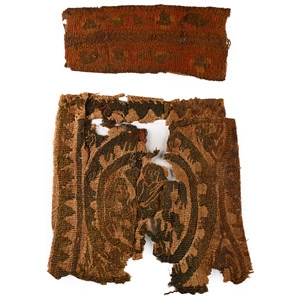
Egyptian Coptic Textile Fragment Group
Circa 4th-6th century A.D.Sold for (Inc. bp): £130
Comprising: remains of a segmentum in yellow, green and brown wool over a red linen background, S torsion, embroidered with a central band and coloured buds; a near complete tablion with representation of a dancer, inside a rondo, with four hares running on the four corners, triangular border on the external edge. 33 grams total including package, 10.7-12.2 cm
Acquired 1970s-1996. Property of a North American collector. London collection, 2016.
The central dancing figure, with her attributes and attitude, can only be interpreted as a Maenad, isolated from the Bacchic procession and abandoned to sacred trances. -
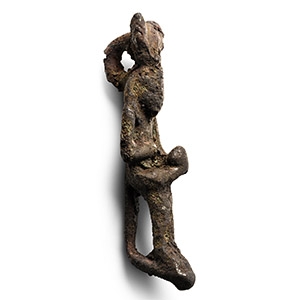
Egyptian Bronze Isis and Horus Pendant
Late-Ptolemaic Period, circa 664-30 B.C.Sold for (Inc. bp): £59
Isis modelled seated and suckling infant Horus on her lap, suspension loop behind the head. 5.04 grams, 39 mm
From the collection of a gentleman, acquired on the London art market in the 1990s.
In ancient Egyptian mythology, Isis was the sister-wife of Osiris and the mother of the sky god Horus. She is associated with fertility and motherhood and is often depicted in artworks seated in a nursing pose with her son, Horus, on her lap, as here.
