
Loading, please wait...
LOT 0560
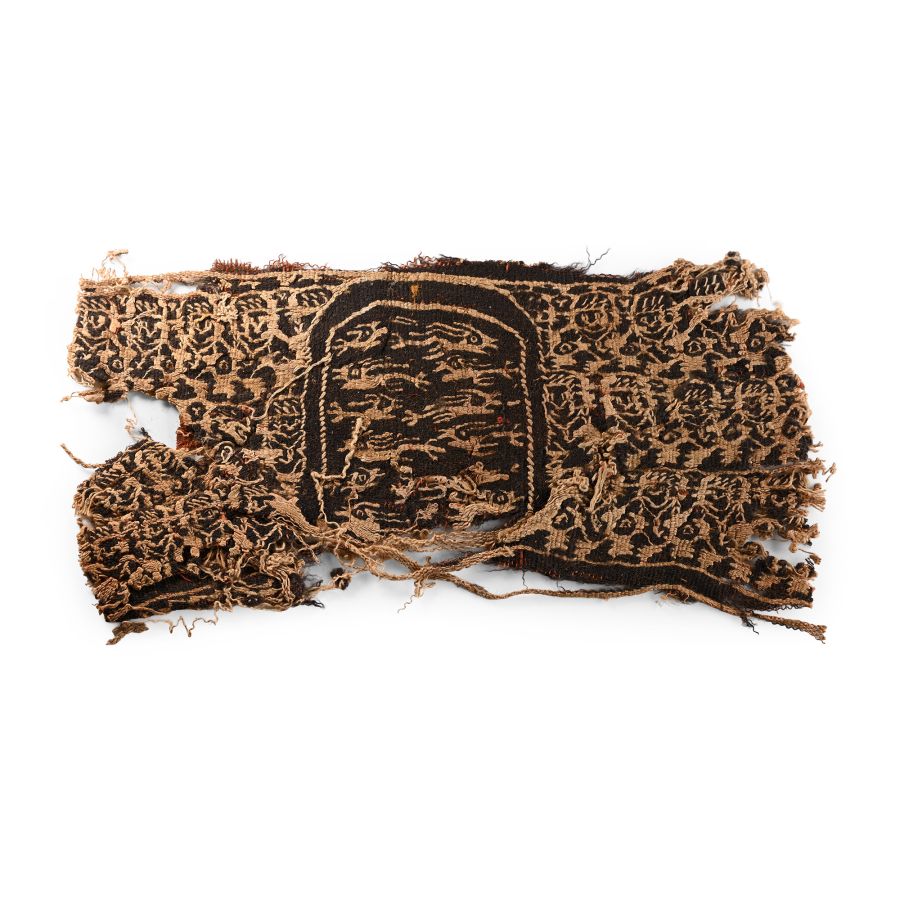
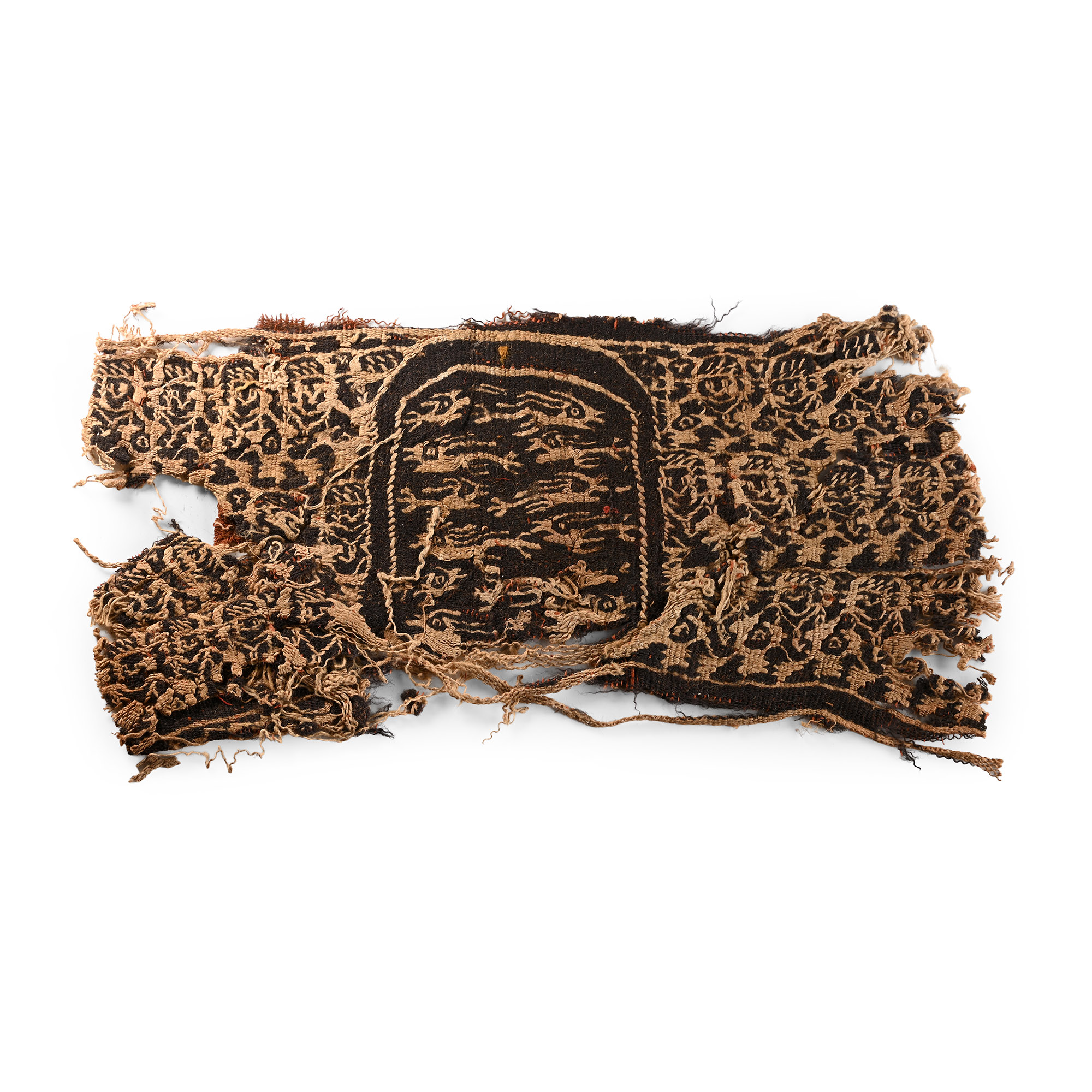
Egyptian Coptic Textile Fragment
CIRCA 4TH-8TH CENTURY A.D.
8 7/8 in. (40 grams total including package, 22.5 cm).
Fragment of a tapestry or a fabric, white linen and brown wool, S twist, depicting three rows of black slingers, shields in right or left hands, marching in opposing positions towards a roundel decorated with images of marine animals. [No Reserve]
ProvenanceAcquired 1970s-1996.
Property of a North American collector.
London collection, 2016.
Cf. Pritchard, F., Clothing culture, Dress in Egypt in the collection of The Whitworth Art Gallery, The University of Manchester, Manchester, 2006, figs.2.3 (a) and 2.3 (b), for similar textiles.
FootnotesThis embroidery was typical of tunics and garments characterised by full-length clavi, decorated with either intricate geometric patterns or with a multitude of small figures and animals, often edged with geometric borders and finished with thick, weft-loop fringes or cords.
CONDITIONTimeLine Auctions follows a vetting process to ensure the authenticity and legality of all items, reinforcing our commitment to integrity and responsible trading. Each antiquity, antique, and coin lot undergoes thorough examination by a vetting committee of at least ten external specialists, professional trade association members, scientists, and archaeologists: Our Vetting Process
AUCTIONS:
TimeLine is a leading auction house specialising in antiquities, ancient art, collectables, natural history, coins, medals, and books. Our auctions offer museums, collectors, historians, and enthusiasts the opportunity to acquire unique and historically significant pieces.
-
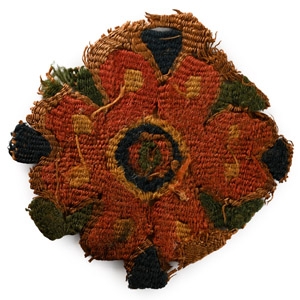
Egyptian Coptic Textile Fragment
Circa 5th-6th century A.D.Sold for (Inc. bp): £195
Central part of an orbiculus representing a six-petalled flower, S torsion, in red, yellow, olive green and blue wool. 11 grams total including package, 74 mm
Acquired 1970s-1996. Property of a North American collector. London collection, 2016.
Similar figures are widely presented in Coptic textiles, repeating a pattern in which flowers are usually paired with bird figures. This decoration is typical of tunics, but it was also used in large-scale textiles intended for domestic or funerary furnishings. -
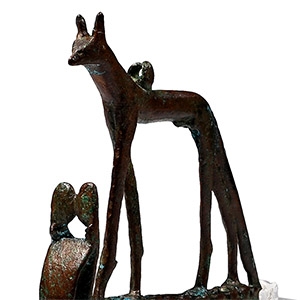
Large Egyptian Bronze Wepwawet Amulet
Third Intermediate-Late Period, 1069-332 B.C.Estimate: £3,500 - 4,500 (‡+bp*)
Opening Bid: £1,750
Showing the jackal deity Wepwawet standing with ears pricked on a sledge, the slender body modelled with long legs and a tail, suspension loop on the back; two rearing cobras before the jackal; mounted on a custom-made display stand. 54 grams, 91 mm (162 grams total, 11.7 cm including stand )
Ex Dr R. and Mrs L.B., Zumikon, Switzerland. with Galerie Rhéa, Zurich, Switzerland. This lot has been checked against the Interpol Database of stolen works of art and is accompanied by a search certificate number no.12627-236406.
Wepwawet, meaning "Opener of the Ways," was an ancient Egyptian god associated primarily with warfare, protection, and funerary practices. Depicted as a jackal or a man with a jackal's head—often mistaken for Anubis—Wepwawet was believed to guide souls through the afterlife and open paths both in battle and in the spiritual realm. He originated in Asyut (ancient Lycopolis) in Upper Egypt and was one of the oldest deities in the Egyptian pantheon, with worship dating back to at least the First Dynasty (c. 3100–2900 BCE). Over time, Wepwawet became closely linked to Anubis, and the two were sometimes conflated, though Wepwawet retained his distinct identity as a god who preceded and cleared the way. In military contexts, Wepwawet was invoked to "open the way" for pharaohs and armies, ensuring victory and safe passage. In funerary texts, he was described as clearing the path to the afterlife, acting as a scout or guide for the deceased. -
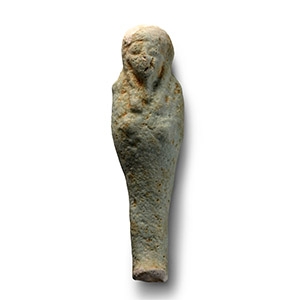
Egyptian Faience Shabti
Ptolemaic Period, 332-30 B.C.Sold for (Inc. bp): £104
D-shaped in section with tripartite wig and beard, hands holding agricultural tools to the chest. 13.9 grams, 77 mm
Ex London, UK, collection, 1990s.
