
Loading, please wait...
LOT 0428
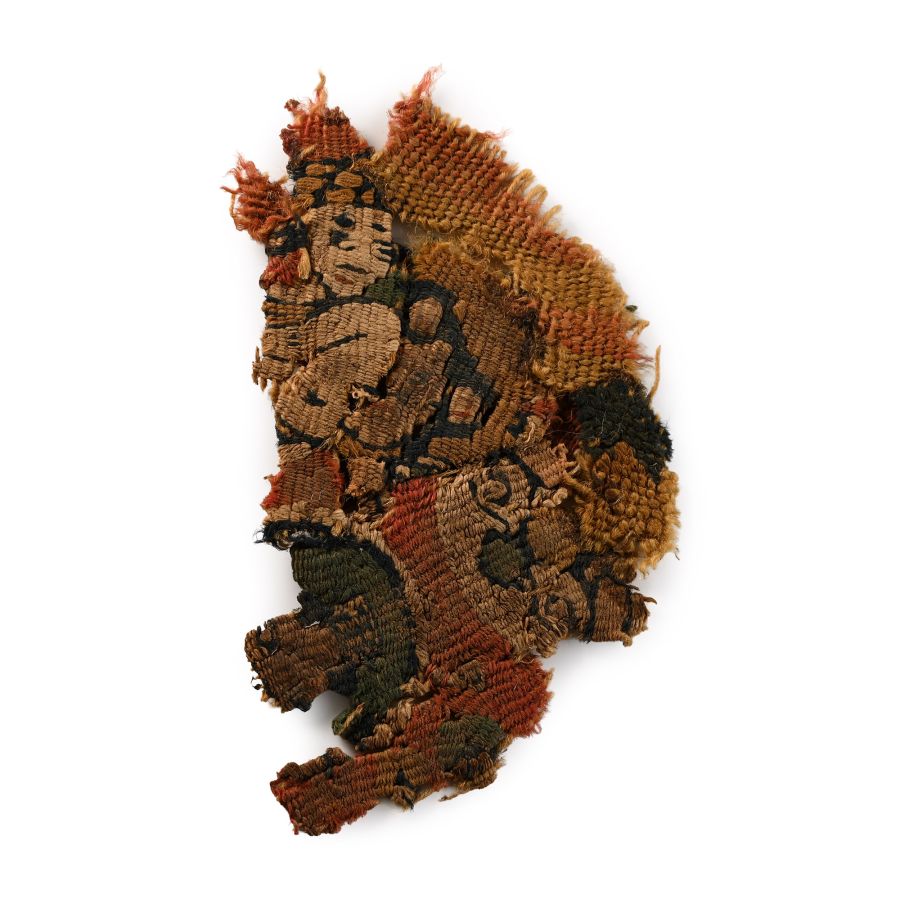
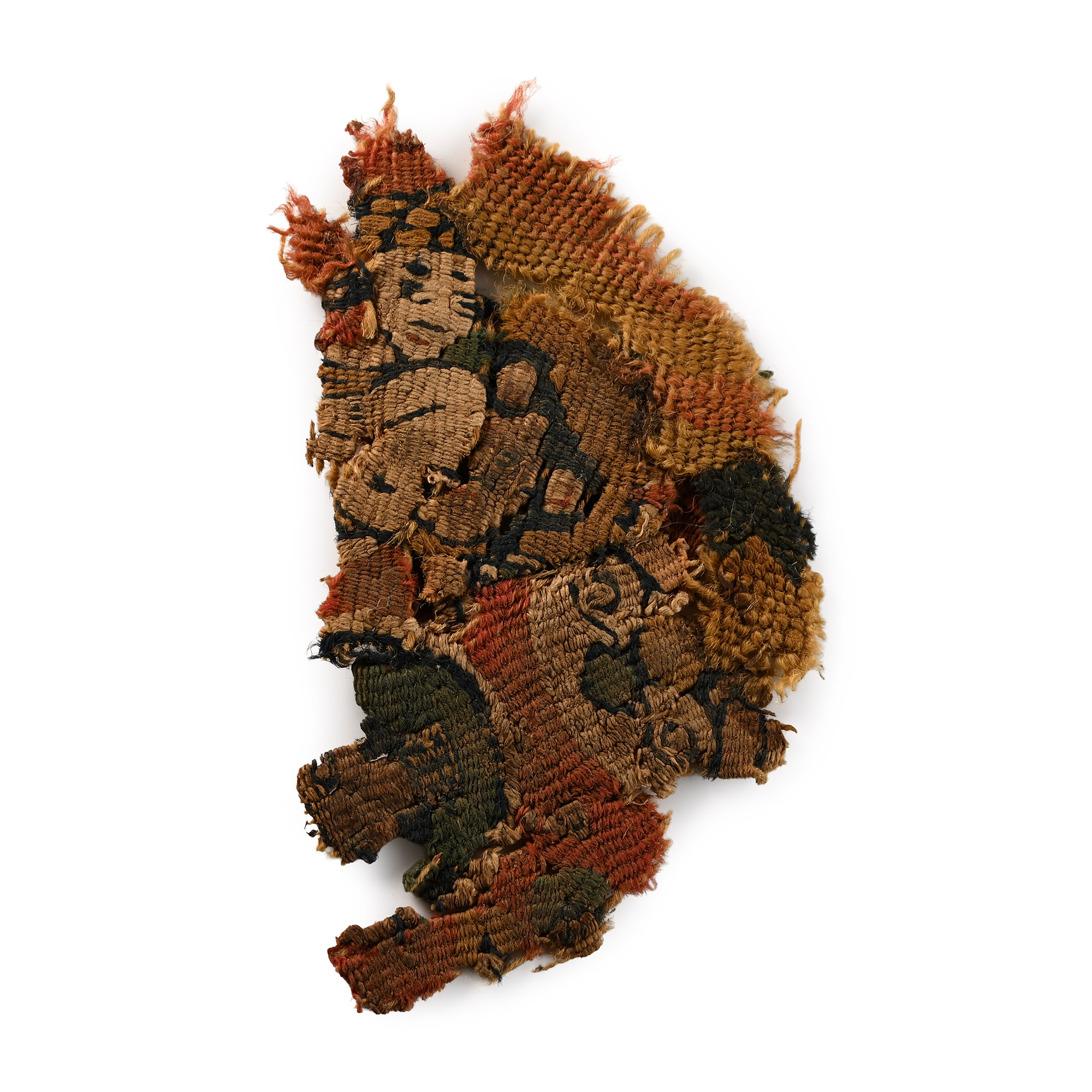
Egyptian Coptic Textile Fragment
CIRCA 7TH-8TH CENTURY A.D.
3 in. (11 grams total including package, 78 mm).
A fragment of an orbiculus in linen and red, brown, yellow and blue wool, S torsion, embroidered with an image of a putto with vine leaves around the head, surrounded by tondos ornamented with vegetal embroidery. [No Reserve]
ProvenanceAcquired 1970s-1996.
Property of a North American collector.
London collection, 2016.
Cf. Del Francia Barocas, L., Museo dell'Alto Medioevo, Roma, I materiali Copti, pp.204-205, for similar textiles.
FootnotesThis is a fragment from a tunic decoration, usually forming part of a double band on a red background, decorated with a series of motifs related to the Dionysian cult: usually depicting cherubs, fish, heads, palmettes, and figures of dancing puttoes within the orbiculi. The decorative motifs on these tunics were usually arranged vertically and horizontally.
CONDITIONTimeLine Auctions follows a vetting process to ensure the authenticity and legality of all items, reinforcing our commitment to integrity and responsible trading. Each antiquity, antique, and coin lot undergoes thorough examination by a vetting committee of at least ten external specialists, professional trade association members, scientists, and archaeologists: Our Vetting Process
AUCTIONS:
TimeLine is a leading auction house specialising in antiquities, ancient art, collectables, natural history, coins, medals, and books. Our auctions offer museums, collectors, historians, and enthusiasts the opportunity to acquire unique and historically significant pieces.
-
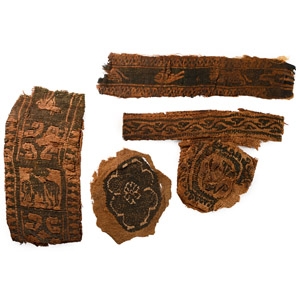
Egyptian Coptic Textile Fragment Group
Circa 6th-7th century A.D.Sold for (Inc. bp): £208
Comprising a fragment of a clavus in white and purple linen and wool, S torsion, borders embroidered with pilasters, the central scene representing eagles alternating with geometric elements; a small fragment of another clavus, ornamented with running lions and fishes, borders with geometric patterns; a third fragment of a clavus, ornamented with vegetal patterns. 20 grams total including package, 6.1-15.6 cm
Acquired 1970s-1996. Property of a North American collector. London collection, 2016.
The clavi are realised in tapestry technique, and the one with prominent figures has a rounded end. They were part of a tunic decoration and the presence of the Imperial eagle, not a common pattern, could refer to a military tunic. -
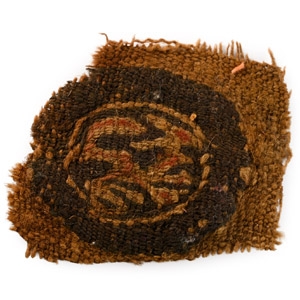
Egyptian Coptic Textile Fragment
Circa 4th century A.D.Sold for (Inc. bp): £78
An orbiculus in yellow, green and red wool and coarse linen, on brown linen background, S torsion, embroidered with a stylised hare within a green circle. 11 grams total including package, 71 mm
Acquired 1970s-1996. Property of a North American collector. London collection, 2016.
In early Christian iconography, the hare was a symbol representing primarily the Church hiding in Christ (the ‘rock’ of Psalm 103:18) from a sinful world. This interpretation drew from the Old Testament's description of the hare as a weak creature that makes its lair in the rock, signifying the Church's reliance on Christ for safety. It was also linked to resurrection and fertility. -
.jpg)
Egyptian Alabaster Mirror Handle
New Kingdom, 18th-20th Dynasty, 1550-1070 B.C.Sold for (Inc. bp): £3,900
In the form of a papyrus column, the upper platform pierced through for insertion of a bronze mirror, incised with lotus petals at the top of the shaft and at the base; mounted on a custom-made display stand. 482 grams total, 14.5 cm including stand
with Nicholas Wright, London, UK, 1969. Christie's, London, 14 April 2011, no.128. Accompanied by copies of the relevant Christie's catalogue pages. This lot has been checked against the Interpol Database of stolen works of art and is accompanied by search certificate number no.12941-243535.
The papyrus stalk was used in the hieroglyphic script for the word 'wadj', meaning 'fresh', making it an appropriate talisman for the preservation of the body.
