
Loading, please wait...
LOT 0509
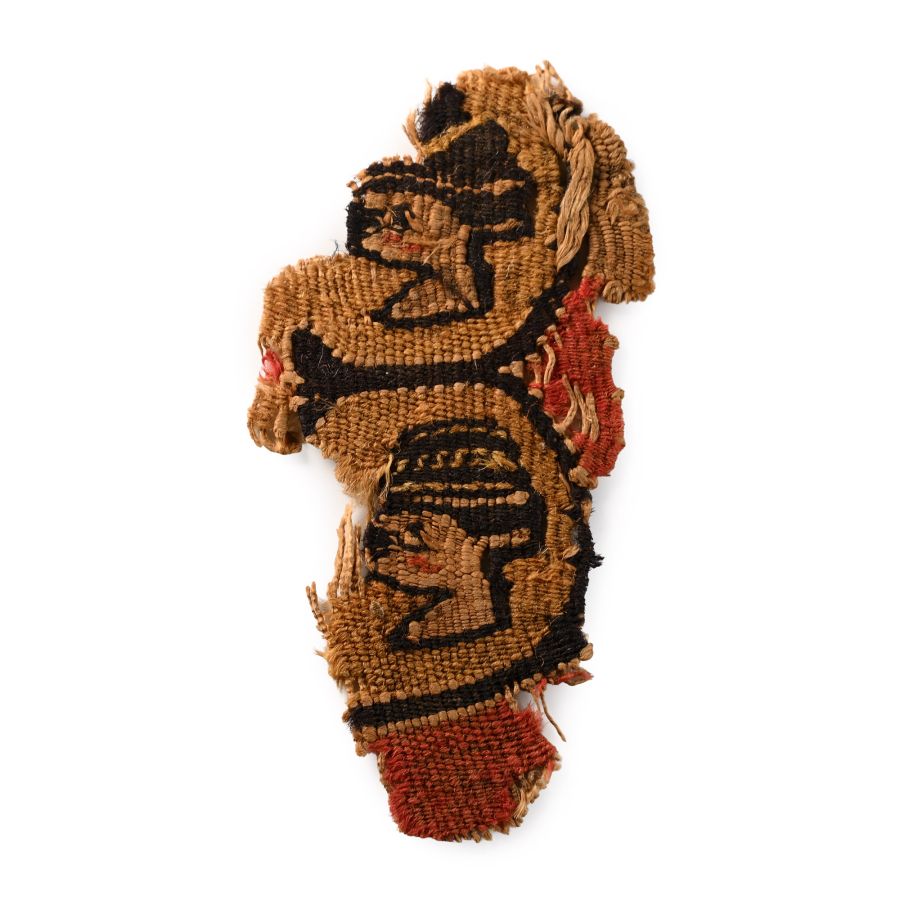
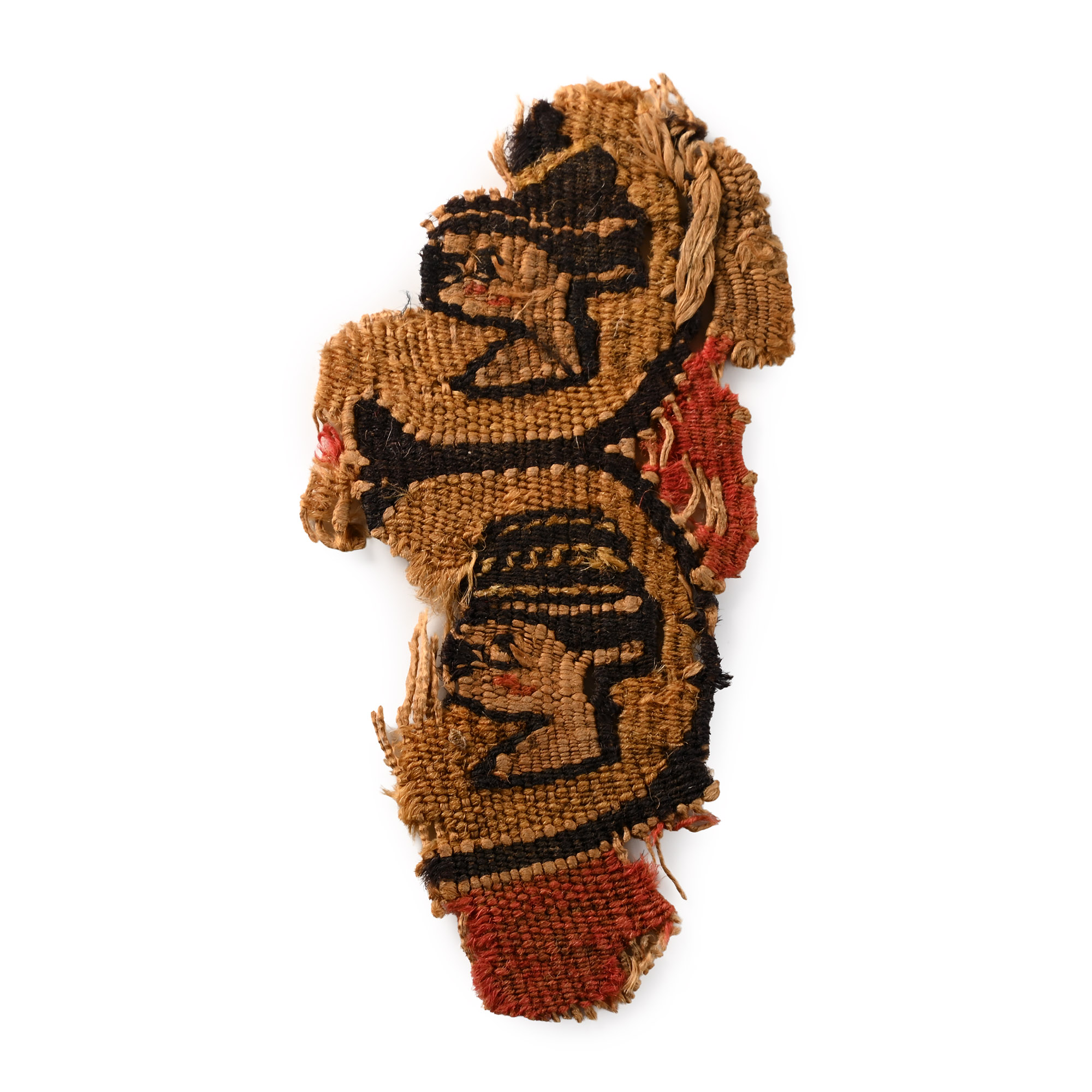
Egyptian Coptic Textile Fragment
CIRCA 5TH-6TH CENTURY A.D.
3 in. (10 grams total including package, 76 mm).
Small fragment of a garment in yellow, green and red wool, S torsion, embroidered with female heads wearing high propoloma. [No Reserve]
ProvenanceAcquired 1970s-1996.
Property of a North American collector.
London collection, 2016.
Cf. Calament, F., Durand, M., Antinoé, á la vie, á la mode, visions d’élégance dans les solitudes, Lyon, 2013, cat.144, for similar textile.
FootnotesThis fragment was most likely part of a tapestry medallion with symbolic figures, likely linked to the Christian cult or, perhaps, to the Dionysian iconography. These figures could surround Tyche (a city's patron deity) or a figure of Christ or Saints.
CONDITIONTimeLine Auctions follows a vetting process to ensure the authenticity and legality of all items, reinforcing our commitment to integrity and responsible trading. Each antiquity, antique, and coin lot undergoes thorough examination by a vetting committee of at least ten external specialists, professional trade association members, scientists, and archaeologists: Our Vetting Process
AUCTIONS:
TimeLine is a leading auction house specialising in antiquities, ancient art, collectables, natural history, coins, medals, and books. Our auctions offer museums, collectors, historians, and enthusiasts the opportunity to acquire unique and historically significant pieces.
-
.jpg)
Egyptian 'Becker' Serpentine Vessel
New Kingdom, 18th Dynasty, circa 1450 B.C.Estimate: £3,000 - 4,000 (‡+bp*)
Opening Bid: £1,600
Piriform jar with wide, flat rim and short neck, narrow neck and flat base. 1.2 kg, 15.5 cm
Ex Becker collection, 1920s. Private collection, Los Angeles, USA, 1990s. Private European collection. Accompanied by an academic report by Dr Raffaele D’Amato. This lot has been checked against the Interpol Database of stolen works of art and is accompanied by a search certificate number no.12576-232111. -
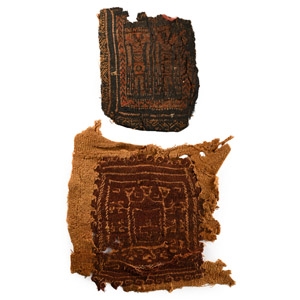
Egyptian Coptic Textile Fragment Group
Circa 4th century A.D.Sold for (Inc. bp): £195
Comprising: a segmentum in red, green and black wool upon coarse linen, S torsion, embroidered with two stylised human figures, standing with the arms along the body, inscribed within a square framed with red and black chevrons, black and yellow borders; a tabula in purple wool and coarse linen, on brown linen background, S torsion, embroidered with a central cross, the borders decorated with meanders. 41 grams total including package, 10.5-13.3 cm
Acquired 1970s-1996. Property of a North American collector. London collection, 2016.
The tabula, or tablion, was a square embroidery used to decorate tunics or mantles. The Christian elements, like the cross at the centre of our tabula, began to decorate the garments from the 4th century onwards. -
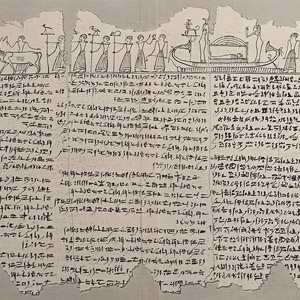
Very Large Egyptian Expedition Lithograph of the Hypogees Papyrus Manuscript from Thebes
Early 19th century A.D.Estimate: £100 - 140 (+bp*)
Opening Bid: £50
Proof etching on laid paper of plate 61 from Vol.II of Description de l'Égypte : ou, Recueil des observations et des recherches qui ont été faites en Égypte pendant l'expédition de l'armée française. entitled Thèbes. Hypogées. Manuscrit sur papyrus. 1ere partie. 207 grams,103 x 68 cm
From the collection of a North American priest. Acquired between 1981-1996. Property of a North American collector.
Produced between February 1802 and 1830 on the orders of Napoleon Bonaparte; published between 1809 and 1828. Just 1,000 copies were distributed to various institutions, printed on laid paper with an 'Égypte ancienne et moderne' watermark. The book is subtitled Recueil des observations et des recherches qui ont été faites en Égypte pendant l’expédition de l’Armée française, publié par les ordres de Sa Majesté l’Empereur Napoléon le Grand (Gathering of observations and discoveries which were made in Egypt during the expedition of the French army, published on the orders of His Majesty the Emperor Napoleon the Great). It was the world's first encyclopedia devoted exclusively to the remains of ancient Egypt. The plates of this book are the first to present the archaeological sites of Thebes (Luxor). The papyrus manuscript was recovered from an underground tomb chamber (hypogeum). The text is written in hieratic, a cursive form of hieroglyphic script often used for religious papyrus documents. The scene in the upper register depicts the funerary procession with lamenting men and women on the right, following the deceased's funerary assemblage, including his mummy on a bark.
