
Loading, please wait...
LOT 0555
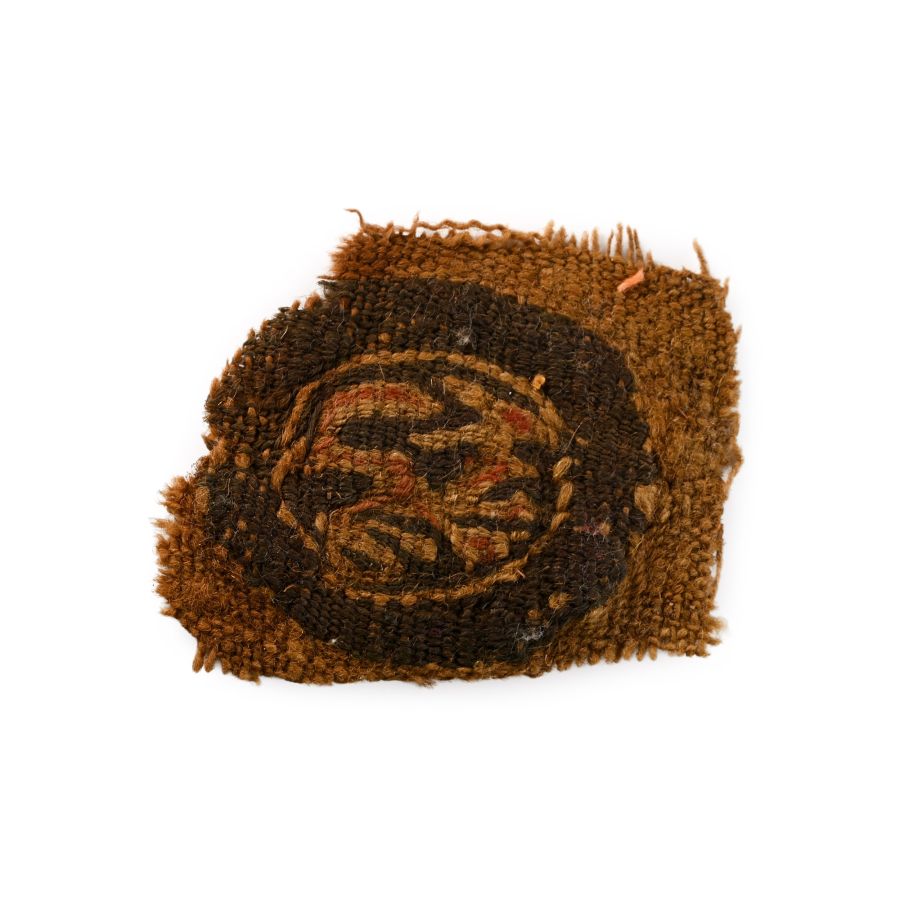
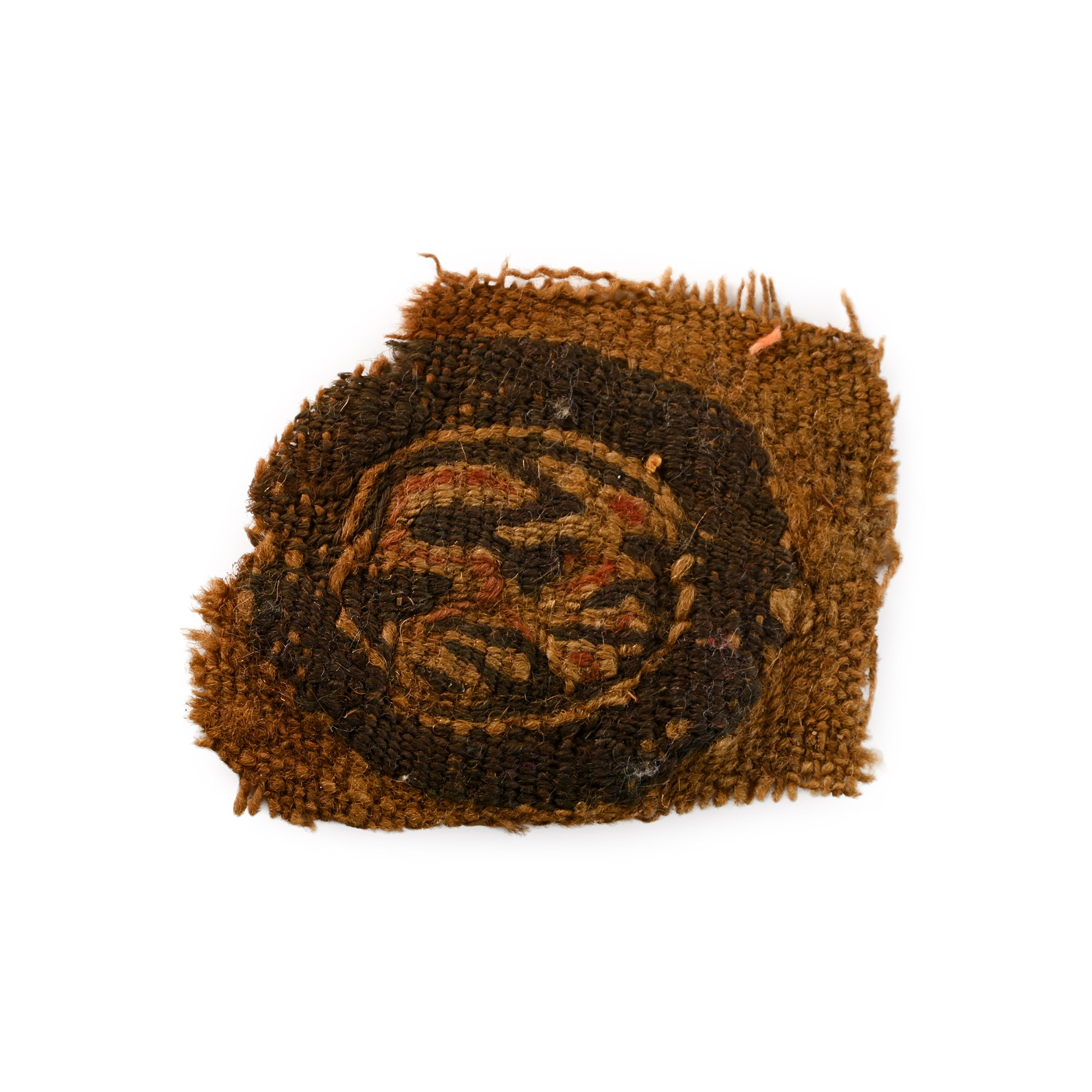
Egyptian Coptic Textile Fragment
CIRCA 4TH CENTURY A.D.
3/4 in. (11 grams total including package, 71 mm).
An orbiculus in yellow, green and red wool and coarse linen, on brown linen background, S torsion, embroidered with a stylised hare within a green circle. [No Reserve]
ProvenanceAcquired 1970s-1996.
Property of a North American collector.
London collection, 2016.
Cf. Forrer, R., Die Graeber und Textilfunde von Achmim Panopolis, Strassburg, 1891, pl.VII no.4, for a similar figure.
FootnotesIn early Christian iconography, the hare was a symbol representing primarily the Church hiding in Christ (the ‘rock’ of Psalm 103:18) from a sinful world. This interpretation drew from the Old Testament's description of the hare as a weak creature that makes its lair in the rock, signifying the Church's reliance on Christ for safety. It was also linked to resurrection and fertility.
CONDITIONTimeLine Auctions follows a vetting process to ensure the authenticity and legality of all items, reinforcing our commitment to integrity and responsible trading. Each antiquity, antique, and coin lot undergoes thorough examination by a vetting committee of at least ten external specialists, professional trade association members, scientists, and archaeologists: Our Vetting Process
AUCTIONS:
TimeLine is a leading auction house specialising in antiquities, ancient art, collectables, natural history, coins, medals, and books. Our auctions offer museums, collectors, historians, and enthusiasts the opportunity to acquire unique and historically significant pieces.
-
.jpg)
Egyptian 'Becker' Serpentine Vessel
New Kingdom, 18th Dynasty, circa 1450 B.C.Estimate: £3,000 - 4,000 (‡+bp*)
Opening Bid: £1,600
Piriform jar with wide, flat rim and short neck, narrow neck and flat base. 1.2 kg, 15.5 cm
Ex Becker collection, 1920s. Private collection, Los Angeles, USA, 1990s. Private European collection. Accompanied by an academic report by Dr Raffaele D’Amato. This lot has been checked against the Interpol Database of stolen works of art and is accompanied by a search certificate number no.12576-232111. -
.jpg)
Egyptian Bronze Uraeus Mount
Late-Ptolemaic Period, circa 664-30 B.C.Estimate: £100 - 140 (+bp*)
Opening Bid: £50
Formed as a rearing cobra with the hood divided into cells to accept inlay. 6.54 grams, 35 mm
From the collection of a gentleman, acquired on the London art market in the 1990s.
The uraeus depicts a rearing cobra and symbolises royal power and authority, as well as the Lower Egyptian goddess Wadjet. -
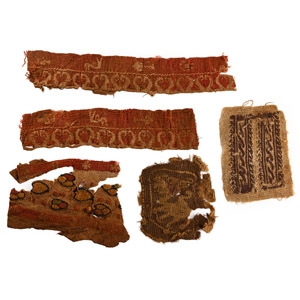
Egyptian Coptic Textile Fragment Group
Circa 4th-6th century A.D.Sold for (Inc. bp): £260
Comprising: fragment of a segmentum in red and coarse linen, S torsion, embroidered with geometric motifs; fragment of another segmentum in red, yellow, blue and green wool, with representations of buds within a red frame; a small tabula in purple wool over linen background, embroidered with a stylised image of Pegasus; a double segmenta, in purple over linen, embroidered with wave motif. 66 grams total including package, 7.8-20.5 cm
Acquired 1970s-1996. Property of a North American collector. London collection, 2016.
These are pieces of extraordinary finesse in both material and design. They all probably were once applied as a decoration of various garments, such as tunics, cloaks, and shawls.
