
Loading, please wait...
LOT 0579
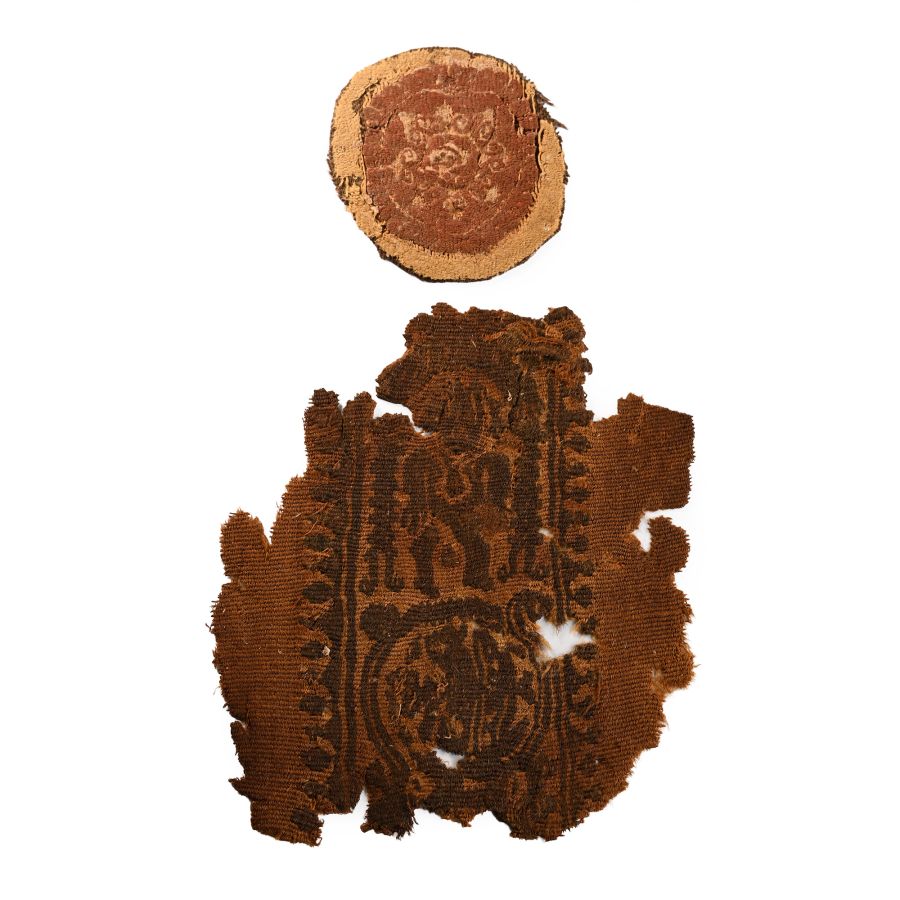
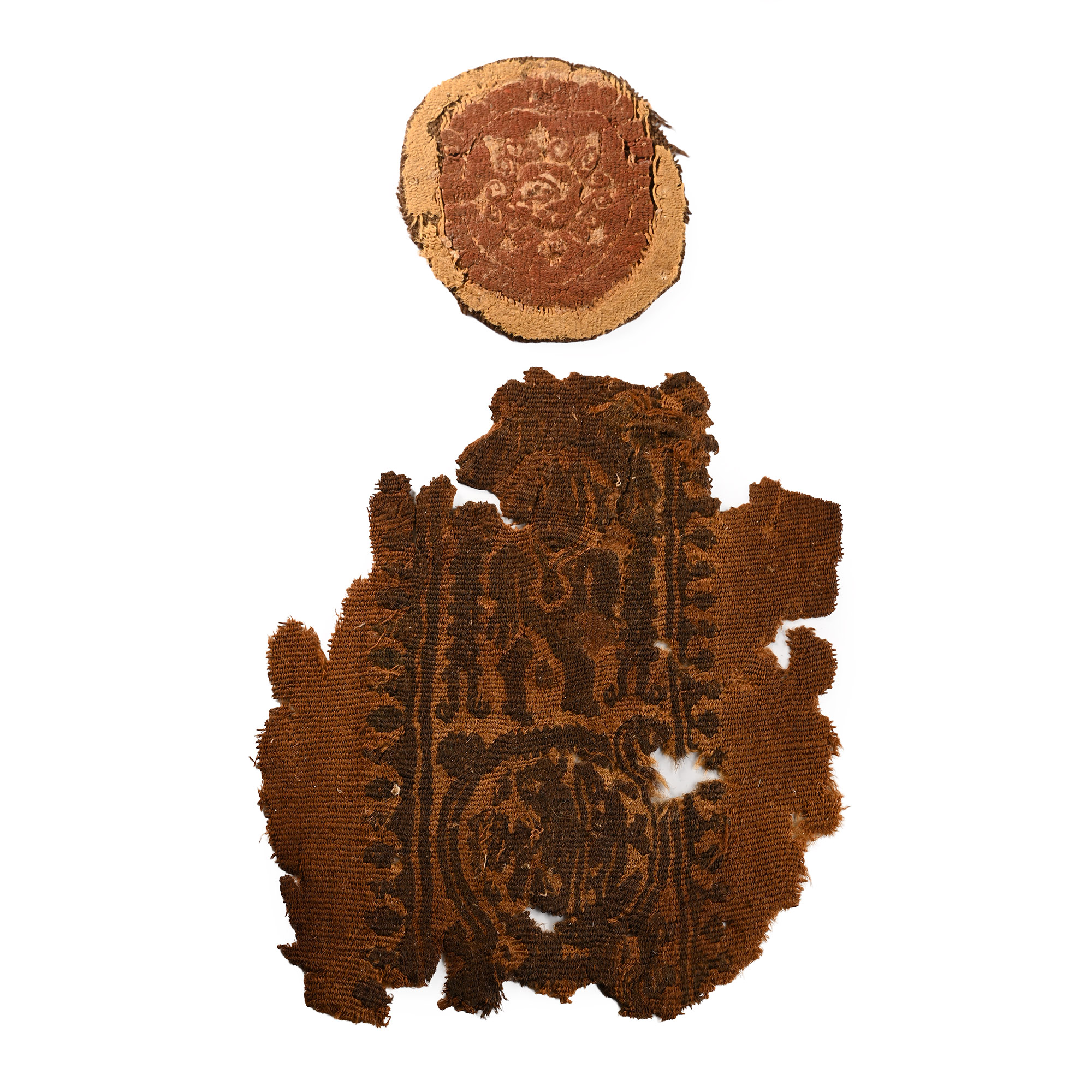
Egyptian Coptic Textile Fragment Group
CIRCA 5TH-6TH CENTURY A.D.
2 5/8 - 5 1/2 in. (37 grams total including package, 6.7-14 cm).
Comprising a fragment of a large segmentum in linen and wool, embroidered with a dancer, followed by a tondo with a Nereid riding a dolphin, borders with geometric decorations; an orbiculus decorated with vegetal patterns. [2, No Reserve]
ProvenanceAcquired 1970s-1996.
Property of a North American collector.
London collection, 2016.
Cf. Del Francia Barocas, L., Museo dell'Alto Medioevo, Roma, I materiali Copti, p.100, no.12, for similar textiles.
FootnotesThe segmentum was probably part of the vertical clavus of a tunic; it is highly probable that the embroidery refers to the Dionysian cycle with dancers, animals and probably, in the missing parts, hunters.
CONDITIONTimeLine Auctions follows a vetting process to ensure the authenticity and legality of all items, reinforcing our commitment to integrity and responsible trading. Each antiquity, antique, and coin lot undergoes thorough examination by a vetting committee of at least ten external specialists, professional trade association members, scientists, and archaeologists: Our Vetting Process
AUCTIONS:
TimeLine is a leading auction house specialising in antiquities, ancient art, collectables, natural history, coins, medals, and books. Our auctions offer museums, collectors, historians, and enthusiasts the opportunity to acquire unique and historically significant pieces.
-
.jpg)
Egyptian Bronze Uraeus Mount
Late-Ptolemaic Period, circa 664-30 B.C.Estimate: £100 - 140 (+bp*)
Opening Bid: £50
Formed as a rearing cobra with the hood divided into cells to accept inlay. 6.54 grams, 35 mm
From the collection of a gentleman, acquired on the London art market in the 1990s.
The uraeus depicts a rearing cobra and symbolises royal power and authority, as well as the Lower Egyptian goddess Wadjet. -
Egyptian Bronze Harpokrates Statuette
Late-Ptolemaic Period, 664-30 B.C.Estimate: £250 - 350 (+bp*)
Opening Bid: £125
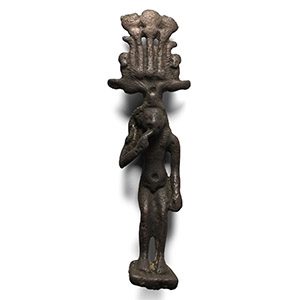
Devotional figurine of Harpokrates seated with his hand raised to his mouth, wearing a nemes headdress with curled side lock, topped by an elaborate hem-hem crown characteristic of the god. 59 grams, 10.7 cm
From the collection of a gentleman, acquired on the London art market in the 1990s.
Harpokrates is the Greek rendering of the Egyptian name Hor-pa-khered, which means ‘Horus the Child’. This name refers to Horus as the divine infant of Isis and Osiris. Wearing an amulet of Harpokrates was believed to offer the same protection that Isis granted to her beloved son. Larger bronze statuettes like this example were likely votive offerings to Harpokrates to secure his favour and protection. -
.jpg)
Egyptian Faience Fish Plaque Amulet
New Kingdom, 1550-1070 B.C.Sold for (Inc. bp): £416
Rectangular plaque with raised Tilapia fish motif on the top and six ring-and-dot motifs on the underside. 2.12 grams, 17 mm
Mrs Allinson to Mrs Foster, 1867 and thence by descent to the current owner, Stanley Crescent, London, UK.
Amulets depicting the Tilapia fish served as symbols of regeneration.
