
Loading, please wait...
LOT 0481
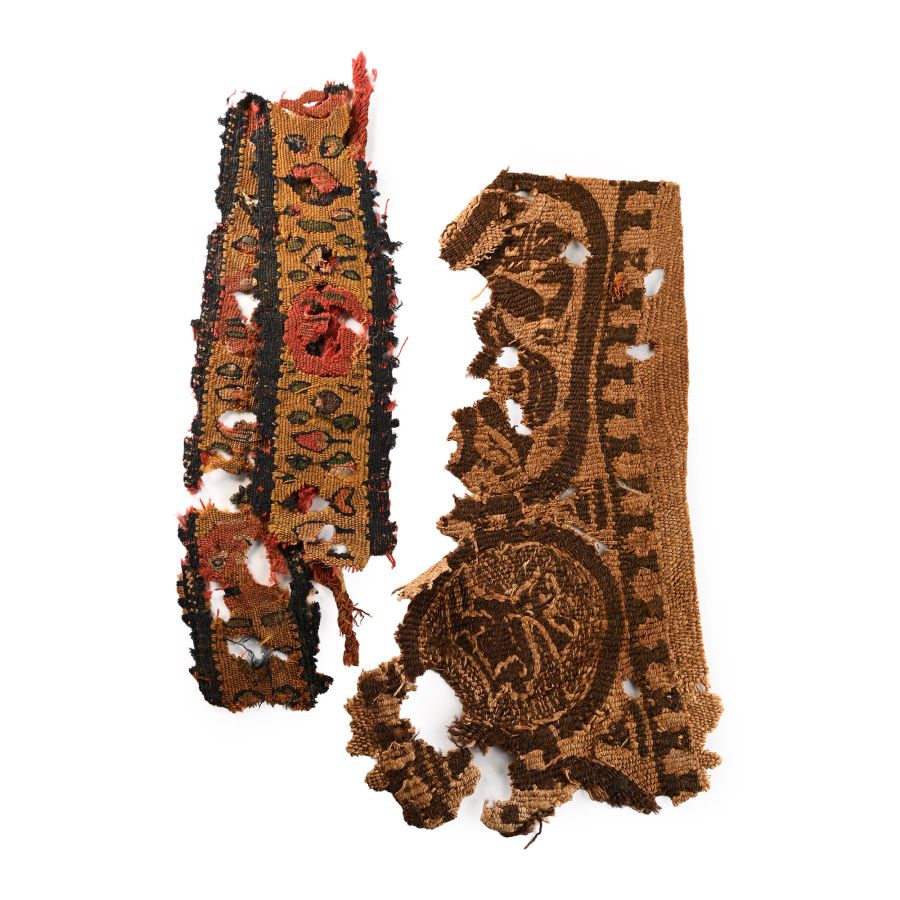
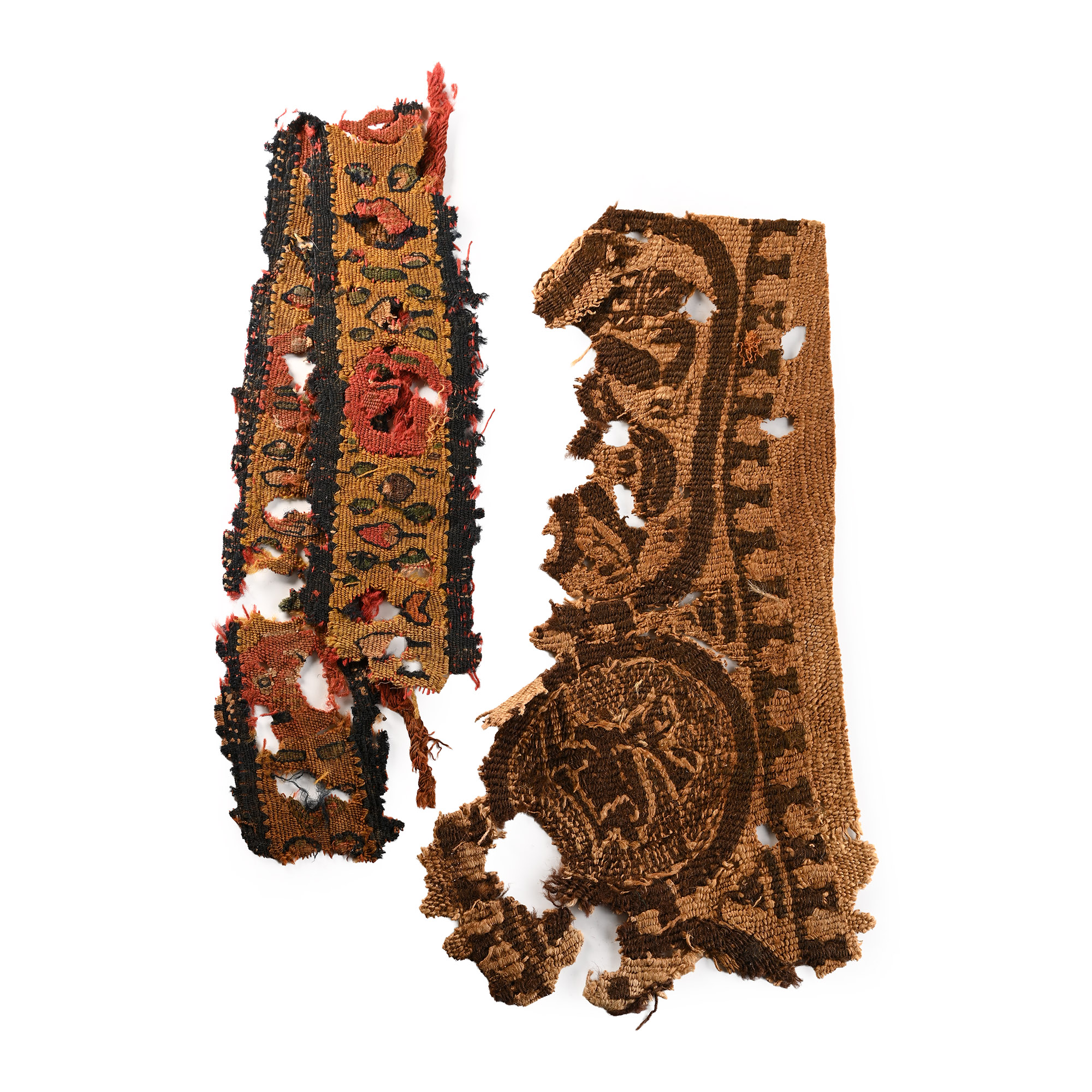
Egyptian Coptic Textile Fragment Group
CIRCA 5TH-6TH CENTURY A.D.
7 1/2 - 13 in. (41 grams total including package, 19-33 cm).
Comprising a large segmentum in linen and wool, with a hare and nereid, wool purple on linen, S torsion, borders with dentellid decoration; two other segmenta in wool and linen, part of clavi, with floral and vegetal embroidery. [2, No Reserve]
ProvenanceAcquired 1970s-1996.
Property of a North American collector.
London collection, 2016.
Cf. Del Francia Barocas, L., Museo dell'Alto Medioevo, Roma, I materiali Copti, p.98, for similar textiles.
FootnotesThe theme of rabbits or hares, in association with other characters and animals of the Dionysian thiasos (here a nereid), has notable parallels. Such representations are linked to narratives of the Dionysian cycle.
CONDITIONTimeLine Auctions follows a vetting process to ensure the authenticity and legality of all items, reinforcing our commitment to integrity and responsible trading. Each antiquity, antique, and coin lot undergoes thorough examination by a vetting committee of at least ten external specialists, professional trade association members, scientists, and archaeologists: Our Vetting Process
AUCTIONS:
TimeLine is a leading auction house specialising in antiquities, ancient art, collectables, natural history, coins, medals, and books. Our auctions offer museums, collectors, historians, and enthusiasts the opportunity to acquire unique and historically significant pieces.
-
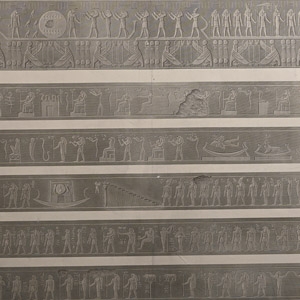
Very Large Egyptian Expedition Lithograph of Reliefs at the Grand Temple of Edfu
Early 19th century A.D.Sold for (Inc. bp): £156
Proof etching on laid paper of plate 58 from Vol .I of Description de l'Égypte : ou, Recueil des observations et des recherches qui ont été faites en Égypte pendant l'expédition de l'armée française. entitled Edfou (Apollinopolis magna) Frises sculptées dans l'intérieur du portique du grand Temple, Autres sculptures du portique. 258 grams, 105.5 x 68.5 cm
From the collection of a North American priest. Acquired between 1981-1996. Property of a North American collector.
Produced between February 1802 and 1830 on the orders of Napoleon Bonaparte; published between 1809 and 1828. Just 1,000 copies were distributed to various institutions, printed on laid paper with an 'Égypte ancienne et moderne' watermark. The book is subtitled Recueil des observations et des recherches qui ont été faites en Égypte pendant l’expédition de l’Armée française, publié par les ordres de Sa Majesté l’Empereur Napoléon le Grand (Gathering of observations and discoveries which were made in Egypt during the expedition of the French army, published on the orders of His Majesty the Emperor Napoleon the Great). It was the world's first encyclopedia devoted exclusively to the remains of ancient Egypt. The plates of this book are the first to present the archaeological sites of Thebes (Luxor). The Temple of Horus at Edfu in Upper Egypt is one of the best preserved in the country, and its walls feature significant religious and mythological scenes. -
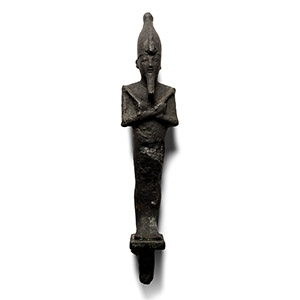
Egyptian Bronze Osiris Statuette
Late-Ptolemaic Period, circa 664-30 B.C.Sold for (Inc. bp): £1,300
Modelled in the round as a characteristically mummiform standing figure with arms crossed and holding the crook and flail regalia, wearing the hedjet crown and uraeus. 136 grams, 13.5 cm
From the collection of a gentleman, acquired on the London art market in the 1990s.
Osiris is a deity associated with death and fertility, widely acknowledged as the supreme god of rebirth. Although he was once a mortal ruler, as a deity, his domain was the Underworld. Abydos served as the primary cult site of Osiris’s worship, where a renowned annual celebration in his honour took place. -
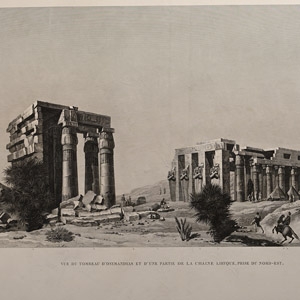
Very Large Egyptian Expedition Lithograph of the Memnonium at Thebes and Tomb of Ozymandias
Early 19th century A.D.Sold for (Inc. bp): £117
Proof etching on laid paper of plate 26 from Vol .II of Description de l'Égypte : ou, Recueil des observations et des recherches qui ont été faites en Égypte pendant l'expédition de l'armée française. entitled Thèbes. Memnonium. Vue du tombeau d'Osymandyas et d'une partie de la chaîne Libyque, prise du nord-est. 227 grams, 104 x 69.5 cm
From the collection of a North American priest. Acquired between 1981-1996. Property of a North American collector.
Produced between February 1802 and 1830 on the orders of Napoleon Bonaparte; published between 1809 and 1828. Just 1,000 copies were distributed to various institutions, printed on laid paper with an 'Égypte ancienne et moderne' watermark. The book is subtitled Recueil des observations et des recherches qui ont été faites en Égypte pendant l’expédition de l’Armée française, publié par les ordres de Sa Majesté l’Empereur Napoléon le Grand (Gathering of observations and discoveries which were made in Egypt during the expedition of the French army, published on the orders of His Majesty the Emperor Napoleon the Great). It was the world's first encyclopedia devoted exclusively to the remains of ancient Egypt. The plates of this book are the first to present the archaeological sites of Thebes (Luxor). The "Memnonium" was the Greek name for the mortuary temple of Ramesses II, known today as the Ramesseum.
