
Loading, please wait...
LOT 0504
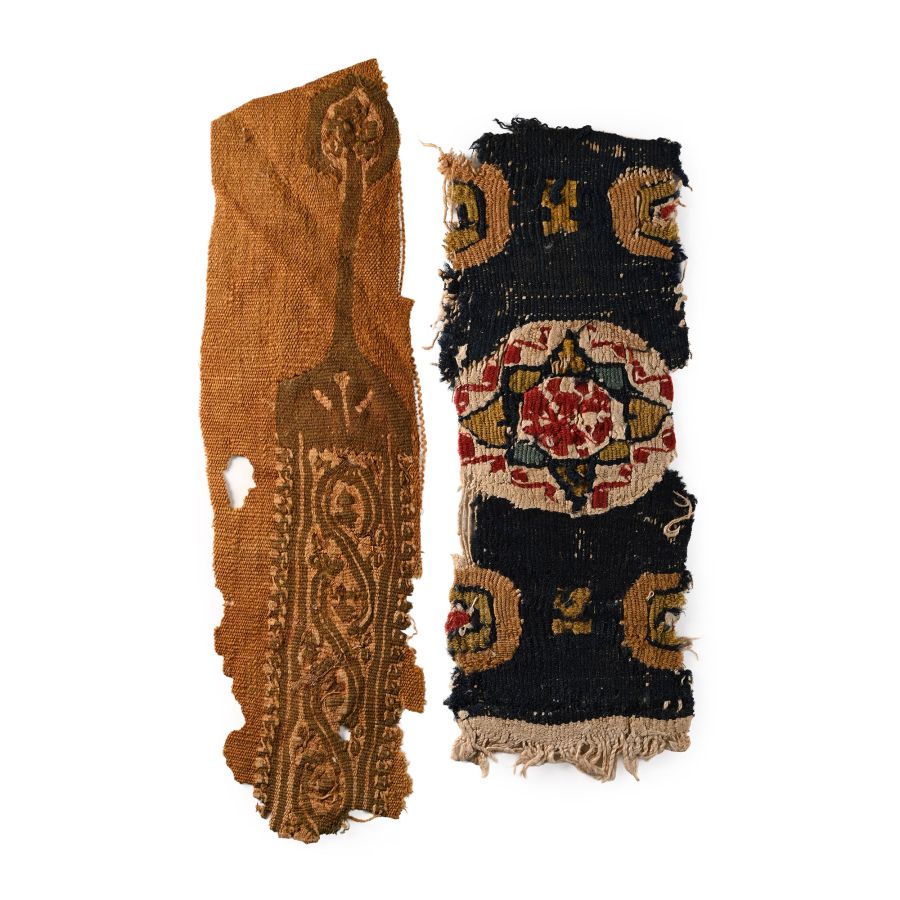
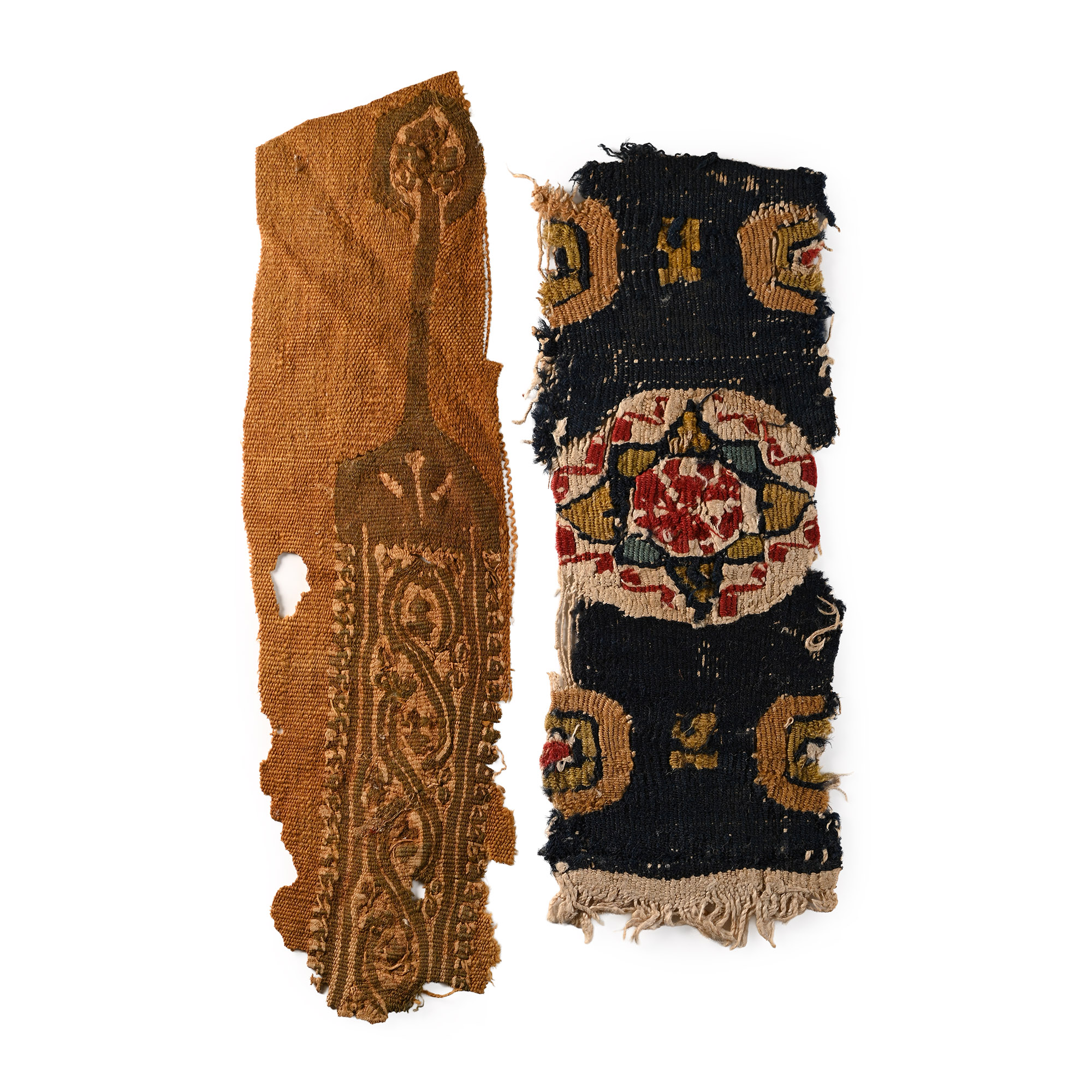
Egyptian Coptic Textile Fragment Group
CIRCA 4TH-5TH CENTURY A.D.
6 3/4 - 7 7/8 in. (40 grams total including package, 17-20 cm).
Comprising: terminal part of a clavus from a tunic with an orbiculus, in purple wool on linen, embroidered with vegetal and floral motifs, framed by straight borders with external crenellation; a fragment of segmentum in yellow, green and red wool, S torsion, embroidered with floral and geometric patterns. [2, No Reserve]
ProvenanceAcquired 1970s-1996.
Property of a North American collector.
London collection, 2016.
Cf. Del Francia Barocas, L., Antinoe, Cent’anni dopo, catalogo della mostra, Firenze, Palazzo Medici Riccardi, 10 Luglio – 1 novembre 1998, p.83, for similar textiles.
FootnotesThe fragments are decorative parts of tunics. These are fabrics of great decorative finesse, with some elements displaying an unusual and extremely well-preserved color palette. The plant designs recall Iranian motifs.
CONDITIONTimeLine Auctions follows a vetting process to ensure the authenticity and legality of all items, reinforcing our commitment to integrity and responsible trading. Each antiquity, antique, and coin lot undergoes thorough examination by a vetting committee of at least ten external specialists, professional trade association members, scientists, and archaeologists: Our Vetting Process
AUCTIONS:
TimeLine is a leading auction house specialising in antiquities, ancient art, collectables, natural history, coins, medals, and books. Our auctions offer museums, collectors, historians, and enthusiasts the opportunity to acquire unique and historically significant pieces.
-
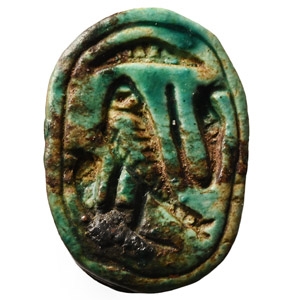
Egyptian Steatite Scarab with Horus and Uraeus
Late Period, 664-332 B.C.Sold for (Inc. bp): £104
Detailed carapace and head, underside with a rearing cobra and Horus in falcon form. 3.42 grams, 19 mm
Mrs Allinson to Mrs Foster, 1867 and thence by descent to the current owner, Stanley Crescent, London, UK. -
.jpg)
Egyptian Hardstone Scarab
26th-30th Dynasty, 664-343 B.C.Sold for (Inc. bp): £3,120
Carved in the half-round with detailed mouth, legs and carapace. 70.2 grams, 49 mm
with Galerie Gunter Phuze, Kunst der Antike, Freiburg, 2000, no.352. Ex George Broomis. Private collection, London, UK. This lot has been checked against the Interpol Database of stolen works of art and is accompanied by search certificate number no.12936-245209.
Scarabs were among the most popular amulets of ancient Egypt. Modelled on the dung beetle, they symbolised rebirth, transformation, and the daily journey of the sun god across the sky. From the Middle Kingdom onwards, they were widely used as personal seals, jewellery, and offerings in tombs. The flat underside was often carved with names, prayers, or symbols, while the beetle form on top carried protective power. Scarabs were believed to safeguard the wearer in life and assist the dead in the afterlife, making them both practical objects and deeply spiritual charms. -
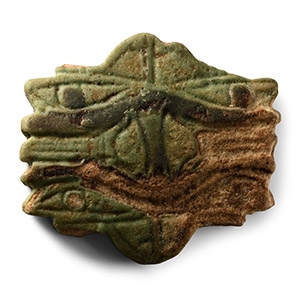
Large Egyptian Quadruple Eye of Horus Amulet
Late Period, 664-332 B.C.Estimate: £250 - 350 (+bp*)
Opening Bid: £125
Plaque with transverse piercing; four addorsed wedjat motifs with black detailing. 31.6 grams, 64 mm
Ex J Bird private collection. Ex Cambridgeshire, UK, collection.
