
Loading, please wait...
LOT 0518
Egyptian Coptic Textile Fragment Group
CIRCA 5TH-6TH CENTURY A.D.
4 3/8 - 4 3/4 in. (36 grams total including package, 11.2-12.2 cm).
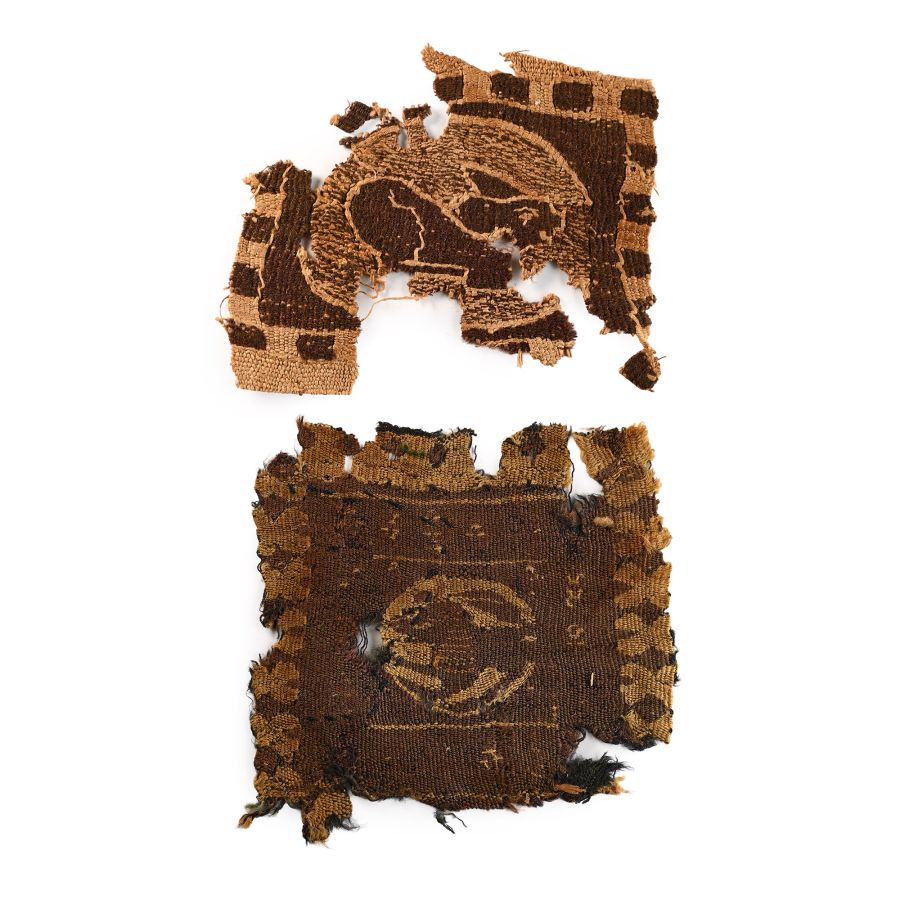
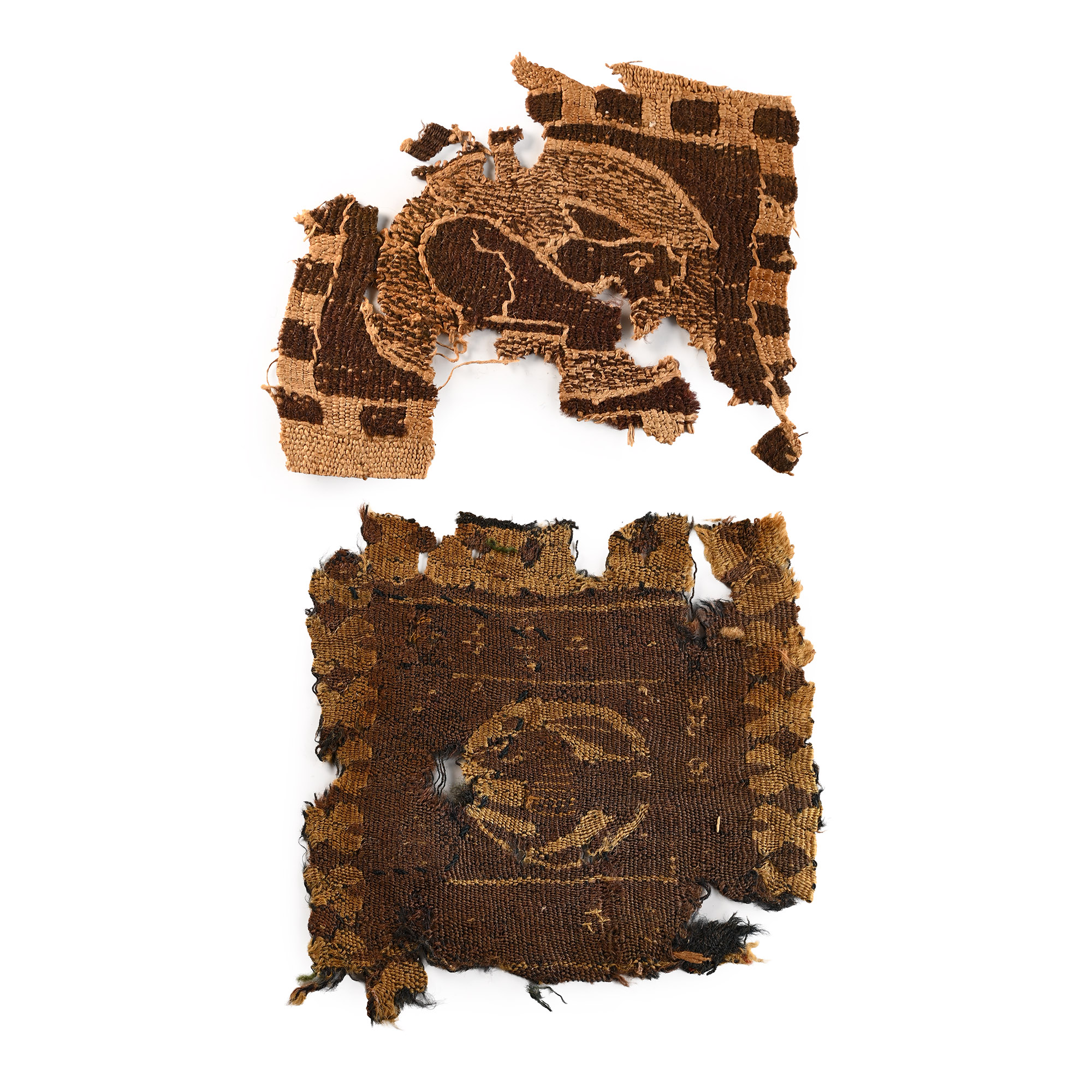
Comprising two large tablia in linen and wool, with one showing an image of a hare and the other one a lion; borders with geometric decorations. [2, No Reserve]
ProvenanceAcquired 1970s-1996.
Property of a North American collector.
London collection, 2016.
Cf. Del Francia Barocas, L., Museo dell'Alto Medioevo, Roma, I materiali Copti, p.98, for similar textile.
FootnotesThe theme of rabbits or hares, in association with other characters and animals of the Dionysian thiasos (here a lion), in a hunting setting, has notable parallels. Such representations are linked to narratives of the Dionysian cycle.
CONDITIONTimeLine Auctions follows a vetting process to ensure the authenticity and legality of all items, reinforcing our commitment to integrity and responsible trading. Each antiquity, antique, and coin lot undergoes thorough examination by a vetting committee of at least ten external specialists, professional trade association members, scientists, and archaeologists: Our Vetting Process
AUCTIONS:
TimeLine is a leading auction house specialising in antiquities, ancient art, collectables, natural history, coins, medals, and books. Our auctions offer museums, collectors, historians, and enthusiasts the opportunity to acquire unique and historically significant pieces.
-
Egyptian Coptic Textile Fragment Group
Circa 4th-5th century A.D.Sold for (Inc. bp): £234
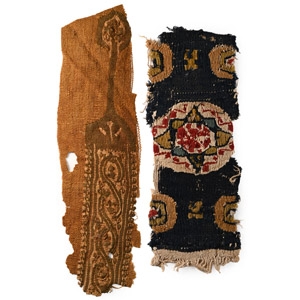
Comprising: terminal part of a clavus from a tunic with an orbiculus, in purple wool on linen, embroidered with vegetal and floral motifs, framed by straight borders with external crenellation; a fragment of segmentum in yellow, green and red wool, S torsion, embroidered with floral and geometric patterns. 40 grams total including package, 17-20 cm
Acquired 1970s-1996. Property of a North American collector. London collection, 2016.
The fragments are decorative parts of tunics. These are fabrics of great decorative finesse, with some elements displaying an unusual and extremely well-preserved color palette. The plant designs recall Iranian motifs. -
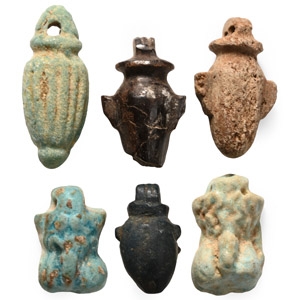
Egyptian Faience Amulet Group
Late Period, 664-332 B.C.Estimate: £180 - 240 (+bp*)
Opening Bid: £90
Comprising three heart amulets, two phallic amulets, and a ribbed fruit amulet. 11.6 grams total, 16-25 mm
From the collection of a gentleman, acquired on the London art market in the 1990s. -
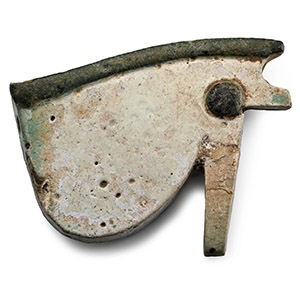
Large Egyptian Faience Eye of Horus Amulet
Late Period, 664-332 B.C.Estimate: £300 - 400 (+bp*)
Opening Bid: £150
Wedjat amuletic bead with applied black detailing to the pupil and brow. 16.5 grams, 50.4 mm
with Archaeologia, Switzerland, before 1983. Ex private North American collection. London private collection, 2016.
