
Loading, please wait...
LOT 0438
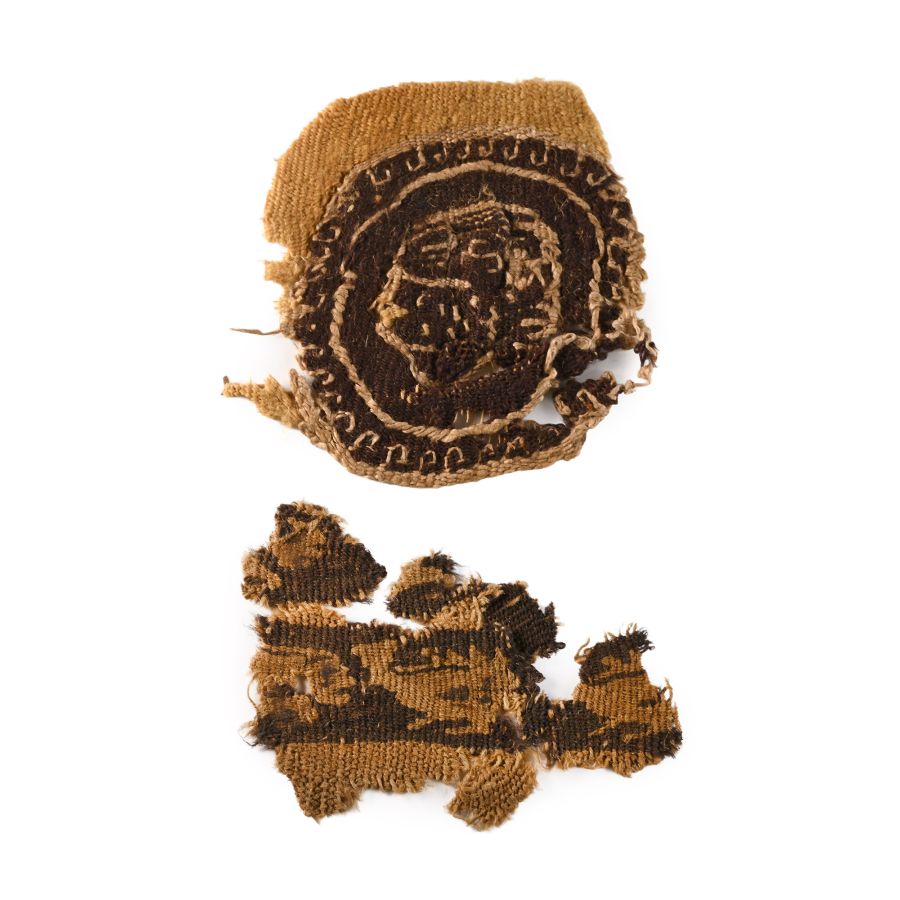
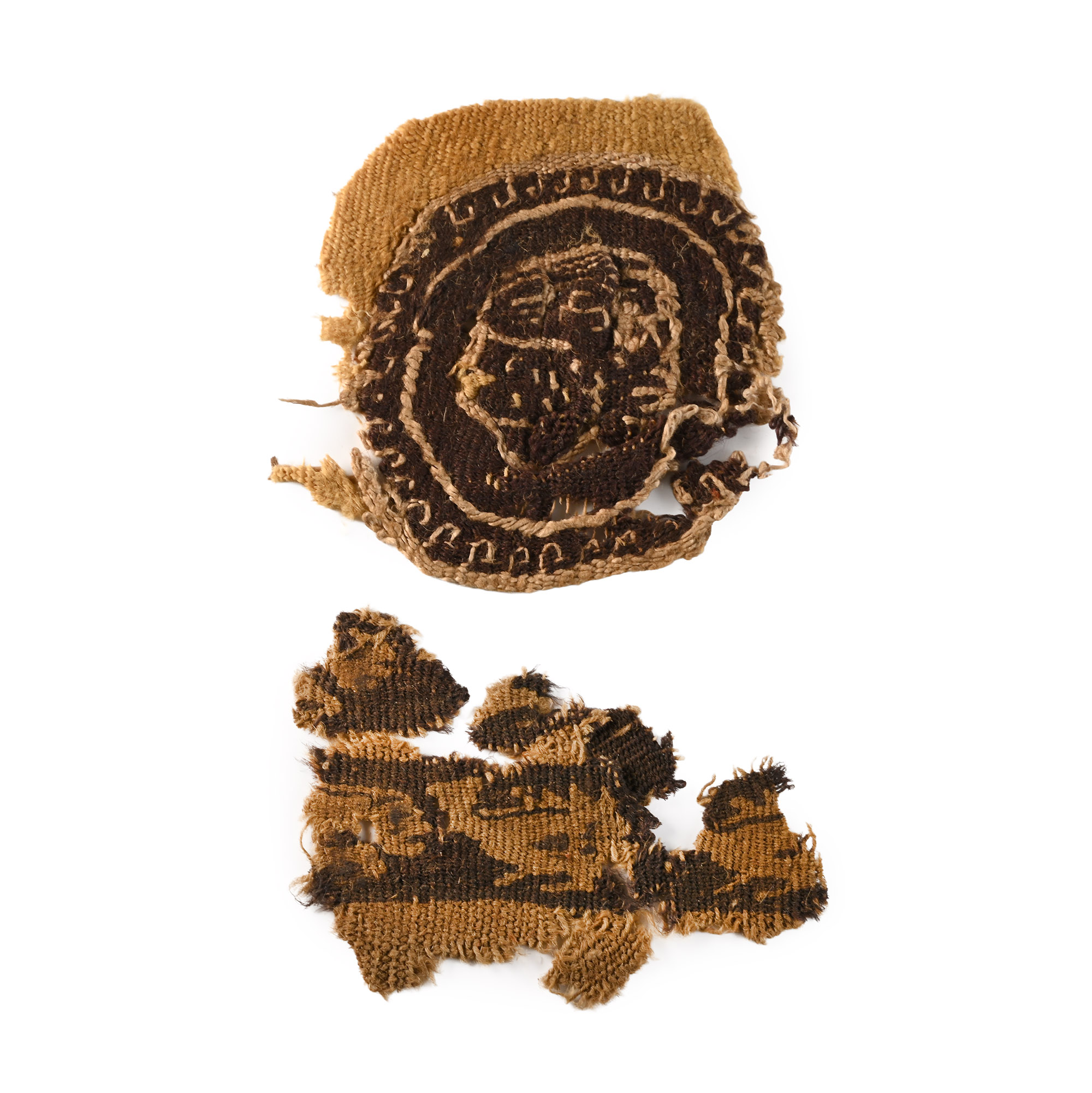
Egyptian Coptic Textile Fragment Group
CIRCA 4TH-5TH CENTURY A.D.
2 3/8 - 2 1/2 in. (9 grams total including package, 60-64 mm).
Comprising: an orbiculus in coarse linen and brown wool, S torsion, embroidered with the image of a stylised bird, surrounded by tondos ornamented with geometric embroidery, borders meander decorated; a similar fragment of double segmenta, embroidered with hares alternated to fishes. [2, No Reserve]
ProvenanceAcquired 1970s-1996.
Property of a North American collector.
London collection, 2016.
Cf. Institut du monde arabe, L'art copte en Égypte: 2000 ans de Christianisme : exposition présentée à l'Institut du monde arabe, Paris, du 15 mai au 3 septembre 2000, Paris, 2000, p.191, no.211, for a similar textile image on papyrus.
FootnotesThe iconography of this fragment is called "Nilotic," as it depicts plant and human elements linked to life on the Nile River. These images are very recurrent on Coptic textiles. Weavers created patterns that allowed them to reproduce these motifs on any type of fabric (curtains, tassels, clothing).
CONDITIONTimeLine Auctions follows a vetting process to ensure the authenticity and legality of all items, reinforcing our commitment to integrity and responsible trading. Each antiquity, antique, and coin lot undergoes thorough examination by a vetting committee of at least ten external specialists, professional trade association members, scientists, and archaeologists: Our Vetting Process
AUCTIONS:
TimeLine is a leading auction house specialising in antiquities, ancient art, collectables, natural history, coins, medals, and books. Our auctions offer museums, collectors, historians, and enthusiasts the opportunity to acquire unique and historically significant pieces.
-
Egyptian Brown Glazed Eye of Horus Amulet
Late Period, 664-332 B.C.Sold for (Inc. bp): £39
Wedjat amuletic bead in dark brown faience with applied black detailing to the pupil and brow. 8.63 grams, 44 mm
with Archaeologia, Switzerland, before 1983. Ex private North American collection. London private collection, 2016. -
.jpg)
Egyptian 'Becker' Serpentine Vessel
New Kingdom, 18th Dynasty, circa 1450 B.C.Estimate: £3,000 - 4,000 (‡+bp*)
Opening Bid: £1,600
Piriform jar with wide, flat rim and short neck, narrow neck and flat base. 1.2 kg, 15.5 cm
Ex Becker collection, 1920s. Private collection, Los Angeles, USA, 1990s. Private European collection. Accompanied by an academic report by Dr Raffaele D’Amato. This lot has been checked against the Interpol Database of stolen works of art and is accompanied by a search certificate number no.12576-232111. -
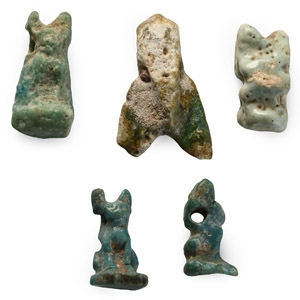
Egyptian Amulet Collection
Late Period, 664-332 B.C.Sold for (Inc. bp): £111
Comprising two crouching Bastet cat figures, a hare, a fly, and a simplified Anubis. 1.56 grams total, 10-15 mm
with Archaeologia, Switzerland, before 1983. Ex private North American collection. London private collection, 2016.
