
Loading, please wait...
LOT 0463
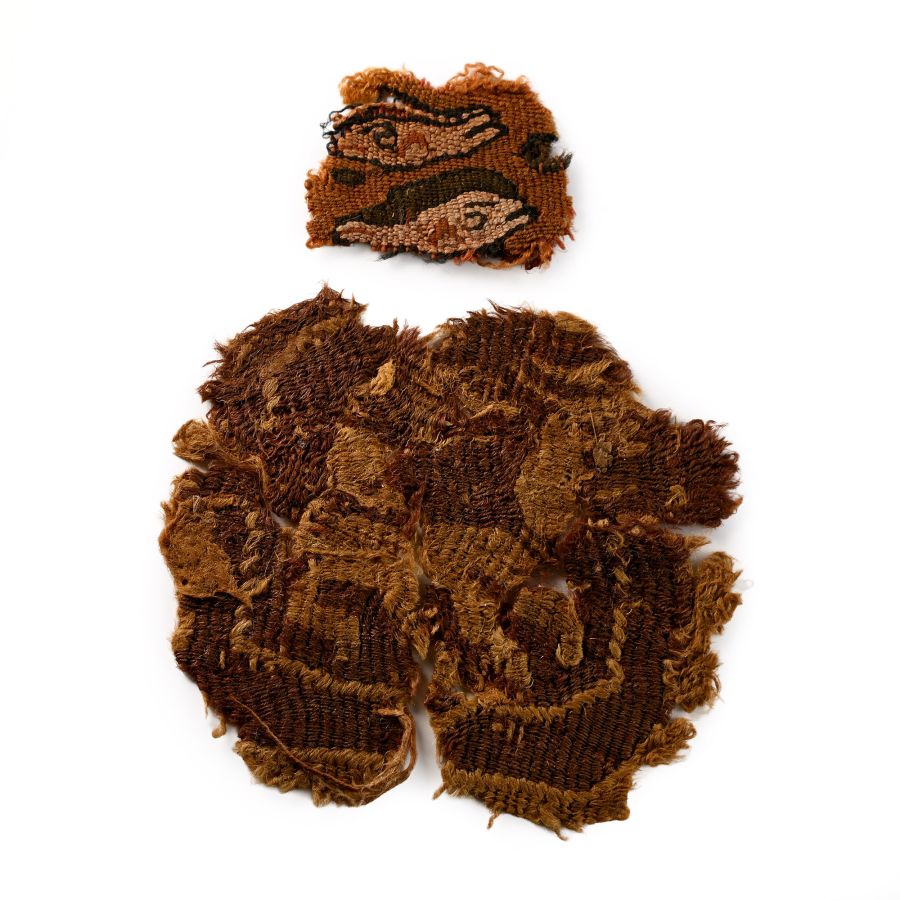
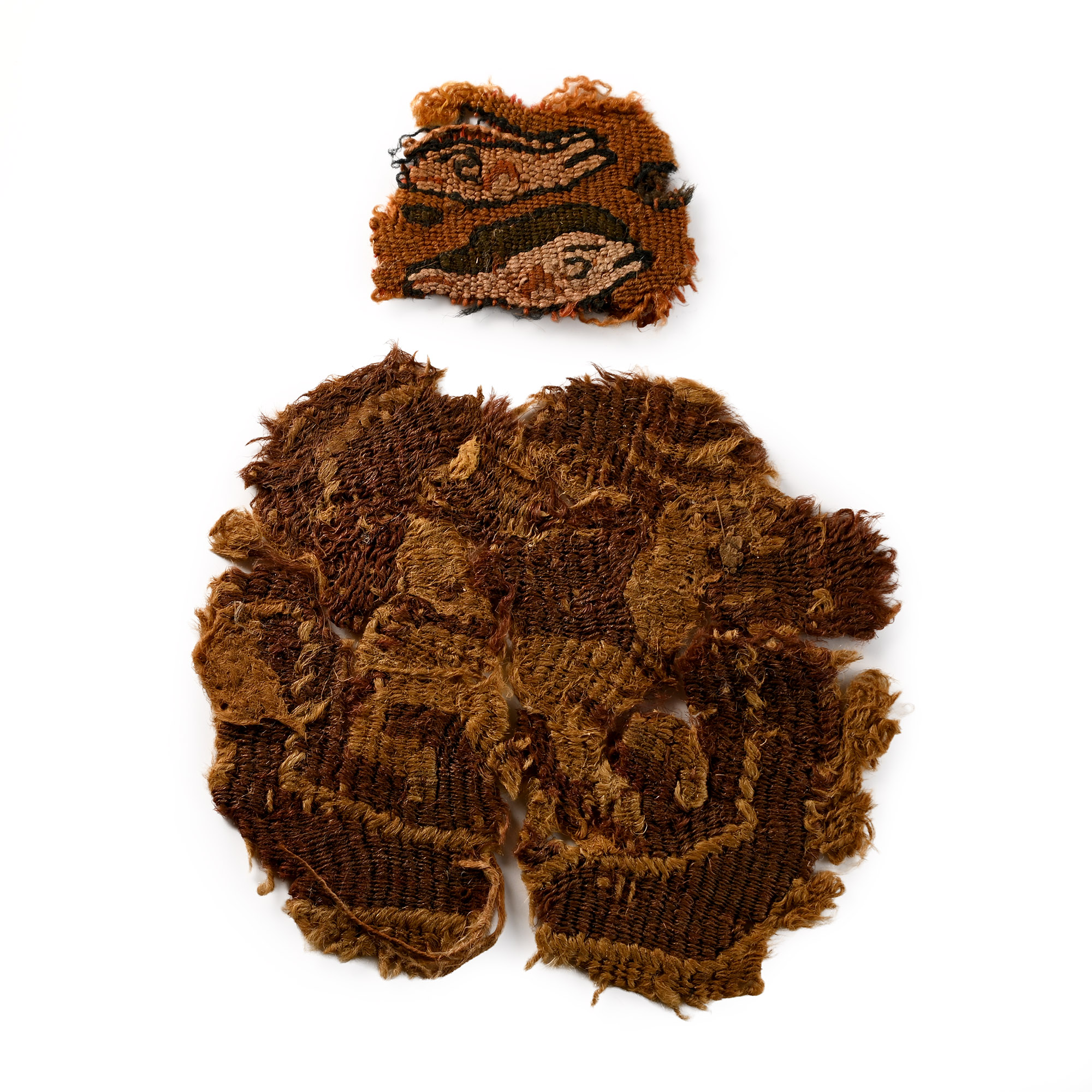
Egyptian Coptic Textile Fragment Group
CIRCA 5TH CENTURY A.D.
1 3/8 - 2 3/4 in. (10 grams total including package, 34-71 mm).
Comprising: fragment of an orbiculus in brown and yellow coarse linen and wool, S torsion, embroidered with a running animal (lion?); fragment of a tablion with representations of fishes, white and green wool on linen. [2, No Reserve]
ProvenanceAcquired 1970s-1996.
Property of a North American collector.
London collection, 2016.
Cf. Del Francia Barocas, L., Antinoe, Cent’anni dopo, catalogo della mostra, Firenze, Palazzo Medici Riccardi, 10 Luglio – 1 novembre 1998, p.87, for similar textiles.
FootnotesParticularly interesting is the presence of fish, which are part of depictions of marine life, in keeping with the classical Graeco-Roman tradition. Stylistically, Hellenistic naturalism is evident in these compositions in the rounded shapes of fish and marine animals, which create an effect of movement.
CONDITIONTimeLine Auctions follows a vetting process to ensure the authenticity and legality of all items, reinforcing our commitment to integrity and responsible trading. Each antiquity, antique, and coin lot undergoes thorough examination by a vetting committee of at least ten external specialists, professional trade association members, scientists, and archaeologists: Our Vetting Process
AUCTIONS:
TimeLine is a leading auction house specialising in antiquities, ancient art, collectables, natural history, coins, medals, and books. Our auctions offer museums, collectors, historians, and enthusiasts the opportunity to acquire unique and historically significant pieces.
-
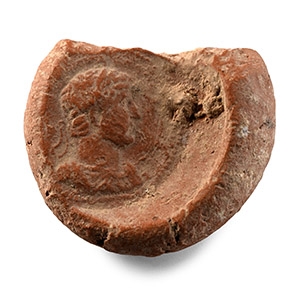
Egyptian Clay Papyrus Document Sealing with Bust of Hadrian
Roman Period, 117-135 A.D.Sold for (Inc. bp): £247
Discoid in plan with impressed seal, profile bust of Hadrian placed to one side. 4.89 grams, 24 mm
Acquired on the UK art market before 2000. Property of an Essex, UK, gentleman. -
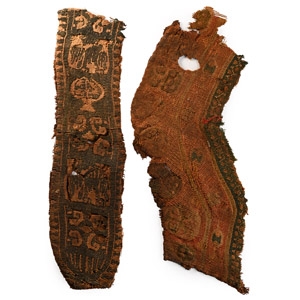
Egyptian Coptic Textile Fragment Group
Circa 6th-7th century A.D.Sold for (Inc. bp): £117
Comprising the terminal part of a clavus in white and purple linen and wool, S torsion, borders embroidered with pilasters, the central scene representing eagles alternating with geometric elements; a large fragment of another clavus, ornamented with geometric patterns in red, green and yellow wool. 49 grams total including package, 22 cm each
Acquired 1970s-1996. Property of a North American collector. London collection, 2016.
The clavi are realised in tapestry technique, and the one with prominent figures has a rounded end. They were part of the decoration of a tunic, and the presence of the Imperial eagle, not a common pattern, could refer to a military tunic. -
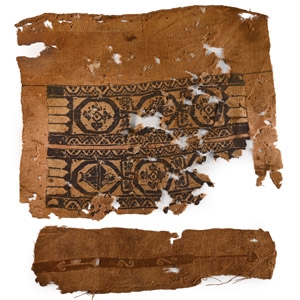
Egyptian Coptic Textile Fragment Group
Circa 7th century A.D.Sold for (Inc. bp): £286
Comprising: a large fragment of a tunic with double segmenta in dark purple wool over linen, S torsion, formed by two parallel stripes, embroidered with kantharos and floral patterns, inscribed in tondos within bands with crenellated borders; a thin clavus connected to an orbiculus ending in an arrow shape, red purple and brown wool over linen, S torsion, embroidered with S shaped and lanceolate patterns. 207 grams total including package, 31-33.5 cm
Acquired 1970s-1996. Property of a North American collector. London collection, 2016.
This type of embroideries were typical of tunics and garments characterised by full-length clavi, and segmenta, decorated with either intricate geometric patterns or floral and vegetal motifs. In Christian symbology, the kantharos was an ancient Greek wine cup that symbolised resurrection and eternal life through Christ.
