
Loading, please wait...
LOT 0493
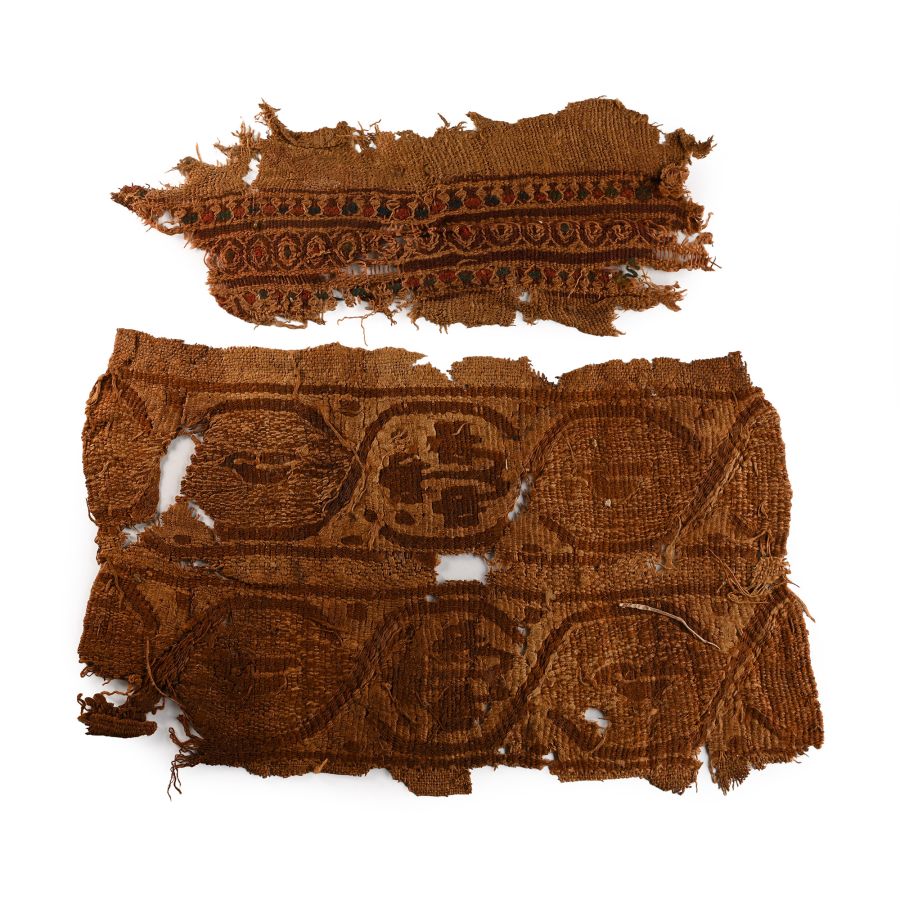
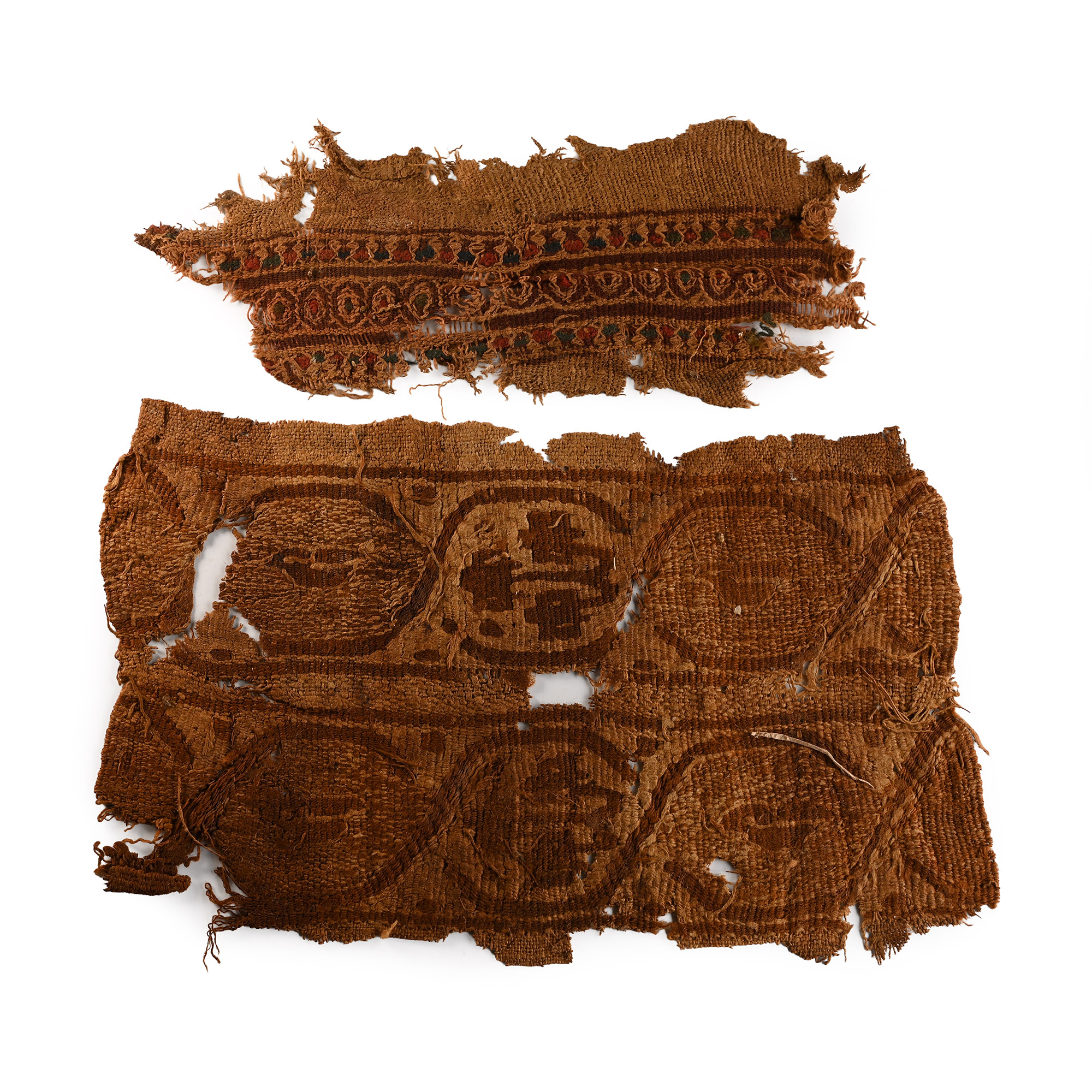
Egyptian Coptic Textile Fragment Group
CIRCA 4TH CENTURY A.D.
7 5/8 - 9 3/4 in. (63 grams total including package, 19.5-25 cm).
Comprising: fragment from a wide tunic segmentum in red granate and coarse linen, S torsion, embroidered with stylised birds and plants inscribed in tondos; fragment of another segmentum in red, blue and green wool, with representations of buds. [2, No Reserve]
ProvenanceAcquired 1970s-1996.
Property of a North American collector.
London collection, 2016.
Cf. Forrer, R., Die Graeber und Textilfunde von Achmim Panopolis, Strassburg, 1891, pl.VII nos.8 and 13, for similar figures of birds and plants.
FootnotesSimilar figures are widely present in Coptic textiles, repeating a pattern in which flowers are usually paired with bird figures. This decoration is typical of tunics, but it was also used in large-scale textiles intended for domestic or funerary furnishings.
CONDITIONTimeLine Auctions follows a vetting process to ensure the authenticity and legality of all items, reinforcing our commitment to integrity and responsible trading. Each antiquity, antique, and coin lot undergoes thorough examination by a vetting committee of at least ten external specialists, professional trade association members, scientists, and archaeologists: Our Vetting Process
AUCTIONS:
TimeLine is a leading auction house specialising in antiquities, ancient art, collectables, natural history, coins, medals, and books. Our auctions offer museums, collectors, historians, and enthusiasts the opportunity to acquire unique and historically significant pieces.
-
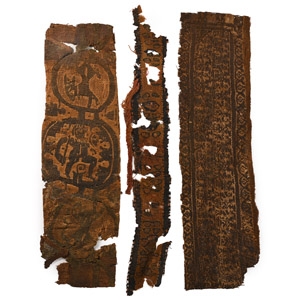
Egyptian Coptic Textile Fragment Group
Circa 5th-7th century A.D.Sold for (Inc. bp): £260
Comprising a large fragment of a segmentum in linen and wool, decorated with orbiculi, a warrior to the centre flanked by hares; a large fragment of a segmentum in purple embroidery, comprising a central row with Nubian figures and borders with geometric decoration; a third segmentum in red, green and yellow wool with central vegetal ornaments. 126 grams total including package, 28-31.2 cm
Acquired 1970s-1996. Property of a North American collector. London collection, 2016.
The theme of rabbits or hares, in association with other characters and animals of the Dionysian thiasos in a hunting setting, has notable parallels. The warrior in the center of the medallion holds a spear and shield and raises his left leg forward. Such representations are linked to narratives of the Dionysian cycle. -
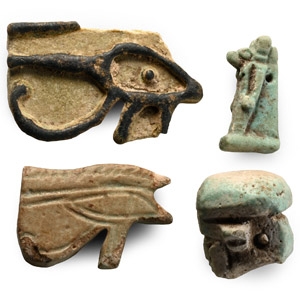
Egyptian Faience Amulet Group
Mainly Late Period, 664-332 B.C.Sold for (Inc. bp): £156
Comprising two wedjat amulets, one Pataikos head amulet, and a striding Anubis amulet. 7.69 grams total, 18-30 mm
From an important central London collection formed since the mid 1960s; thence by descent. -
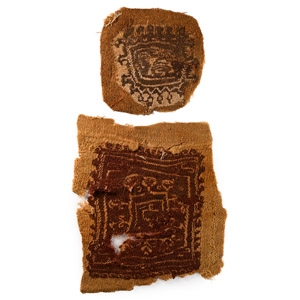
Egyptian Coptic Textile Fragment Group
Circa 4th century A.D.Sold for (Inc. bp): £143
Comprising: an orbiculus in purple wool and coarse linen, on brown linen background, S torsion, embroidered with two stylised lions, the borders crenellated; a tabula in purple wool and coarse linen, on brown linen background, S torsion, embroidered with a central cross, the borders decorated with meanders. 36 grams total including package, 8.7-13 cm
Acquired 1970s-1996. Property of a North American collector. London collection, 2016.
The tabula, or tablion, was a squared embroidery decorating tunics or mantles. The Christian elements, like the cross at the centre of our tabula, began to decorate the garments from the 4th century onwards.
