
Loading, please wait...
LOT 0584
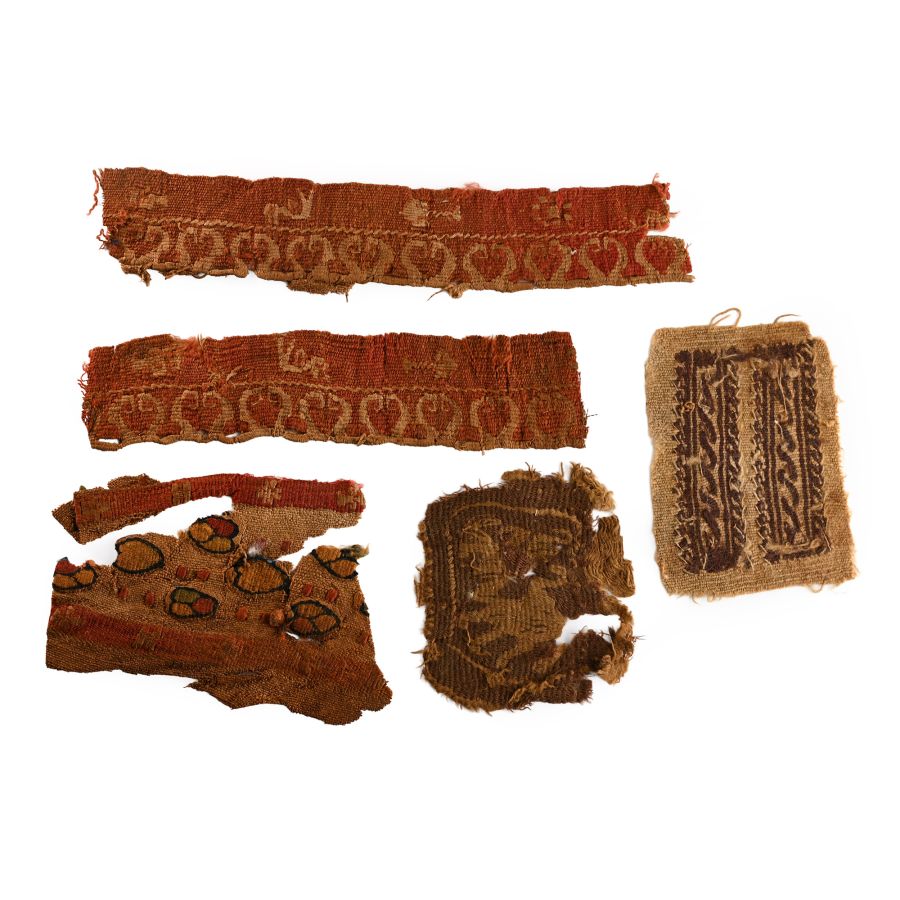
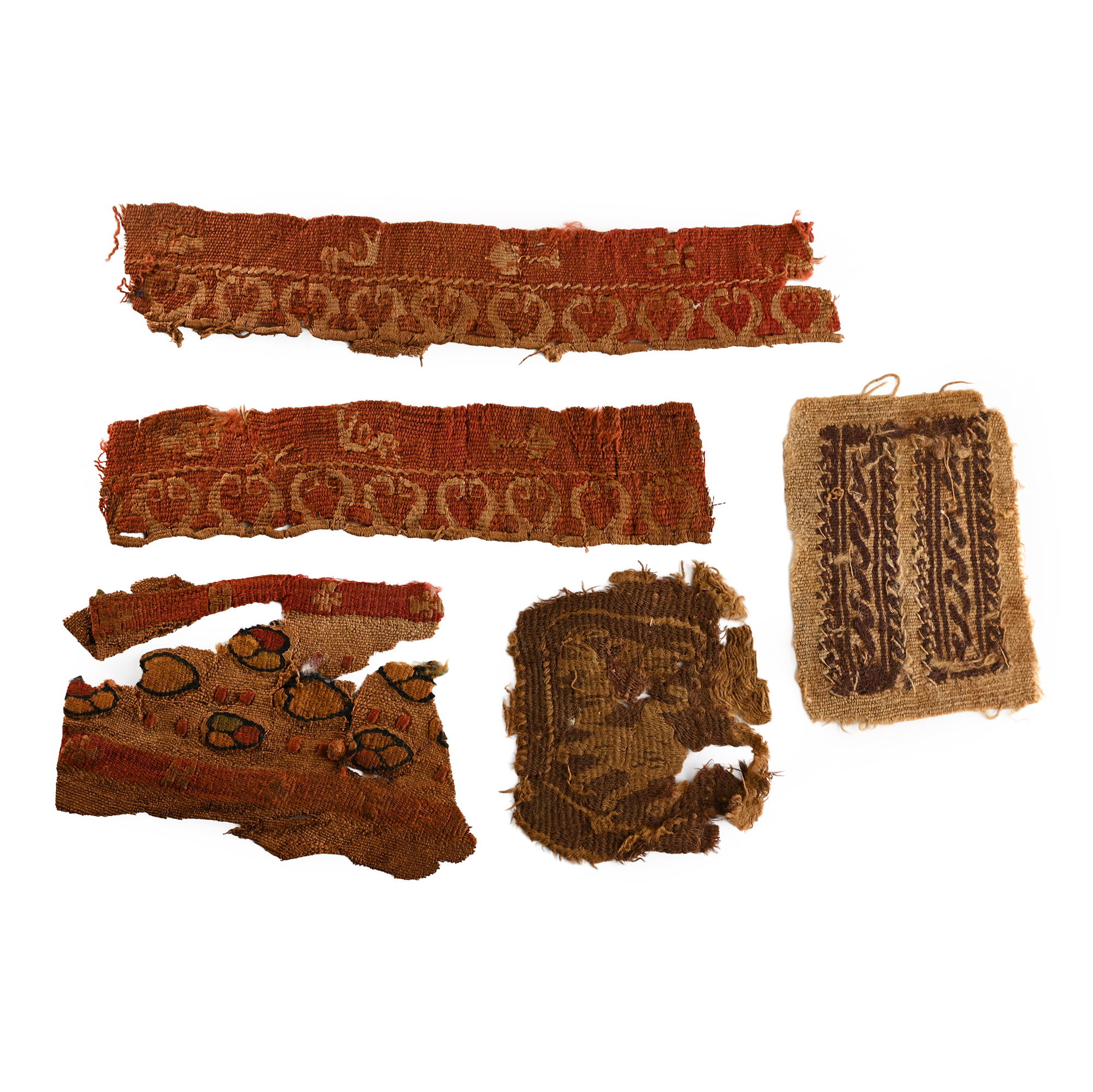
Egyptian Coptic Textile Fragment Group
CIRCA 4TH-6TH CENTURY A.D.
3 - 8 in. (66 grams total including package, 7.8-20.5 cm).
Comprising: fragment of a segmentum in red and coarse linen, S torsion, embroidered with geometric motifs; fragment of another segmentum in red, yellow, blue and green wool, with representations of buds within a red frame; a small tabula in purple wool over linen background, embroidered with a stylised image of Pegasus; a double segmenta, in purple over linen, embroidered with wave motif. [5, No Reserve]
ProvenanceAcquired 1970s-1996.
Property of a North American collector.
London collection, 2016.
Cf. Del Francia Barocas, L., Antinoe, Cent’anni dopo, catalogo della mostra, Firenze, Palazzo Medici Riccardi, 10 Luglio – 1 novembre 1998, p.190, for similar textiles.
FootnotesThese are pieces of extraordinary finesse in both material and design. They all probably were once applied as a decoration of various garments, such as tunics, cloaks, and shawls.
CONDITIONTimeLine Auctions follows a vetting process to ensure the authenticity and legality of all items, reinforcing our commitment to integrity and responsible trading. Each antiquity, antique, and coin lot undergoes thorough examination by a vetting committee of at least ten external specialists, professional trade association members, scientists, and archaeologists: Our Vetting Process
AUCTIONS:
TimeLine is a leading auction house specialising in antiquities, ancient art, collectables, natural history, coins, medals, and books. Our auctions offer museums, collectors, historians, and enthusiasts the opportunity to acquire unique and historically significant pieces.
-
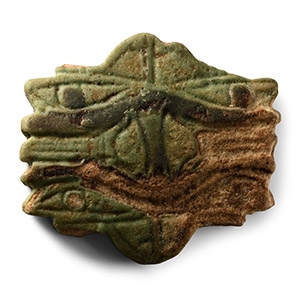
Large Egyptian Quadruple Eye of Horus Amulet
Late Period, 664-332 B.C.Estimate: £250 - 350 (+bp*)
Opening Bid: £125
Plaque with transverse piercing; four addorsed wedjat motifs with black detailing. 31.6 grams, 64 mm
Ex J Bird private collection. Ex Cambridgeshire, UK, collection. -
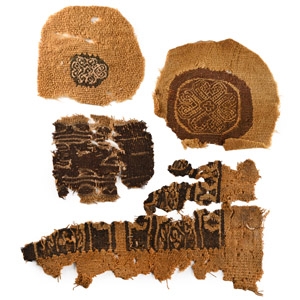
Egyptian Coptic Textile Fragment Group
Circa 5th-6th century A.D.Sold for (Inc. bp): £130
Comprising a fragment of a clavus in white and purple linen and wool, S torsion, the central scene representing a dancer; a small fragment of a double segmenta, ornamented with vegetal embroidery; two orbiculi, one embroidered with a flower inside a rondo and with a cross in the centre, the other with a simple vegetal ornament. 40 grams total including package, 7.2-15.7 cm
Acquired 1970s-1996. Property of a North American collector. London collection, 2016.
The segmentum with the dancer was probably part of the vertical clavus of a tunic; it is highly probable that the embroidery refers to the Dionysian cycle, with dancers, animals and probably, in the missing parts, hunters. -
.jpg)
Egyptian Bronze Cobra Mount
Late Period, 6th century B.C.Estimate: £700 - 900 (‡+bp*)
Opening Bid: £350
Cobra-shaped mount with head raised and hood expanded, two mounting studs to the reverse; mounted on a custom-made stand. 182 grams, 22 cm
Private Israeli collection. Ex Archaeological Center, Tel Aviv, Israel, 2015. Private European collection.
The mount quite possibly adorned the Atef crown of a statue of Osiris.
