
Loading, please wait...
LOT 0431
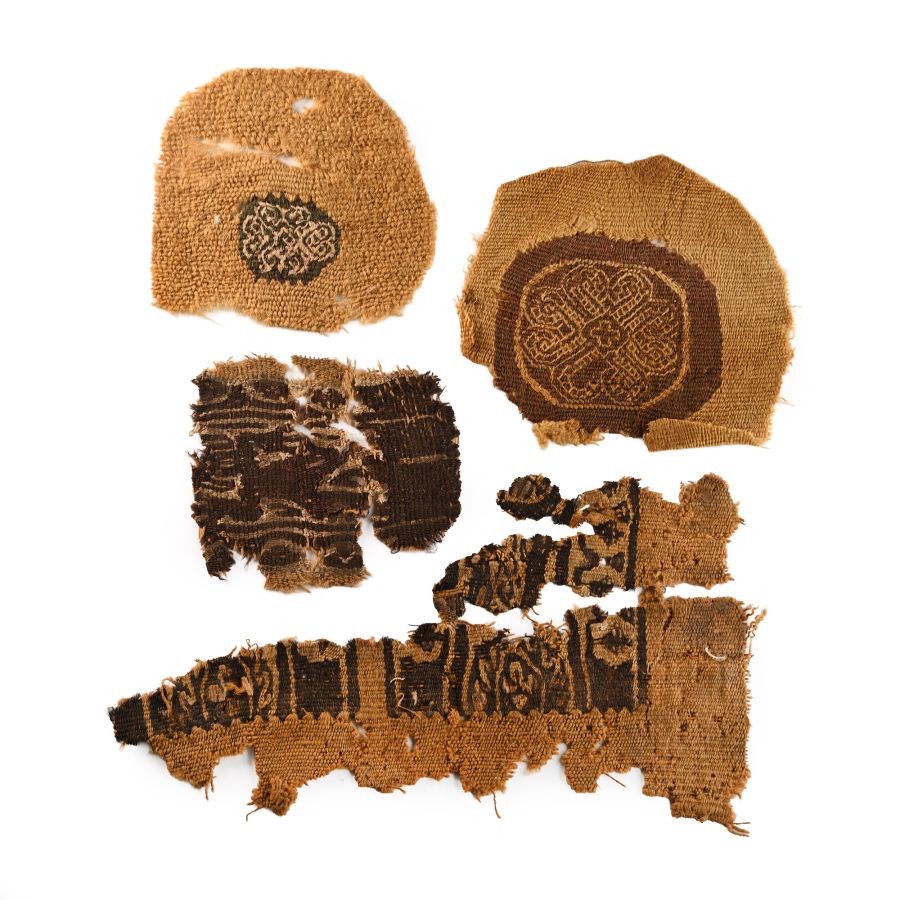
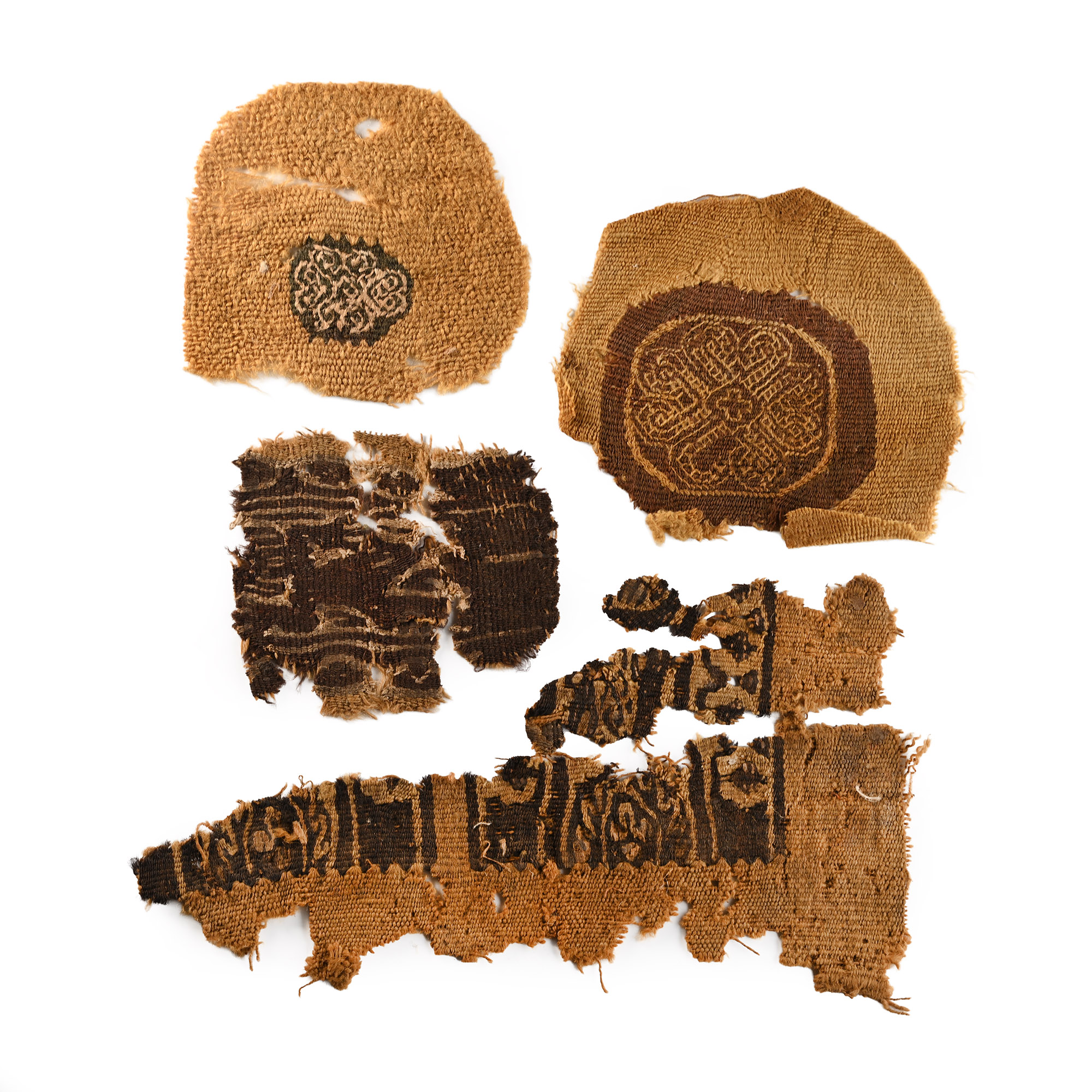
Egyptian Coptic Textile Fragment Group
CIRCA 5TH-6TH CENTURY A.D.
2 7/8 - 6 1/8 in. (40 grams total including package, 7.2-15.7 cm).
Comprising a fragment of a clavus in white and purple linen and wool, S torsion, the central scene representing a dancer; a small fragment of a double segmenta, ornamented with vegetal embroidery; two orbiculi, one embroidered with a flower inside a rondo and with a cross in the centre, the other with a simple vegetal ornament. [4, No Reserve]
ProvenanceAcquired 1970s-1996.
Property of a North American collector.
London collection, 2016.
Cf. Del Francia Barocas, L., Museo dell'Alto Medioevo, Roma, I materiali Copti, p.100-101, for similar textiles.
FootnotesThe segmentum with the dancer was probably part of the vertical clavus of a tunic; it is highly probable that the embroidery refers to the Dionysian cycle, with dancers, animals and probably, in the missing parts, hunters.
CONDITIONTimeLine Auctions follows a vetting process to ensure the authenticity and legality of all items, reinforcing our commitment to integrity and responsible trading. Each antiquity, antique, and coin lot undergoes thorough examination by a vetting committee of at least ten external specialists, professional trade association members, scientists, and archaeologists: Our Vetting Process
AUCTIONS:
TimeLine is a leading auction house specialising in antiquities, ancient art, collectables, natural history, coins, medals, and books. Our auctions offer museums, collectors, historians, and enthusiasts the opportunity to acquire unique and historically significant pieces.
-
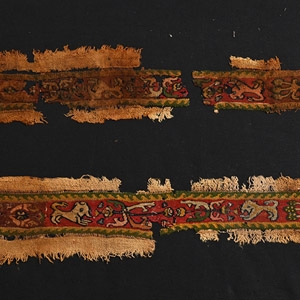
Large Mounted Egyptian Coptic Textile Pair with Animals
Mid 6th century A.D.Sold for (Inc. bp): £1,560
Pair of decorative tunic strips (clavi) ending with circular decorations (orbiculi), red, green and yellow wool, S-twist tapestry, decorated with two rows of lions alternating with vegetal elements running in a contrasting manner. 434 grams total, mount: 1.21 m
Acquired 1970s-1996. Property of a North American collector. London collection, 2016.
Among the many fragments of wool tunics are several long strips that match to form nearly full-length central pectoral clavi. They are patterned with a profusion of small figures or interlaced abstract designs, birds, plants and animals with a contrasting border filled with geometric motifs. -
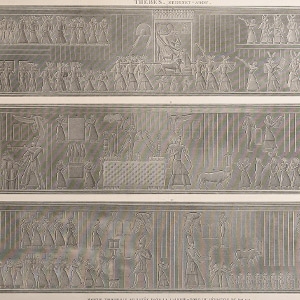
Very Large Egyptian Expedition Lithograph of the Temple of Medynet-Abou at Thebes
Early 19th century A.D.Sold for (Inc. bp): £117
Proof etching on laid paper of plate 11 from Phillipeaux Thèbes - Medynet-Abou with Plan et Coupe Longitudinale du Temple et de ses Propylées 2.3 Plan et Coupe Longitudinale du Palais - Plan du pavillon. 240 grams, 105.5 x 70 cm
From the collection of a North American priest. Acquired between 1981-1996. Property of a North American collector.
Produced between February 1802 and 1830 on the orders of Napoleon Bonaparte; published between 1809 and 1828. Just 1,000 copies were distributed to various institutions, printed on laid paper with an 'Égypte ancienne et moderne' watermark. The book is subtitled Recueil des observations et des recherches qui ont été faites en Égypte pendant l’expédition de l’Armée française, publié par les ordres de Sa Majesté l’Empereur Napoléon le Grand (Gathering of observations and discoveries which were made in Egypt during the expedition of the French army, published on the orders of His Majesty the Emperor Napoleon the Great). It was the world's first encyclopedia devoted exclusively to the remains of ancient Egypt. The plates of this book are the first to present the archaeological sites of Thebes (Luxor). Medinet Habu is the name given to the impressive mortuary temple built for Ramesses III. The walls are covered with scenes of religious and royal ceremonies, as well as battle scenes. An earlier temple and later tomb complexes are found within its impressive enclosure walls. -
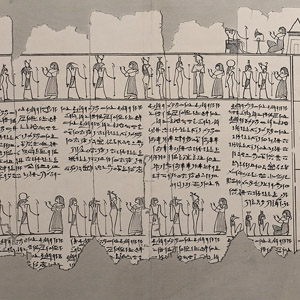
Very Large Egyptian Expedition Lithograph of the Hypogees Papyrus Manuscript from Thebes
Early 19th century A.D.Estimate: £100 - 140 (+bp*)
Opening Bid: £50
Proof etching on laid paper of plate 62 from Vol.II of Description de l'Égypte : ou, Recueil des observations et des recherches qui ont été faites en Égypte pendant l'expédition de l'armée française. entitled Thèbes. Hypogées. Manuscrit sur papyrus. 2eme partie. 231 grams, 103 x 69.5 cm
From the collection of a North American priest. Acquired between 1981-1996. Property of a North American collector.
Produced between February 1802 and 1830 on the orders of Napoleon Bonaparte; published between 1809 and 1828. Just 1,000 copies were distributed to various institutions, printed on laid paper with an 'Égypte ancienne et moderne' watermark. The book is subtitled Recueil des observations et des recherches qui ont été faites en Égypte pendant l’expédition de l’Armée française, publié par les ordres de Sa Majesté l’Empereur Napoléon le Grand (Gathering of observations and discoveries which were made in Egypt during the expedition of the French army, published on the orders of His Majesty the Emperor Napoleon the Great). It was the world's first encyclopedia devoted exclusively to the remains of ancient Egypt. The plates of this book are the first to present the archaeological sites of Thebes (Luxor). The papyrus manuscript was recovered from an underground tomb chamber (hypogeum). The text is written in hieratic, a cursive form of hieroglyphic writing often used for religious papyrus documents.
