
Loading, please wait...
LOT 0048
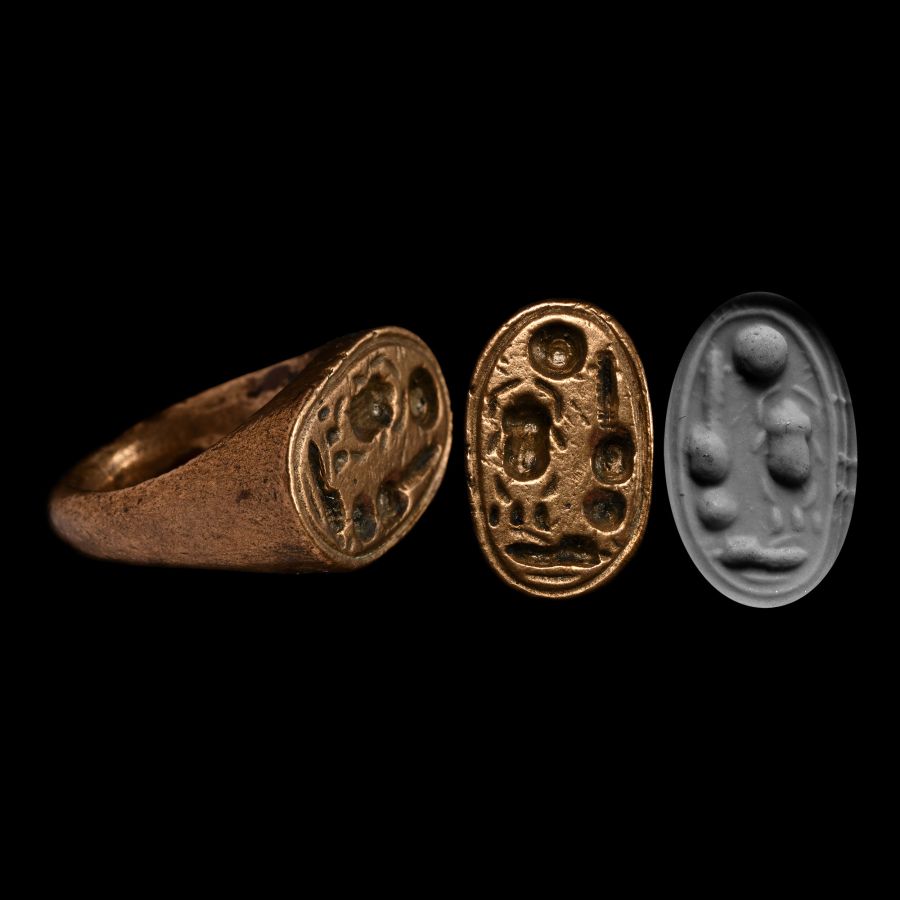
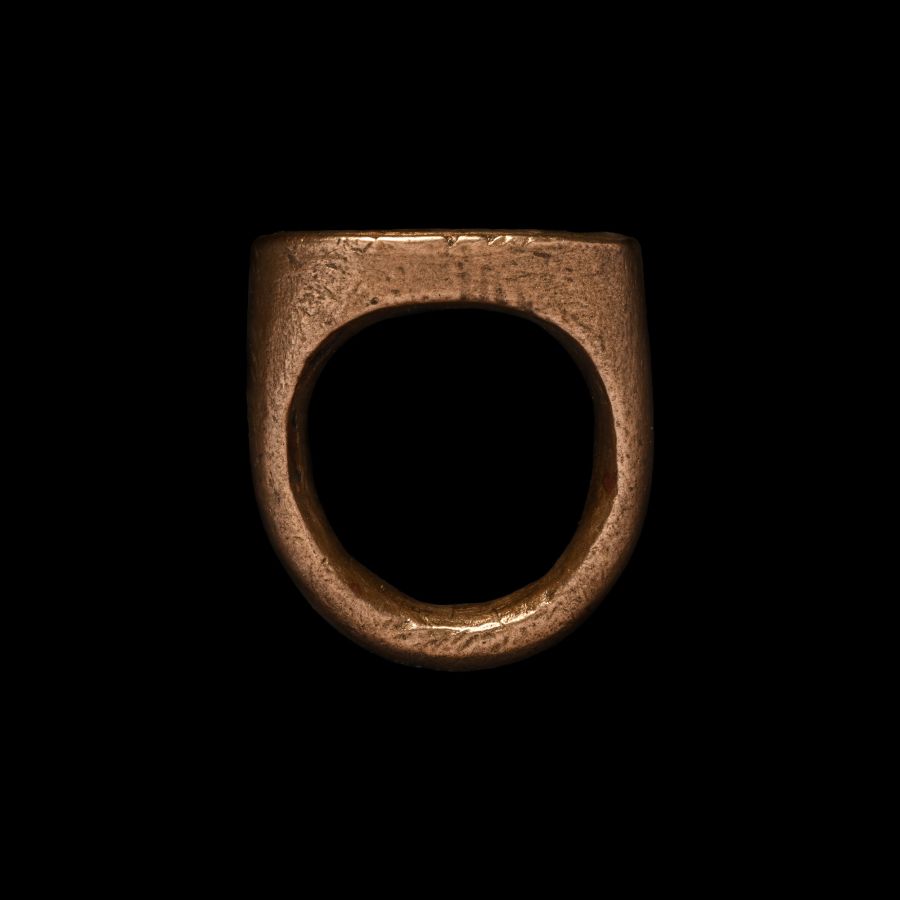
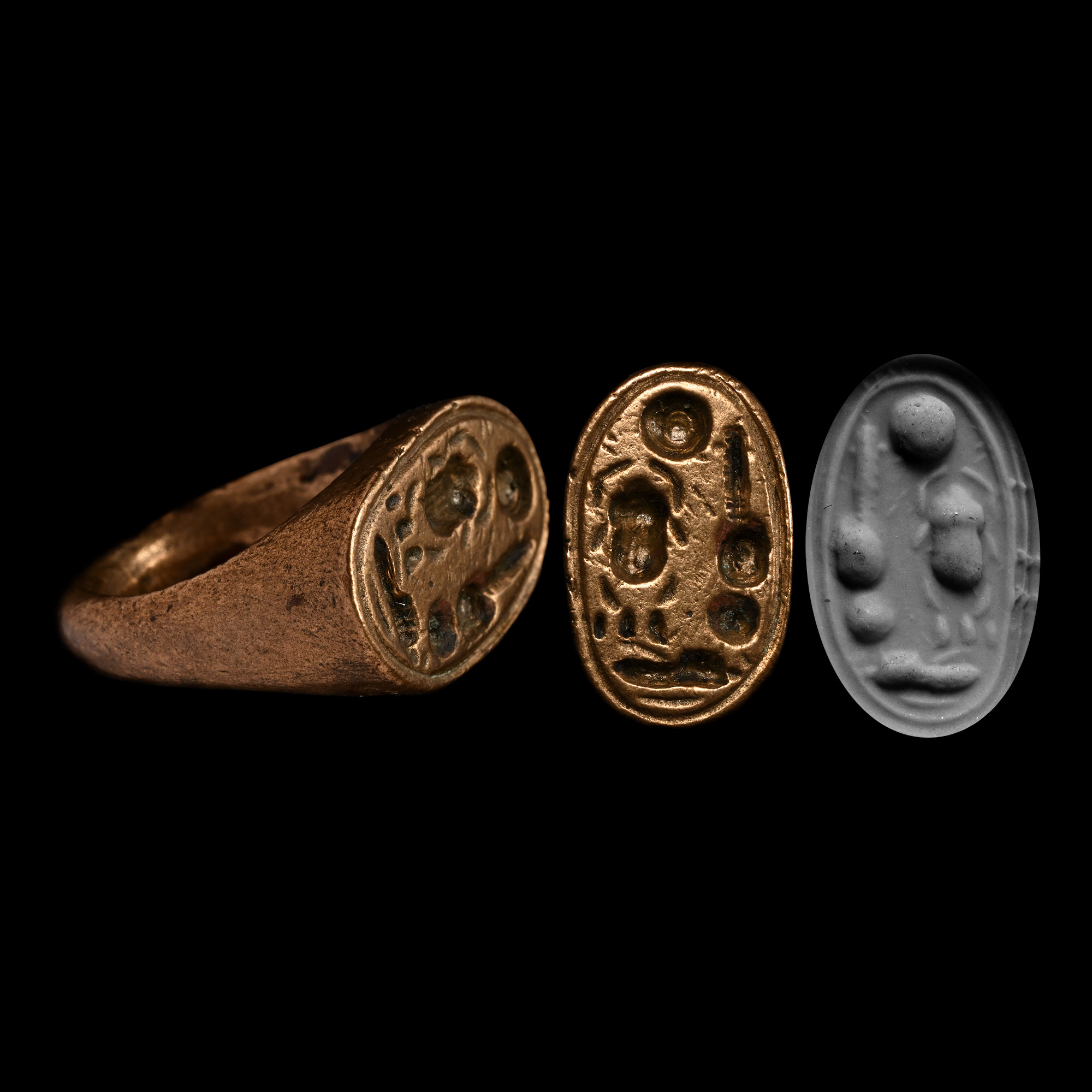
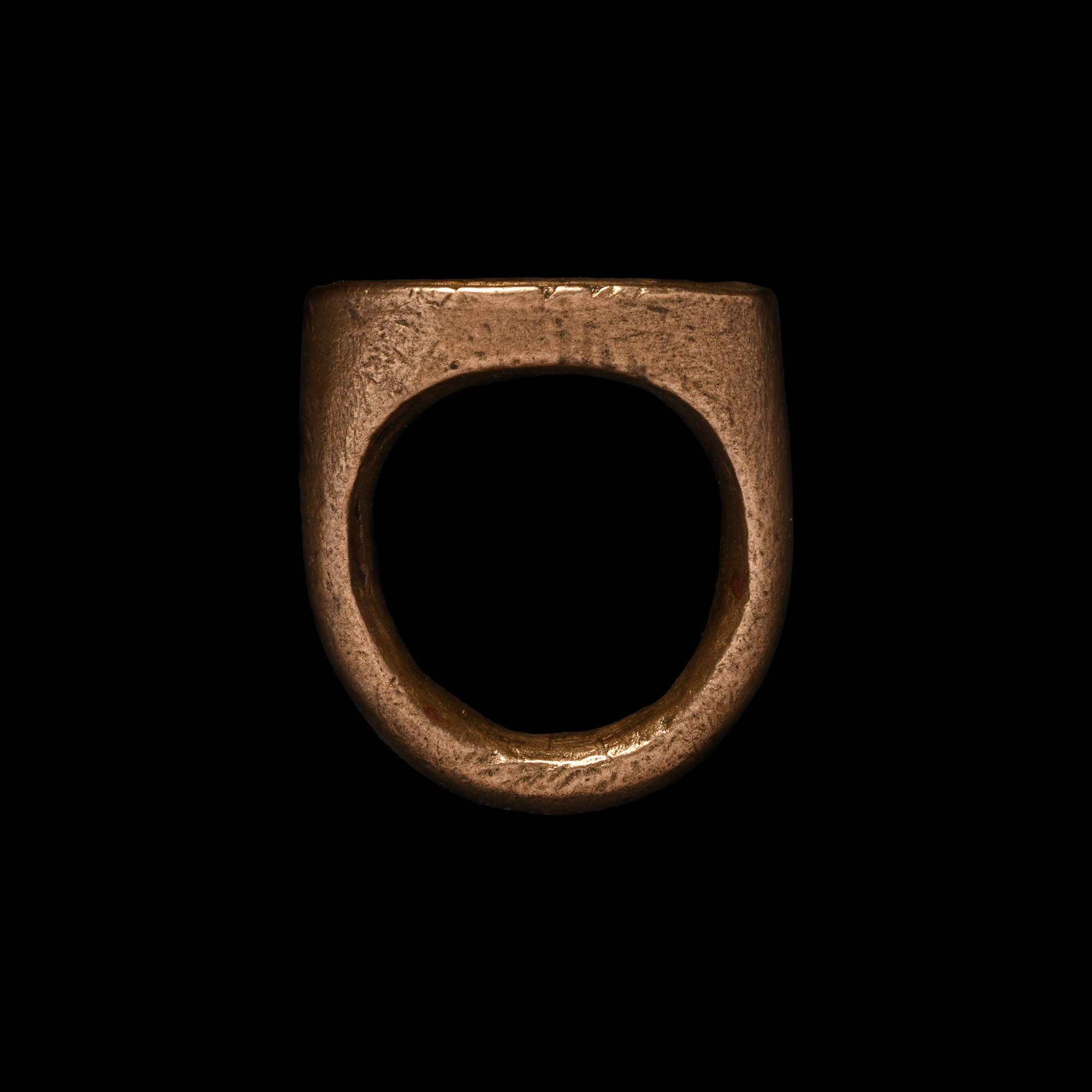
Egyptian Copper Ring with the Name of Akhenaten
NEW KINGDOM, 18TH DYNASTY, 1353-1336 B.C.
3/4 in. (7.28 grams, 19.03 mm overall, 12.08 mm internal diameter).
A 'stirrup' type ring with a substantial oval-shaped bezel bearing the name of Pharaoh Akhenaten - Nefer-kheperu-re Wah-en-re; supplied with a museum-quality impression.
ProvenanceAcquired in the mid 1980s-1990s.
Private collection, Switzerland, thence by descent.
Private collection, since the late 1990s.
This lot is accompanied by an illustrated lot declaration signed by the Head of the Antiquities Department, Dr Raffaele D'Amato.
Cf. Lacovara, P., Teasley Trope, B., and D’Auria, S.H., The Collector’s Eye: Masterpieces of Egyptian Art from The Thalassic Collection, Ltd., Atlanta, 2001, pp.106-107, no. 59, for an almost identical ring in electrum.
FootnotesAkhenaten, an 18th Dynasty pharaoh (c. 1353-1336 BCE), introduced a major religious shift by promoting the Aten, the sun disc, as the sole god. Rejecting the traditional polytheistic religion of ancient Egypt, Akhenaten elevated the Aten above all other gods and even changed his name from Amenhotep (IV) to Akhenaten, meaning ‘Effective for the Aten’. He founded a new short-lived capital in Middle Egypt called Akhetaten. However, traditional polytheism was restored after his death, and his reforms were largely reversed.
CONDITIONTimeLine Auctions follows a vetting process to ensure the authenticity and legality of all items, reinforcing our commitment to integrity and responsible trading. Each antiquity, antique, and coin lot undergoes thorough examination by a vetting committee of at least ten external specialists, professional trade association members, scientists, and archaeologists: Our Vetting Process
AUCTIONS:
TimeLine is a leading auction house specialising in antiquities, ancient art, collectables, natural history, coins, medals, and books. Our auctions offer museums, collectors, historians, and enthusiasts the opportunity to acquire unique and historically significant pieces.
-
Egyptian Silver Bastet as Seated Cat Amulet
Late-Ptolemaic Period, 664-30 B.C.Sold for (Inc. bp): £715
Seated figure of a cat with pointed ears mounted on a rectangular base with a rounded end; suspension loop on the back. 0.34 grams, 8 mm
From an early 20th century collection. This lot is accompanied by an illustrated lot declaration signed by the Head of the Antiquities Department, Dr Raffaele D'Amato.
The cat was sacred to Bastet, a protective mother goddess and the daughter of the sun god Re. Amulets offered the wearer the goddess's protection. Her name means ‘she of the bast [ointment jar],’ which may have contained a substance favoured by or exclusive to royalty. Originally, Bastet was depicted as a woman with the head of a lioness, but by the late New Kingdom, she was usually shown with a cat's head. She is sometimes portrayed with kittens, emphasising her maternal role as a fierce protector of offspring. -
Egyptian Carnelian Necklace with Djed Pillar
Late Period, 664-332 B.C.Sold for (Inc. bp): £715
Composed mainly of oblate and spherical beads, four poppy seed pendants, and a larger djed pillar pendant; restrung with a modern clasp. 12.68 grams, 43.5 cm
From an Israeli collection, formerly with the Archaeological Centre in Jaffa. This lot is accompanied by an illustrated lot declaration signed by the Head of the Antiquities Department, Dr Raffaele D'Amato.
The djed pillar symbolises endurance and stability. Used as a funerary amulet since the Old Kingdom, it was first linked to Ptah and Sokar, later becoming associated with Osiris as his backbone. Chapter 155 of the Book of the Dead references it in the context of resurrection. Beads in the form of poppies were used to heal and alleviate pain and to ward off death. These types of amulets were also linked to Osiris, the Egyptian deity of agriculture, death, and the afterlife. -
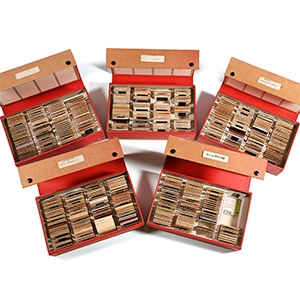
Historic Collection of 561 Slides of Archaeological Objects From Egypt
1960s-1980s A.D.Sold for (Inc. bp): £702
Housed in five linen-covered boxes, covering objects from the Old Kingdom, royal sculpture, general sculpture, and amulets, etc. 3.78 kg total, 26.5 x 16.5 x 6.5 cm each box
Property of archaeologist Stephanie Gee, N.W. London, UK, 1960s-1980s. This lot is accompanied by an illustrated lot declaration signed by the Head of the Antiquities Department, Dr Raffaele D'Amato.
Stephanie Gee was a prominent archaeologist who took part in several expeditions in Egypt. She was a trusted assistant to the British-Australian archaeologist Veronica Seton-Williams, who excavated in Egypt, Britain, and the Near East. Stephanie also took part in the Tell El-Farâ'în expeditions of 1965-1968, and assisted Seton-Williams with preparing the 1966 expedition report. Their collaboration continued and Stephanie helped with the manuscript of Seton-Williams’ book ‘The Road to El-Aguzein’, a narrative account of her life that was first published in 1988.
