
Loading, please wait...
LOT 0473
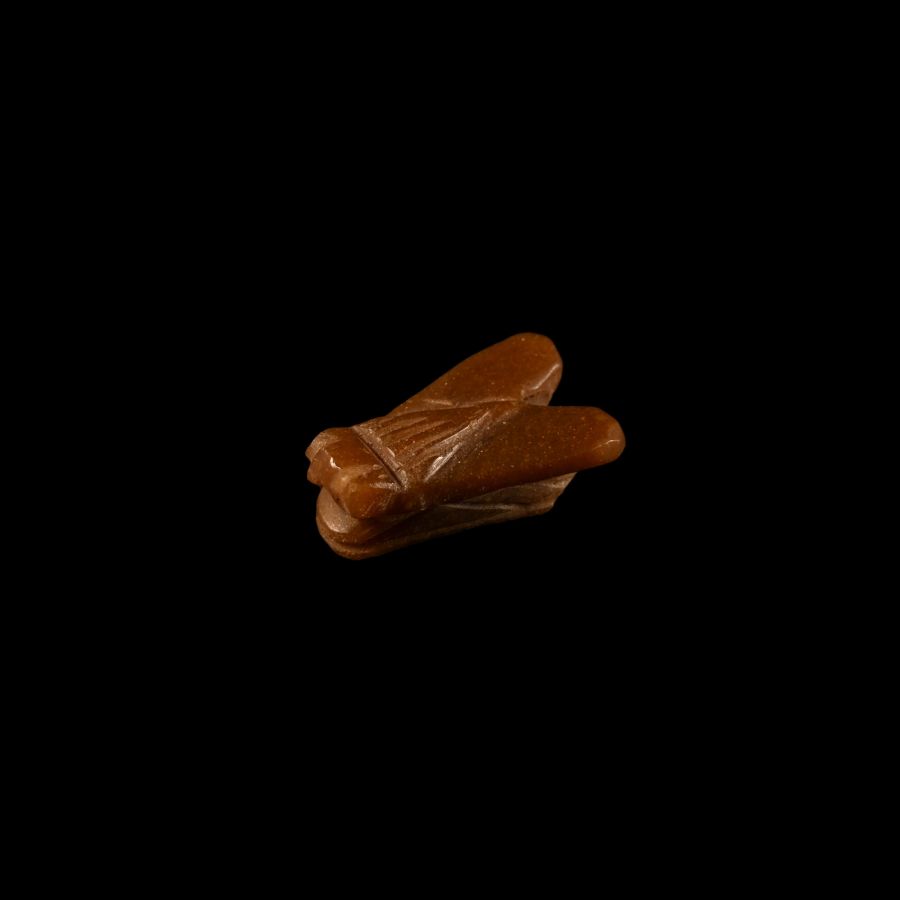
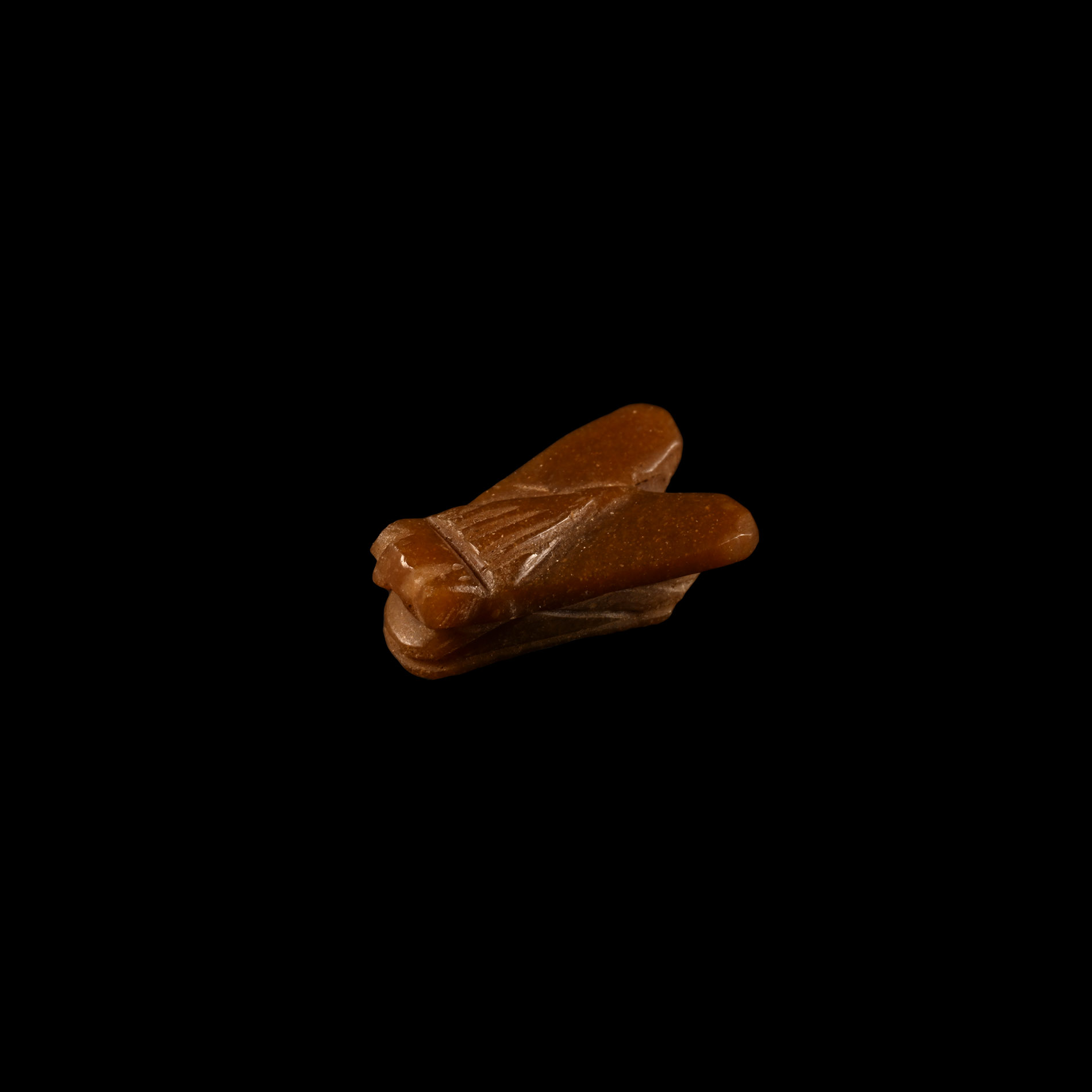
Egyptian Carnelian Fly Amulet
LATE PERIOD, 664-332 B.C.
1/2 in. (0.83 grams, 14 mm).
Carved standing on a slightly curved pear-shaped base; simple anatomical detailing; drilled for suspension. [No Reserve]
ProvenanceFrom the collection of H.N., Milton Keynes, 1980s-1990s.
LiteratureSee Andrews, C., Amulets of Ancient Egypt, London, 1994, pp.62-63, for discussion of fly amulets.
CONDITIONTimeLine Auctions follows a vetting process to ensure the authenticity and legality of all items, reinforcing our commitment to integrity and responsible trading. Each antiquity, antique, and coin lot undergoes thorough examination by a vetting committee of at least ten external specialists, professional trade association members, scientists, and archaeologists: Our Vetting Process
AUCTIONS:
TimeLine is a leading auction house specialising in antiquities, ancient art, collectables, natural history, coins, medals, and books. Our auctions offer museums, collectors, historians, and enthusiasts the opportunity to acquire unique and historically significant pieces.
-
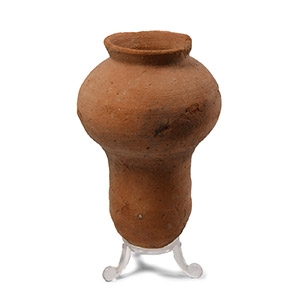
Egyptian Round-Bottomed Terracotta Vessel
Middle Kingdom, 2040-1782 B.C. or laterSold for (Inc. bp): £65
With a bulbous shoulder, everted rim and U-shaped foot; accompanied by an acrylic display base. 173 grams, 11.8 cm high
Ex North Yorkshire deceased estate, 1990s. -
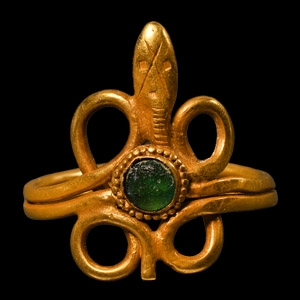
Romano-Egyptian Gold Serpent Ring
Roman Period, 30 B.C.-323 A.D. or laterSold for (Inc. bp): £4,160
The hoop a double-coil with lateral loops, lentoid head, applied cell with beaded wire collar and inset green glass cabochon. 4.32 grams, 21.57 mm overall, 17.47 mm internal diameter (approximate size British M, USA 6, Europe 12.46, Japan 12)
From the Gustave Mustaki collection, Alexandria, Egypt. Acquired early to mid 20th century and exported under Egyptian government license. with Charles Ede 1990s. -
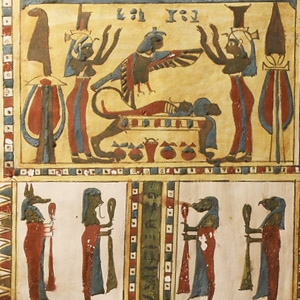
Framed Egyptian Cartonnage Panel with Hieroglyphic Inscription
Ptolemaic or Roman Period, after 305 B.C.Estimate: £8,000 - 10,000 (+bp*)
Opening Bid: £4,444
Tongue-shaped decorative panel with segmented borders; above, funerary scene with the deceased's mummy on a leonine bier, flanked by the attending goddesses Isis and Nephthys; the deceased's Ba-bird hovering above the body; a central vertical band of semi-cursive hieroglyphic text flanked by six panels containing figures of the Four Sons of Horus and squatting knife-wielding guardians; mounted on board in a glazed frame. 2.17 kg total, 36.5 cm high
From a London, UK, collection. Exhibited in London in mid 2000s. Private gentleman's collection, J.L., Surrey, UK. Accompanied by a scholarly report by Egyptologist Paul Whelan. This lot has been checked against the Interpol Database of stolen works of art and is accompanied by search certificate number no.11772-203499.
This cartonnage comes from a set of mummy trappings, usually consisting of four to six individual pieces that were sown on the front of a mummified and bandaged body. The element here is an apron positioned on the body below a mask and collar and above a foot cover or stylised 'sandals'. The central band of inscription calls upon Osiris and Anubis to ensure a good burial for the deceased.
