
Loading, please wait...
LOT 0492
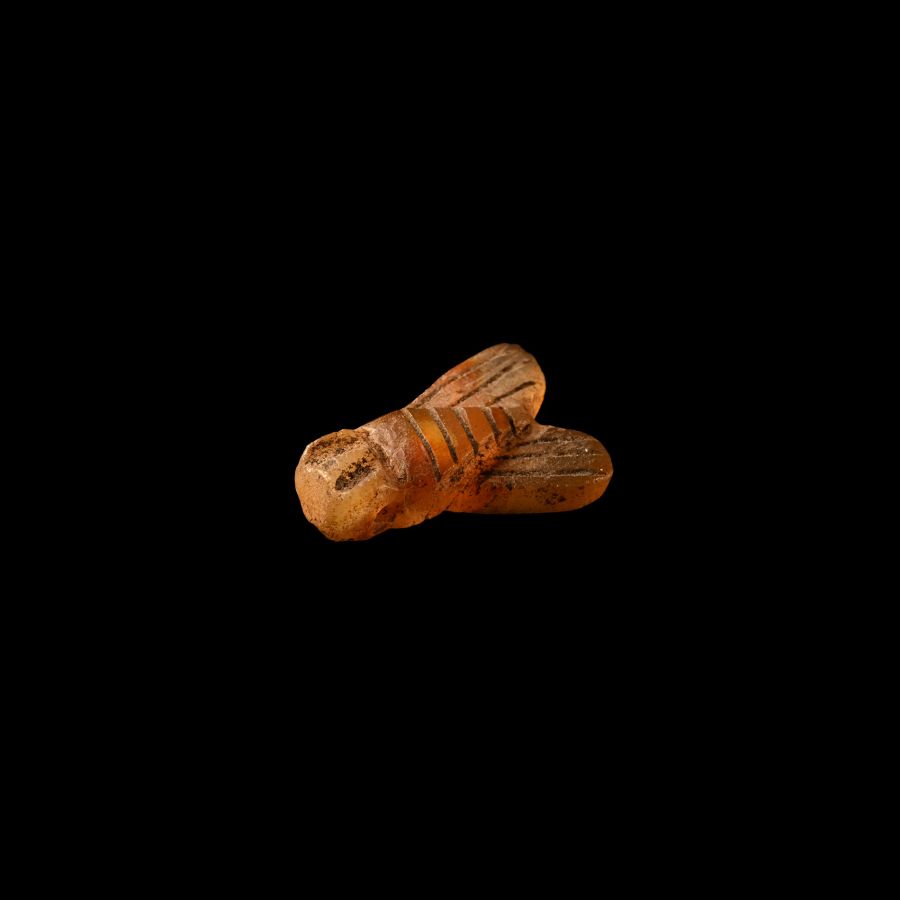
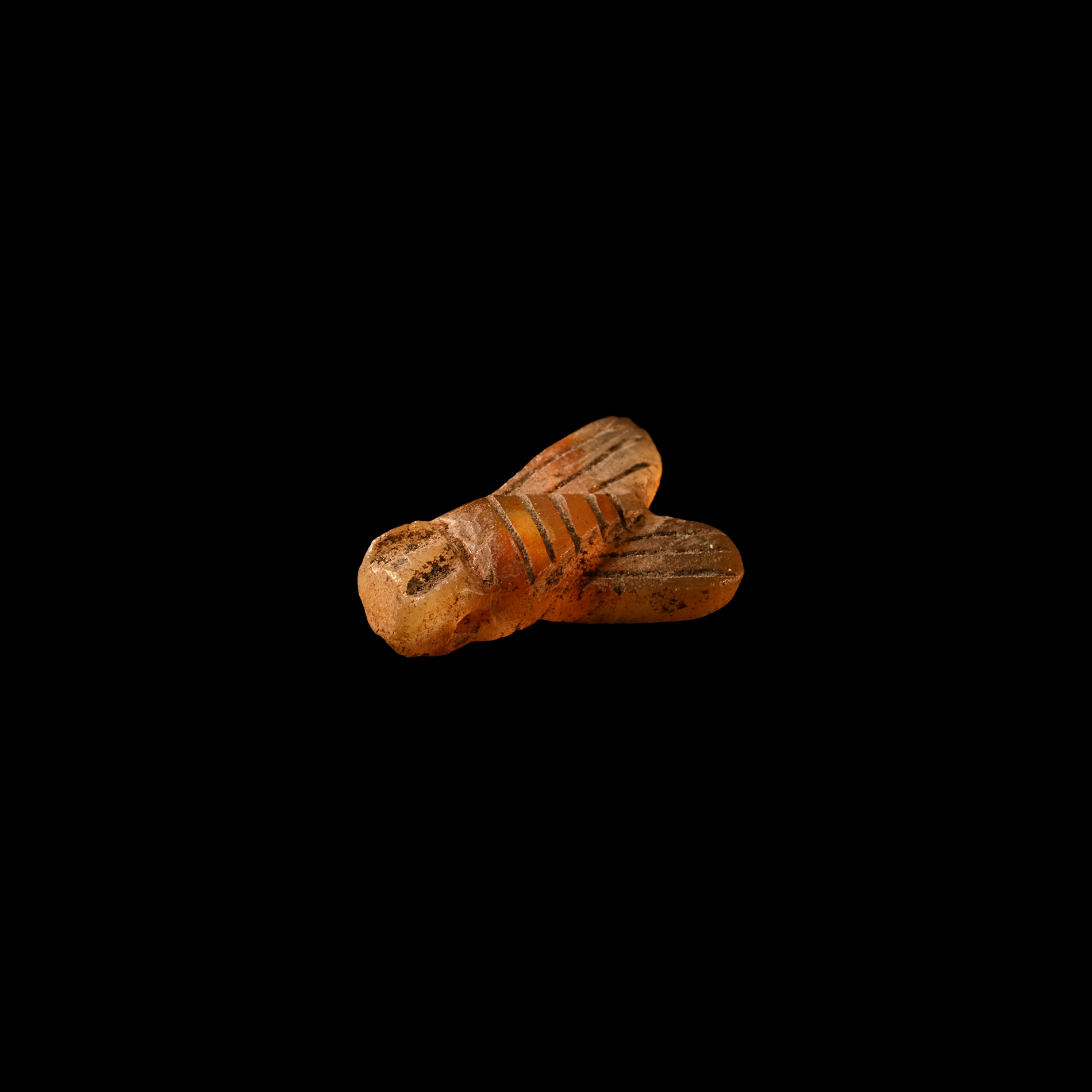
Egyptian Carnelian Fly Amulet
1ST MILLENNIUM B.C.
3/8 in. (0.39 grams, 12 mm).
Drilled through the eyes for suspension; simple detailing to both faces.
ProvenanceFrom an early 20th century collection.
LiteratureSee Andrews, C., Amulets of Ancient Egypt, London, 1994, pp.62-63, for discussion.
CONDITIONTimeLine Auctions follows a vetting process to ensure the authenticity and legality of all items, reinforcing our commitment to integrity and responsible trading. Each antiquity, antique, and coin lot undergoes thorough examination by a vetting committee of at least ten external specialists, professional trade association members, scientists, and archaeologists: Our Vetting Process
AUCTIONS:
TimeLine is a leading auction house specialising in antiquities, ancient art, collectables, natural history, coins, medals, and books. Our auctions offer museums, collectors, historians, and enthusiasts the opportunity to acquire unique and historically significant pieces.
-
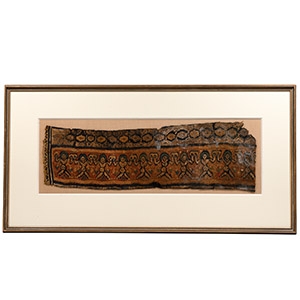
Large Framed Coptic Wool Garment Fragment with Dancing Nymphs
Circa 6th-7th century A.D.Sold for (Inc. bp): £520
Comprising a series of nude female figures on red background, probably maenads or nymphs, dancing to the sounds of cymbals held in their outstretched hands, each wearing a green proploma; wide band of geometric decoration above; mounted in a custom-made glazed frame. 2.1 kg total, 71 x 36 cm including frame
Ex Dutch collection, 1960s. UK collection 2018.
The band is probably the terminal part of a large wall carpet. The warp material is raw natural twisted wool in one strand, with weft in linen and raw wool in red, orange, ochre yellow, blue green, olive green, blue. The motif still echoes themes of the pagan world, despite being made in the Christian Roman Empire. -
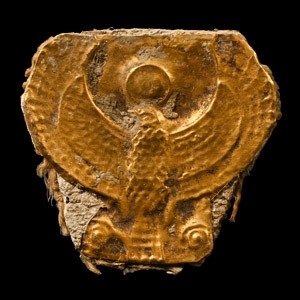
Egyptian Gold Repousse Pharaonic Falcon with Original Linen and Plaster Backing
Circa 500 B.C.Sold for (Inc. bp): £1,430
From mummy wrappings, Horus falcon with spread wings wearing a sun disc and gripping a shen symbol in each claw; applied to a woven fabric backing; held in a membranous display frame. 25 grams total, 70 x 70 mm including case
From a Spanish collection, formerly with a German dealership in the 1980s.
Similar in form to the elaborate inlaid gold pectoral discovered in the tomb of Tutankhamun, for which see Andrews, C., Ancient Egyptian Jewellery, p.134, no. 117. -
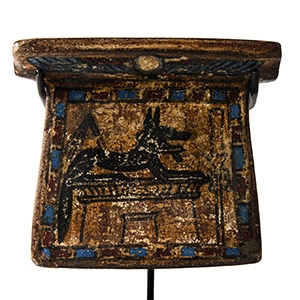
Egyptian Bifacial Faience Pectoral with Anubis
Late New Kingdom, 1290-1070 B.C.Estimate: £2,500 - 3,500 (+bp*)
Opening Bid: £800
The obverse with a scene of Anubis recumbent on a pylon-shaped shrine with a standing sceptre in front; the reverse painted with a djed pillar flanked by two knots of Isis, remains of polychrome painted pigment; three piercings to both sides of the top; accompanied by a custom-made display stand. 71 grams, 85 mm wide (223 grams total, 10.5 cm including stand)
Fine condition.
From an early 20th century collection. This lot has been checked against the Interpol Database of stolen works of art and is accompanied by search certificate number no.11104-182800.
Pectorals worn by the living were made from metal, usually gold; for the dead, glazed composition was an acceptable substitute, indicating the funerary nature of such objects. Circular piercings have been made through the cavetto cornice, enabling the piece to be stitched to the bandages covering a mummy's chest. The shape of the pectoral imitates that of a pylon, the rectangular tower which flanked the gateway into an Egyptian temple. The cavetto cornice is decorated with a winged and gilded sun-disk. All four sides are adorned with a block pattern. A jackal reclining on a pylon-shaped shrine represents Anubis, god of embalming. He has a magical tie or scarf around his neck and is shown with a flagellum. Such imagery is found in New Kingdom tombs at Thebes. In front of the shrine is the sekhem sceptre of power. The reverse depicts a djed pillar, believed to represent the backbone with ribs of Osiris, god of the dead, flanked by the Girdle of Isis or 'tit' amulet. Both were standard funerary amulets.
