
Loading, please wait...
LOT 0021
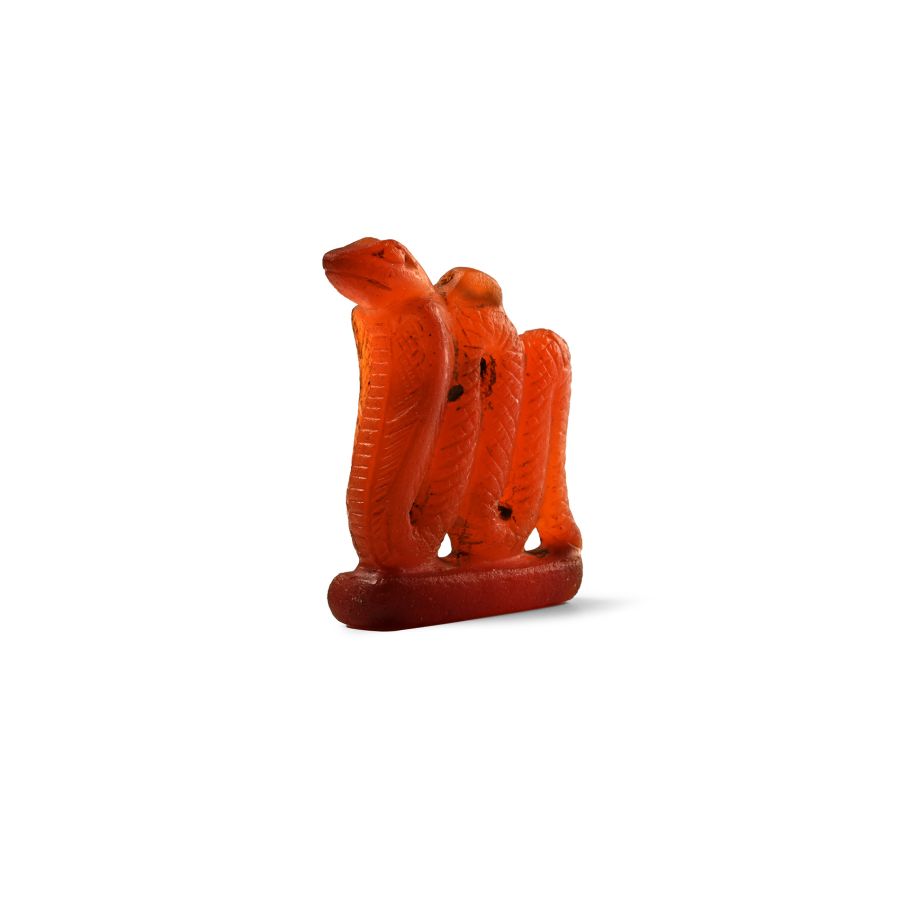
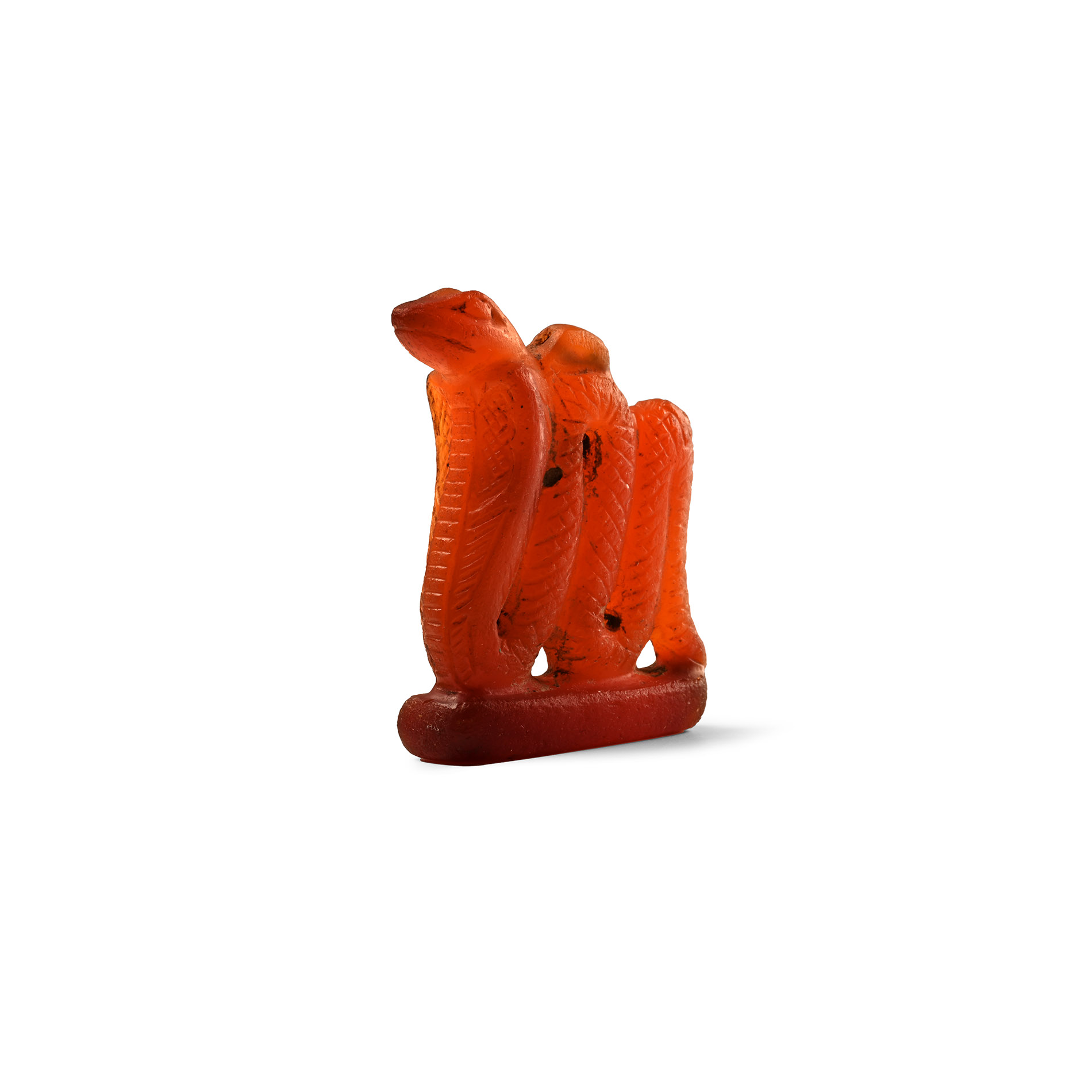
Egyptian Carnelian Cobra Amulet
THIRD INTERMEDIATE PERIOD, CIRCA 900 B.C.
1 1/4 in. (8.58 grams, 33 mm).
Carved on a free-standing rectangular base; suspension loop to the serpent's back.
ProvenanceAcquired prior to 2000 from a European collection.
Canadian private collection of Mr A.K. of Montreal.
The sacred uraeus was a symbol of royalty, sovereignty and divine authority in ancient Egypt.
CONDITIONTimeLine Auctions follows a vetting process to ensure the authenticity and legality of all items, reinforcing our commitment to integrity and responsible trading. Each antiquity, antique, and coin lot undergoes thorough examination by a vetting committee of at least ten external specialists, professional trade association members, scientists, and archaeologists: Our Vetting Process
AUCTIONS:
TimeLine is a leading auction house specialising in antiquities, ancient art, collectables, natural history, coins, medals, and books. Our auctions offer museums, collectors, historians, and enthusiasts the opportunity to acquire unique and historically significant pieces.
-
.jpg)
Large Egyptian Faience Cartouche Amulet for the Pharaoh Apries
26th Dynasty, 664-525 B.C.Sold for (Inc. bp): £208
Displaying Wahibre, the birth name of the 26th Dynasty pharaoh Apries on one face; his throne name, Haaibre (rendered 'Apries' in Hellenistic times) on the other; repaired. 7.7 grams, 41 mm
Fine condition, repaired.
Acquired 1980s-1990s. Private collection of H. N., Milton Keynes, Berkshire, UK.
This plaque was almost certainly once part of a foundation deposit of a temple built in the reign of this pharaoh. A similar, albeit slightly thicker, double-sided cartouche-shaped plaque of this king is in the Metropolitan Museum of Art (accession number 02.4.105b). -
.jpg)
Egyptian Gold Mounted Hardstone Scarab
New Kingdom, 1550-1070 B.C.Sold for (Inc. bp): £936
The scarab with simple incised detailing and hieroglyphs to base, with the name Amun-Ra, the mount with two suspension loops. 2.51 grams, 19 mm
From an early 20th century collection, Home Counties, UK, 1930-1940s. -
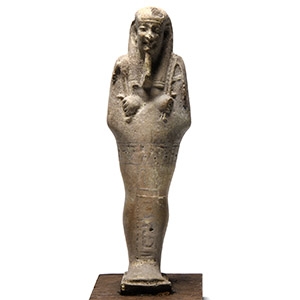
Large Egyptian Glazed Hieroglyphic Shabti
Late Period, 30th Dynasty, 380-343 B.C.Sold for (Inc. bp): £845
Modelled mummiform, arms crossed over the chest holding crook and flail, with a blank pillar to reverse; hieroglyphs to the front of the body; remains of glaze; mounted on a wooden display base; repaired. 191 grams total, 17 cm high including stand
Gifted by Herbert Parsons (1870-1940) to his grandson, James Gibson (1926-2013). Inherited by the vendor and her brother, from their grandfather James Gibson.
