
Loading, please wait...
LOT 0026
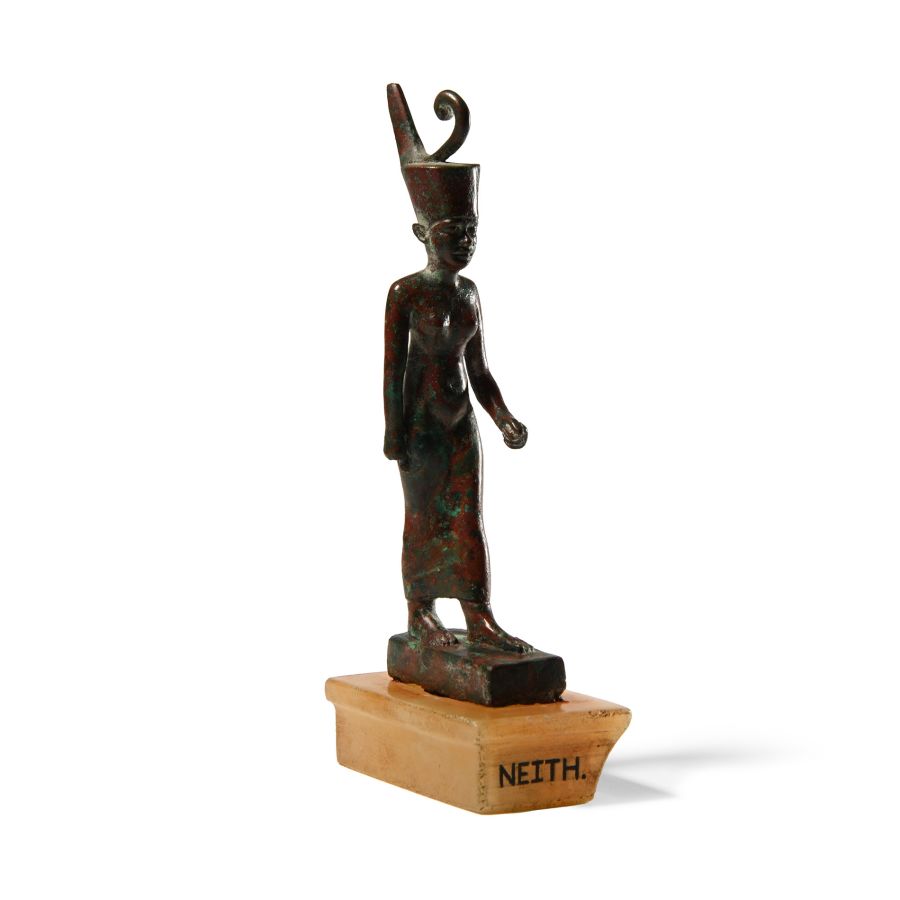
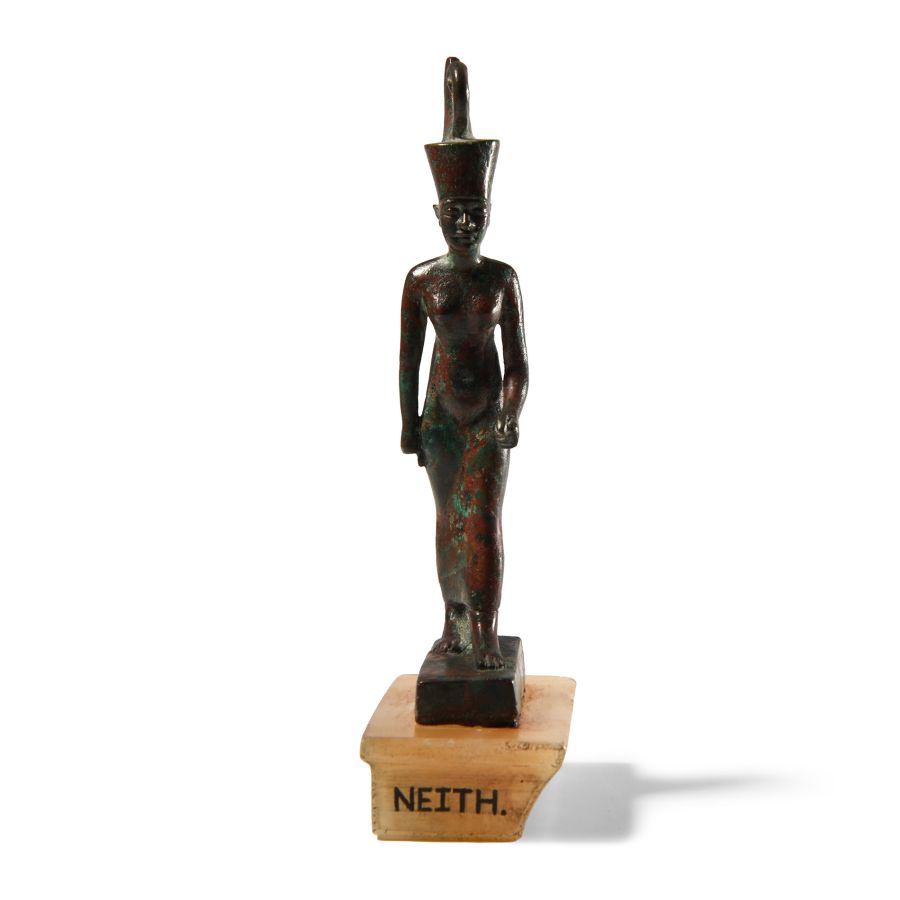
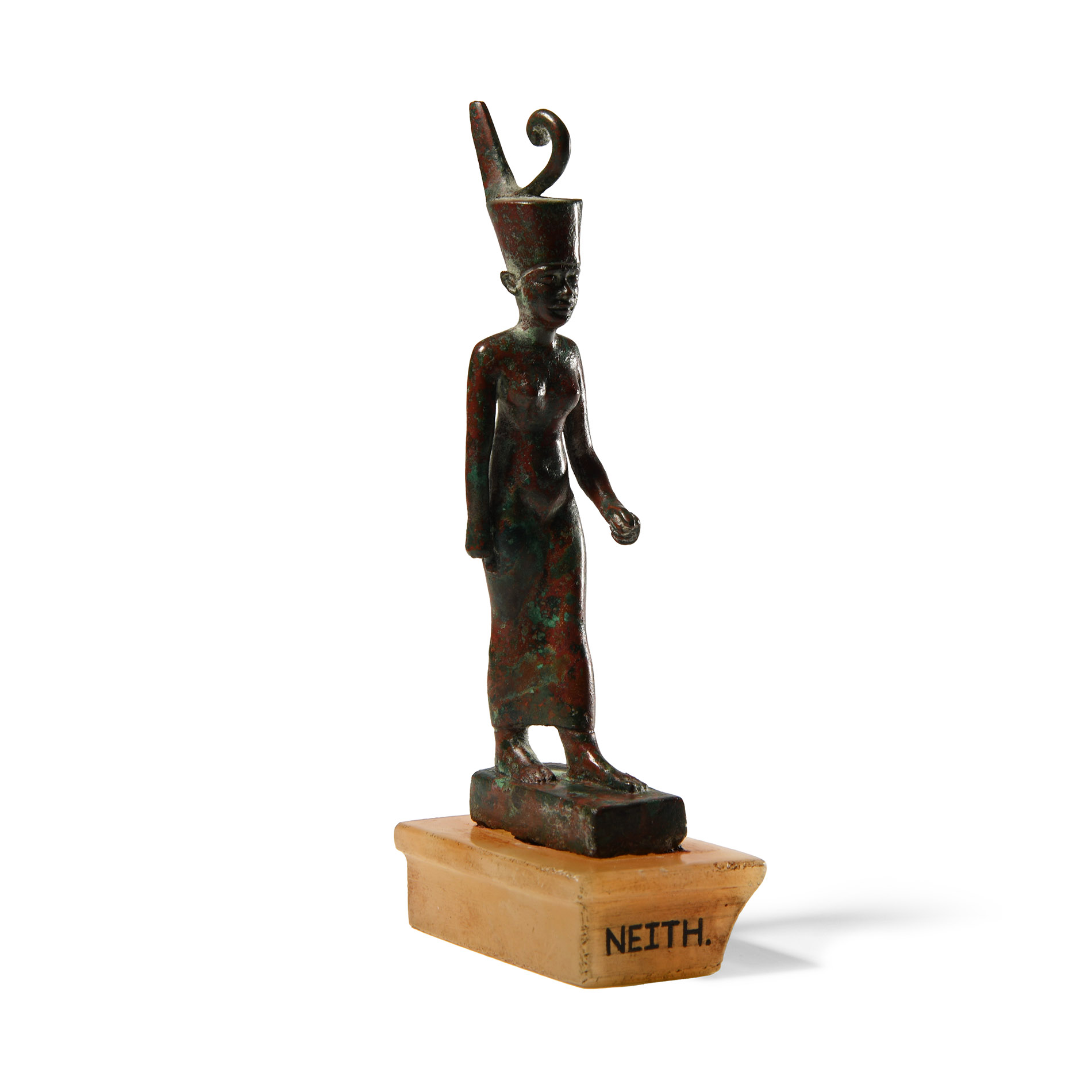
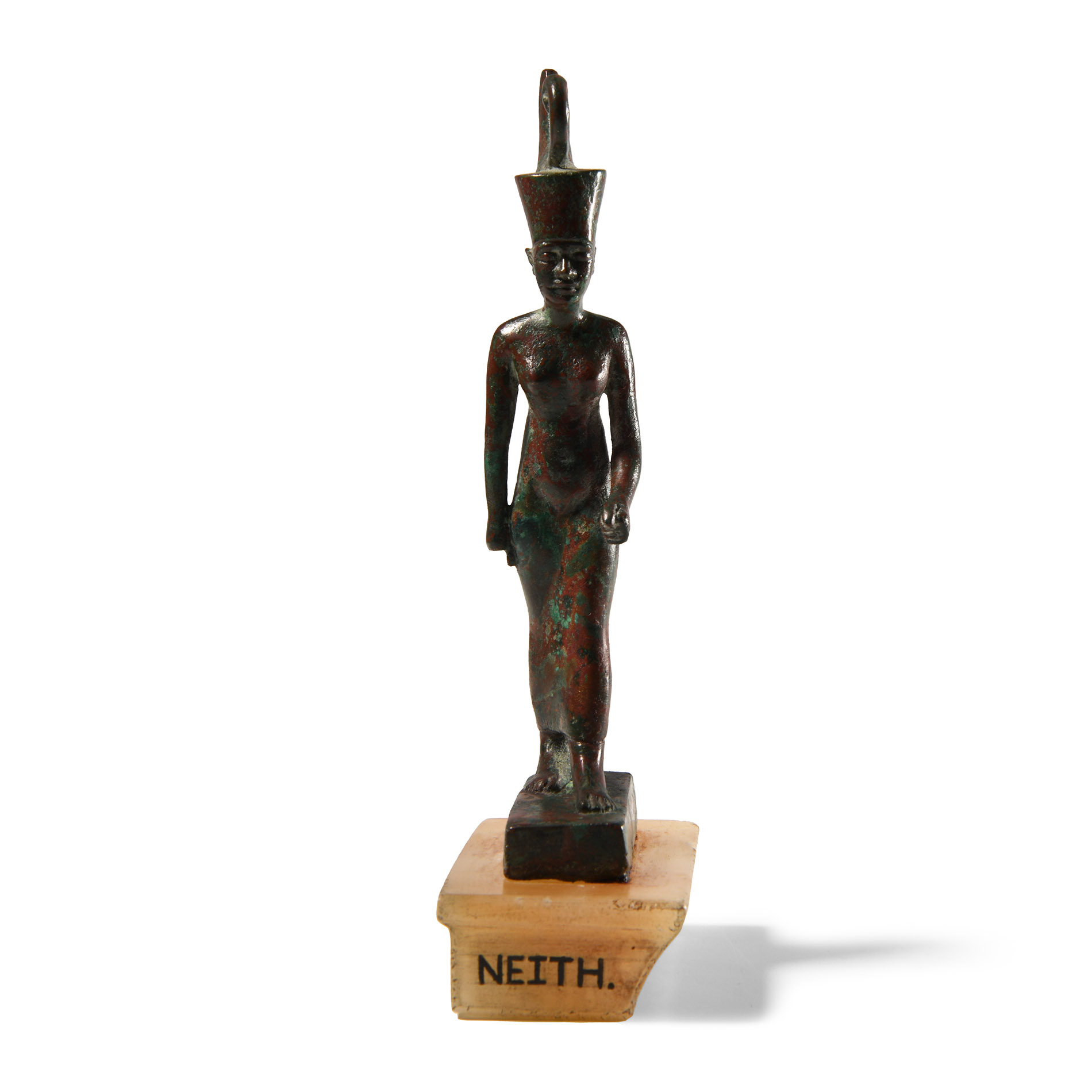
Egyptian Bronze Striding Figure of the Goddess Neith
26TH DYNASTY, 664-525 B.C.
5 3/8 in. (6 1/8 in.) (287 grams total, 13.5 cm high (15.5 cm high including stand)).
Striding on a rectangular base; formerly holding a papyrus sceptre (?) in her extended left hand, her right hand by her side, and wearing a long close-fitting dress; mounted on an old marble tiered base with 'NEITH' legend to one short edge.
ProvenanceFrom an early 20th century collection, based on the alabaster stand.
Probably the Hilton Price collection, based on the style of the base.
This lot has been checked against the Interpol Database of stolen works of art and is accompanied by search certificate no.12131-213614.
Cf. Daressy, G., Catalogue général des antiquités égyptiennes du Musée du Caire N° 38001-39384 Statues de divinités, Cairo, 1906, pl.XLVIII (inv. no. 38953), for similar figure.
FootnotesNeith was the patron goddess of the powerful city of Sais in the Nile Delta.
CONDITIONTimeLine Auctions follows a vetting process to ensure the authenticity and legality of all items, reinforcing our commitment to integrity and responsible trading. Each antiquity, antique, and coin lot undergoes thorough examination by a vetting committee of at least ten external specialists, professional trade association members, scientists, and archaeologists: Our Vetting Process
AUCTIONS:
TimeLine is a leading auction house specialising in antiquities, ancient art, collectables, natural history, coins, medals, and books. Our auctions offer museums, collectors, historians, and enthusiasts the opportunity to acquire unique and historically significant pieces.
-
Egyptian Turquoise Faience Bead Necklace
Late Period, 664-332 B.C.Sold for (Inc. bp): £117
Restrung using mainly tubular beads interspersed with small annular beads; modern clasp. 4.93 grams, 46 cm
From an early 20th century UK collection. -
Phoenicio-Egyptian Dark Green Stone Scarab
Circa 6th-4th century B.C.Estimate: £400 - 600 (+bp*)
Opening Bid: £200
With textured carapace, bull-horned column to the reverse. 3.94 grams, 15 mm
From the property of the late Mr SM, London, UK, 1969-1999. -
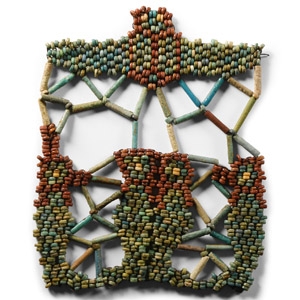
Egyptian Faience Beaded Four Sons of Horus
Ptolemaic Period, 332-30 B.C.Sold for (Inc. bp): £124
Openwork restrung panel depicting Imsety, Hapy, Duamutef, and Qebehsenuef, the Four Sons of Horus. 21 grams, 11.5 cm
Previously with Mariaud de Serres, Paris, France. From a Paris Gallery.
The Four Sons of Horus were deities responsible for protecting the internal organs of the deceased. The human-headed Imsety protected the liver, the baboon-headed Hapy protected the lungs, the jackal-headed Duamutef protected the stomach, and the falcon-headed Qebehsenuef protected the intestines.
