
Loading, please wait...
LOT 0043
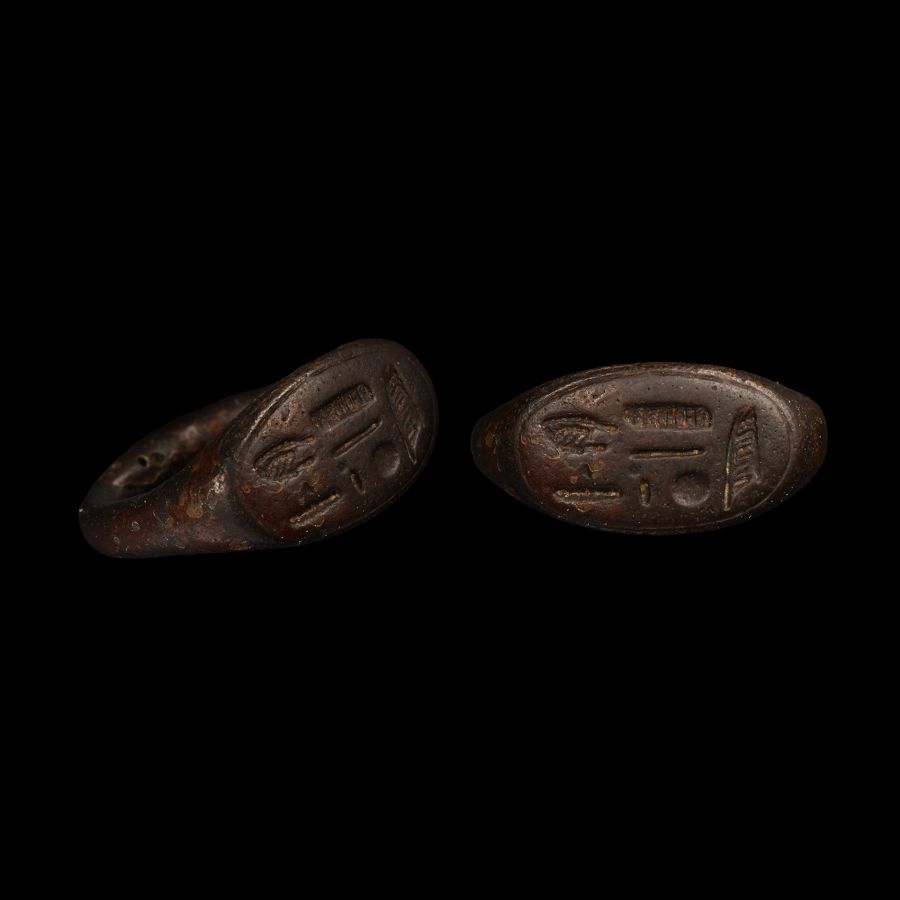
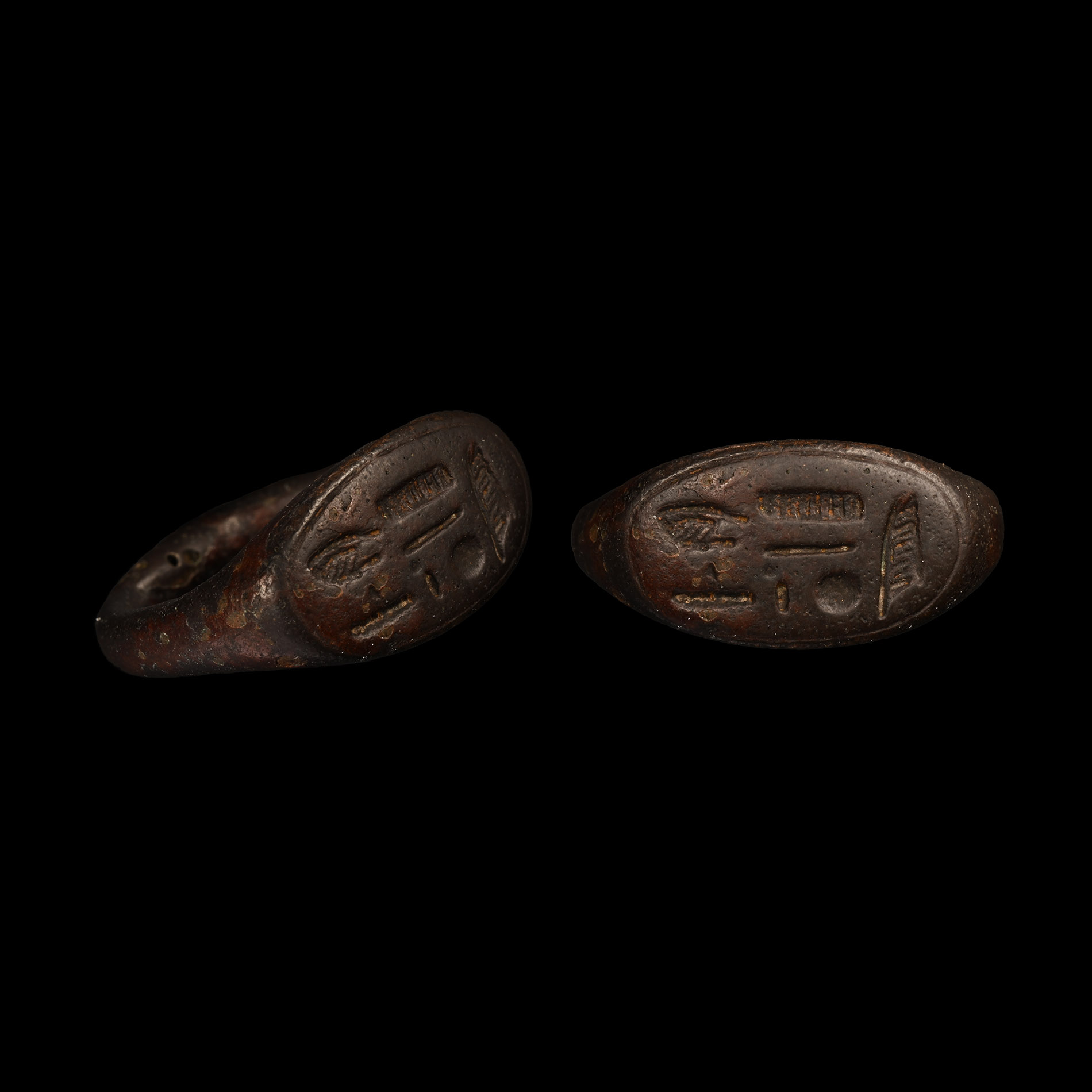
Egyptian Bronze Ring with Hieroglyphs
1ST MILLENNIUM B.C.
1 in. (9.62 grams, 24.22 mm overall, 18.25 mm internal diameter (approximate size British O, USA 7, Europe 14.98, Japan 14)).
Ellipsoid bezel with a group of incuse hieroglyphs to the plaque naming Amun-Re.
ProvenanceAcquired in the mid 1980s-1990s.
From the family collection of Mr S.A., Switzerland, thence by descent.
Private collection since the late 1990s.
Cf. Petrie, W.M.F., Objects of Daily Use, Warminster, 1972, pl. XIII, no. 133, for a vertical oval bezel with a similar hieroglyphic inscription.
CONDITIONTimeLine Auctions follows a vetting process to ensure the authenticity and legality of all items, reinforcing our commitment to integrity and responsible trading. Each antiquity, antique, and coin lot undergoes thorough examination by a vetting committee of at least ten external specialists, professional trade association members, scientists, and archaeologists: Our Vetting Process
AUCTIONS:
TimeLine is a leading auction house specialising in antiquities, ancient art, collectables, natural history, coins, medals, and books. Our auctions offer museums, collectors, historians, and enthusiasts the opportunity to acquire unique and historically significant pieces.
-
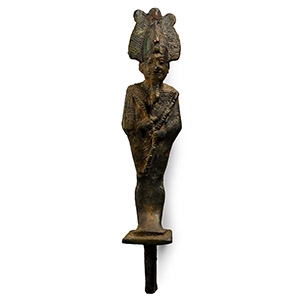
Egyptian Bronze Statue of the God Osiris
Late Period, 664-525 B.C.Sold for (Inc. bp): £650
Modelled in the round wearing the Atef crown with a uraeus to the brow, arms crossed on the chest holding the nekhakha (flail) and heka (crook); trapezoidal base with long tenon beneath. 136 grams, 14 cm
Acquired on the German art market, 1989-1995. with The Museum Gallery, 19 Bury Place, London, WC1, UK, 1998-2003. Property of a London based academic, 2003-present.
Osiris is a deity who represents death and fertility and is commonly regarded as the quintessential god of rebirth. Though he was once a mortal ruler, as a deceased entity, his domain was the Underworld. Abydos was the primary centre of Osiris’ cult, where a renowned yearly celebration of the god was held. Many small figurines like this were dedicated to the god at temples throughout Egypt. -
.jpg)
Egyptian Wooden Mummy Mask with Egyptian Blue Inlaid Eyebrows
Third Intermediate Period, 22nd-24th Dynasty, 944-716 B.C.Sold for (Inc. bp): £14,950
D-shaped in plan with finely carved facial detailing, slender nose and full lips, sockets to the eyes; eyebrows recessed to accept inserts still partly in situ; pierced to reverse for attachment. 972 grams, 20 cm
Old mounting to the reverse. From a private estate, Suffolk, UK. Acquired from a UK antiques fair. Property of Mr E.D., a UK professional. This lot has been checked against the Interpol Database of stolen works of art and is accompanied by a search certificate number no.12076-217420. -
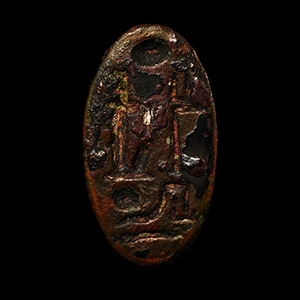
Egyptian Bronze Ring for Ramesses II
New Kingdom, 19th Dynasty, 1303-1213 B.C.Sold for (Inc. bp): £2,340
D-shaped hoop and ellipsoid plaque, hieroglyphic text in low relief giving the regnal name of Ramesses II (User-Maat-Re Setep-en-Re). 6.78 grams, 23.72 mm overall, 17.94 mm internal diameter (approximate size British Q, USA 8, Europe 17.49, Japan 16)
Ex R.K. collection, early 1980s. UK private collection before 2000. Property of a London gentleman. This lot has been checked against the Interpol Database of stolen works of art and is accompanied by a search certificate number no.12082-217353.
