
Loading, please wait...
LOT 0429
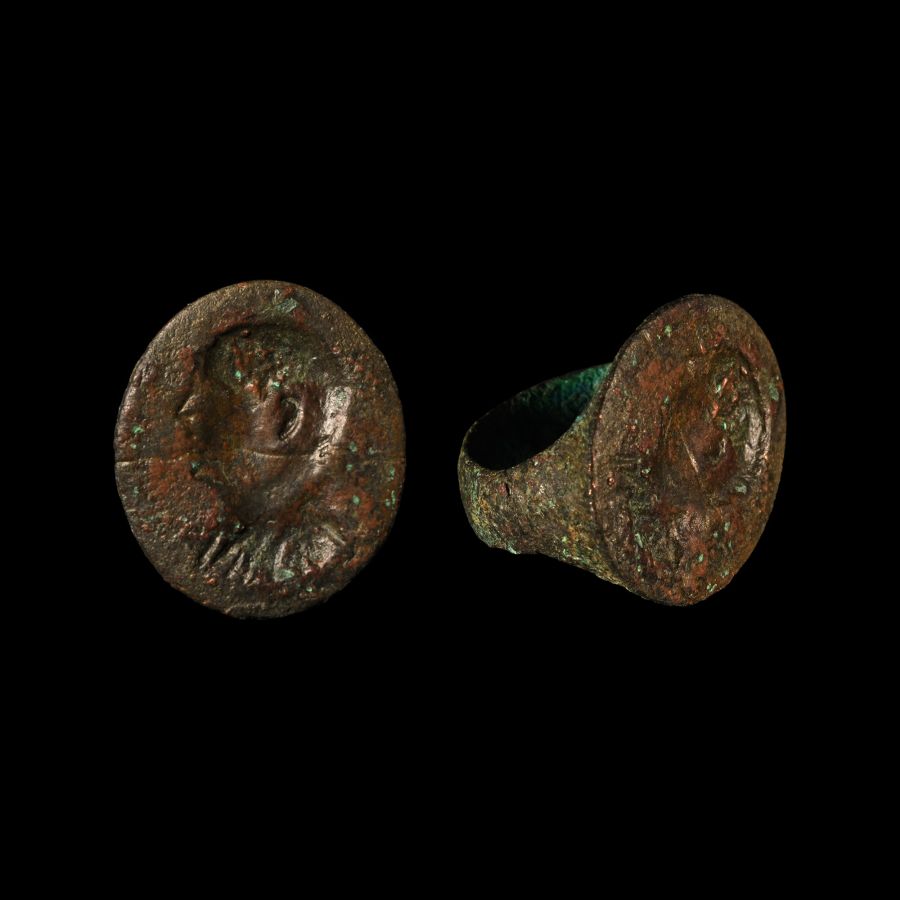
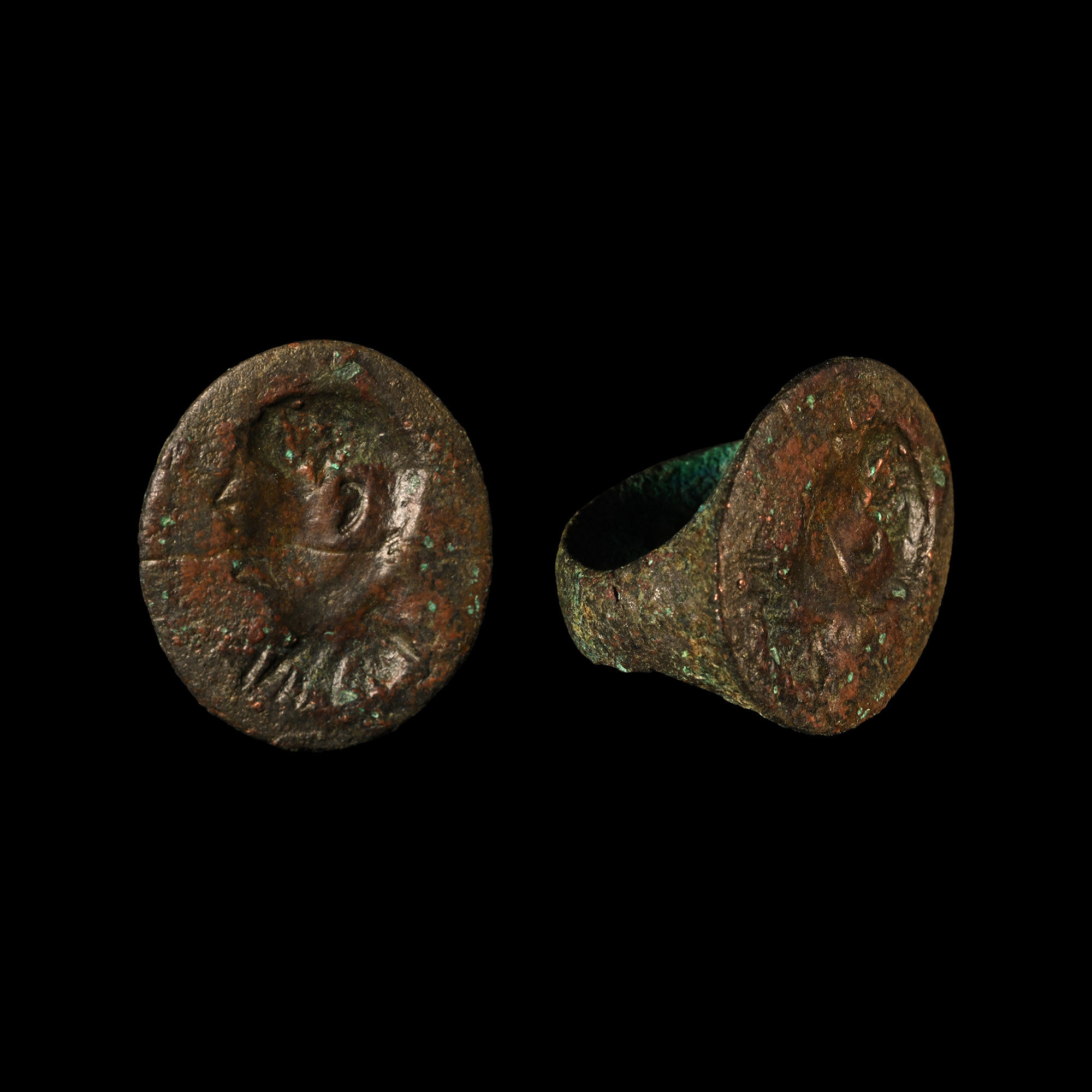
Egyptian Bronze Ring with Bust
PTOLEMAIC PERIOD, 332-30 B.C.
1 in. (7.03 grams, 23.09 mm overall, 17.15 mm internal diameter (approximate size British G 1/2, USA 3 1/2, Europe 5.55, Japan 5)).
With discoid bezel with incuse profile facing left.
ProvenanceAcquired 1980-2015.
Ex Abelita family collection.
Cf. Chadour, A.B., Rings. The Alice and Louis Koch Collection, volume I, Leeds, 1994, item 26, for type.
CONDITIONTimeLine Auctions follows a vetting process to ensure the authenticity and legality of all items, reinforcing our commitment to integrity and responsible trading. Each antiquity, antique, and coin lot undergoes thorough examination by a vetting committee of at least ten external specialists, professional trade association members, scientists, and archaeologists: Our Vetting Process
AUCTIONS:
TimeLine is a leading auction house specialising in antiquities, ancient art, collectables, natural history, coins, medals, and books. Our auctions offer museums, collectors, historians, and enthusiasts the opportunity to acquire unique and historically significant pieces.
-
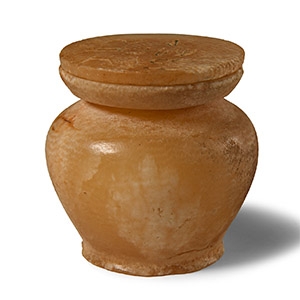
Egyptian Alabaster Kohl Pot
Middle Kingdom, circa 2035-1665 B.C.Sold for (Inc. bp): £715
Barrel-shaped with broad flat rim; with later hieroglyphic inscription to the lid. 115 grams, 47 mm high with lid
Acquired in the mid 1980s-1990s. From the family collection of Mr S.A., Switzerland, thence by descent. Private collection since the late 1990s. -
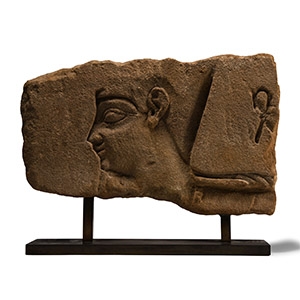
Egyptian Sandstone Relief
Late Period or Ptolemaic Period, 664-31 B.C.Estimate: £4,000 - 6,000 (+bp*)
Opening Bid: £2,000
Rectangular frieze fragment with low-relief profile bust wearing the double crown; sa symbol (of protection) to the rear; mounted on a custom-made stand. 2.8 kg total, 27 cm wide
From Galerie Orient-Occident, Paris, France. with Cahn Auctions, 19 October 2002, no.527. From the Keane private collection, Kent, UK. This lot has been checked against the Interpol Database of stolen works of art and is accompanied by a search certificate number no.12077-216770.
Possibly a sculptor's trial piece or model. -
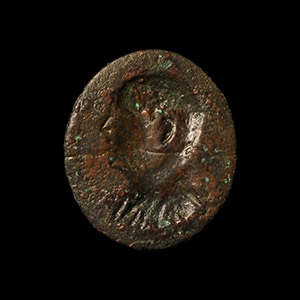
Egyptian Bronze Ring with Bust
Ptolemaic Period, 332-30 B.C.Sold for (Inc. bp): £338
With discoid bezel with incuse profile facing left. 7.03 grams, 23.09 mm overall, 17.15 mm internal diameter (approximate size British G 1/2, USA 3 1/2, Europe 5.55, Japan 5)
Acquired 1980-2015. Ex Abelita family collection.
