
Loading, please wait...
LOT 0045
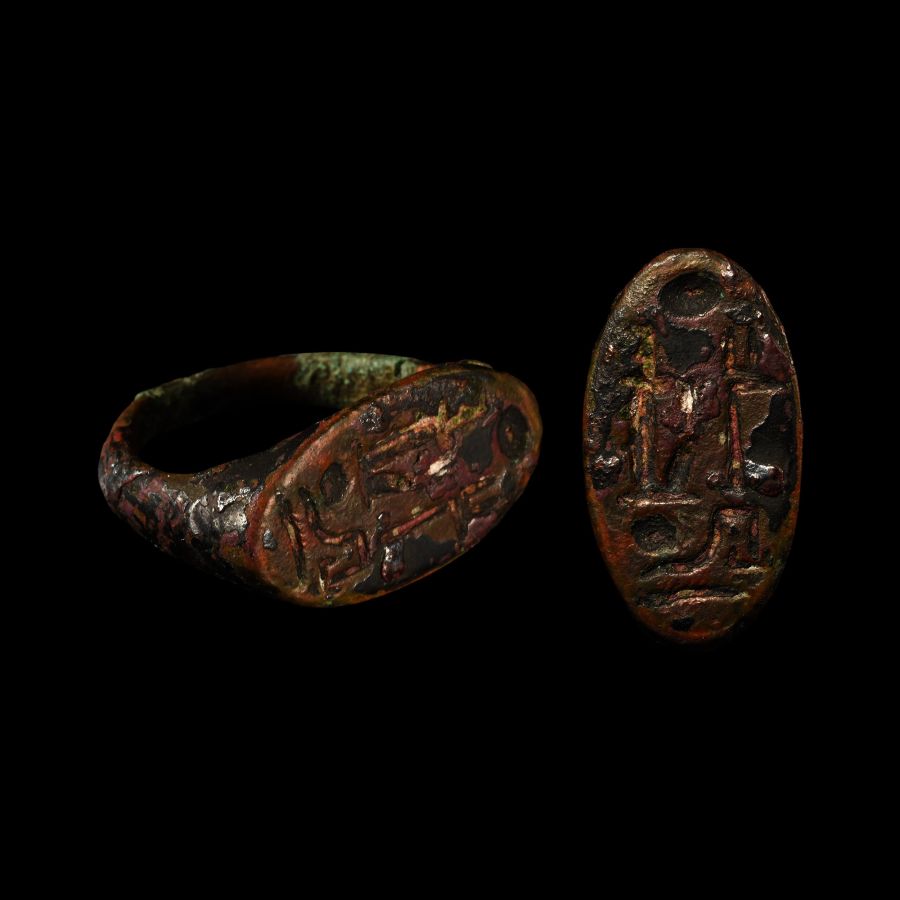
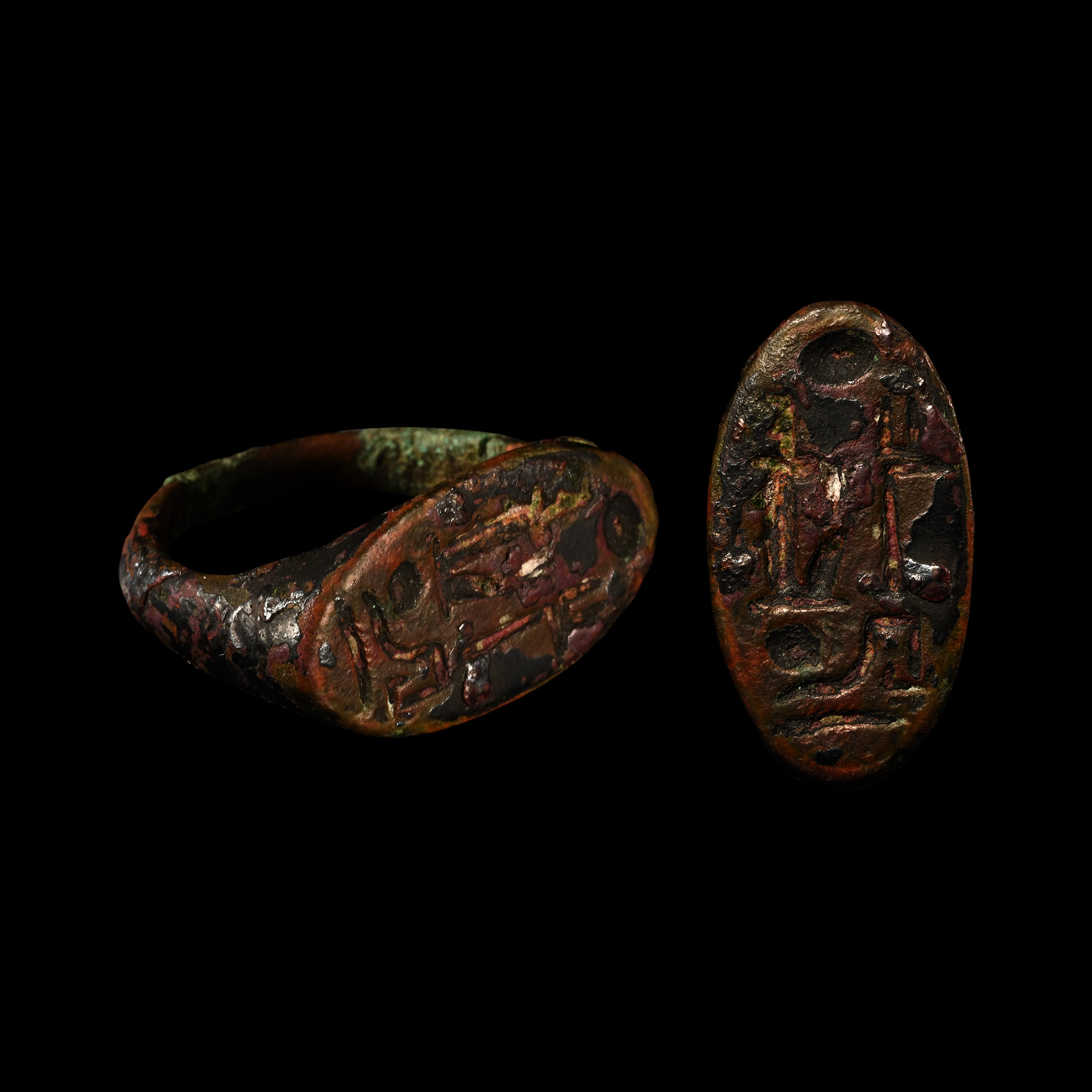
Egyptian Bronze Ring for Ramesses II
NEW KINGDOM, 19TH DYNASTY, 1303-1213 B.C.
1 in. (6.78 grams, 23.72 mm overall, 17.94 mm internal diameter (approximate size British Q, USA 8, Europe 17.49, Japan 16)).
D-shaped hoop and ellipsoid plaque, hieroglyphic text in low relief giving the regnal name of Ramesses II (User-Maat-Re Setep-en-Re).
ProvenanceEx R.K. collection, early 1980s.
UK private collection before 2000.
Property of a London gentleman.
This lot has been checked against the Interpol Database of stolen works of art and is accompanied by a search certificate number no.12082-217353.
Cf. Andrews, C., Ancient Egyptian Jewellery, London, 1990, p.165, no.148, for the type; Tinius, I., Altägypten in Braunschweig. Die Sammlungen des Herzog Anton Ulrich-Museums und des Städtischen Museums, Wiesbaden, 2011, p.175, no. 345, for a faience ring of similar style.
CONDITIONTimeLine Auctions follows a vetting process to ensure the authenticity and legality of all items, reinforcing our commitment to integrity and responsible trading. Each antiquity, antique, and coin lot undergoes thorough examination by a vetting committee of at least ten external specialists, professional trade association members, scientists, and archaeologists: Our Vetting Process
AUCTIONS:
TimeLine is a leading auction house specialising in antiquities, ancient art, collectables, natural history, coins, medals, and books. Our auctions offer museums, collectors, historians, and enthusiasts the opportunity to acquire unique and historically significant pieces.
-
Egyptian Bronze Cobra Mount
Late Period, 6th century B.C.Estimate: £1,200 - 1,700 (‡+bp*)
Opening Bid: £600
Cobra-shaped mount with head raised and hood expanded, two mounting studs to the reverse; mounted on a custom-made stand. 182 grams, 22 cm
Private Israeli collection. Ex Archaeological Center, Tel Aviv, Israel, 2015. Private European collection.
The mount most likely adorned the Atef crown of a statue of Osiris. -
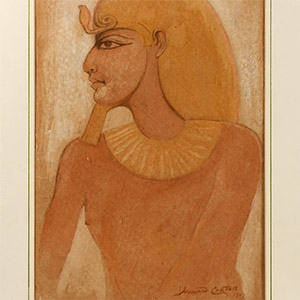
Egyptian Pharaoh Watercolour Attributed to Howard Carter
Dated 1917 A.D.Sold for (Inc. bp): £1,430
Profile bust of an Egyptian male in nemes headcloth with uraeus to the brow, wesekh segmented collar; signed bottom right 'Howard Carter, 1905'; board to reverse with pencilled note 'Hatshepsu' and inked 'Watercolour painting signed H carter 1905 / remnants of an old Philips auction label on verso', with pencilled star motif. 898 grams total, 38.5 x 31 cm
with old Phillips label to the verso.
Hatshepsut was the longest-reigning female ruler in Egyptian history (1473-1458 B.C.), who undertook several military expeditions. Howard Carter's father, Samuel, was an illustrator for the Illustrated London News in the later 1800s. In 1891, Howard Carter accompanied Percy Newberry on an expedition focussing on First Intermediate Period tombs at the Middle Egyptian site of Beni Hasan, from which many of his original pieces survive. During his time at El-Amarna, the excavator Flinders-Petrie took Carter to visit the newly discovered royal tomb of Pharaoh Akhenaten. Carter made some sketches there which were published in The Daily Graphic on March 23, 1892, accompanying Petrie’s article on the tomb. These sketches were the first Egyptian drawings published by Howard Carter, and the first to convey the uniqueness of Amarna art to the European public. -
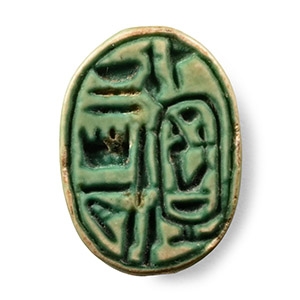
Egyptian Faience Scarab for Amenhotep III
New Kingdom, 18th Dynasty, 1410-1372 B.C.Sold for (Inc. bp): £1,300
Modelled with carapace and mouth details, the underside with hieroglyphic text giving the dedication: 'the good god, lord of the Two Lands, beloved of Amun', with the cartouche containing the throne name of Amenhotep III (Neb-Maat-Re). 2.53 grams, 17 mm
From the collection of Doctor Girard, a collector for over 60 years. with Hotel des Ventes de Clermont-Ferrand, 22 May 2017. Property of a French collector.
