
Loading, please wait...
LOT 0520
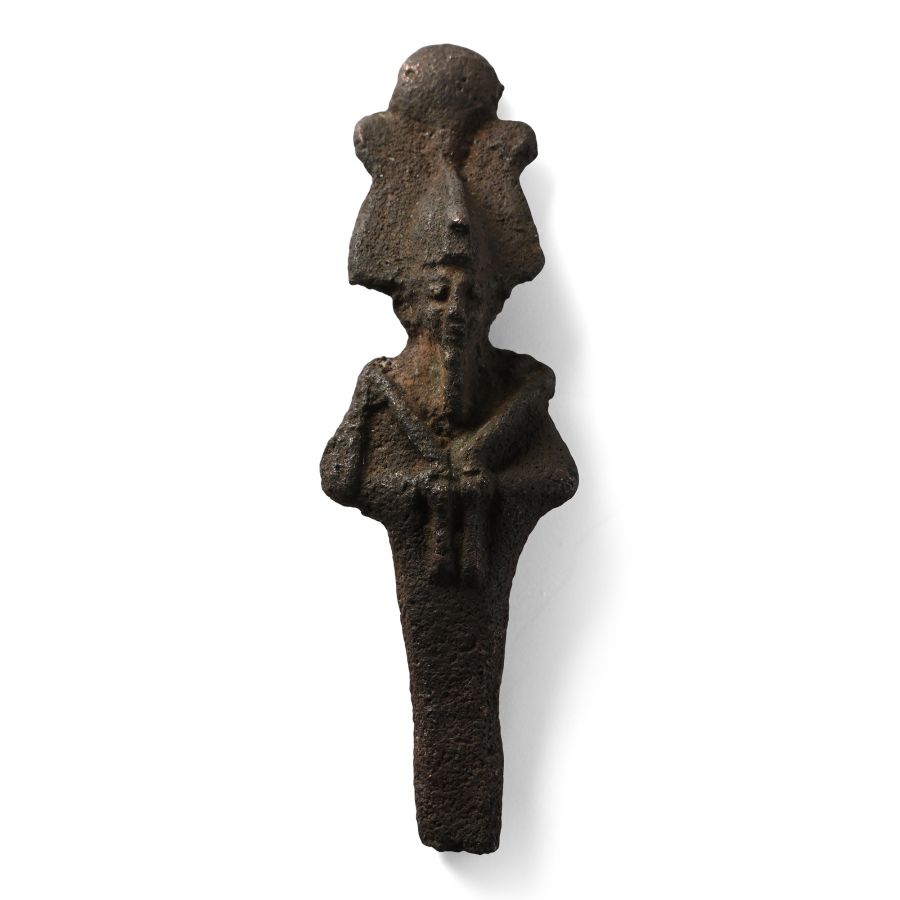
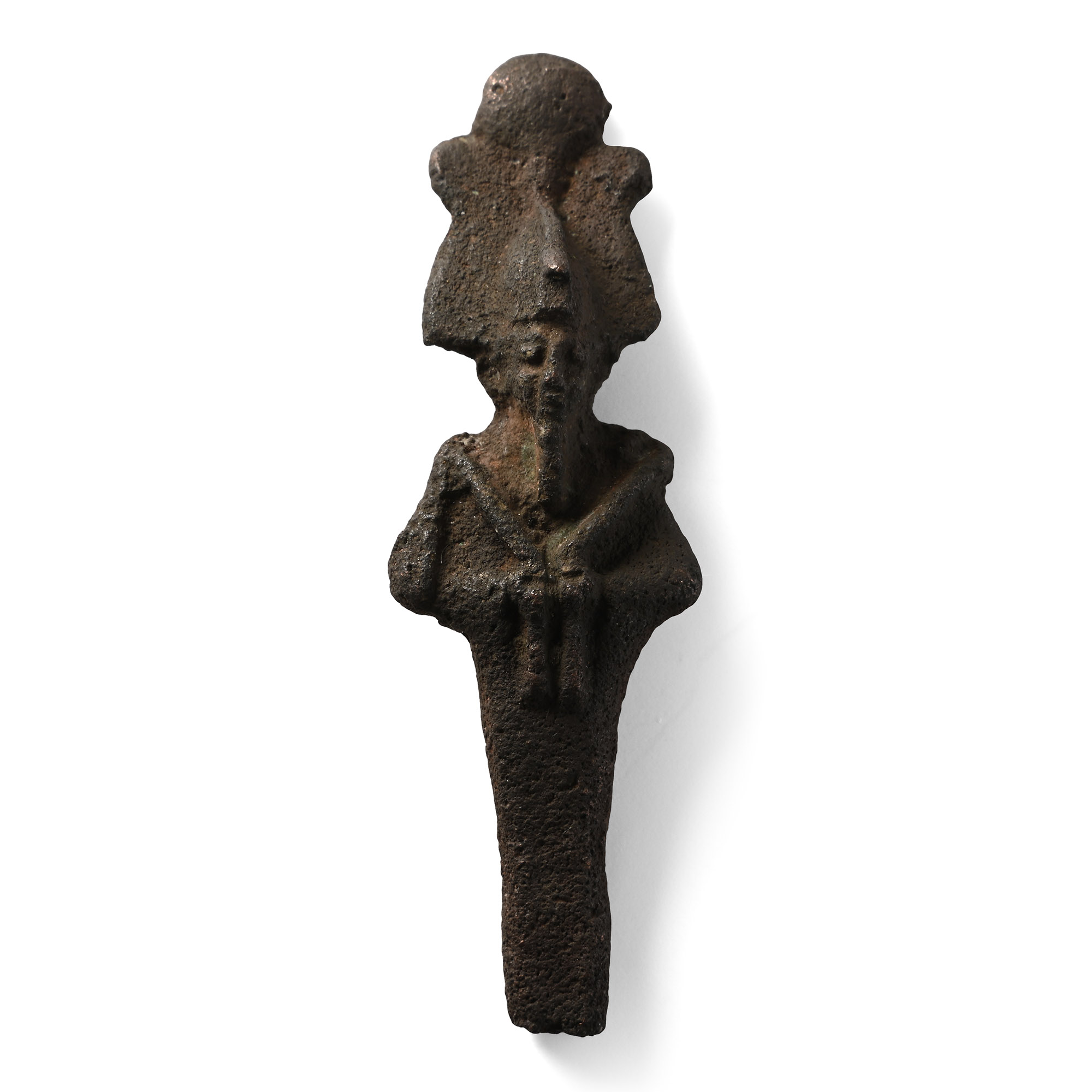
Egyptian Bronze Osiris Statuette
LATE-PTOLEMAIC PERIOD, CIRCA 664-30 B.C.
2 3/8 in. (17.5 grams, 62 mm).
A slender standing figure of Osiris in iconic mummiform appearance, wearing the tall conical Atef crown with its flanking ostrich plumes, and central uraeus, a long, internally detailed divine beard, and holding the crook (heka) and flail (nekhakha) regalia. [No Reserve]
ProvenanceFrom the collection of a gentleman, acquired on the London art market in the 1990s.
CONDITIONTimeLine Auctions follows a vetting process to ensure the authenticity and legality of all items, reinforcing our commitment to integrity and responsible trading. Each antiquity, antique, and coin lot undergoes thorough examination by a vetting committee of at least ten external specialists, professional trade association members, scientists, and archaeologists: Our Vetting Process
AUCTIONS:
TimeLine is a leading auction house specialising in antiquities, ancient art, collectables, natural history, coins, medals, and books. Our auctions offer museums, collectors, historians, and enthusiasts the opportunity to acquire unique and historically significant pieces.
-
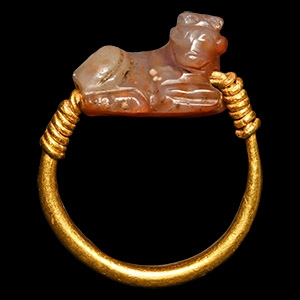
Egyptian Gold Ring with Agate Bull
New Kingdom, 1550-1292 B.C.Estimate: £6,000 - 8,000 (+bp*)
Opening Bid: £3,250
Comprising a round-section swivel ring set with a carved Apis bull depicted recumbent with its head turned to right. 4.71 grams, 27.98 mm overall, 19.07 mm internal diameter (approximate size British N, USA 6 1/2, Europe 13.72, Japan 13)
Private collection, UK. This lot has been checked against the Interpol Database of stolen works of art and is accompanied by search certificate number no.12939-245988.
The Apis bull was a sacred animal in ancient Egyptian religion, worshipped as a living manifestation of the god Ptah and later associated with Osiris and Ra. Regarded as an intermediary between the gods and humanity, the Apis bull was chosen based on specific physical characteristics, such as a black coat with unique white markings. Once identified, it was housed in a grand temple in Memphis, where it was treated with great reverence, adorned with jewellery, and participated in important religious ceremonies. Upon its death, the bull underwent elaborate mummification and burial rituals, symbolising its transition to the afterlife and its continued divine role. The cult of the Apis bull highlights the Egyptians’ deep connection to animals as symbols of divine power and their belief in the interconnectedness of the mortal and spiritual worlds. -
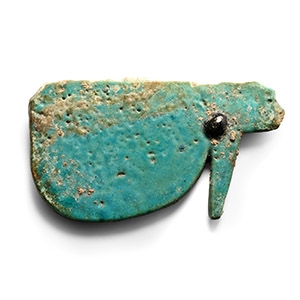
Large Egyptian Blue Glazed Eye of Horus Amulet
Late Period, 664-332 B.C.Sold for (Inc. bp): £65
Wedjat amulet with applied black detailing to the pupil; upper edge absent. 11 grams, 59 mm
with Archaeologia, Switzerland, before 1983. Ex private North American collection. London private collection, 2016. -
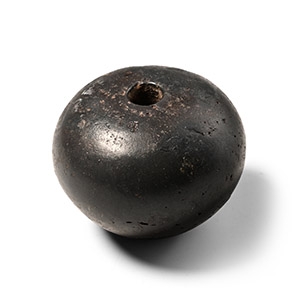
Egyptian Hematite Macehead
3rd millennium B.C.Sold for (Inc. bp): £325
Piriform with narrow socket tapering to the socket's mouth. 323 grams, 54 mm
Acquired 1970s-1996. Property of a North American collector. London collection, 2016.
