
Loading, please wait...
_900x900.jpg "Egyptian Bronze Offering Table with Ramesses II Cartouche")
_200x200.jpg "Egyptian Bronze Offering Table with Ramesses II Cartouche")
_900x900.jpg "Egyptian Bronze Offering Table with Ramesses II Cartouche")
_200x200.jpg "Egyptian Bronze Offering Table with Ramesses II Cartouche")
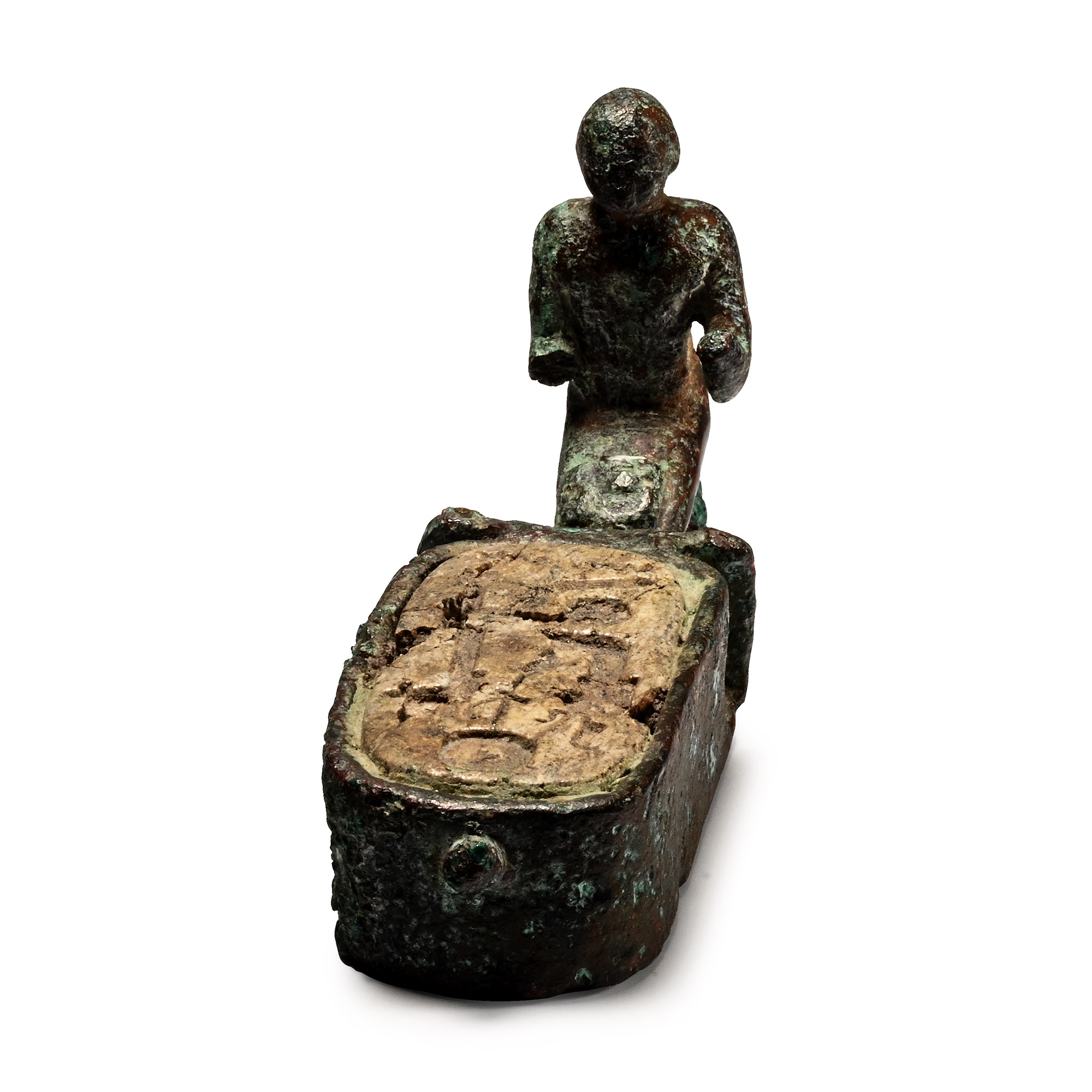
.jpg "Egyptian Bronze Offering Table with Ramesses II Cartouche")
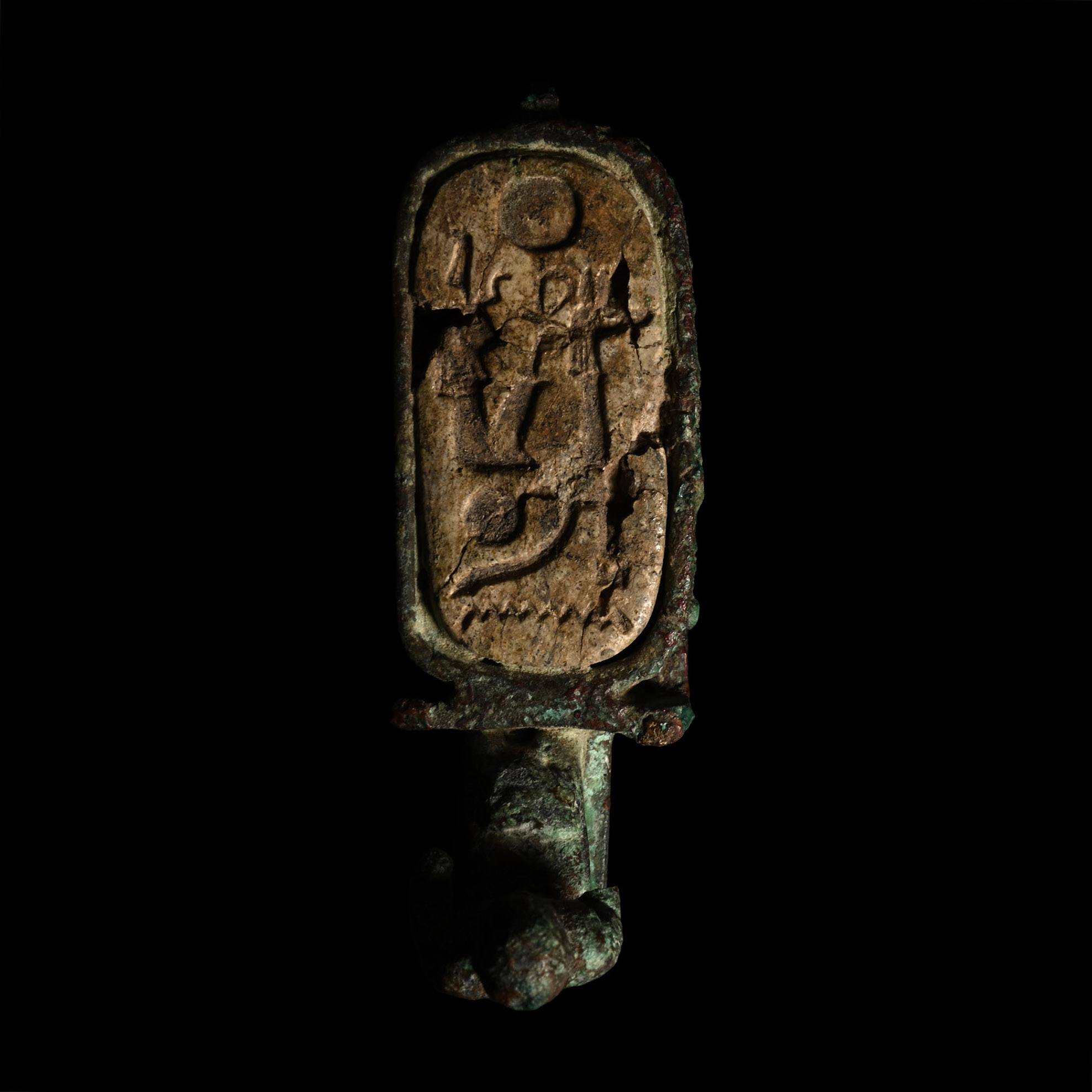
.jpg "Egyptian Bronze Offering Table with Ramesses II Cartouche")
LOT 0004
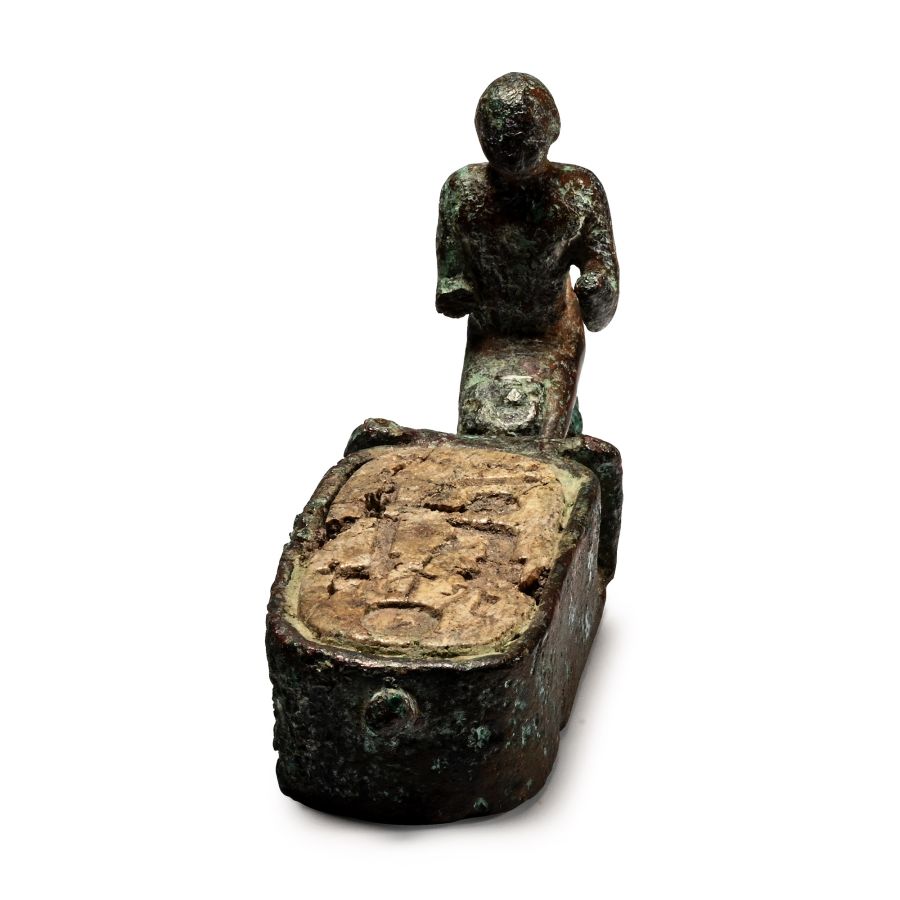
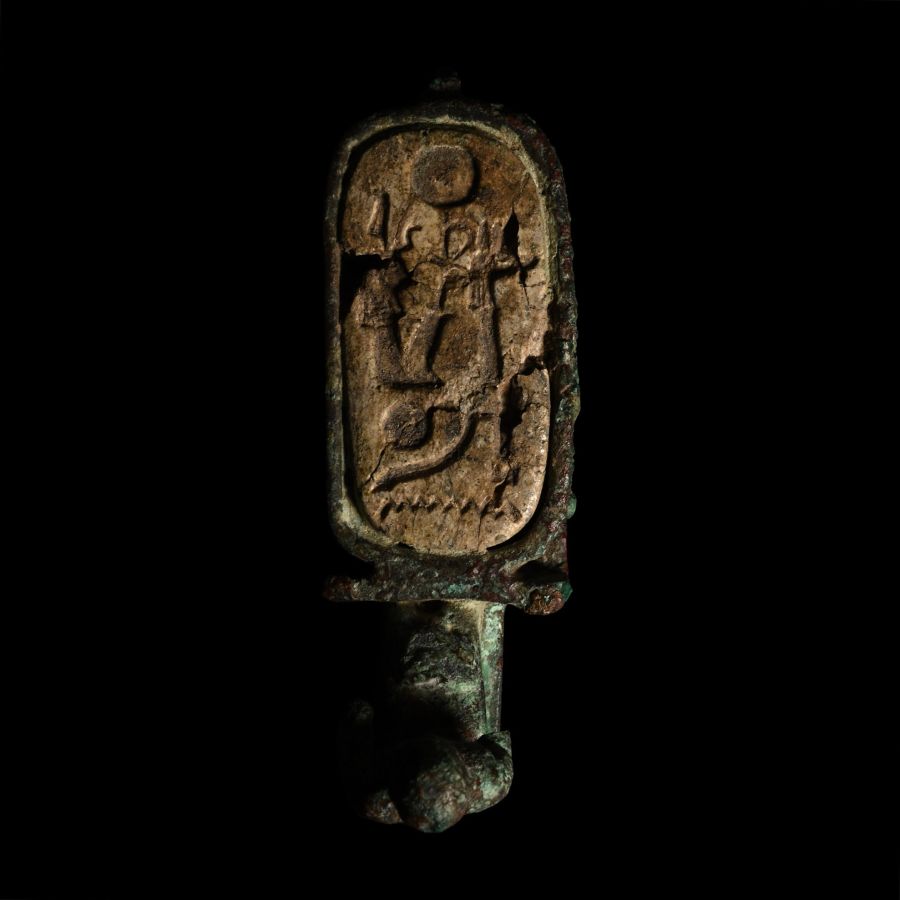
Egyptian Bronze Offering Table with Ramesses II Cartouche
NEW KINGDOM, CIRCA 13TH CENTURY B.C.
3 in. (118 grams, 78 mm).
Hollow-formed representation of a cartouche featuring a figure of a kneeling offerant at one end; the cartouche inlaid with a panel incised with Setepenre Usermaatre and hieroglyphic text, along with two attachment holes on the underside.
ProvenanceAcquired on the German art market, 1989-1995.
with The Museum Gallery, 19 Bury Place, London, WC1, UK, 1998-2003.
Property of a London based academic, 2003 to present.
This lot has been cleared against the Art Loss Register database, and is accompanied by an illustrated lot declaration signed by the Head of the Antiquities Department, Dr Raffaele D'Amato.
Cf. Roeder, G., Ägyptische Bronzefiguren I, Berlin, 1956, p. 433, for discussion and an example of this type of object.
FootnotesThis type of object seems to have served as a symbolic offering. Its resemblance to the primary element of an incense burner may imply a ritual connection.
CONDITIONTimeLine Auctions follows a vetting process to ensure the authenticity and legality of all items, reinforcing our commitment to integrity and responsible trading. Each antiquity, antique, and coin lot undergoes thorough examination by a vetting committee of at least ten external specialists, professional trade association members, scientists, and archaeologists: Our Vetting Process
AUCTIONS:
TimeLine is a leading auction house specialising in antiquities, ancient art, collectables, natural history, coins, medals, and books. Our auctions offer museums, collectors, historians, and enthusiasts the opportunity to acquire unique and historically significant pieces.
LOT 0004
Egyptian Bronze Offering Table with Ramesses II Cartouche
Sold for (Inc. bp): £1,755
-
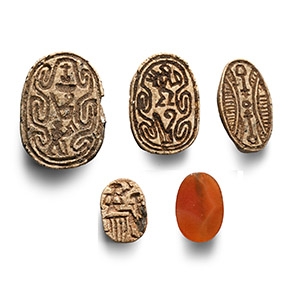
Egyptian Mixed Scarab Collection
Mostly Late Period, 664-332 B.C.Estimate: £500 - 700 (+bp*)
Opening Bid: £250
Comprising: three faience scarabs with detailed bodies and hieroglyphs on the underside; one carnelian scarab with plain base; one scaraboid with hieroglyphs to the underside. 22.75 grams total, 15-28 mm
From the collection of a gentleman, acquired on the London art market in the 1990s. This lot is accompanied by an illustrated lot declaration signed by the Head of the Antiquities Department, Dr Raffaele D'Amato. -
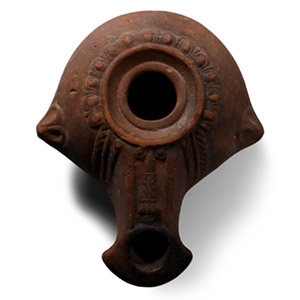
Egyptian Terracotta Oil Lamp
Ptolemaic Period, circa 200-50 B.C.Sold for (Inc. bp): £169
Rounded body with large filler hole and two pointed lugs on the shoulder, the rim with a low-relief ovolo decoration, elongated nozzle with a low-relief pillar motif; low basal ring. 60 grams, 92 mm
with Galerie Rhéa, Zurich, Switzerland. This lot is accompanied by an illustrated lot declaration signed by the Head of the Antiquities Department, Dr Raffaele D'Amato. -
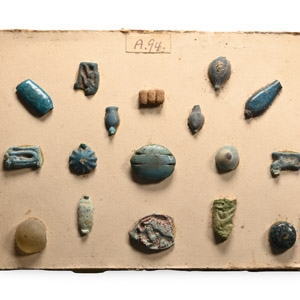
Egyptian Faience Bead and Amulet Collection
Late-Ptolemaic Period, 664-30 B.C.Sold for (Inc. bp): £520
Including floral, poppy seed, uraeus, an eye bead, a bull with solar disc, a standing deity holding a sceptre, and other types; mounted on cardboard backing with collector's label 'A.94.'. 24 grams total, 11.4 x 8.4 cm
From the private collection of Walter Thomas Gaze Cooper (1895-1980). This lot is accompanied by an illustrated lot declaration signed by the Head of the Antiquities Department, Dr Raffaele D'Amato.
