
Loading, please wait...
LOT 0476
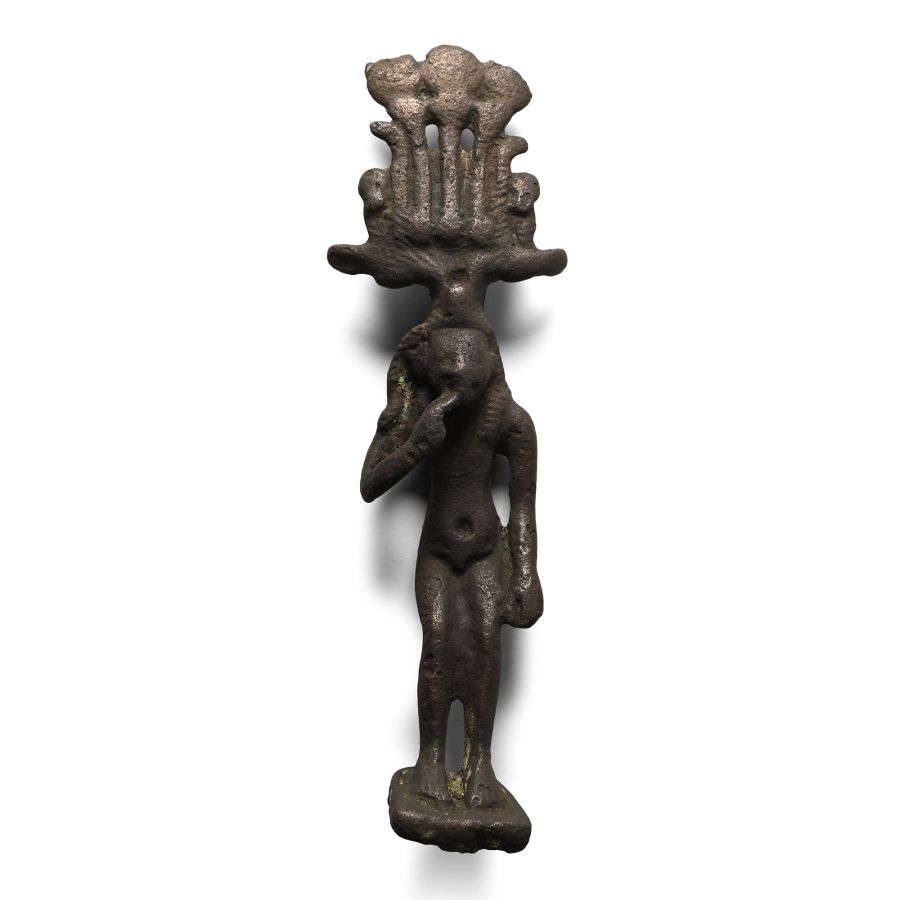
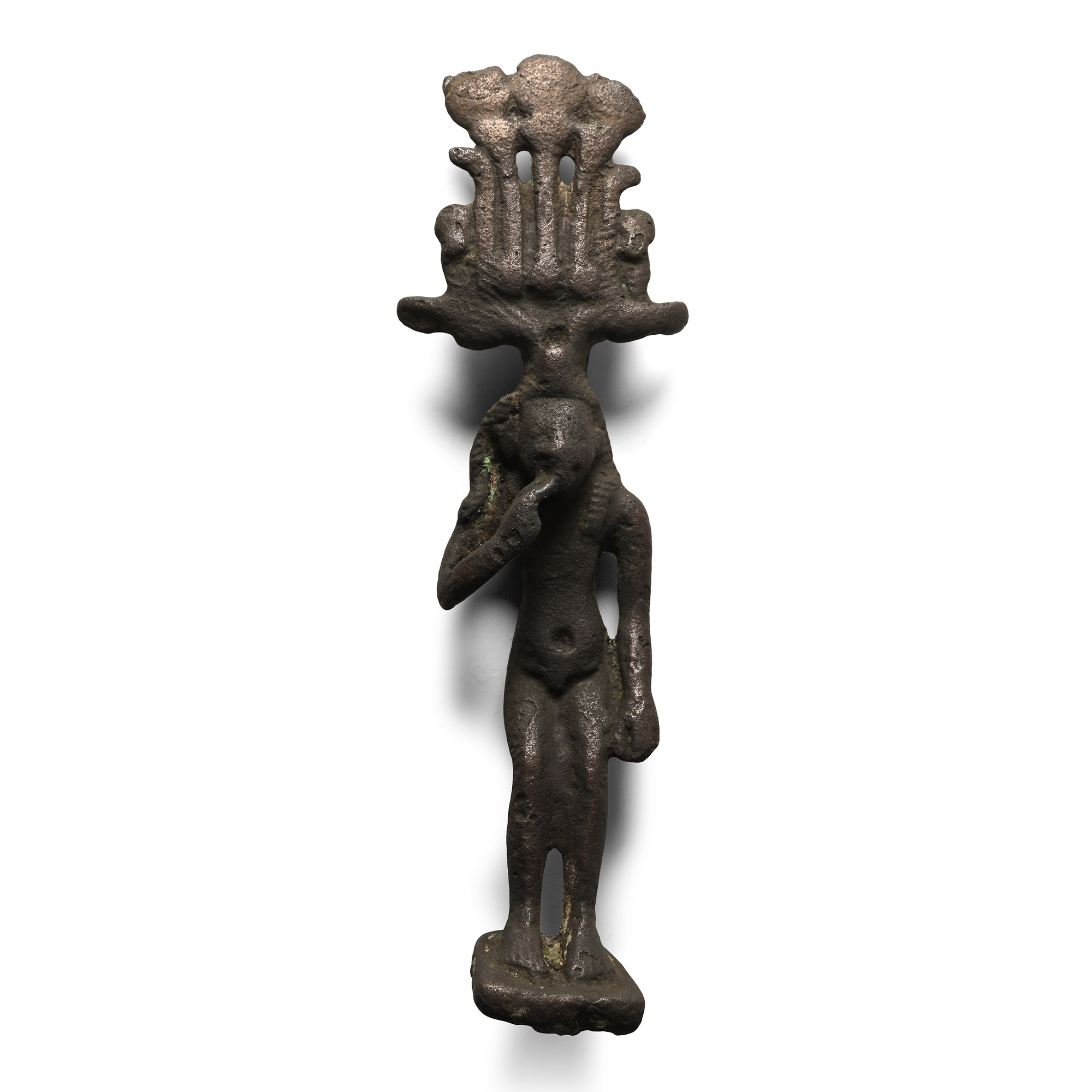
Egyptian Bronze Harpokrates Statuette
LATE-PTOLEMAIC PERIOD, 664-30 B.C.
4 1/4 in. (59 grams, 10.7 cm).
Devotional figurine of Harpokrates seated with his hand raised to his mouth, wearing a nemes headdress with curled side lock, topped by an elaborate hem-hem crown characteristic of the god.
ProvenanceFrom the collection of a gentleman, acquired on the London art market in the 1990s.
LiteratureCf. Roeder, G., Ägyptische Bronzefiguren II, Berlin, 1956, pl. 22a, for a similar example.
FootnotesHarpokrates is the Greek rendering of the Egyptian name Hor-pa-khered, which means ‘Horus the Child’. This name refers to Horus as the divine infant of Isis and Osiris. Wearing an amulet of Harpokrates was believed to offer the same protection that Isis granted to her beloved son. Larger bronze statuettes like this example were likely votive offerings to Harpokrates to secure his favour and protection.
CONDITIONTimeLine Auctions follows a vetting process to ensure the authenticity and legality of all items, reinforcing our commitment to integrity and responsible trading. Each antiquity, antique, and coin lot undergoes thorough examination by a vetting committee of at least ten external specialists, professional trade association members, scientists, and archaeologists: Our Vetting Process
AUCTIONS:
TimeLine is a leading auction house specialising in antiquities, ancient art, collectables, natural history, coins, medals, and books. Our auctions offer museums, collectors, historians, and enthusiasts the opportunity to acquire unique and historically significant pieces.
LOT 0476
Egyptian Bronze Harpokrates Statuette
Estimate £250 - 350€290 - 410 (for guidance only)$340 - 470 (for guidance only)
-
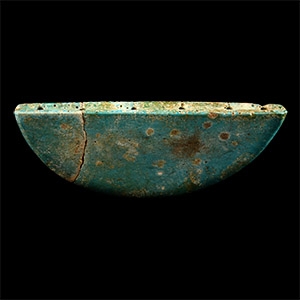
Large Egyptian Blue Glazed Solar Bead
1st millennium B.C.Sold for (Inc. bp): £52
Flat and crescent-shaped with transverse piercings to the reverse; an end spacer for a multi-strand necklace. 24 grams, 82 mm wide
with Archaeologia, Switzerland, before 1983. Ex private North American collection. London private collection, 2016. -
.jpg)
Egyptian Black Stone Amulet with Cartouche
Late Period, 664-332 B.C.Sold for (Inc. bp): £416
Carved in low relief with hieroglyphs to the sub-rectangular plaque, with two feathers above; integral pierced lug to reverse. 3.15 grams, 29.8 mm
with Archaeologia, Switzerland, before 1983. Ex private North American collection. London private collection, 2016. -
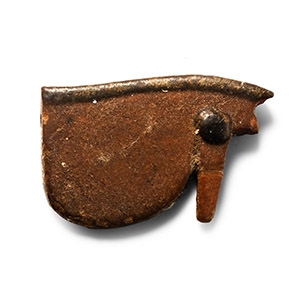
Egyptian Brown Glazed Eye of Horus Amulet
Late Period, 664-332 B.C.Sold for (Inc. bp): £39
Wedjat amuletic bead in dark brown faience with applied black detailing to the pupil and brow. 8.63 grams, 44 mm
with Archaeologia, Switzerland, before 1983. Ex private North American collection. London private collection, 2016.
