
Loading, please wait...
LOT 0536
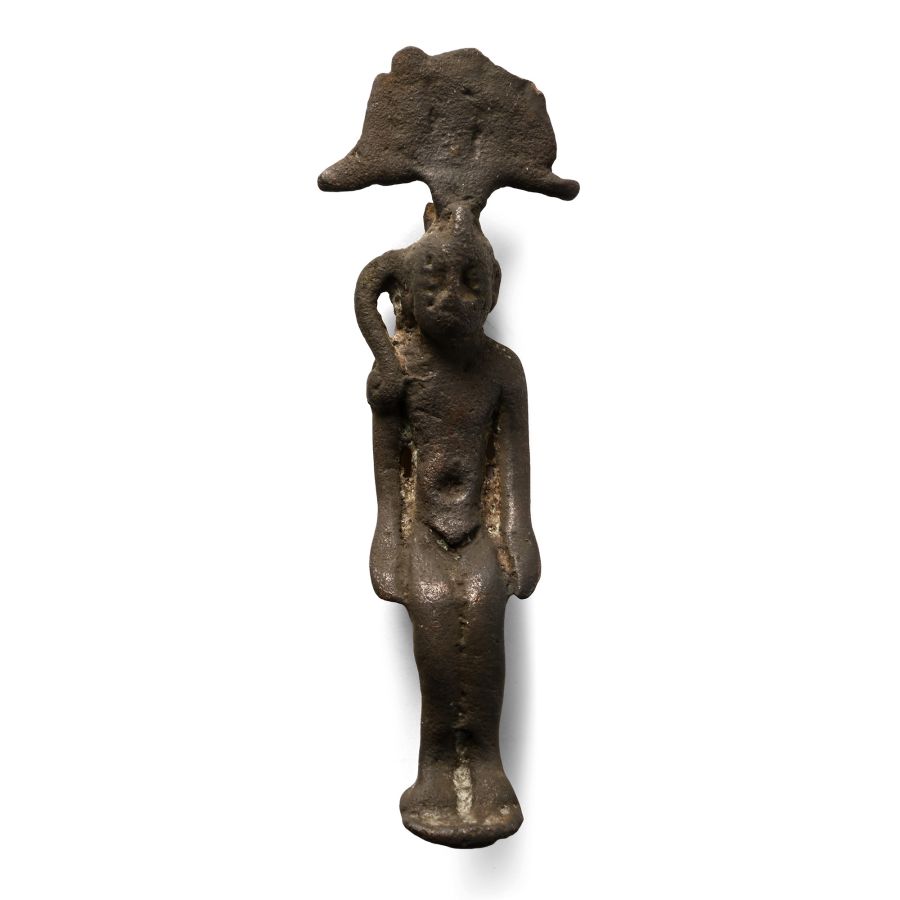
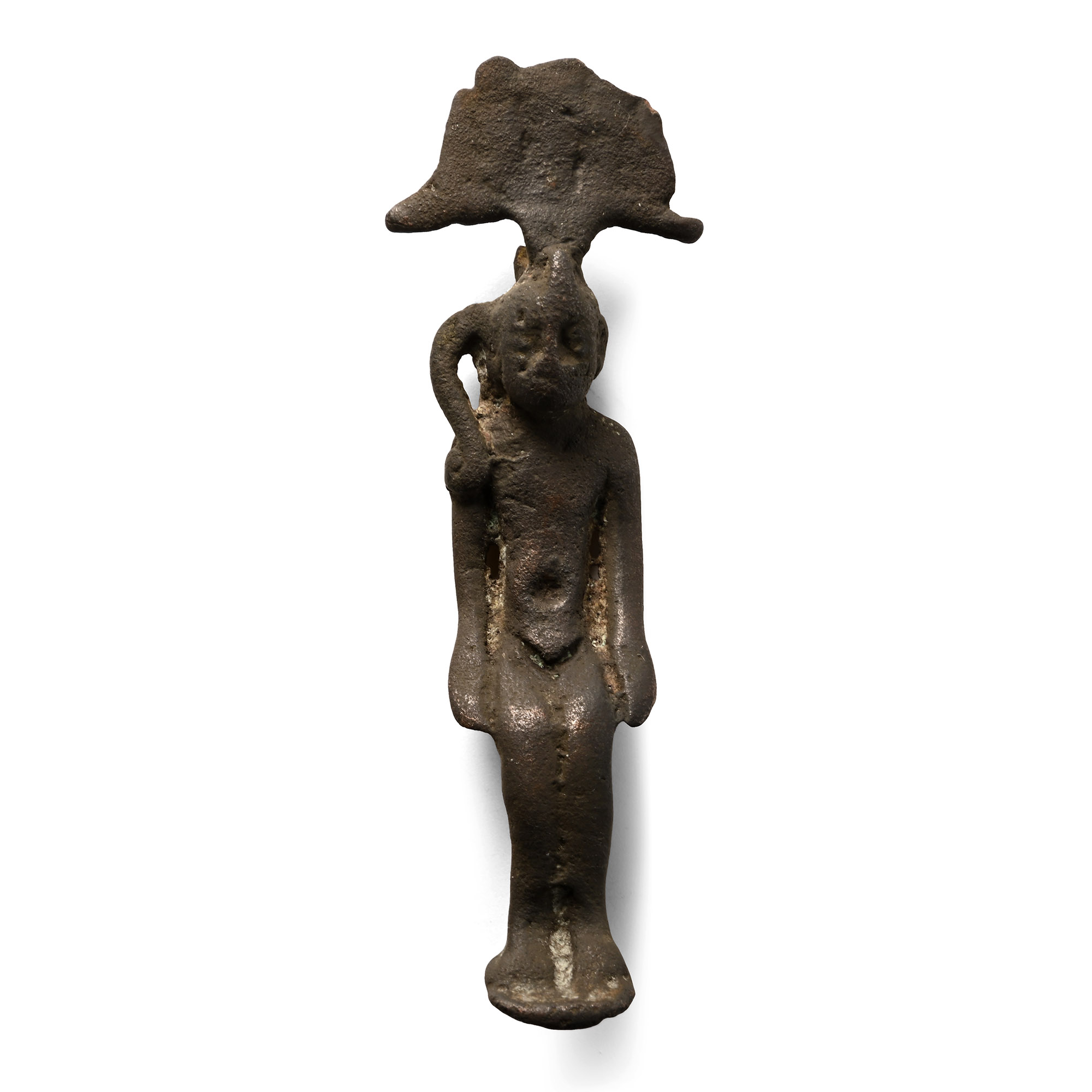
Egyptian Bronze Harpokrates Pendant
LATE-PTOLEMAIC PERIOD, 664-30 B.C.
2 7/8 in. (20.7 grams, 72 mm).
Modelled seated with his arms by his sides, wearing a sidelock of youth and the remains of an elaborate hem-hem crown; partial suspension loop behind the headdress.
ProvenanceFrom the collection of a gentleman, acquired on the London art market in the 1990s.
LiteratureCf. Roeder, G., Ägyptische Bronzefiguren II, Berlin, 1956, pl. 20e, for a similar example.
FootnotesHarpocrates is the Greek version of the Egyptian Hor-pa-khered, which means ‘Horus the Child’. This name refers to Horus as the divine infant of Isis and Osiris. Wearing an amulet of Harpocrates was believed to provide the same protection that Isis offered to her beloved son.
CONDITIONTimeLine Auctions follows a vetting process to ensure the authenticity and legality of all items, reinforcing our commitment to integrity and responsible trading. Each antiquity, antique, and coin lot undergoes thorough examination by a vetting committee of at least ten external specialists, professional trade association members, scientists, and archaeologists: Our Vetting Process
AUCTIONS:
TimeLine is a leading auction house specialising in antiquities, ancient art, collectables, natural history, coins, medals, and books. Our auctions offer museums, collectors, historians, and enthusiasts the opportunity to acquire unique and historically significant pieces.
LOT 0536
Egyptian Bronze Harpokrates Pendant
Estimate £150 - 200€170 - 230 (for guidance only)$200 - 270 (for guidance only)
-
.jpg)
Egyptian Black Stone Amulet with Cartouche
Late Period, 664-332 B.C.Sold for (Inc. bp): £416
Carved in low relief with hieroglyphs to the sub-rectangular plaque, with two feathers above; integral pierced lug to reverse. 3.15 grams, 29.8 mm
with Archaeologia, Switzerland, before 1983. Ex private North American collection. London private collection, 2016. -
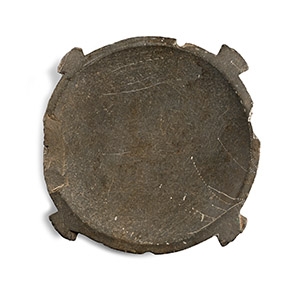
Egyptian Schist Plate
Middle Kingdom, 2040-1782 B.C.Estimate: £650 - 850 (‡+bp*)
Opening Bid: £325
Discoid palette with rounded underside and flat base, dished central field, flat rim with four radiating trapezoidal projections. 450 grams, 16.4 cm
Acquired in the mid 1980s-1990s. Private collection, Switzerland, thence by descent. Private collection, since the late 1990s. Accompanied by a copy of an Art Loss Register certificate no.S00038135. -
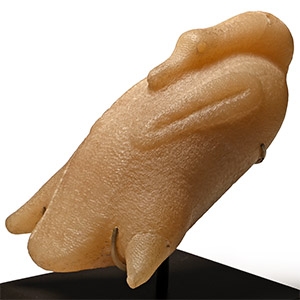
Egyptian Alabaster Trussed Duck
Old Kingdom, 6th Dynasty, circa 2345-2181 B.C.Estimate: £7,000 - 9,000 (+bp*)
Opening Bid: £3,500
Carved in the round with the head and neck laid backwards along the spine; mounted on a custom-made stand. 890 grams total, 10 cm wide including stand
Acquired before 1970. Private French collection. with Bonhams, New Bond Street, London, 29 April 2009, lot 58. Ex Middle Eastern royal family, living in the UK, 2013-2017. Accompanied by a copy of a French cultural passport no.099505. Accompanied by a copy of an Art Loss Register certificate, no.S000149104. Accompanied by a copy of the relevant Bonhams catalogue pages. This lot has been checked against the Interpol Database of stolen works of art and is accompanied by search certificate number no.12942-245247.
In ancient Egypt, the duck (actually the Egyptian goose) was considered a sacred and very popular animal, often depicted in art and associated with symbolic meanings. It was a common bird in the Nile Valley and considered a symbol of fertility, life, and family, which is why it frequently appeared in scenes of daily life and rituals, and in the artworks.
