
Loading, please wait...
LOT 0035
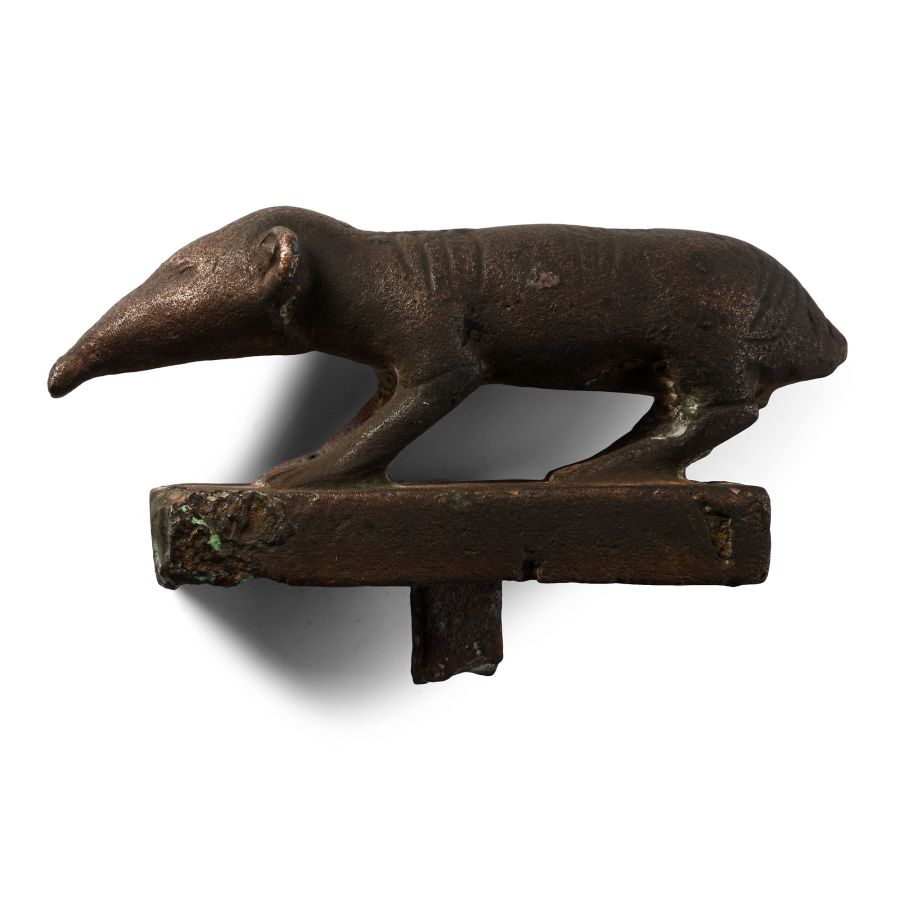
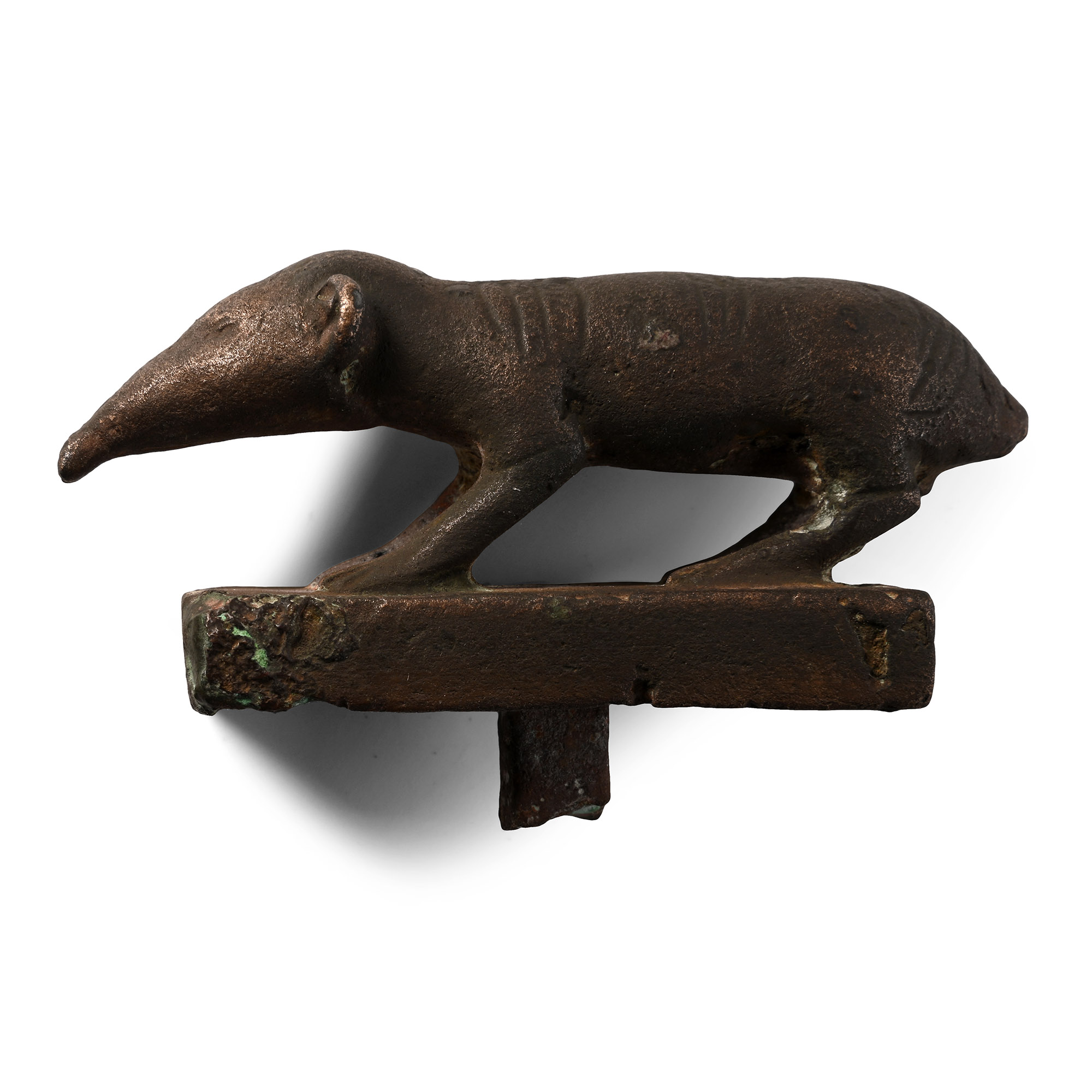
Egyptian Bronze Figure of a Shrew
LATE-PTOLEMAIC PERIOD, 664-30 B.C.
1 7/8 in. (145 grams, 73 mm).
Modelled in the round in a crouching pose on a rectangular base with an attachment peg.
ProvenanceFrom the collection of a gentleman, acquired on the London art market in the 1990s.
LiteratureCf. Roeder, G., Ägyptische Bronzefiguren II, Berlin, 1956, pl. 54g, for similar.
FootnotesThis figure most likely comes from a shrew coffin or votive statuette. The dwarf shrew (Crocidura nana) and Flower’s shrew (Crocidura floweri) were among many animal species buried in dedicated cemeteries across various parts of Egypt. Ironically, these tiny creatures symbolised Horus in his raptor-headed form — a figure who, in reality, would have preyed upon them. Shrews were associated with Khenty-irty, the “seeing-and-blind god,” due to their ability to navigate darkness. It may be possible to read the shrew’s symbolism as that of seeking light in darkness, representing the Egyptian belief in the deceased’s journey through the hours of the night before rebirth at dawn. Radiographic analysis of a bundle containing about twenty-one shrews shows that they were dried whole, with no evisceration, preserved by being ‘pickled’ in natron.
CONDITIONTimeLine Auctions follows a vetting process to ensure the authenticity and legality of all items, reinforcing our commitment to integrity and responsible trading. Each antiquity, antique, and coin lot undergoes thorough examination by a vetting committee of at least ten external specialists, professional trade association members, scientists, and archaeologists: Our Vetting Process
AUCTIONS:
TimeLine is a leading auction house specialising in antiquities, ancient art, collectables, natural history, coins, medals, and books. Our auctions offer museums, collectors, historians, and enthusiasts the opportunity to acquire unique and historically significant pieces.
-
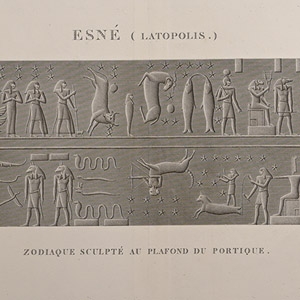
Very Large Egyptian Expedition Lithograph of Reliefs at Esna
Early 19th century A.D.Estimate: £100 - 140 (+bp*)
Opening Bid: £50
Proof etching on laid paper of plate 79 from Vol .I of Description de l'Égypte : ou, Recueil des observations et des recherches qui ont été faites en Égypte pendant l'expédition de l'armée française. entitled Esné (Latopolis) Zodiaque sculpté au plafond du portique. 187 grams, 105 x 70 cm
From the collection of a North American priest. Acquired between 1981-1996. Property of a North American collector.
Produced between February 1802 and 1830 on the orders of Napoleon Bonaparte; published between 1809 and 1828. Just 1,000 copies were distributed to various institutions, printed on laid paper with an 'Égypte ancienne et moderne' watermark. The book is subtitled Recueil des observations et des recherches qui ont été faites en Égypte pendant l’expédition de l’Armée française, publié par les ordres de Sa Majesté l’Empereur Napoléon le Grand (Gathering of observations and discoveries which were made in Egypt during the expedition of the French army, published on the orders of His Majesty the Emperor Napoleon the Great). It was the world's first encyclopedia devoted exclusively to the remains of ancient Egypt. The plates of this book are the first to present the archaeological sites of Thebes (Luxor). The Temple of Khnum at Esna in Upper Egypt has elements from the New Kingdom, but most of it dates to the Ptolemaic and Roman periods. This elaborate zodiac dates to the reign of Ptolemy III. -
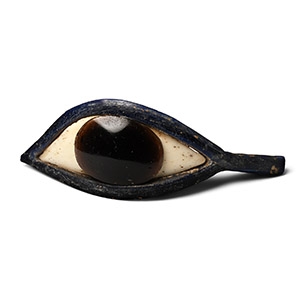
Egyptian Mummy Glass Eye
1st millennium B.C.Sold for (Inc. bp): £1,300
Comprising a blue glass frame with extended tear duct, inset with a white sclera and a large black pupil. 8.02 grams, 62 mm
Acquired in London or Japan, early 1980s. Property of a London, UK, gentleman. -
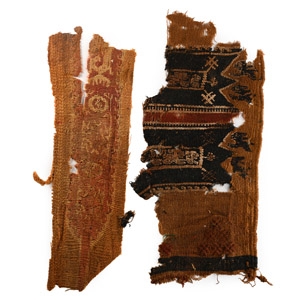
Egyptian Coptic Textile Fragment Group
Circa 4th-6th century A.D.Sold for (Inc. bp): £208
Comprising: terminal part of a clavus connected by a thin band to the missing orbiculus in red granate and coarse linen, S torsion, embroidered with stylised birds and palmettes; fragment of fabric, embroidered with two segments, in black, red granate and white wool, over a coarse linen background; the internal part of the segments decorated with motifs of running hares, the linen background with opposed running black hares. 61 grams total including package, 23-23.5 cm
Acquired 1970s-1996. Property of a North American collector. London collection, 2016.
The clavus and orbiculus ornamented a tunic of white linen, often given to soldiers or member of the military class. The stylised birds possibly represent swans.
