
Loading, please wait...
LOT 0477
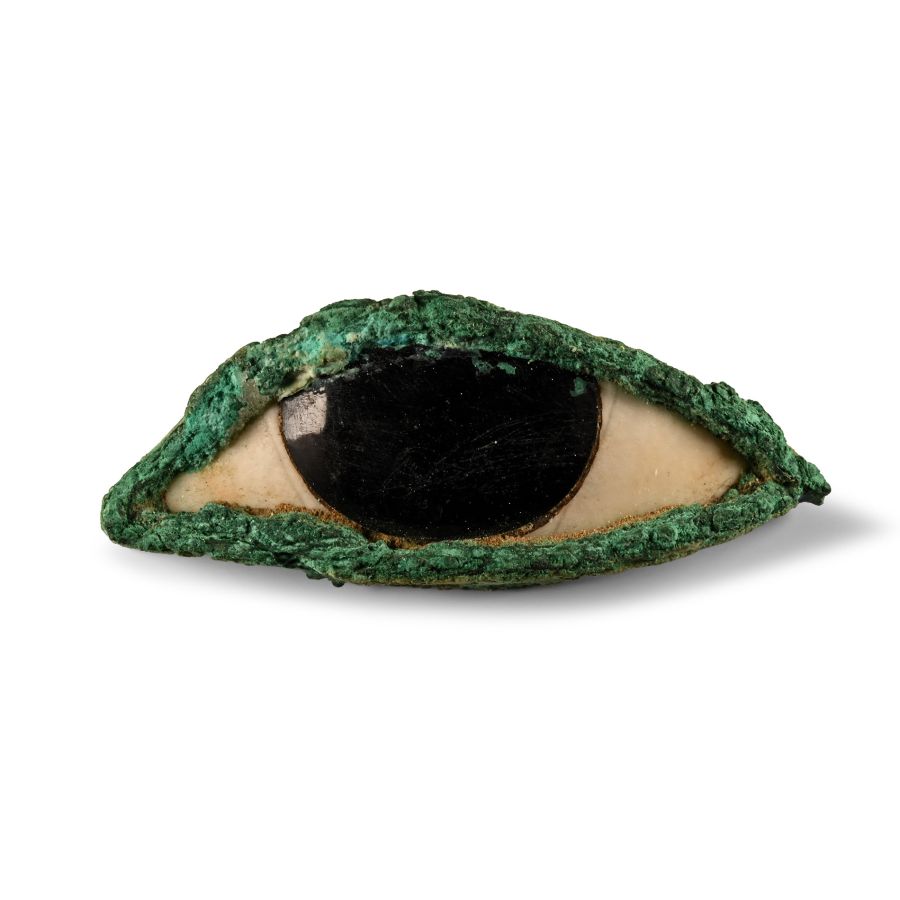
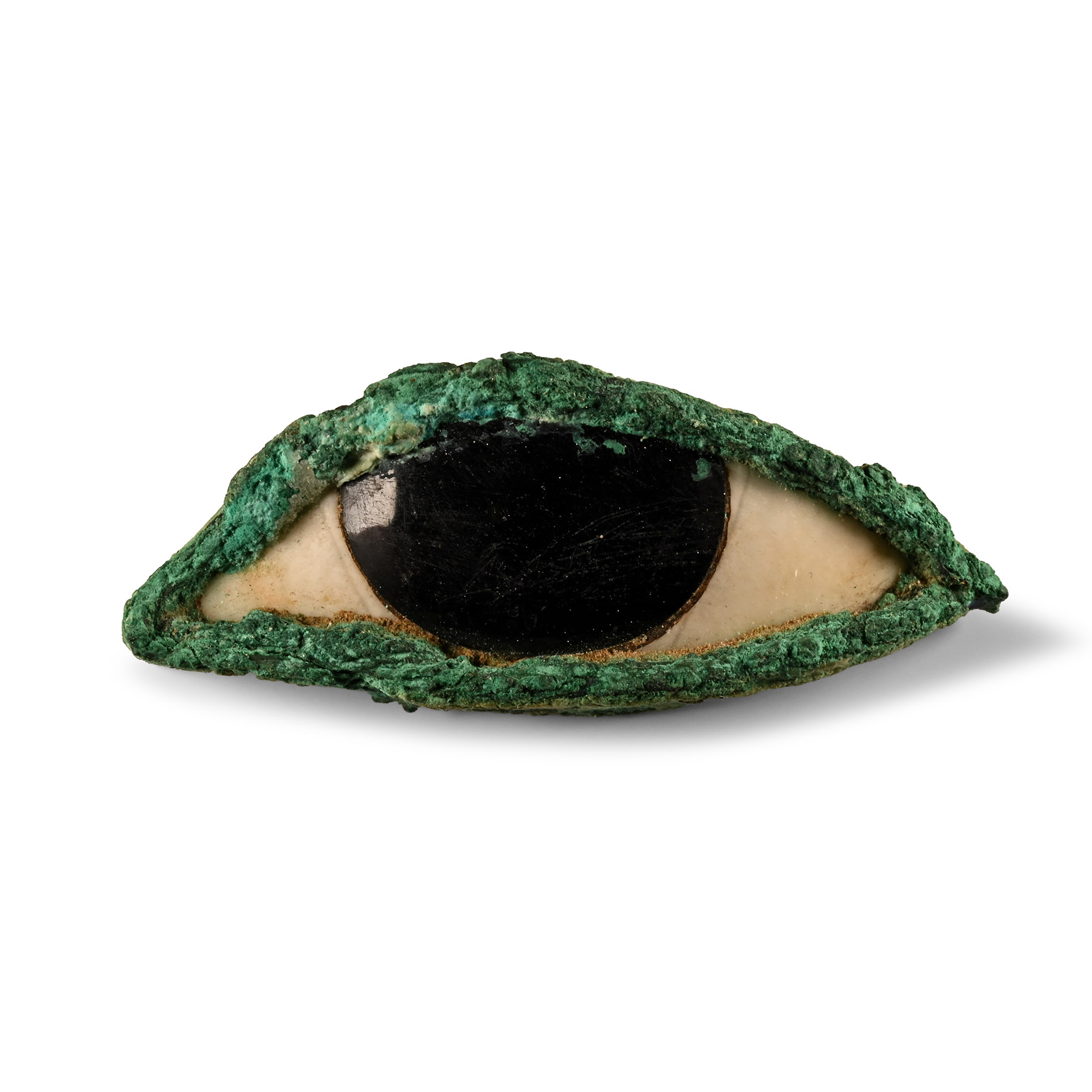
Egyptian Bronze Eye Inlay
LATE PERIOD, 664-332 B.C.
2 3/8 in. (33 grams, 62 mm).
Comprising a bronze frame with a delicately modelled tear duct, inset with a white hardstone scalera and a large black glass pupil.
ProvenanceEx AB collection, 1920s-1930s.
Accompanied by an old collection ticket.
Cf. Lacovara, P., Teasley Trope, B., and D’Auria, S.H., The Collector’s Eye: Masterpieces of Egyptian Art from The Thalassic Collection, Ltd., Atlanta, 2001, p.120, no.70, for similar inlaid eyes with faience frames.
FootnotesMummy masks were used as a protection over the deceased and were first introduced during the First Intermediate Period. The eyes were thought to fend off evil by reflecting it back to the one bestowing it.
CONDITIONTimeLine Auctions follows a vetting process to ensure the authenticity and legality of all items, reinforcing our commitment to integrity and responsible trading. Each antiquity, antique, and coin lot undergoes thorough examination by a vetting committee of at least ten external specialists, professional trade association members, scientists, and archaeologists: Our Vetting Process
AUCTIONS:
TimeLine is a leading auction house specialising in antiquities, ancient art, collectables, natural history, coins, medals, and books. Our auctions offer museums, collectors, historians, and enthusiasts the opportunity to acquire unique and historically significant pieces.
-
Egyptian Bronze Eye Inlay
Late Period, 664-332 B.C.Sold for (Inc. bp): £715
Comprising a bronze frame with a delicately modelled tear duct, inset with a white hardstone scalera and a large black glass pupil. 33 grams, 62 mm
Ex AB collection, 1920s-1930s. Accompanied by an old collection ticket.
Mummy masks were used as a protection over the deceased and were first introduced during the First Intermediate Period. The eyes were thought to fend off evil by reflecting it back to the one bestowing it. -
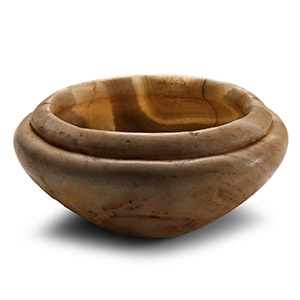
Egyptian Alabaster Bowl
1st Dynasty, circa 3000 B.C.Estimate: £1,800 - 2,400 (‡+bp*)
Opening Bid: £1,000
Of conical profile with flattened base, carinated shoulder and stepped rounded rim, possibly for accepting a lid. 380 grams, 11.6 cm wide
Property from an American deceased estate, acquired between 19770-1989. with Bonhams, London, 28 October 2009, no.16 (Part). Private European collection. Accompanied by copies of the relevant Bonhams catalogue pages. This lot has been checked against the Interpol Database of stolen works of art and is accompanied by a search certificate number no.12071-215259. -
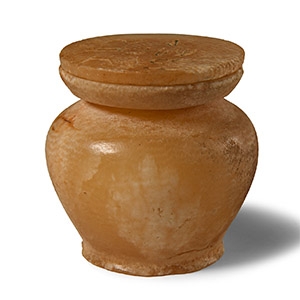
Egyptian Alabaster Kohl Pot
Middle Kingdom, circa 2035-1665 B.C.Sold for (Inc. bp): £715
Barrel-shaped with broad flat rim; with later hieroglyphic inscription to the lid. 115 grams, 47 mm high with lid
Acquired in the mid 1980s-1990s. From the family collection of Mr S.A., Switzerland, thence by descent. Private collection since the late 1990s.
