
Loading, please wait...
LOT 0037
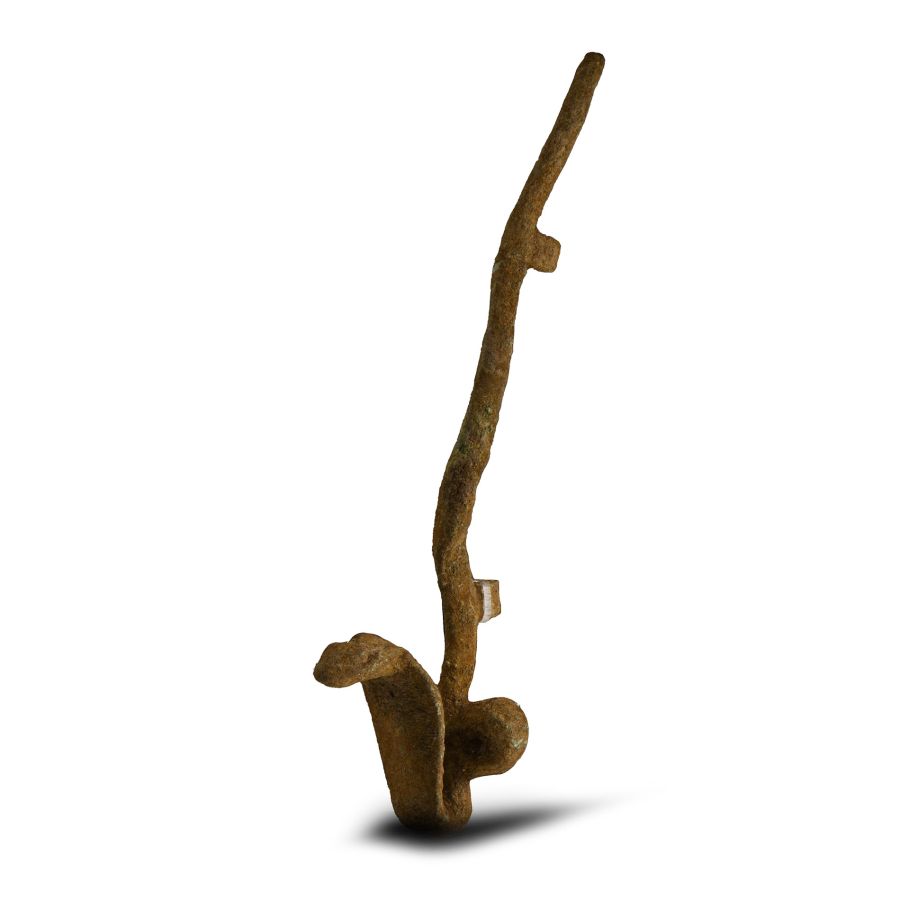
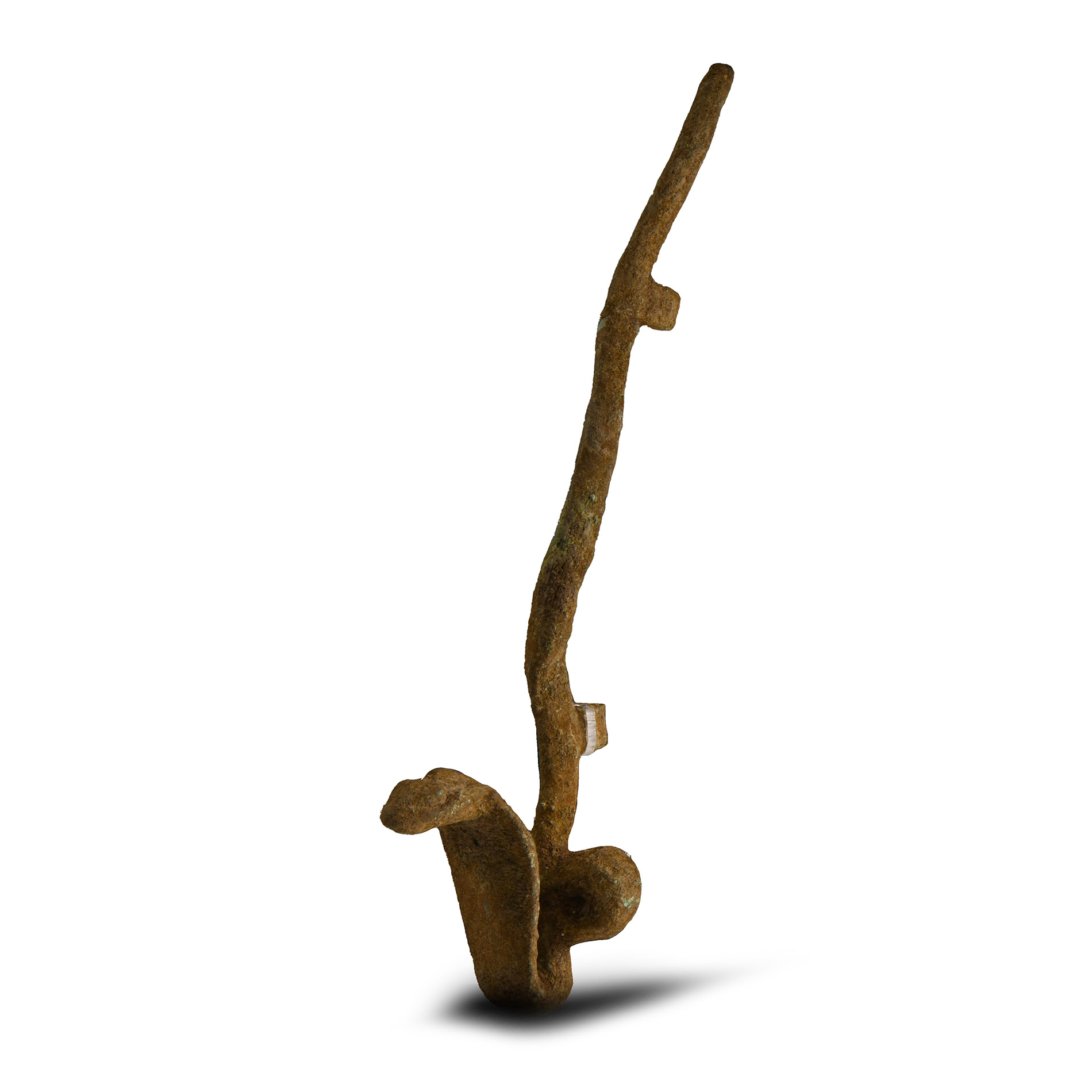
Egyptian Bronze Cobra Mount
LATE PERIOD, 6TH CENTURY B.C.
8 5/8 in. (182 grams, 22 cm).
Cobra-shaped mount with head raised and hood expanded, two mounting studs to the reverse; mounted on a custom-made stand.
ProvenancePrivate Israeli collection.
Ex Archaeological Center, Tel Aviv, Israel, 2015.
Private European collection.
Cf. Tiribilli, E., The bronze figurines of the Petrie Museum from 2000 BC to AD 400, GHP Egyptology 28, London, 2018, p. 295, no. 480, for a similar, though smaller, example.
FootnotesThe mount most likely adorned the Atef crown of a statue of Osiris.
CONDITIONTimeLine Auctions follows a vetting process to ensure the authenticity and legality of all items, reinforcing our commitment to integrity and responsible trading. Each antiquity, antique, and coin lot undergoes thorough examination by a vetting committee of at least ten external specialists, professional trade association members, scientists, and archaeologists: Our Vetting Process
AUCTIONS:
TimeLine is a leading auction house specialising in antiquities, ancient art, collectables, natural history, coins, medals, and books. Our auctions offer museums, collectors, historians, and enthusiasts the opportunity to acquire unique and historically significant pieces.
LOT 0037
Egyptian Bronze Cobra Mount
Estimate £1,200 - 1,700€1,390 - 1,970 (for guidance only)$1,620 - 2,300 (for guidance only)
-
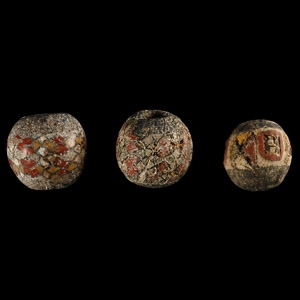
Egyptian Millefiori Glass Bead Group
Roman Period, 30 B.C.-323 A.D.Sold for (Inc. bp): £208
Three spherical glass beads decorated with geometric millefiori patterns. 10 grams total, 12-15 mm
Collected from 1969-1999. From the collection of the late Mr S.M., London, UK. -
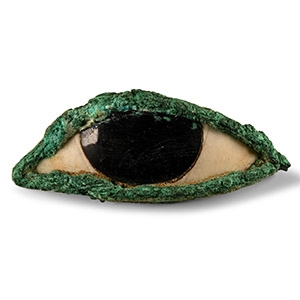
Egyptian Bronze Eye Inlay
Late Period, 664-332 B.C.Sold for (Inc. bp): £715
Comprising a bronze frame with a delicately modelled tear duct, inset with a white hardstone scalera and a large black glass pupil. 33 grams, 62 mm
Ex AB collection, 1920s-1930s. Accompanied by an old collection ticket.
Mummy masks were used as a protection over the deceased and were first introduced during the First Intermediate Period. The eyes were thought to fend off evil by reflecting it back to the one bestowing it. -
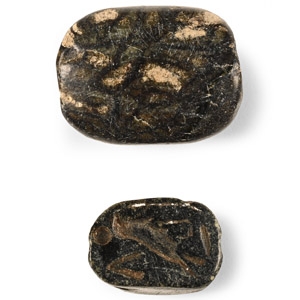
Egypto-Phoenician Stone Scaraboid Group
1st millennium B.C.Sold for (Inc. bp): £52
One with incuse bird, chevron and other motifs to the underside, the other in mottled hardstone. 4.69 grams total, 13-18 mm
From a collection acquired on the UK art market from various auction houses and collections mostly before 2000. From an important Cambridgeshire estate; thence by descent.
