
Loading, please wait...
LOT 0038
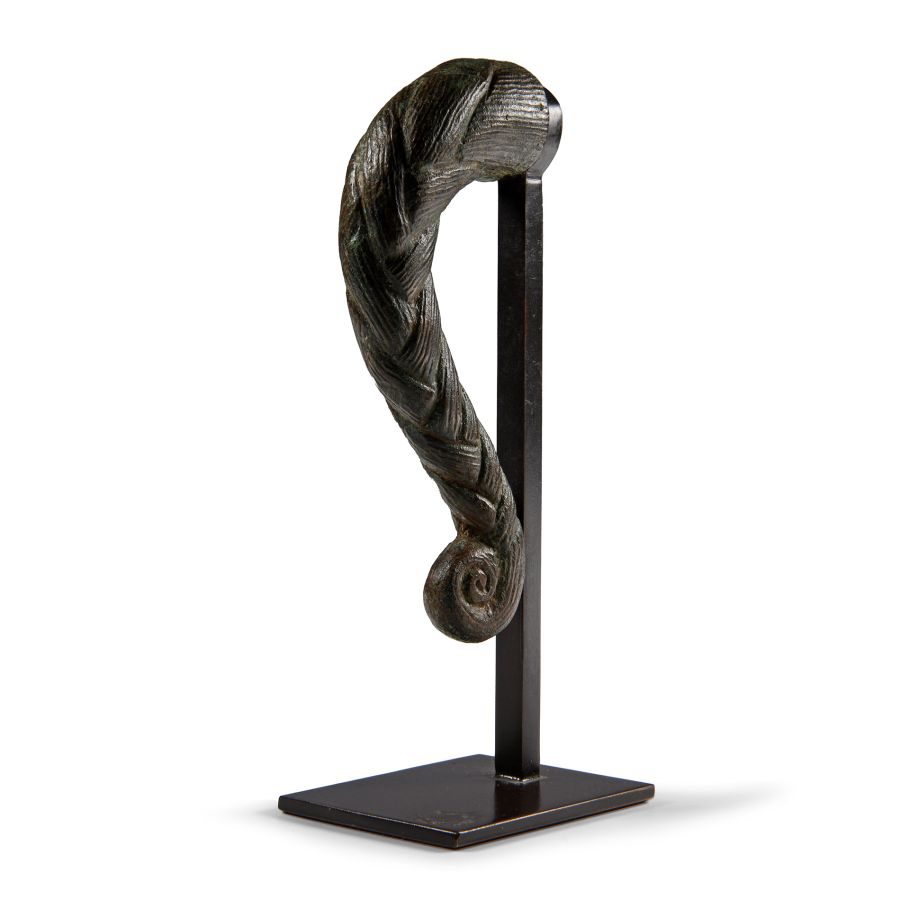
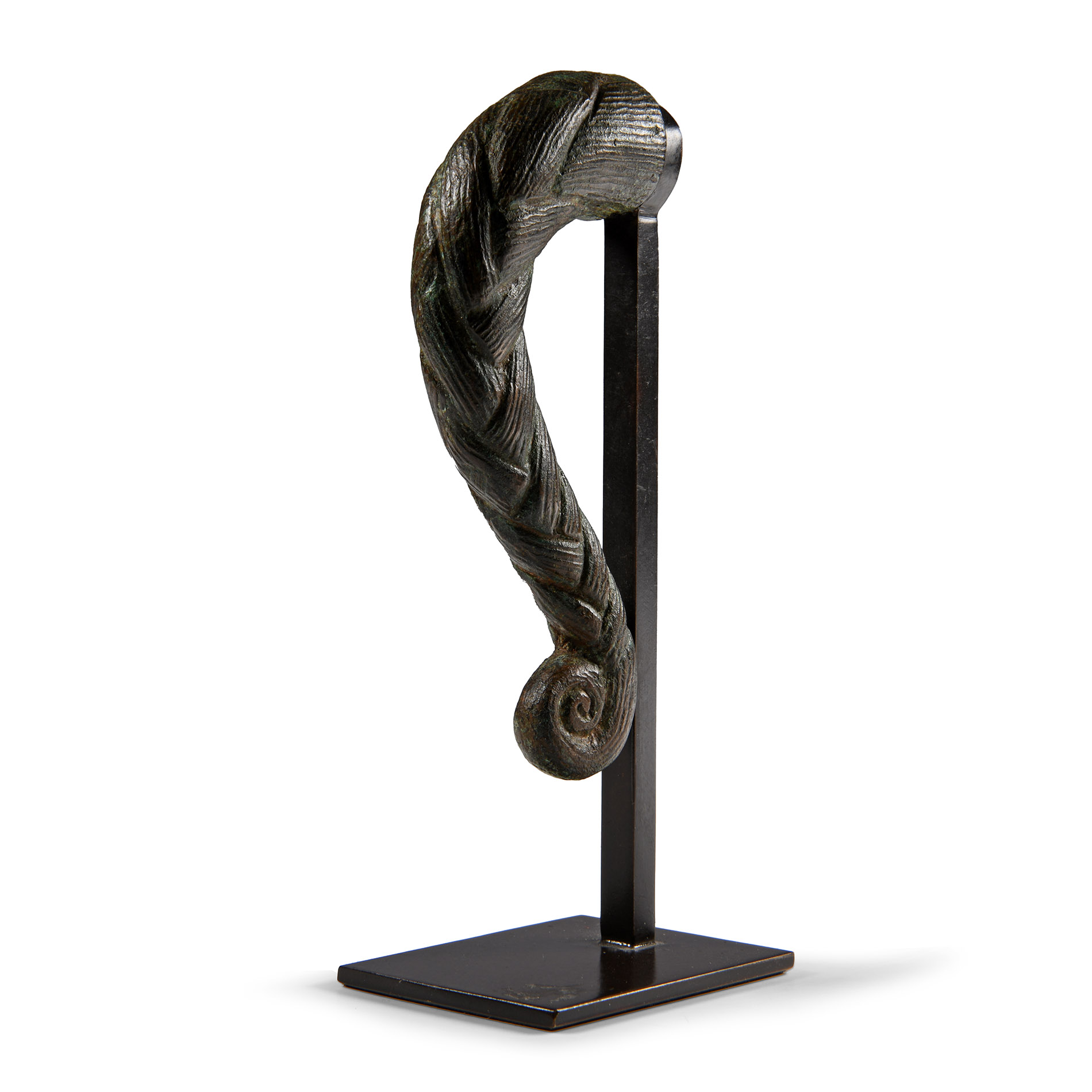
Egyptian Bronze Braided Sidelock of Harpocrates
PTOLEMAIC PERIOD, CIRCA 332-30 B.C.
5 5/8 in. (372 grams total, 14.3 cm high including stand).
Accessory from a statue, S-curved with braid detailing to the surface and coiled end; mounted on a custom-made display stand.
ProvenanceJean P. Bourgis, Beaulieu Sur-Mer, France; acquired 1980.
CONDITIONTimeLine Auctions follows a vetting process to ensure the authenticity and legality of all items, reinforcing our commitment to integrity and responsible trading. Each antiquity, antique, and coin lot undergoes thorough examination by a vetting committee of at least ten external specialists, professional trade association members, scientists, and archaeologists: Our Vetting Process
AUCTIONS:
TimeLine is a leading auction house specialising in antiquities, ancient art, collectables, natural history, coins, medals, and books. Our auctions offer museums, collectors, historians, and enthusiasts the opportunity to acquire unique and historically significant pieces.
-
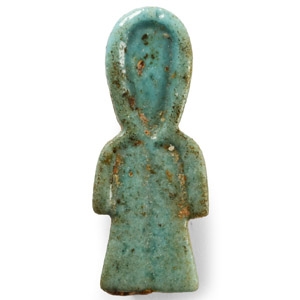
Egyptian Blue Faience Tyet 'Isis Knot' Amulet
Late Period, 664-332 B.C.Sold for (Inc. bp): £104
With dorsal pillar, pierced for suspension. 1.76 grams, 25 mm
From the collection of Doctor Girard, a collector for over 60 years. with Hotel des Ventes de Clermont-Ferrand, 22 May 2017. Property of a French collector.
The tyet amulet was associated with the goddess Isis and was often referred to as the "knot" or "girdle" of Isis. It was commonly placed within the mummy wrappings on the upper torso of the deceased, with the belief that it would invoke Isis' protection and safeguard the body, thus ensuring their rebirth in the afterlife. -
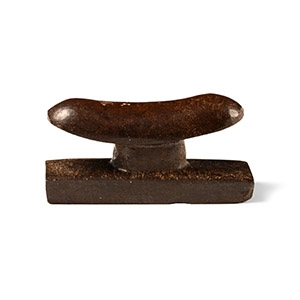
Egyptian Hardstone Head Rest Amulet
Late Period, 664-332 B.C.Sold for (Inc. bp): £143
Carved miniature headrest with rectangular base. 5.74 grams, 26 mm
Old French collection. Acquired from Hotel des Ventes, Drouot, Paris, France, early 2000. From the collection of Mr D. Property of a French collector.
The headrest, or weres amulet, was placed under the mummy's head to protect it from damage and ensure the deceased's rebirth. -
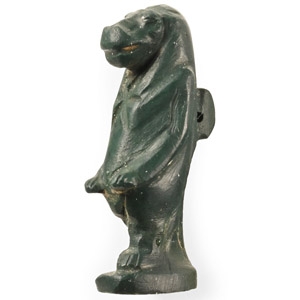
Egyptian Hardstone Tawaret Amulet
Late Period, 664-332 B.C.Sold for (Inc. bp): £442
Modelled in the round as a standing hippopotamus (Tawaret) figure on a rectangular base with loop to the rear. 1.98 grams, 24 mm
From the collection of Doctor Girard, a collector for over 60 years. with Hotel des Ventes de Clermont-Ferrand, 22 May 2017. Property of a French collector.
The goddess Tawaret was a female hippopotamus with the arms and legs of a lion and the back and tail of a crocodile. Despite her fearsome appearance, Tawaret was a household deity and protector of women in childbirth.
