
Loading, please wait...

LOT 0465
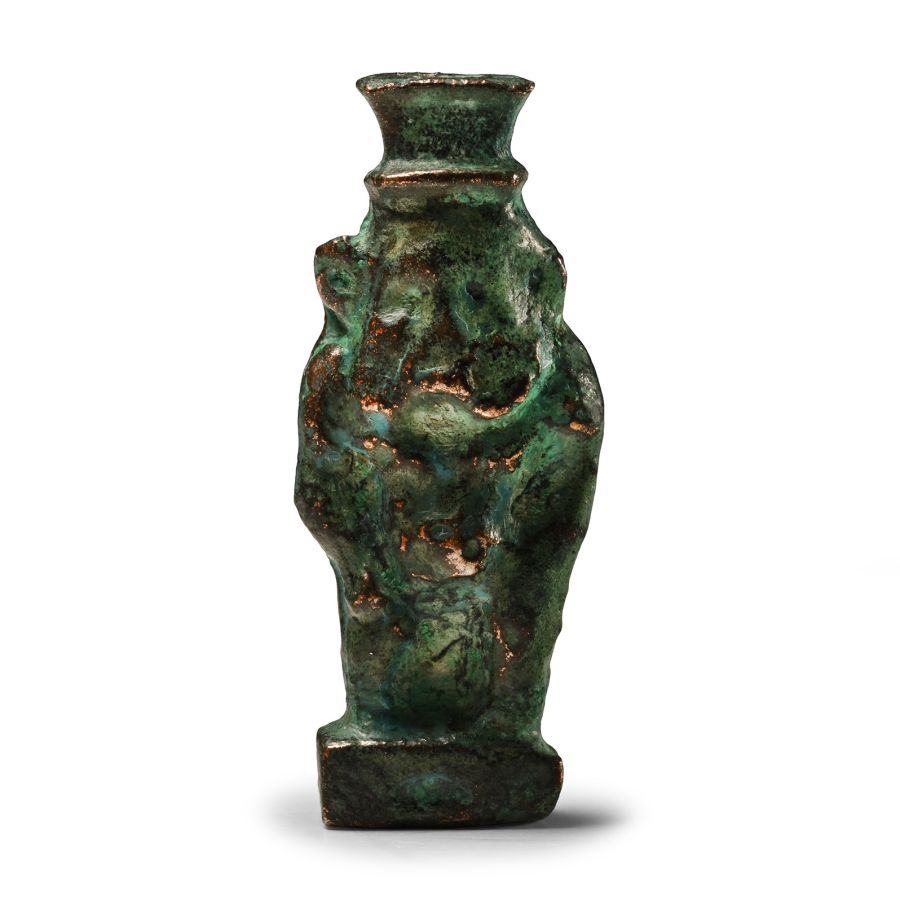
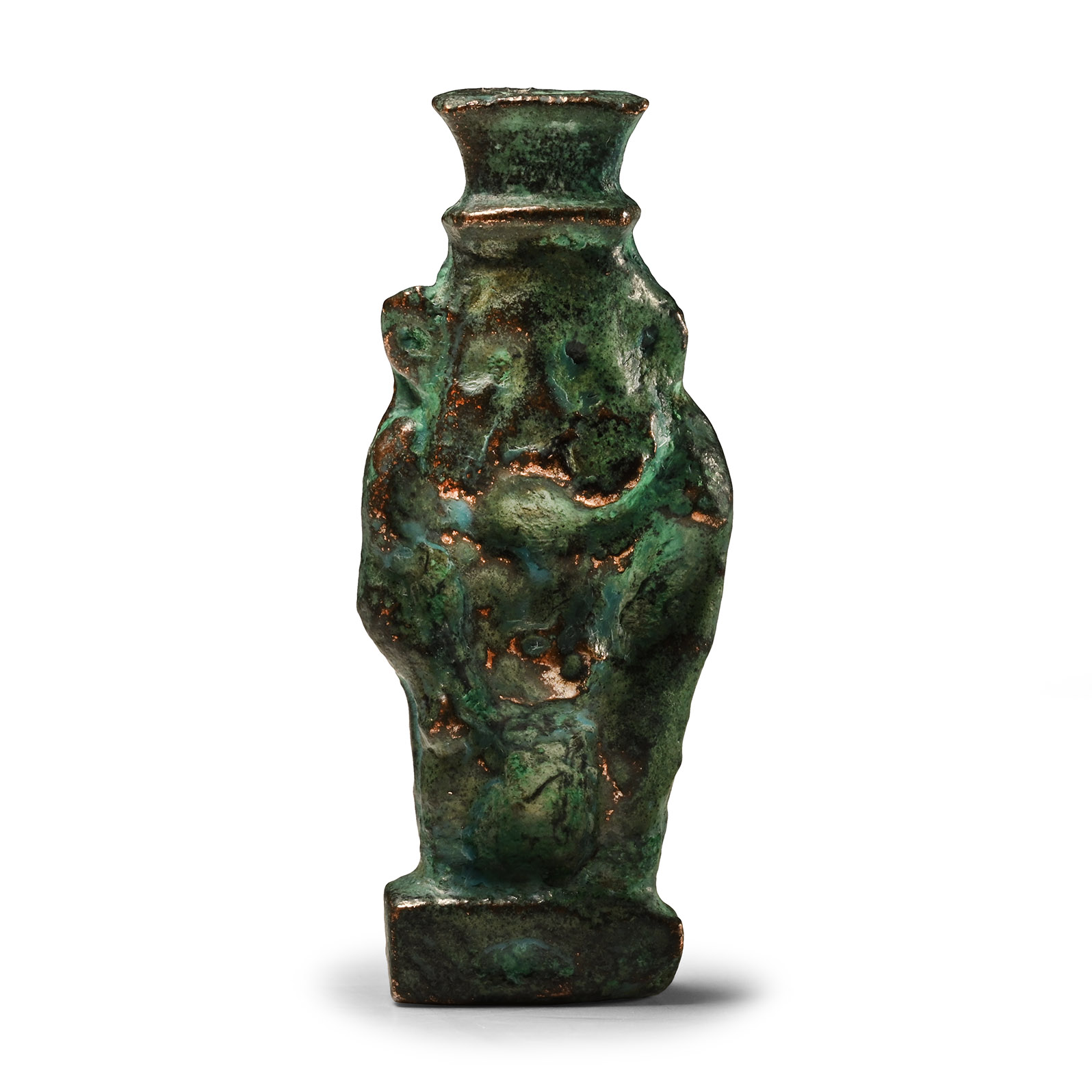
Egyptian Bronze Bes Statuette
LATE PERIOD-PTOLEMAIC PERIOD, 664-30 B.C.
1 3/8 in. (21 grams, 37 mm).
Standing on a rectangular base with flared modius type headdress; modelled in the round with tail to the reverse; re-patinated. [No Reserve]
ProvenanceUK private collection before 2000.
Acquired on the UK art market.
Property of a London gentleman.
Cf. Droste zu Hülshoff, V.v., Hofmann, E., Schlick-Nolte, B., Seidlmayer, S., Statuetten, Gefässe und Geräte. Liebieghaus – Museum Alter Plastik: Ägyptische Bildwerke, Band II, Melsungen, 1991, pp.311-12 cat. no.193, for a Bes with similar modius; Tinius, I., Altägypten in Braunschweig. Die Sammlungen des Herzog Anton Ulrich-Museums und des Städtischen Museums, Wiesbaden, 2011, pp.133-34, no.226, for similar.
FootnotesFrom the New Kingdom onwards, Bes became one of ancient Egypt's most popular apotropaic deities. Despite his rather fearful appearance, Bes was the patron and protector of pregnant women and children and was also believed to protect them from harmful creatures like snakes.
CONDITIONTimeLine Auctions follows a vetting process to ensure the authenticity and legality of all items, reinforcing our commitment to integrity and responsible trading. Each antiquity, antique, and coin lot undergoes thorough examination by a vetting committee of at least ten external specialists, professional trade association members, scientists, and archaeologists: Our Vetting Process
AUCTIONS:
TimeLine is a leading auction house specialising in antiquities, ancient art, collectables, natural history, coins, medals, and books. Our auctions offer museums, collectors, historians, and enthusiasts the opportunity to acquire unique and historically significant pieces.
-
Large Egyptian Blue Glazed Horus Amulet
Late New Kingdom-Third Intermediate Period, circa 1300-700 B.C.Sold for (Inc. bp): £234
Modelled in the round as a perching falcon on a rectangular base and wearing the double-crown; loop to rear of head. 12.5 grams, 54 mm
From an old Suffolk, UK, collection. Acquired in the UK before 1980. From the personal collection of Derek Rogers, Suffolk, UK.
The falcon amulet was a symbol of Horus, the god of the sky, war, and protection. -
Phoenician Bronze Figure
1st millennium B.C.Sold for (Inc. bp): £624
Modelled in the round with tall conical cap, pinched face, flat discoid upper body and single-piece legs, ovoid foot; lightly punched eyes, navel and nipples, horseshoe punch-detailing to edges; mounted on a display stand. 56 grams total, 10.3 cm including stand
From a collection acquired on the UK art market from various auction houses and collections mostly before 2000. From an important Cambridgeshire estate; thence by descent.
This figurine bears a resemblance to other simply crafted figurines found in temple deposits at Byblos and other Phoenician sites. The tall conical cap seen on many of these figurines is reminiscent of the hedjet Egyptian crown, underscoring the robust cultural and commercial ties between the Levant and Egypt. -
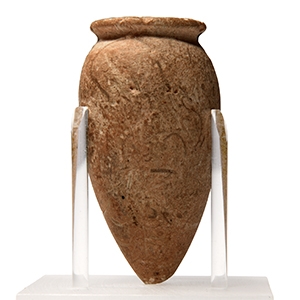
Egyptian Stone Alabastron
Late Old Kingdom, circa 2300 B.C.Estimate: £250 - 350 (‡+bp*)
Opening Bid: £135
The body with rounded shoulders, convex outer face and pointed base, everted rim; accompanied by a custom-made display base. 34.2 grams, 48 mm high (48.9 grams, 55 mm including stand)
Acquired in Europe before 1994. European collection.
