
Loading, please wait...
LOT 0456
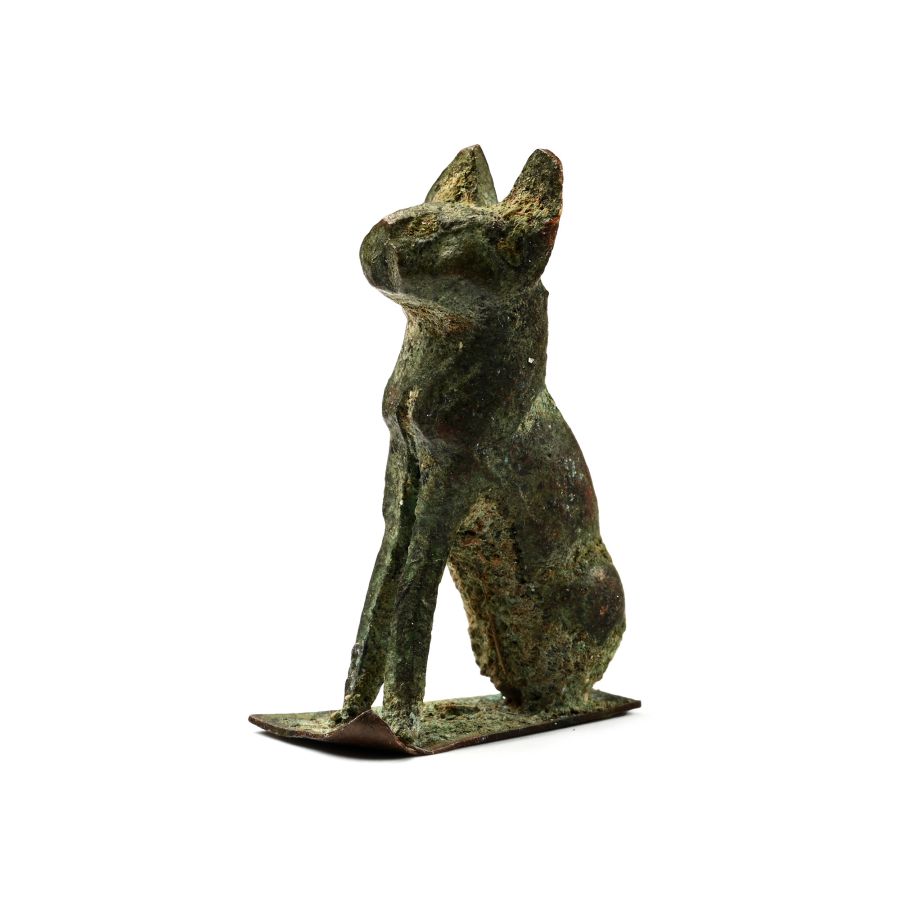
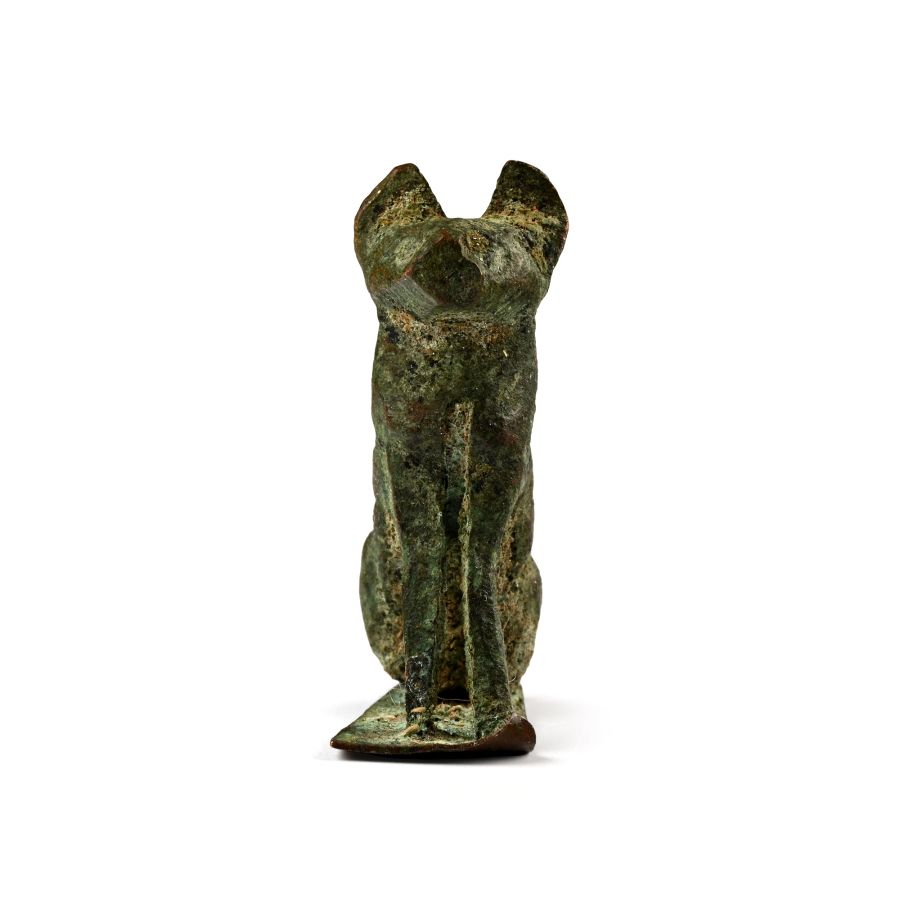
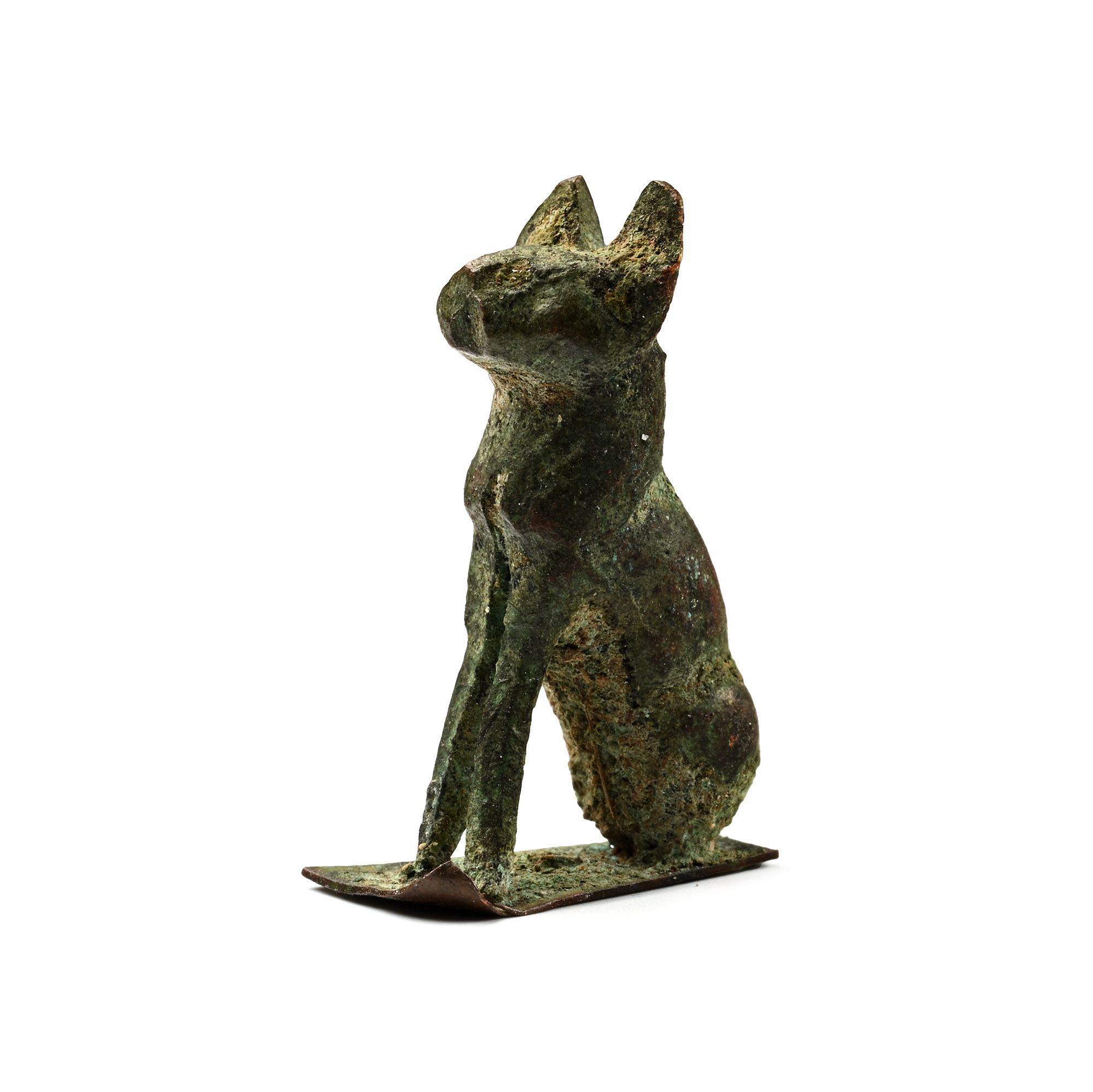
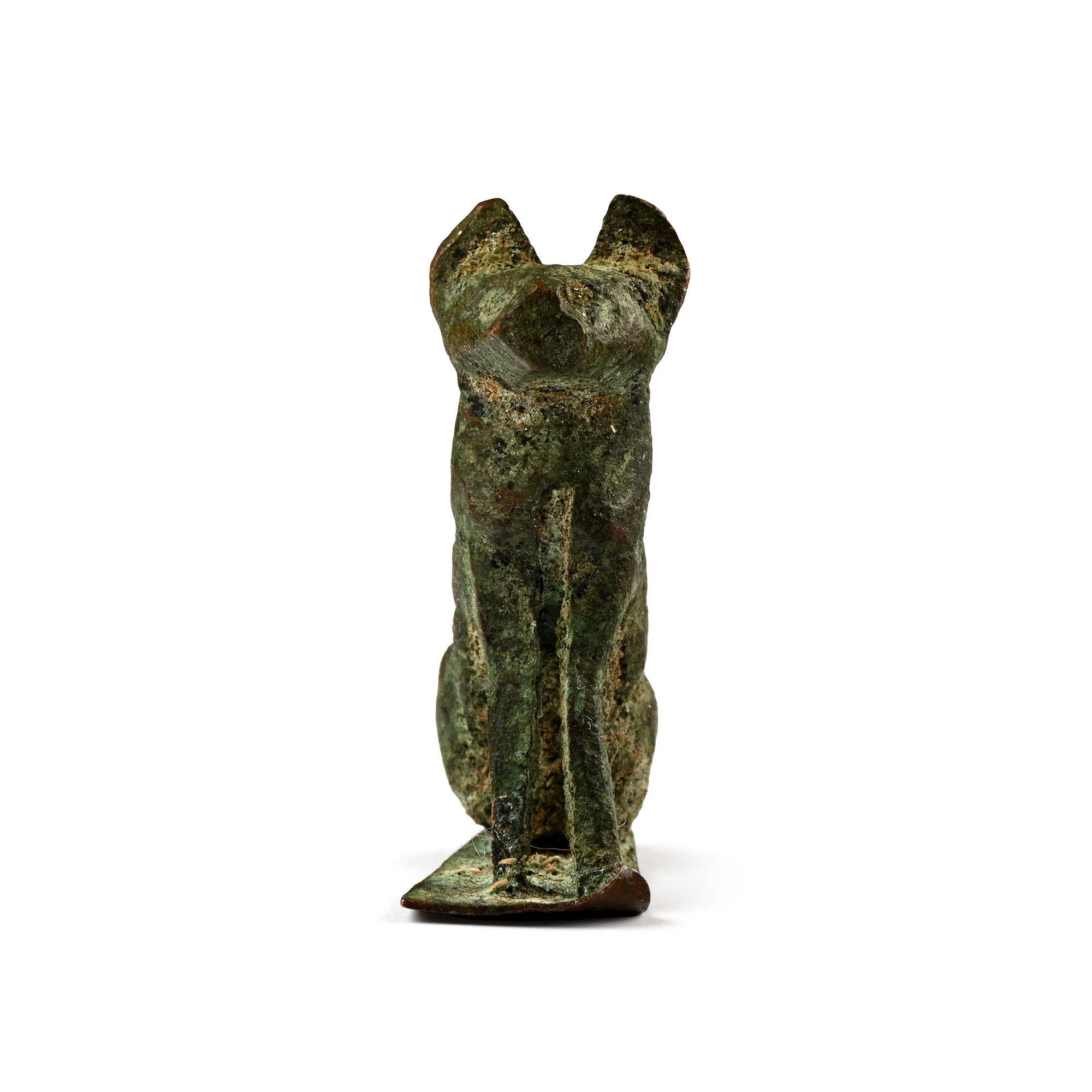
Egyptian Bronze Bastet Cat Amulet
LATE PERIOD, 664-332 B.C.
1 1/4 in. (14 grams, 30 mm).
Modelled in the round as a seated cat on an oblong base, large pointed ears with a notch behind them.
ProvenancePrivate collection, 1970s.
Private collection, 2017.
This lot is accompanied by an illustrated lot declaration signed by the Head of the Antiquities Department, Dr Raffaele D'Amato.
Cf. Tinius, I., Altägypten in Braunschweig. Die Sammlungen des Herzog Anton Ulrich-Museums und des Städtischen Museums, Wiesbaden, 2011, p. 152, no. 281, for a similar example.
FootnotesIn ancient times, the cat was revered as the sacred animal of the goddess Bastet, who was worshipped in Bubastis, located in the Nile Delta. She was a protective mother goddess and the daughter of the sun god Re. Amulets provided the wearer with the goddess's protection.
CONDITIONTimeLine Auctions follows a vetting process to ensure the authenticity and legality of all items, reinforcing our commitment to integrity and responsible trading. Each antiquity, antique, and coin lot undergoes thorough examination by a vetting committee of at least ten external specialists, professional trade association members, scientists, and archaeologists: Our Vetting Process
AUCTIONS:
TimeLine is a leading auction house specialising in antiquities, ancient art, collectables, natural history, coins, medals, and books. Our auctions offer museums, collectors, historians, and enthusiasts the opportunity to acquire unique and historically significant pieces.
-
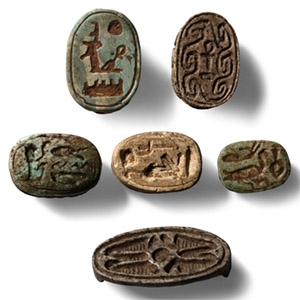
Egyptian Mixed Scarab Collection
2nd-1st millennium B.C.Sold for (Inc. bp): £585
Comprising (from left to right, top to bottom): 1) a scarab with an oval border containing the throne name of the 19th Dynasty pharaoh, Seti I (Men-Maat-Re); 2) a scarab with an oval outer border containing a continuous oblong scroll border framing a neb and ankh symbol; 3) a scarab with an oval border containing a seated adorant before a sa, water, and neb symbol; 4) a scarab with an oval border containing the throne name of the 19th Dynasty pharaoh, Ramesses II (User-Maat-Re), atop a neb sign; 5) a scarab with two signs, possibly representing the word for ‘bread’ above a goose, with a beer jar in front; 6) and a scaraboid with a stretched oval border containing mirrored pairs of rearing cobras surrounding a central sun disc. 18.64 grams total, 14-27 mm
From the collection of a gentleman, acquired on the London art market in the 1990s. This lot is accompanied by an illustrated lot declaration signed by the Head of the Antiquities Department, Dr Raffaele D'Amato. -
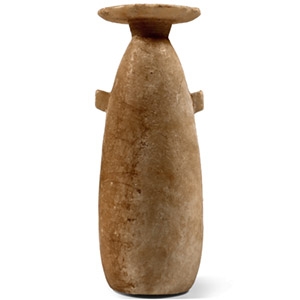
Phoenician Alabastron with Handles
6th-5th century B.C.Sold for (Inc. bp): £1,053
Comprising a slender alabaster piriform body and two lateral lug handles, conical neck with broad everted rim. 650 grams, 19.7 cm high
Giusfredi collection, 1980s. Swiss private collection, acquired May 1999. This lot is accompanied by an illustrated lot declaration signed by the Head of the Antiquities Department, Dr Raffaele D'Amato. -
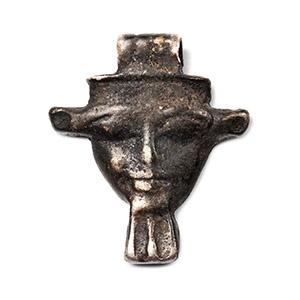
Egyptian Silver Hathor Amulet
Late-Ptolemaic Period, 664-30 B.C.Sold for (Inc. bp): £975
D-shaped mask representing the human-headed Hathor with cow ears and a short beard, a ribbed suspension loop above. 0.7 grams, 11 mm
From an early 20th century collection. This lot is accompanied by an illustrated lot declaration signed by the Head of the Antiquities Department, Dr Raffaele D'Amato.
