
Loading, please wait...
LOT 0009
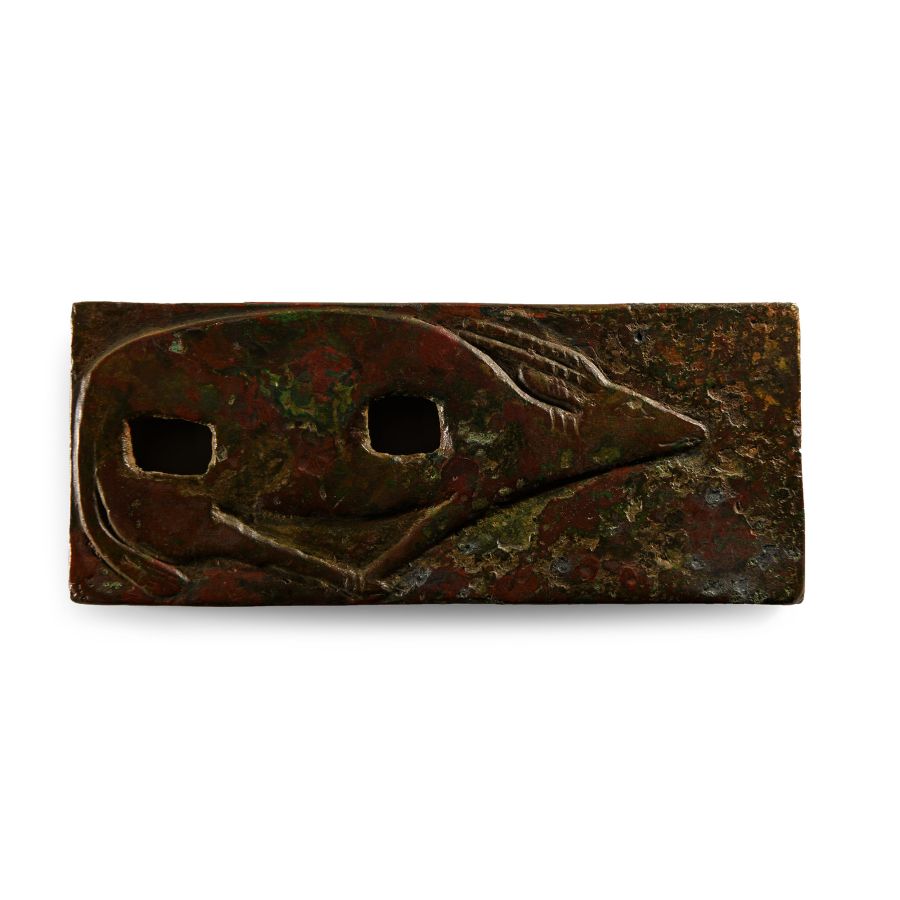
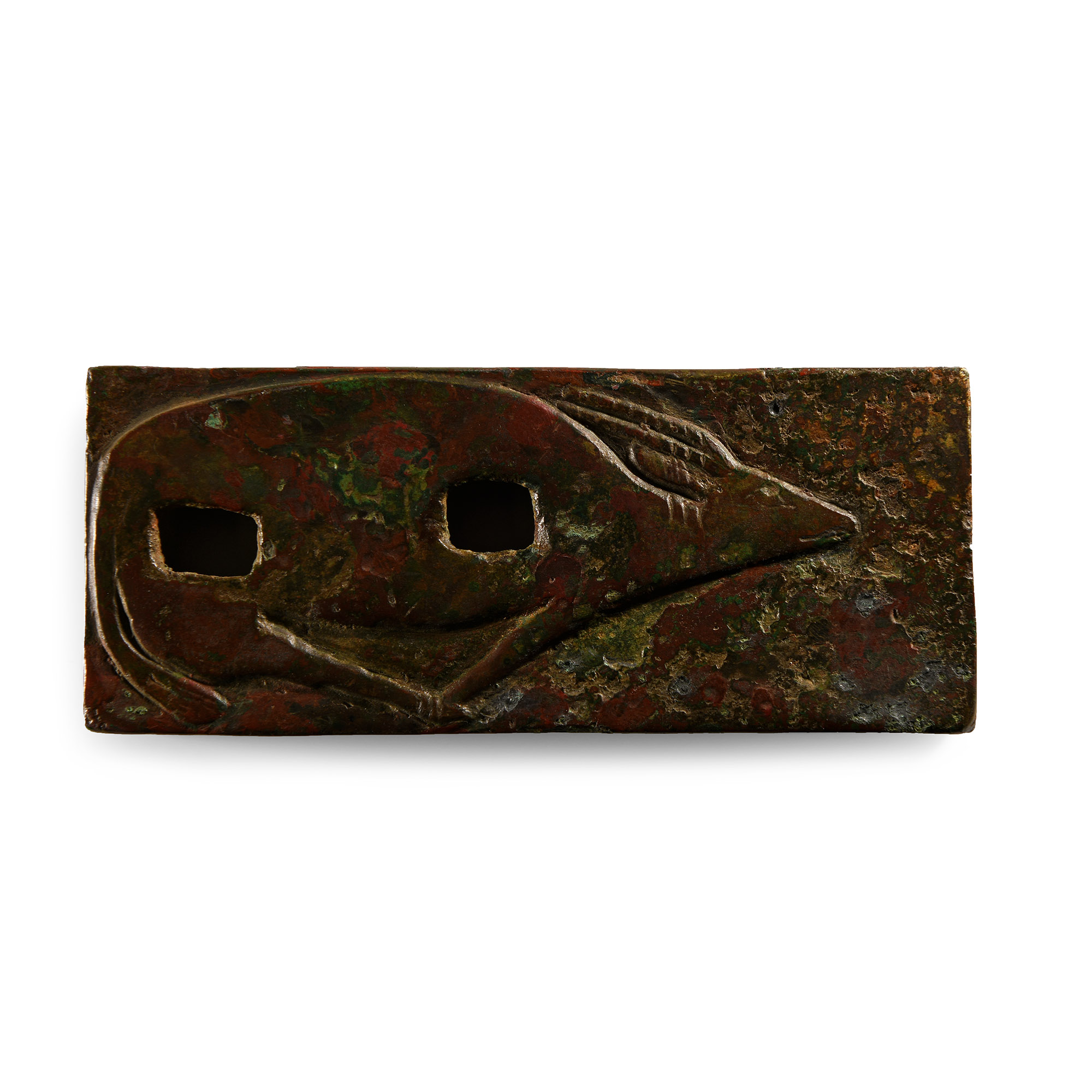
Egyptian Bronze Base with Ibex and Hieroglyphs
LATE PERIOD, 664-332 B.C.
4 5/8 in. (205 grams, 11.7 cm).
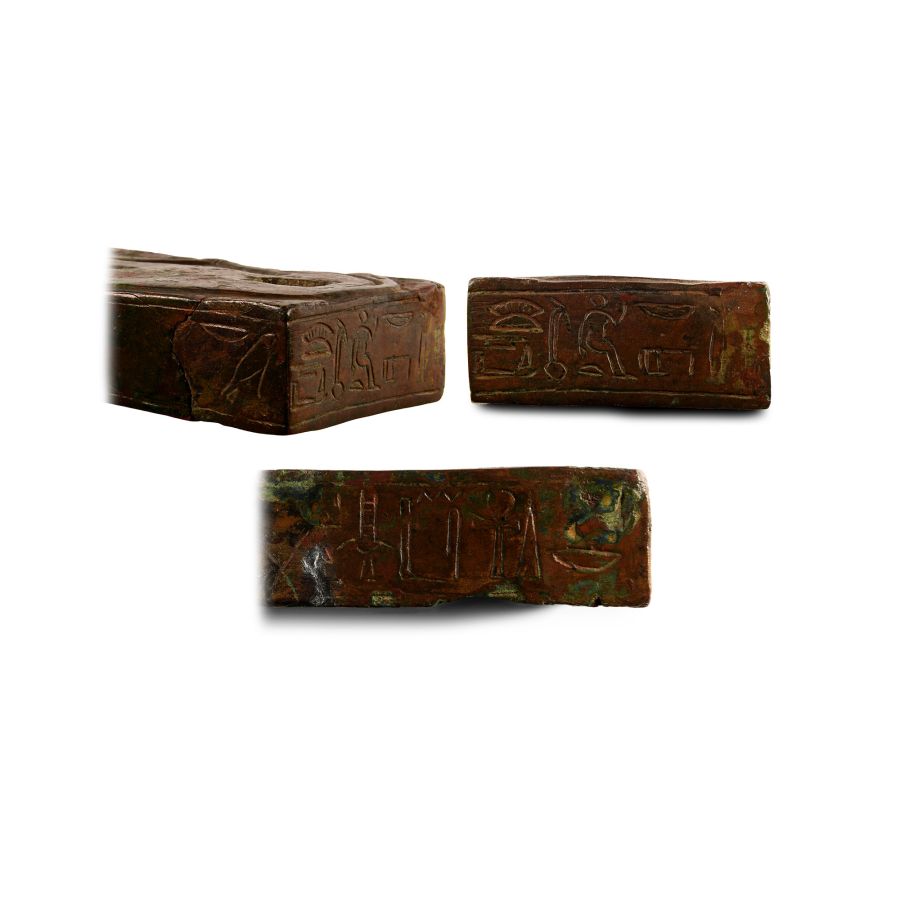
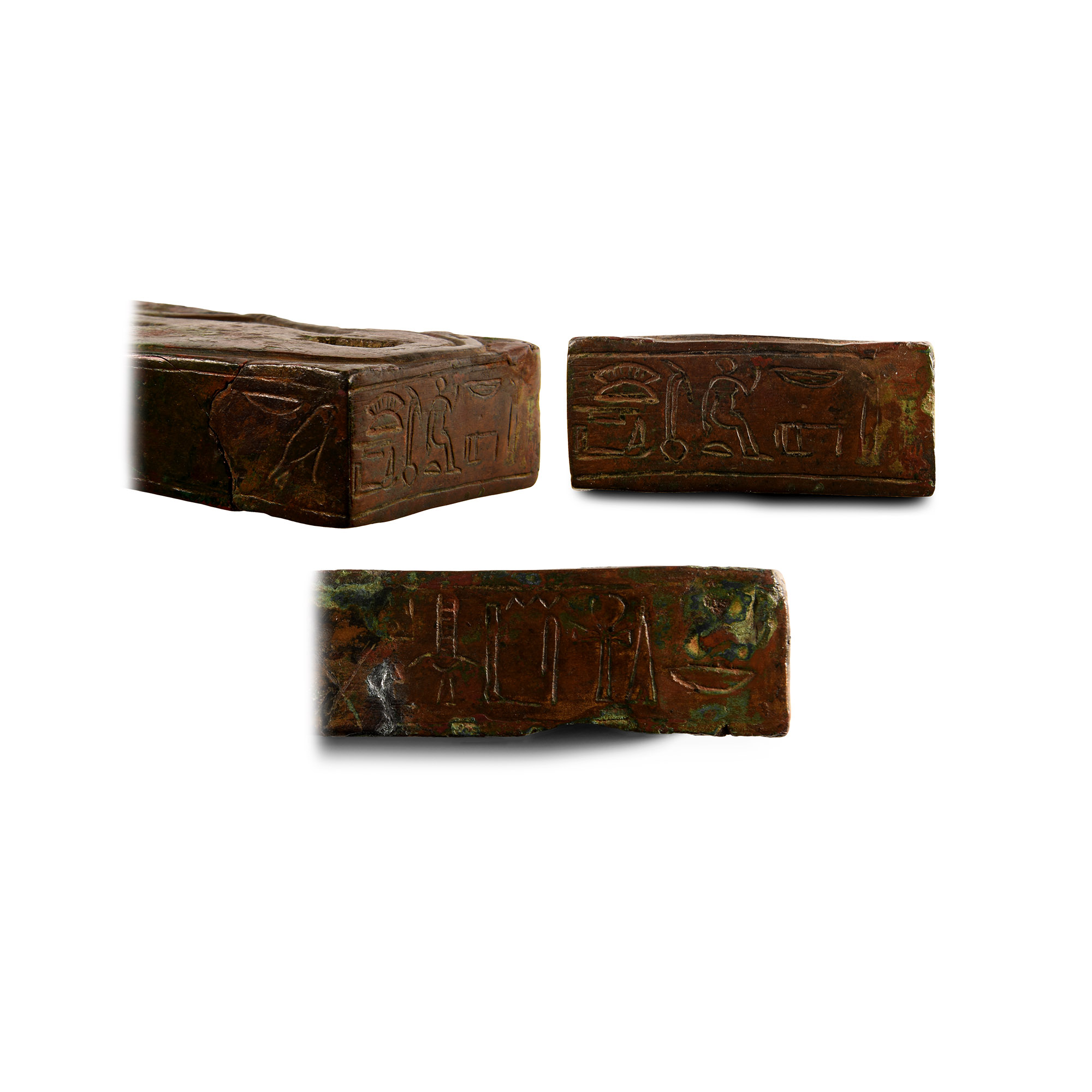
Rectangular with two sockets to the upper face, low-relief recumbent ibex; incised hieroglyphic text to one short sidewall and remains on both long sidewalls, giving a dedication to 'give life, health, a long [lifetime......]'.
ProvenanceGalerie Orient-Occident, Paris, 1990.
Parisian private collection.
with Pierre Berge, 2 February 2017, lot 85.
Cf. Tiribilli, E., The bronze figurines of the Petrie Museum from 2000 BC to AD 400, GHP Egyptology 28, London, 2018, p.302, no. 499, for a less elaborately decorated, inscribed base.
FootnotesThe bound ibex is a frequent image in ancient Egyptian art and a prized foodstuff. The animal's presence on this base symbolises the finest offerings to the once-attached deity.
CONDITIONTimeLine Auctions follows a vetting process to ensure the authenticity and legality of all items, reinforcing our commitment to integrity and responsible trading. Each antiquity, antique, and coin lot undergoes thorough examination by a vetting committee of at least ten external specialists, professional trade association members, scientists, and archaeologists: Our Vetting Process
AUCTIONS:
TimeLine is a leading auction house specialising in antiquities, ancient art, collectables, natural history, coins, medals, and books. Our auctions offer museums, collectors, historians, and enthusiasts the opportunity to acquire unique and historically significant pieces.
-
Egyptian Hardstone Fly Amulet
Late Period, 664-332 A.D.Sold for (Inc. bp): £117
With linear detailing to body and wings, pierced at the neck. 0.38 grams, 12 mm
From the H.N. collection, Milton Keynes, Berkshire, UK, 1990s.
Fly amulets were believed to protect against insect bites and ward off flying creatures through apotropaic magic. Additionally, the pharaoh would give gold fly-shaped pendants as military awards to recognise the bravery and persistence of soldiers in battle. -
Bronze Bust with Phallus
Roman, 1st-2nd century A.D.Sold for (Inc. bp): £364
Modelled as a grotesque male head, depicted clean-shaven and hairless apart from a small tuft of hair to the rear with a raised phallus above; the neck developing to a broad circular socket with flange rim; mounted on a custom-made display stand. 377 grams total, 14.5 cm including stand
From an old Nevers collection, acquired before 1960. Ex Hotel des Ventes de Nevers. Property of a French collector. This lot has been checked against the Interpol Database of stolen works of art and is accompanied by a search certificate number no.12035-214900.
The exact meaning of these grotesque busts surmounted by a phallus is disputed, although Rolland (p.106) believes that they originated in Alexandria among the priests of the cult of Isis. Similar busts have been discovered in the Roman Gallia, at Bavay and Strasbourg. -
.jpg)
Egyptian Basalt Torso of Naophoros
Late Period, 664-332 B.C.Sold for (Inc. bp): £1,690
Carved in the round, depicting a male carrying a rectangular shrine intended to hold a figure of a goddess; arms and upper chest bare, strap to the chest to support an apron, dorsal pillar to the reverse; accompanied by a custom-made stand. 4.6 kg, 19.3 cm (5.18 kg total, 25 cm including stand)
From the collection of Danish furniture designer Ole Wanscher (1903-1985). Accompanied by an academic report by Egyptologist Paul Whelan. Accompanied by a copy of a photo of Wanscher in his office, circa 1960. This lot has been checked against the Interpol Database of stolen works of art and is accompanied by search certificate number no.11843-207728.
Ole Wanscher was a leading figure of the Scandinavian Design movement. Wanscher was inspired by ancient designs, and one of his most famous creations, the 'Egyptian Stool', was based on folding chairs from Egypt's New Kingdom. This piece is visible in the background of a photo of Wanscher in his office, circa 1960.
