
Loading, please wait...
LOT 0002
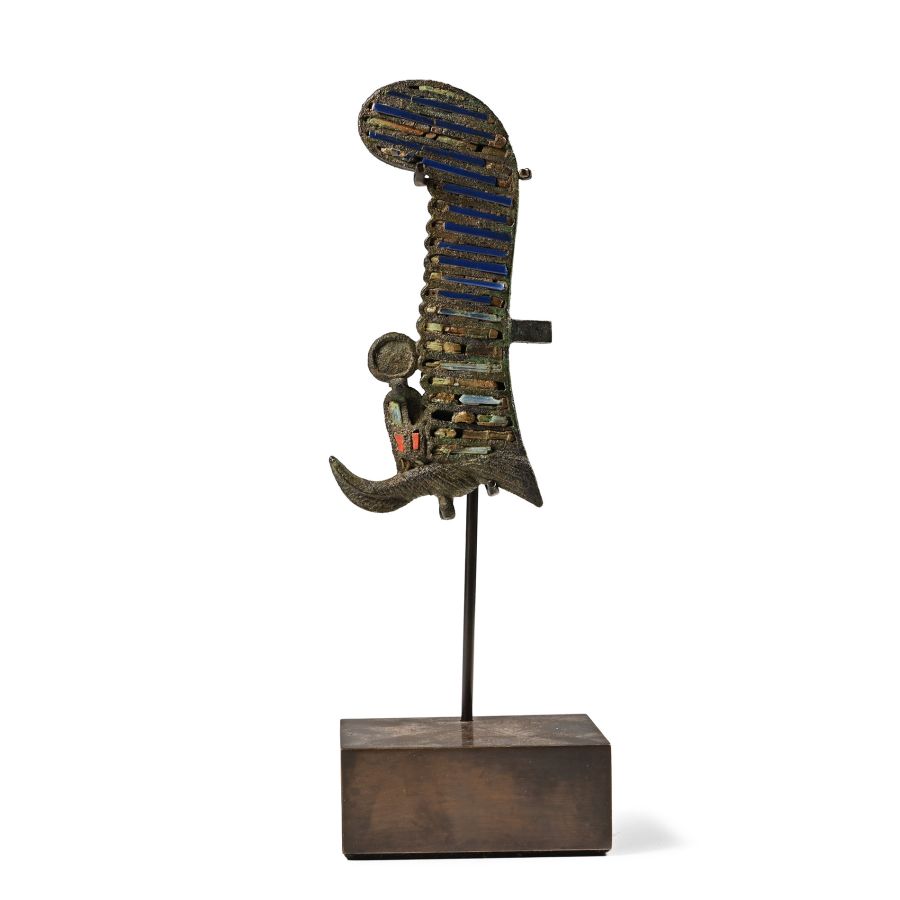
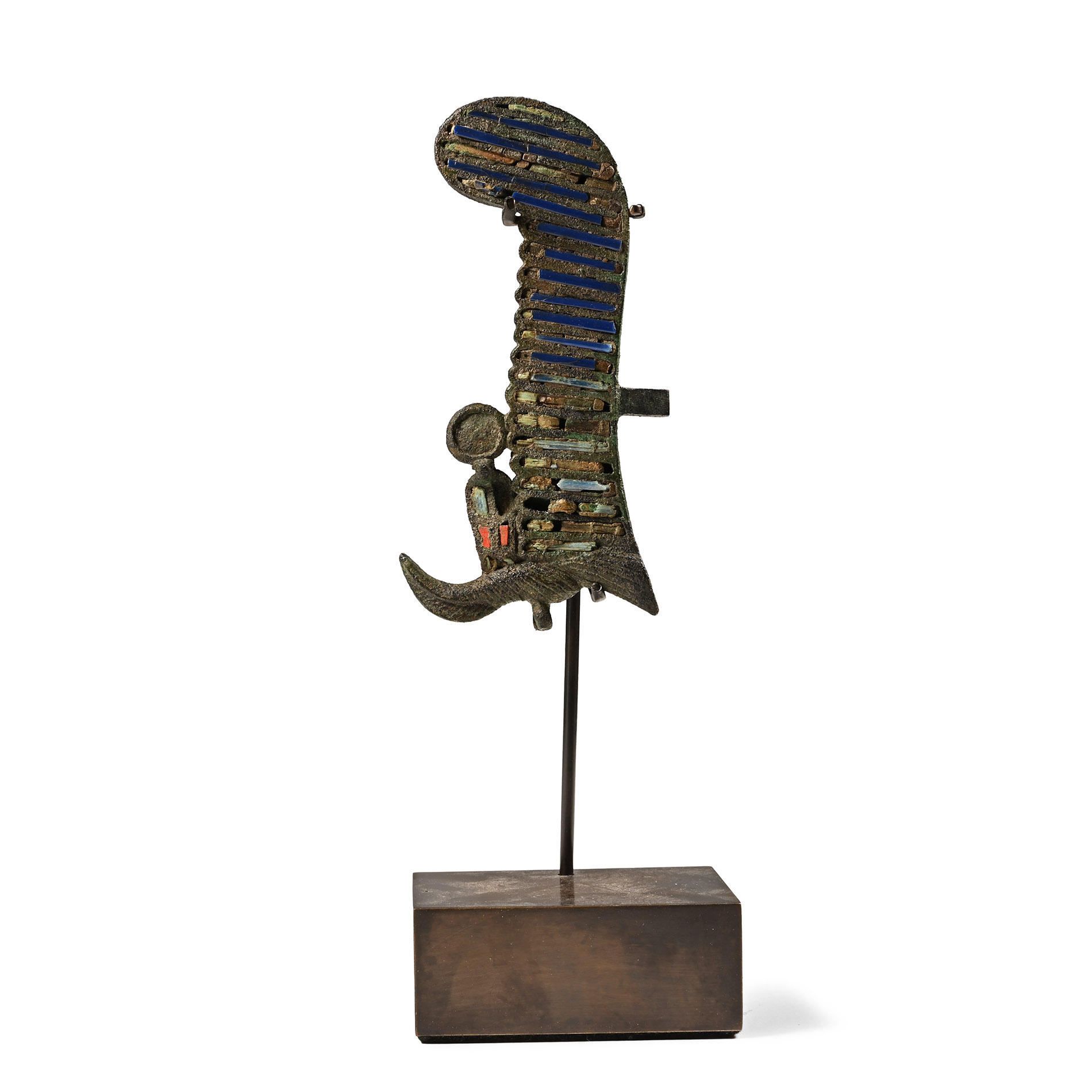
Egyptian Bronze and Glass Inlaid Ostrich Feather from an Atef Crown
LATE PERIOD-PTOLEMAIC PERIOD, CIRCA 664-30 B.C.
11 1/4 in. (244 grams total, 18.5 cm).
Stylised ostrich plume surmounting a ram's horn, uraeus with sun disk to one side; side tang and loop on the underside for attachment; the plume decorated with a series of narrow horizontal recesses to accept inlays, with some original remaining as well as later replacements in blue glass.
ProvenanceUK private collection of Werner Forman (1921-2010), formed between 1950-1980.
LiteratureCf. Tiribilli, E., The bronze figurines of the Petrie Museum from 2000 BC to AD 400, GHP Egyptology 28, London, 2018, p.289, cat. no.461, for a comparable element.
FootnotesThe atef crown consists of a central element similar to the hedjet or White Crown, flanked by two ostrich feathers, often with a pair of ram's horns beneath and uraei on either side. The meaning of atef is uncertain, but it may mean either 'his might' or 'his terror'. The crown first appeared in the 5th Dynasty and is particularly associated with the underworld god Osiris.
CONDITIONTimeLine Auctions follows a vetting process to ensure the authenticity and legality of all items, reinforcing our commitment to integrity and responsible trading. Each antiquity, antique, and coin lot undergoes thorough examination by a vetting committee of at least ten external specialists, professional trade association members, scientists, and archaeologists: Our Vetting Process
AUCTIONS:
TimeLine is a leading auction house specialising in antiquities, ancient art, collectables, natural history, coins, medals, and books. Our auctions offer museums, collectors, historians, and enthusiasts the opportunity to acquire unique and historically significant pieces.
LOT 0002
Egyptian Bronze and Glass Inlaid Ostrich Feather from an Atef Crown
Sold for (Inc. bp): £650
-
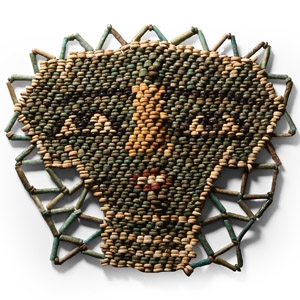
Egyptian Faience Mummy Bead Mask
Ptolemaic Period, 332-30 B.C.Sold for (Inc. bp): £286
A panel of small glazed composition beads in various colours representing a mummy face mask with false beard with netted border; restrung with some later beads. 42 grams, 13.5 cm
Ex Mariaud des Serres, Paris, France, 1990s. -
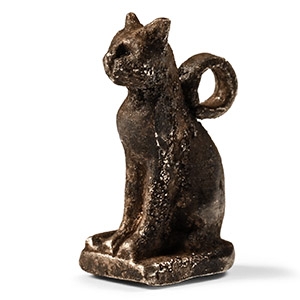
Egyptian Silver Cat Amulet
Late Period, 664-332 B.C.Sold for (Inc. bp): £260
Modelled seated on a tongue-shaped base, with fur detailing and suspension loop to the back. 1.58 grams, 12 mm
From an early 20th century collection.
The cat was sacred to Bastet, a protective mother goddess and the daughter of the sun god Re. Amulets provided the wearer with the goddess's protection. -
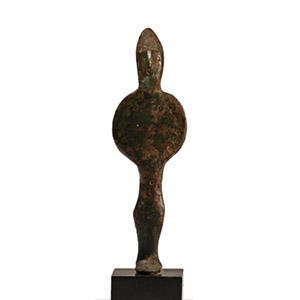
Phoenician Bronze Figure
1st millennium B.C.Sold for (Inc. bp): £624
Modelled in the round with tall conical cap, pinched face, flat discoid upper body and single-piece legs, ovoid foot; lightly punched eyes, navel and nipples, horseshoe punch-detailing to edges; mounted on a display stand. 56 grams total, 10.3 cm including stand
From a collection acquired on the UK art market from various auction houses and collections mostly before 2000. From an important Cambridgeshire estate; thence by descent.
This figurine bears a resemblance to other simply crafted figurines found in temple deposits at Byblos and other Phoenician sites. The tall conical cap seen on many of these figurines is reminiscent of the hedjet Egyptian crown, underscoring the robust cultural and commercial ties between the Levant and Egypt.
