
Loading, please wait...
LOT 0433
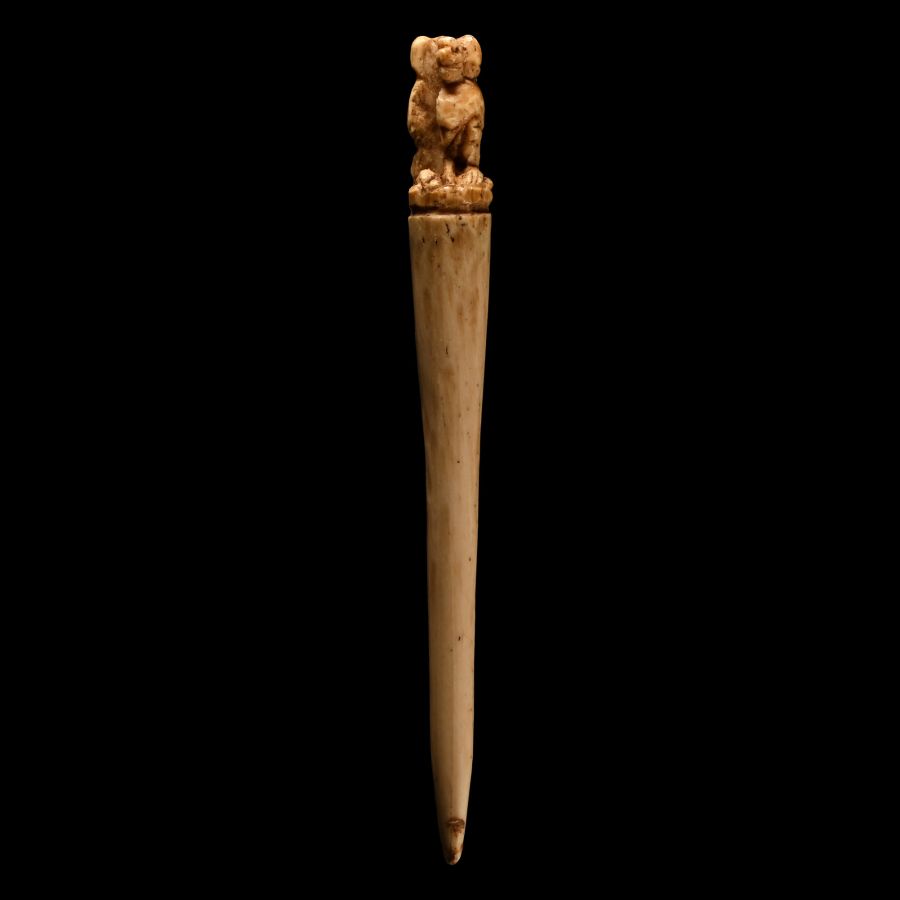
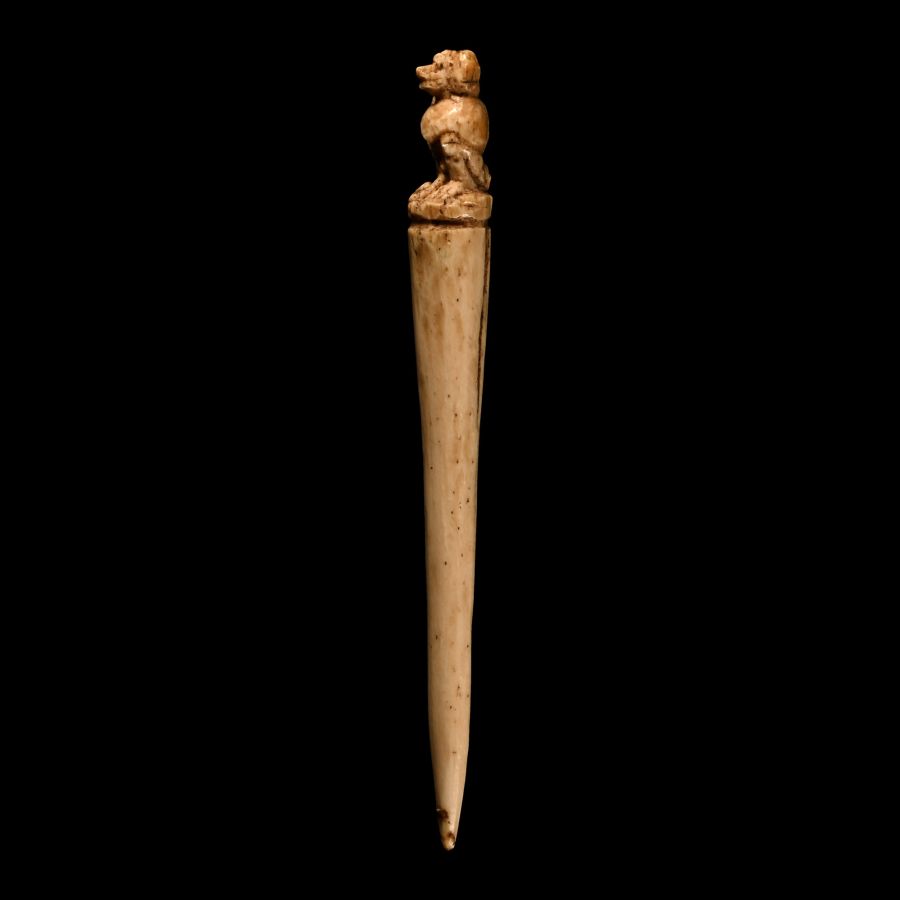
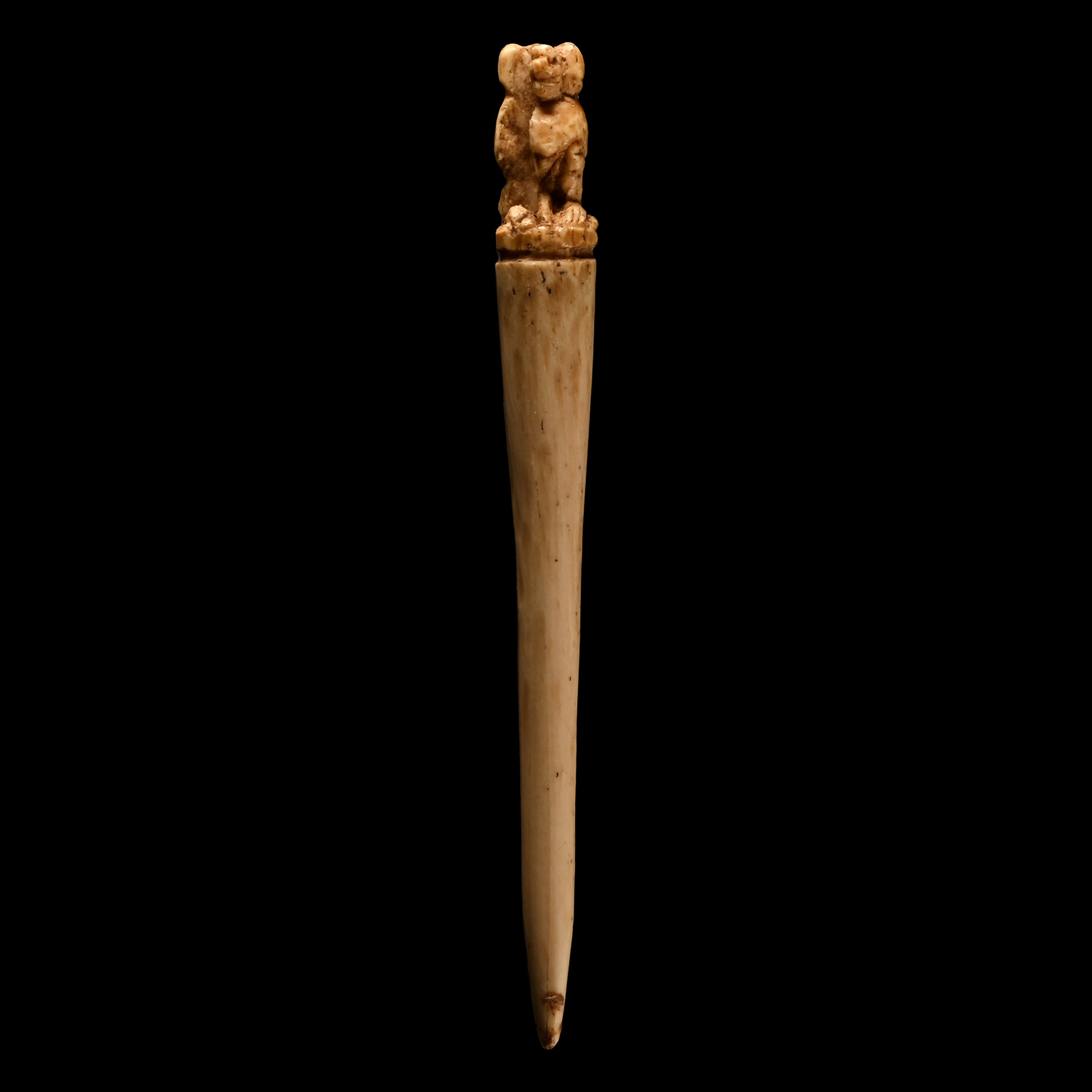
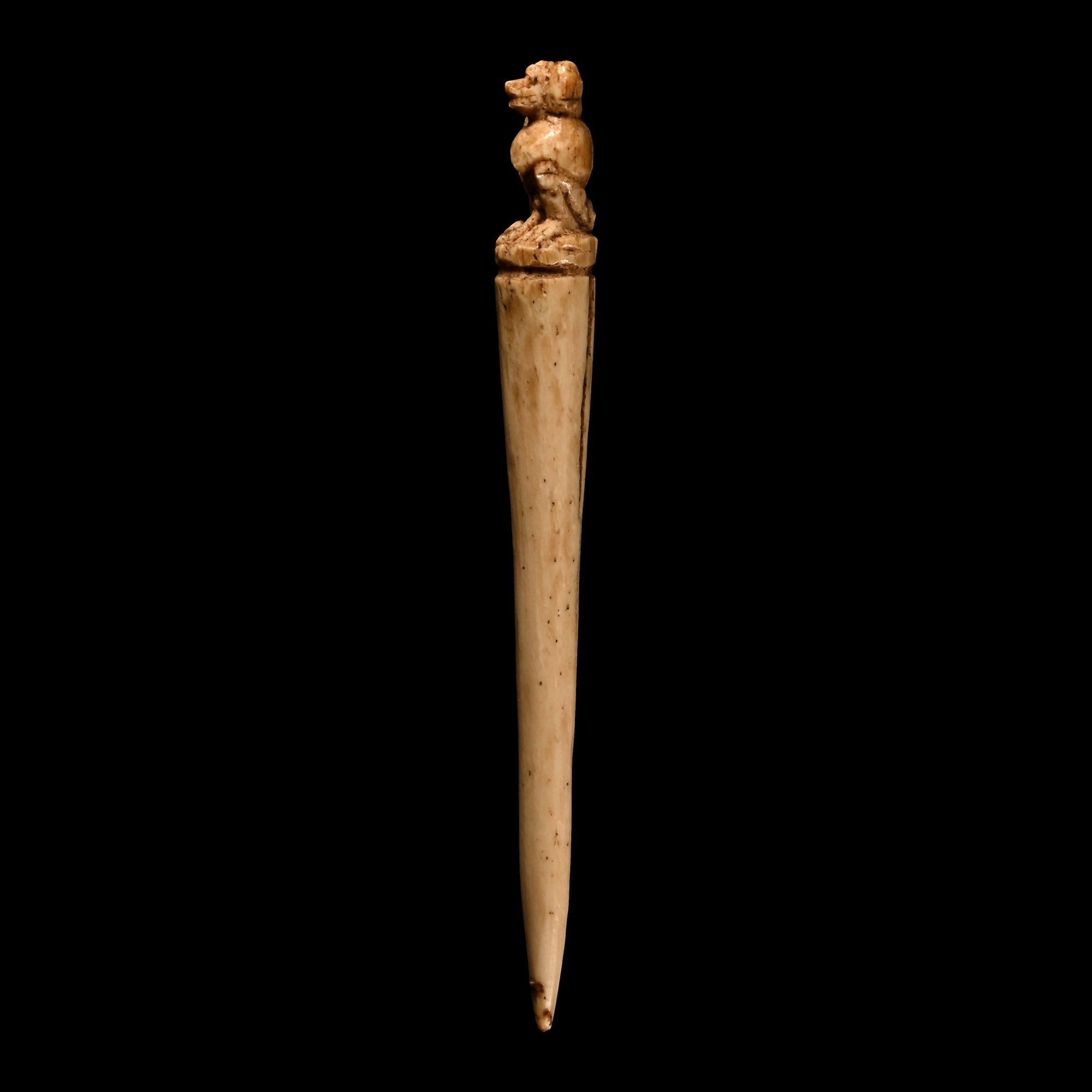
Egyptian Bone Hairpin with Thoth as a Baboon
NEW KINGDOM, 1569-1081 B.C.
3 1/2 in. (5.4 grams, 89 mm).
Tapering round-section hairpin, with a finial fashioned as a seated baboon with its tail resting along the body.
ProvenanceEx Thomas collection, UK, 1980s-1990s.
This lot is accompanied by an illustrated lot declaration signed by the Head of the Antiquities Department, Dr Raffaele D'Amato.
Cf. Vandier d’Abbadie, J., Les objets de toilette égyptiens au Musée du Louvre, Paris, 1972, pp. 148-149, nos. 633-4, for monkey-topped examples.
FootnotesDecorative hairpins often feature animals such as monkeys and cats, and inanimate objects such as olives.
CONDITIONTimeLine Auctions follows a vetting process to ensure the authenticity and legality of all items, reinforcing our commitment to integrity and responsible trading. Each antiquity, antique, and coin lot undergoes thorough examination by a vetting committee of at least ten external specialists, professional trade association members, scientists, and archaeologists: Our Vetting Process
AUCTIONS:
TimeLine is a leading auction house specialising in antiquities, ancient art, collectables, natural history, coins, medals, and books. Our auctions offer museums, collectors, historians, and enthusiasts the opportunity to acquire unique and historically significant pieces.
-
Romano-Egyptian Limestone Stele of a Nobleman Holding an Offering to the Gods
3rd-4th century A.D.Sold for (Inc. bp): £3,640
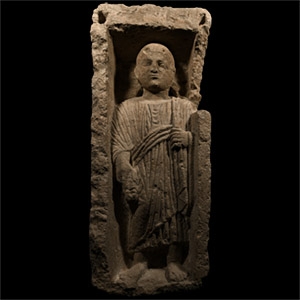
Modelled in the half-round as a man standing on an integral plinth, round face with short curly hair, wide eyes, a slender nose and a small mouth; wearing a Greek himation wrapped around his body and feet enclosed in Romano-Egyptian sandals; the left arm lowered and holding a cluster of grapes; his right arm bent at the elbow and holding a roll; remains of red and dark brown pigment on the face and clothing. 50 kg, 81.5 cm
Property of a Surrey lady; acquired by her father Christopher Terry circa 1980. Accompanied by an academic report by Dr Raffaele D'Amato. This lot has been checked against the Interpol Database of stolen works of art and is accompanied by search certificate number no.12603-233353. This lot has been cleared against the Art Loss Register database, and is accompanied by an illustrated lot declaration signed by the Head of the Antiquities Department, Dr Raffaele D'Amato.
Limestone niches with polychrome representations of the deceased were common in Roman Egypt, and lasted until the time of the Arab conquest. The man depicted on this stele certainly belonged to the high contemporary nobility as is evidenced by his well-pleated clothing, which identifies him as a member of local Graeco-Roman aristocracy. -
.jpg)
Egyptian Bronze Statuette of Isis Seated with Young Horus
Late-Ptolemaic Period, 664-30 B.C.Sold for (Inc. bp): £130
Isis enthroned wearing a cow's horn headdress with a solar disc, suckling the infant Horus on her lap. 39 grams, 10.7 cm
From the property of a lady since the early to mid 20th century. From the private collection of Mr M.L. since circa 2005. This lot is accompanied by an illustrated lot declaration signed by the Head of the Antiquities Department, Dr Raffaele D'Amato.
In ancient Egyptian mythology, Isis was the sister-wife of Osiris and the mother of the sky god Horus. She is associated with aspects of fertility and motherhood and is often depicted in various artworks seated in a nursing pose with her son Horus on her lap, as here. -
Egyptian Blue Glazed Faience Figure of Pataikos
Saite Period, 26th Dynasty, 664-545 B.C.Sold for (Inc. bp): £468
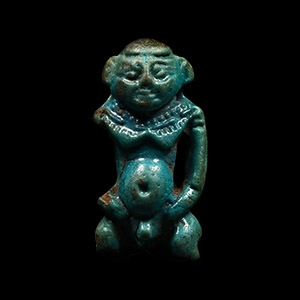
Wearing a broad collar and a stylised scarab on top of the head, elongated arms resting on the lower part of his protruding abdomen. 10.8 grams, 43 mm
Acquired in the mid 1980s-1990s. Private collection, Switzerland, thence by descent. Private collection, since the late 1990s. This lot is accompanied by an illustrated lot declaration signed by the Head of the Antiquities Department, Dr Raffaele D'Amato.
Herodotus mentions Pataikos as a dwarf-like representation of Ptah, although the ancient Egyptian name of the god remains unclear. These diminutive amulets symbolise Ptah’s immense magical power, which served to protect the wearer from dangerous creatures such as snakes and crocodiles. The role of the deity in the funerary sphere is explained in Spell 164 of the Book of the Dead, where a Pataikos is used to protect the deceased's heart from enemy attacks and the putrefaction of the body.
