
Loading, please wait...
LOT 0016
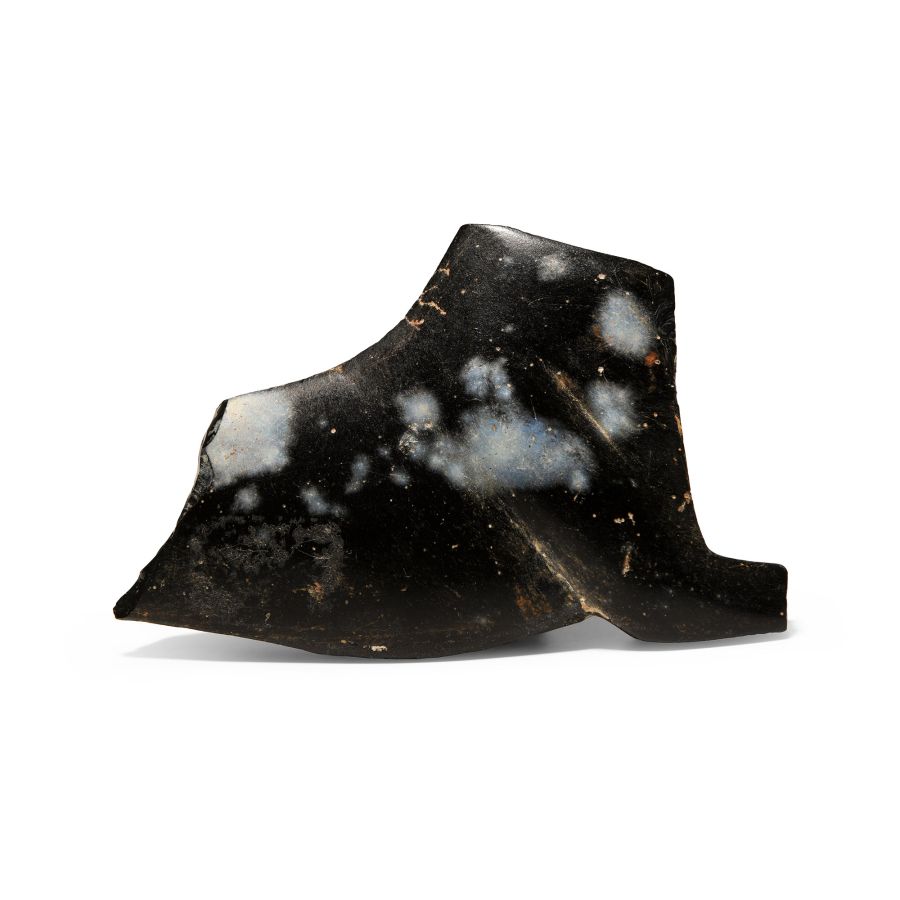
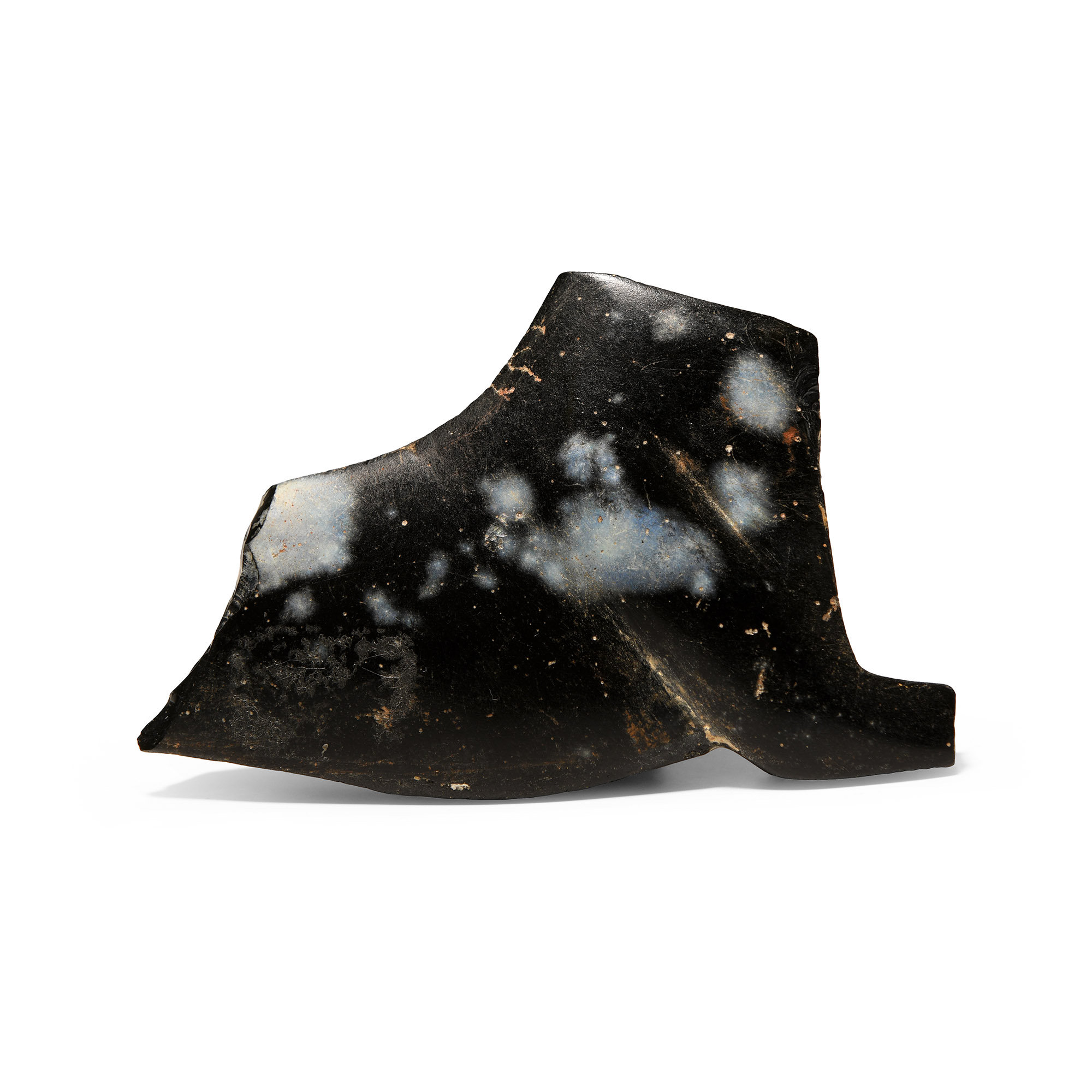
Egyptian Body of Anubis Glass Inlay
LATE PERIOD-PTOLEMAIC PERIOD, 664-30 B.C.
3 3/4 in. (108 grams, 96 mm).
With gently curved obverse and flat reverse, section of an inlay depicting Anubis, with thick neck and beginning of extended foreleg.
ProvenanceAcquired on the French art market, 1980s.
with Bonhams, London, 13 April 2011, lot 21.
Accompanied by copies of the relevant Bonhams catalogue pages.
Cf. Stern, E., Schick-Nolte, B., Early Glass of the Ancient World, 1600 B.C.-A.D.50. Ersto Wlf Collection, 1994, p.176, no.28, for a complete reclining jackal inlay.
CONDITIONTimeLine Auctions follows a vetting process to ensure the authenticity and legality of all items, reinforcing our commitment to integrity and responsible trading. Each antiquity, antique, and coin lot undergoes thorough examination by a vetting committee of at least ten external specialists, professional trade association members, scientists, and archaeologists: Our Vetting Process
AUCTIONS:
TimeLine is a leading auction house specialising in antiquities, ancient art, collectables, natural history, coins, medals, and books. Our auctions offer museums, collectors, historians, and enthusiasts the opportunity to acquire unique and historically significant pieces.
LOT 0016
Egyptian Body of Anubis Glass Inlay
Estimate £1,200 - 1,700€1,390 - 1,970 (for guidance only)$1,620 - 2,300 (for guidance only)
-
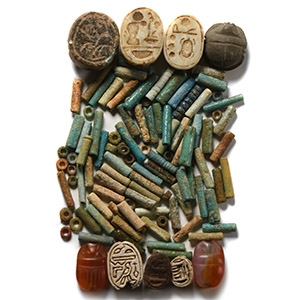
Egyptian Faience Bead and Scarab Collection
New Kingdom-Late Period, circa 1400-332 B.C.Sold for (Inc. bp): £624
Including tubular and annular beads, scarabs and scaraboids with inscriptions, including the prenomen of Amenhotep III (Neb-Maat-Re) and the nomen of Amenhotep II (A-Kheperu-Re). 22.4 grams total, 3-18 mm
From an early to mid 20th century collection, West country, UK. -
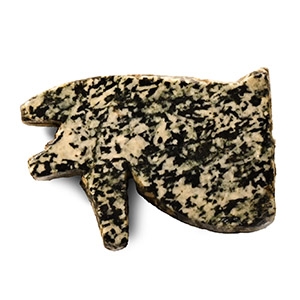
Egyptian Diorite Wedjat Eye Amulet
Late Period, 664-332 B.C.Sold for (Inc. bp): £72
With transverse piercing for suspension. 7.55 grams, 30 mm
From the old Belfort collection, expert Jean Roudillon. Ex Hotel des Ventes de Belfort. Property of a French collector.
The wedjat-eye amulet represents the healed eye of the god Horus, featuring both human and falcon elements. The name wedjat in ancient Egyptian means ‘the one that is sound.’ According to Egyptian mythology, Horus' eye was wounded or taken by the god Seth and restored by Thoth. The wedjat-eye amulet was thought to protect its wearer and bestow the power of recovery and regeneration onto them. As such, it was used by both the living and the dead. -
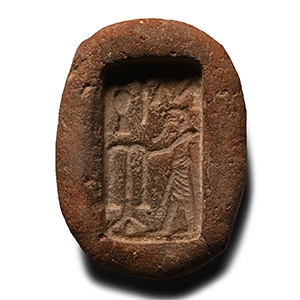
Egyptian Terracotta Nile God Hapi Amulet Mould
Late Period, 664-332 B.C.Sold for (Inc. bp): £390
Plano-convex ceramic mould with an incuse image of Hapi standing before a libating vessel and sacred knot. 22 grams, 50 mm
Ex D. Smith collection, 1990s. Property of a Cambridgeshire, UK, gentleman.
In ancient Egyptian mythology, Hapi was considered the embodiment of the annual inundation of the River Nile and the source of life for all living beings in Egypt, including people, animals, and plants. His distinct headdress of papyrus stalks was often used to identify him.
