
Loading, please wait...
LOT 0502
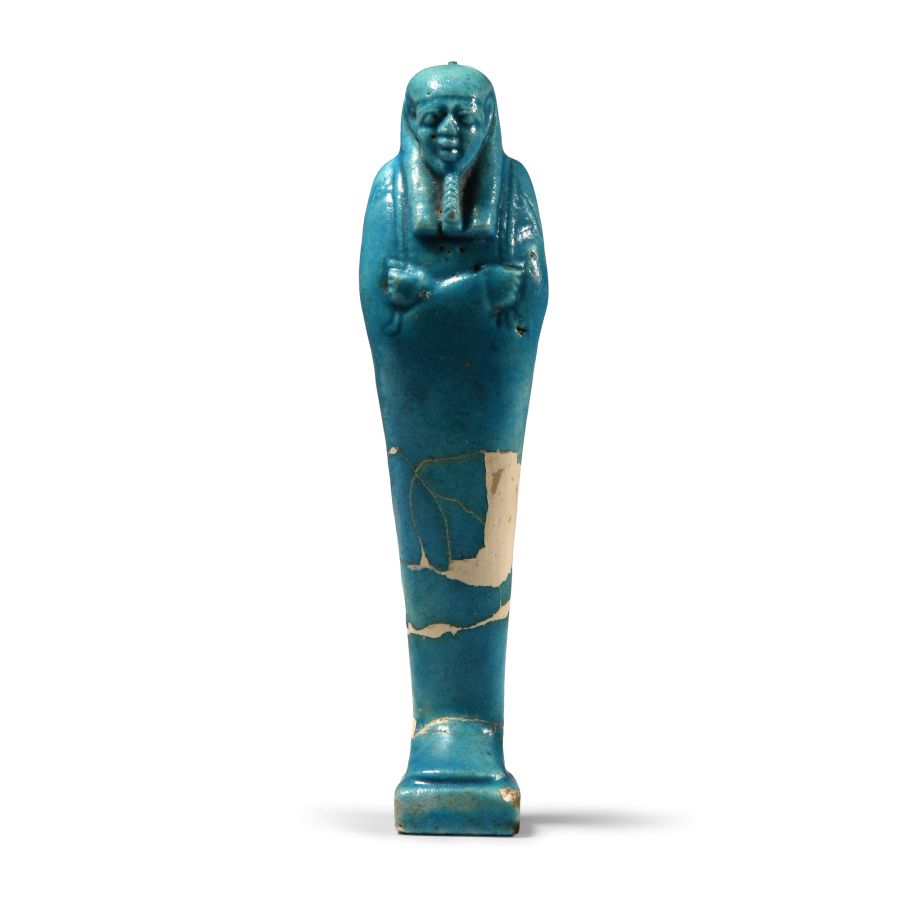
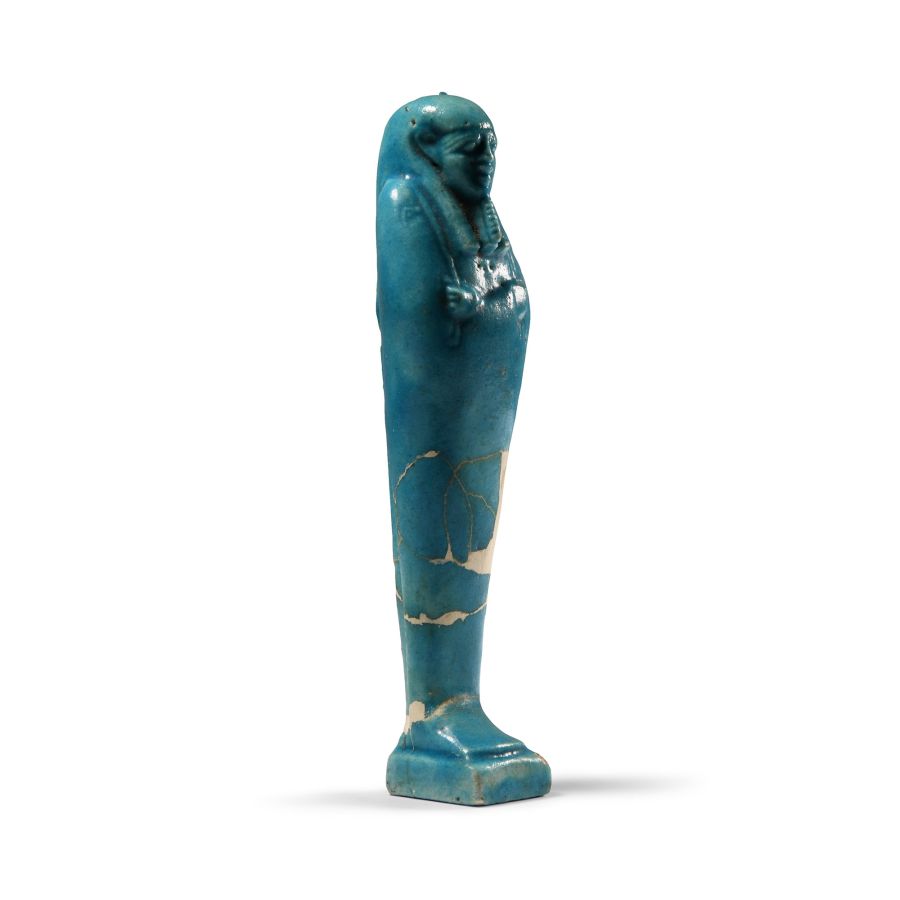
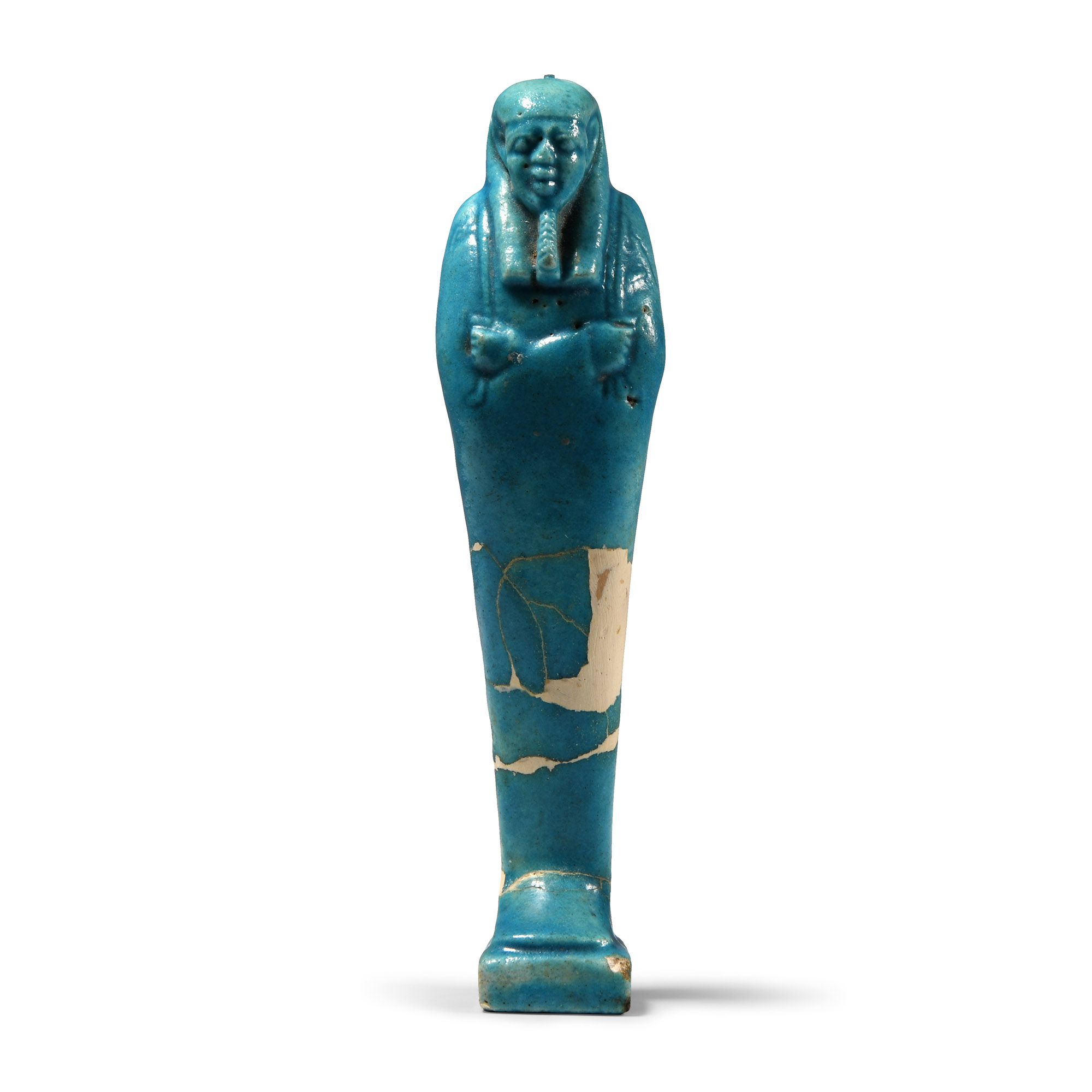
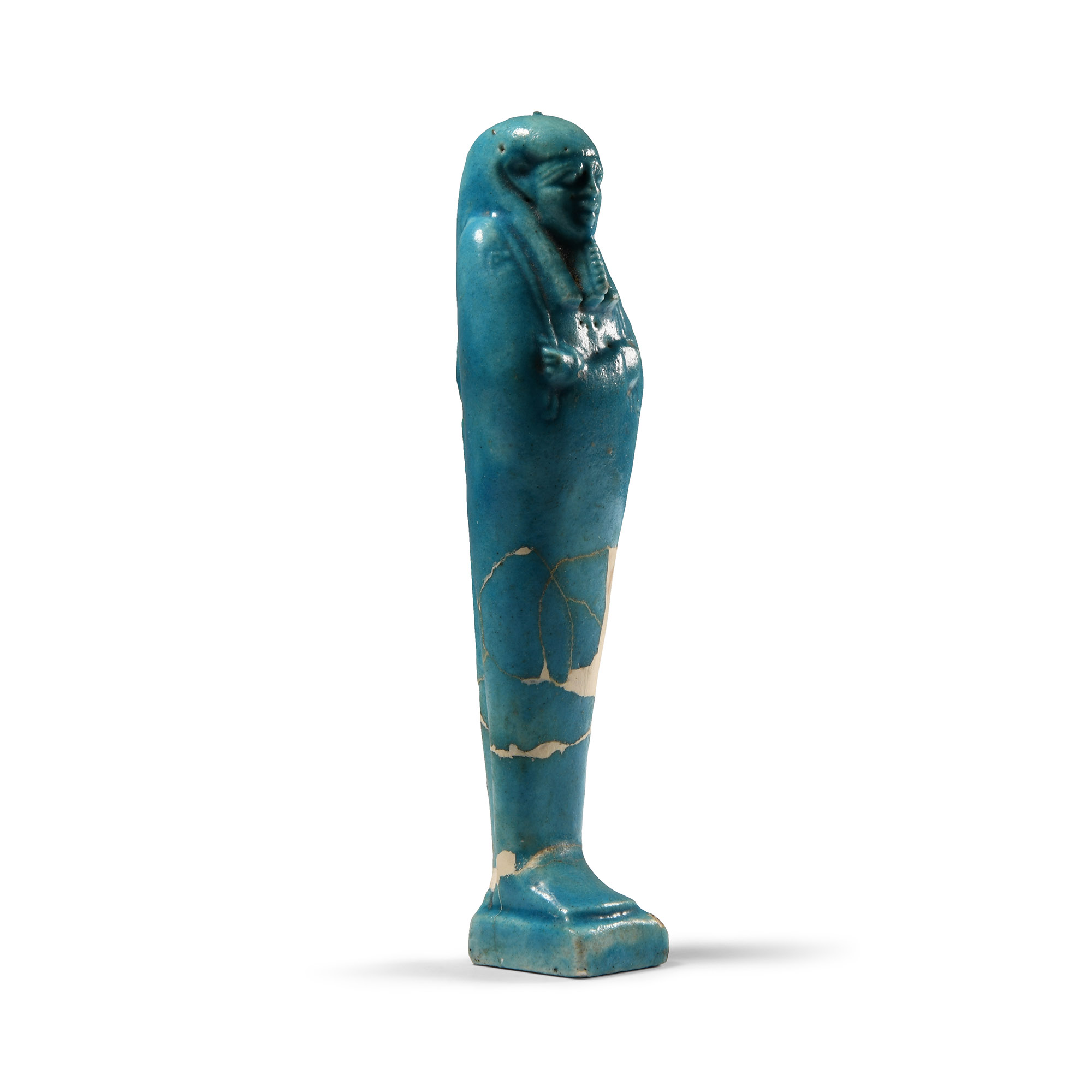
Egyptian Blue Glazed Shabti
LATE PERIOD, 664-332 B.C.
6 1/2 in. (162 grams, 16.5 cm).
Faience shabti with detailed face, beard and wig, holding a pick and hoe, dorsal pillar and seed bag to left shoulder; some loss to surface; repaired. [No Reserve]
ProvenanceEx Gilles Grimm collection, Paris, France.
Acquired by the current owner from Aguttes, 19 December 2018, no.451.
Property of a French collector.
Cf. Lacovara, P., and Markowitz, Y.J., Jewels of the Nile: Ancient Egyptian Treasures from the Worcester Art Museum, Worcester MA, 2020, p. 183, for examples of shabtis with a similar glassy blue glaze.
CONDITIONTimeLine Auctions follows a vetting process to ensure the authenticity and legality of all items, reinforcing our commitment to integrity and responsible trading. Each antiquity, antique, and coin lot undergoes thorough examination by a vetting committee of at least ten external specialists, professional trade association members, scientists, and archaeologists: Our Vetting Process
AUCTIONS:
TimeLine is a leading auction house specialising in antiquities, ancient art, collectables, natural history, coins, medals, and books. Our auctions offer museums, collectors, historians, and enthusiasts the opportunity to acquire unique and historically significant pieces.
-
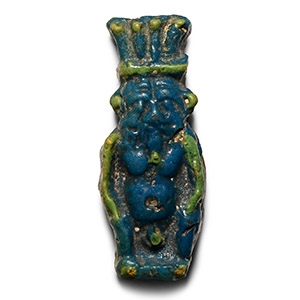
Egyptian Blue-Glazed Amulet of Bes
Ptolemaic Period, 332-30 B.C.Estimate: £200 - 300 (+bp*)
Opening Bid: £100
Faience amulet of the god Bes with his body of a dwarf, leonine head, and feather headdress; with a bright blue satin glaze and raised accents in yellow, modelled similarly on both sides; pierced through the neck for suspension 8.2 grams, 46 mm
From the P.C. collection, 1990s. Ex London gallery. Property of a Bristol, UK, gentleman.
Bes became one of ancient Egypt's most popular apotropaic deities from the New Kingdom onwards. Despite his somewhat fearful appearance, Bes was the patron and protector of pregnant women and children. He was also believed to protect from snakes. -
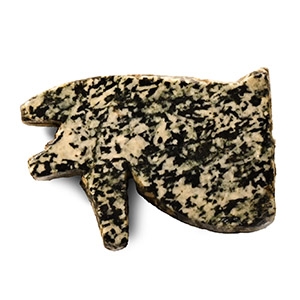
Egyptian Diorite Wedjat Eye Amulet
Late Period, 664-332 B.C.Sold for (Inc. bp): £72
With transverse piercing for suspension. 7.55 grams, 30 mm
From the old Belfort collection, expert Jean Roudillon. Ex Hotel des Ventes de Belfort. Property of a French collector.
The wedjat-eye amulet represents the healed eye of the god Horus, featuring both human and falcon elements. The name wedjat in ancient Egyptian means ‘the one that is sound.’ According to Egyptian mythology, Horus' eye was wounded or taken by the god Seth and restored by Thoth. The wedjat-eye amulet was thought to protect its wearer and bestow the power of recovery and regeneration onto them. As such, it was used by both the living and the dead. -
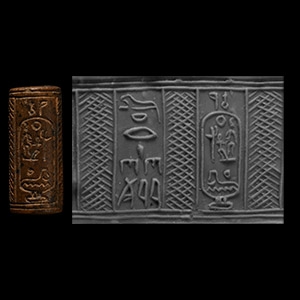
Egyptian Cylinder Seal with Cartouche of Ramesses II
New Kingdom, 19th Dynasty 1304-1237 B.C.Sold for (Inc. bp): £1,235
With crisp detail of crosshatched panels, hieroglyphic text in one and a cartouche in the other with the regnal name of Ramesses II (User-Maat-Re-setep-en-Re), supplied with a museum-quality impression. 5.01 grams, 25 mm
Gustave Mustaki, Alexandria, Egypt; exported from Egypt to the UK c.1950. Elsa McLellan, UK; by descent from the above. Private collection, London, UK; by descent from the above.
