
Loading, please wait...
LOT 0412
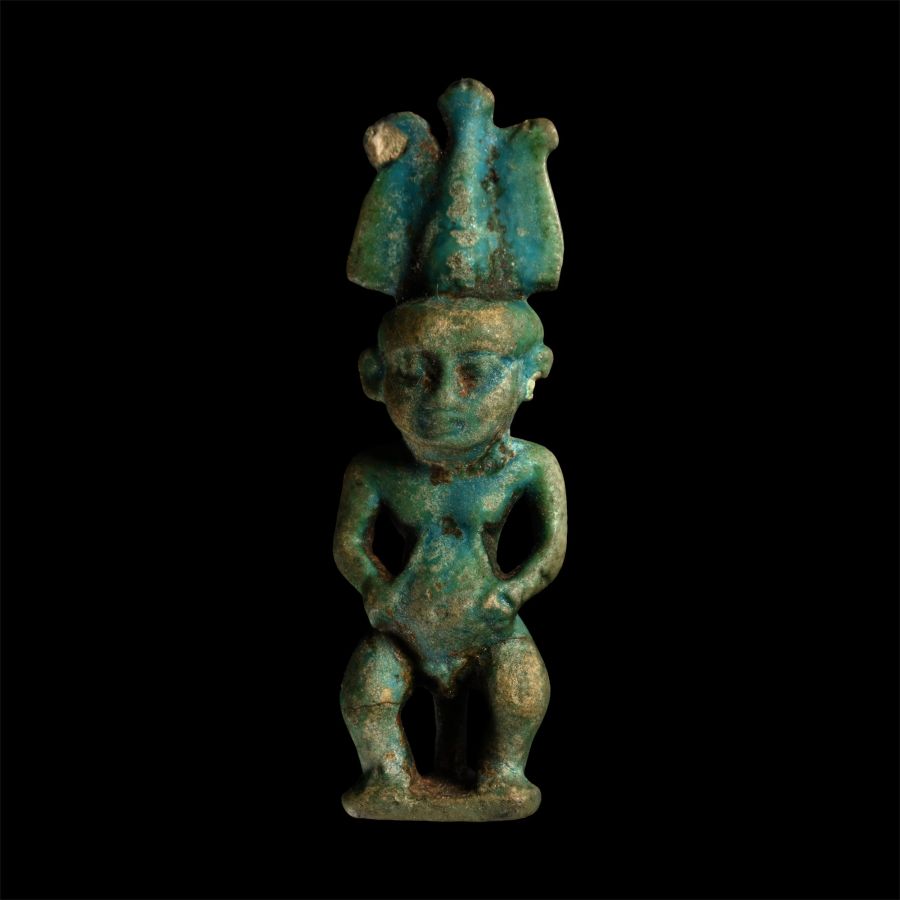
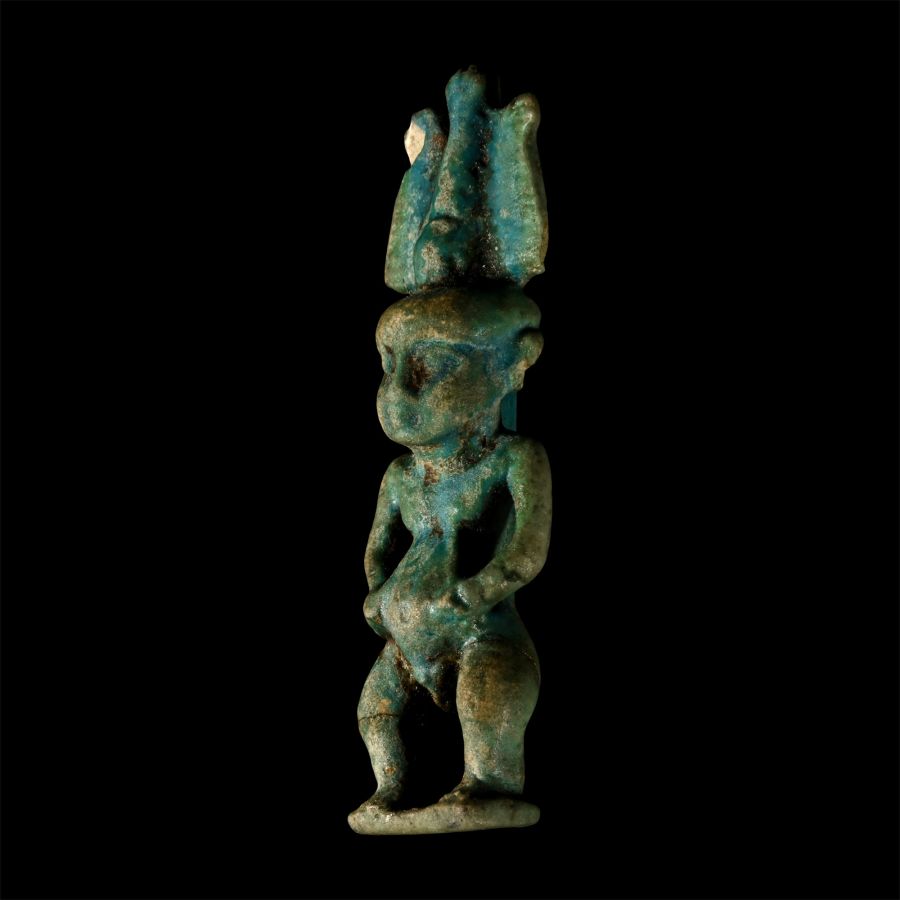
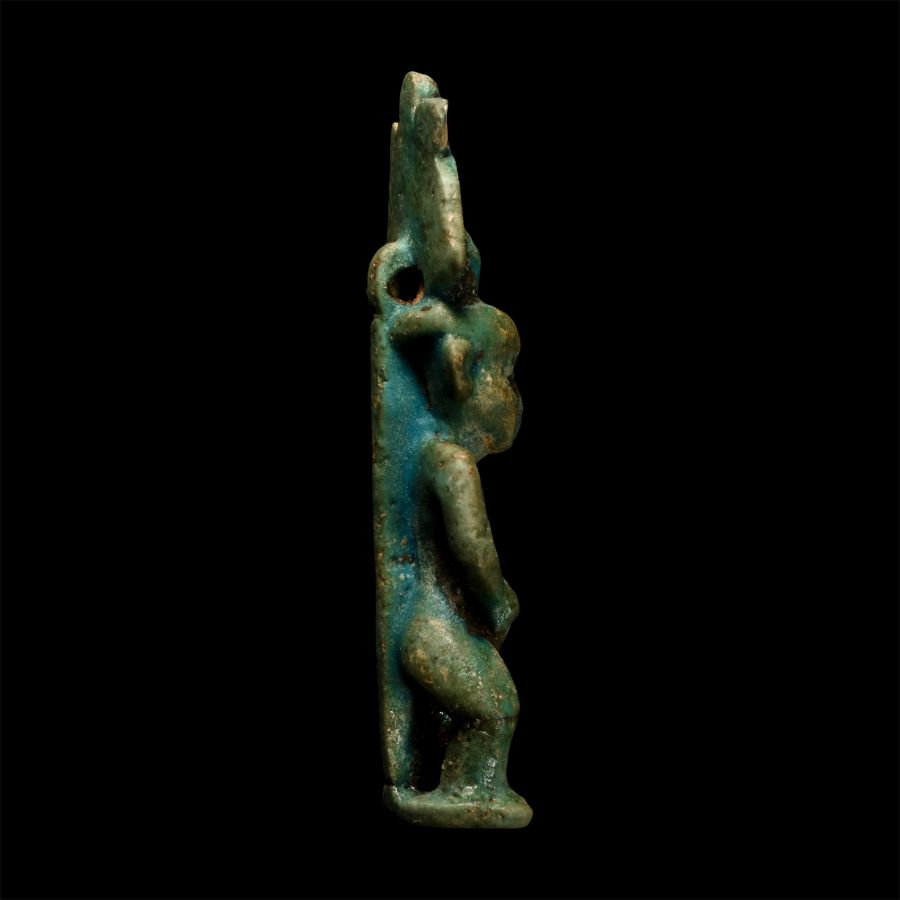
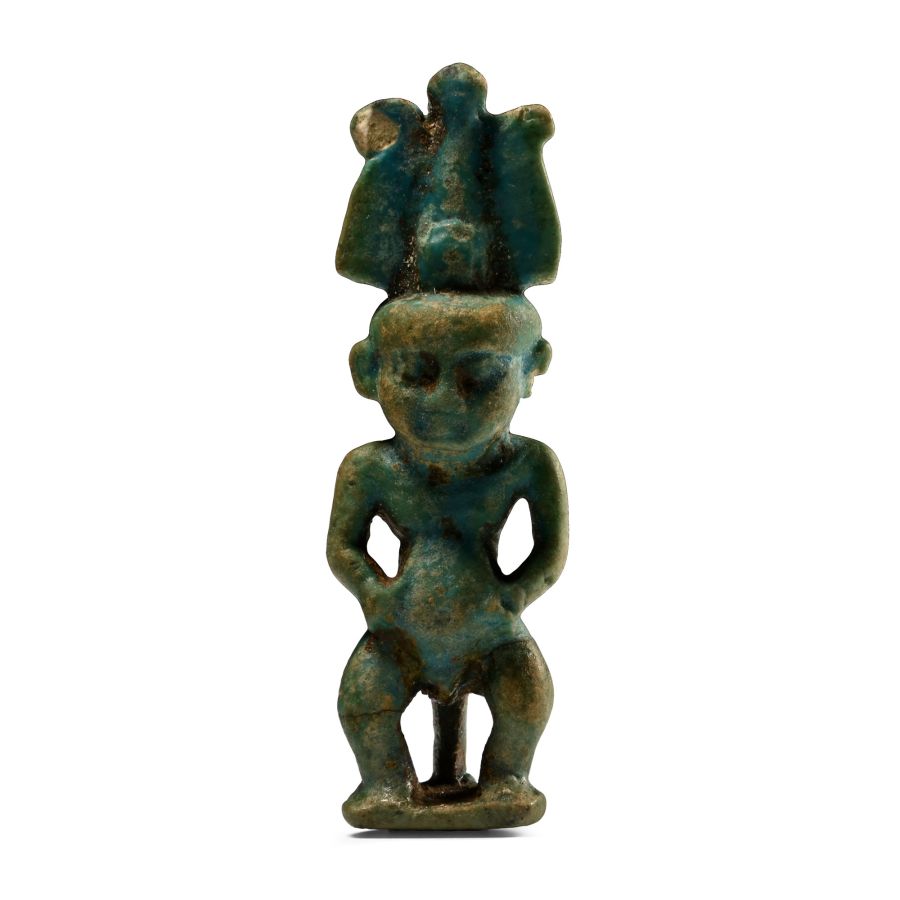
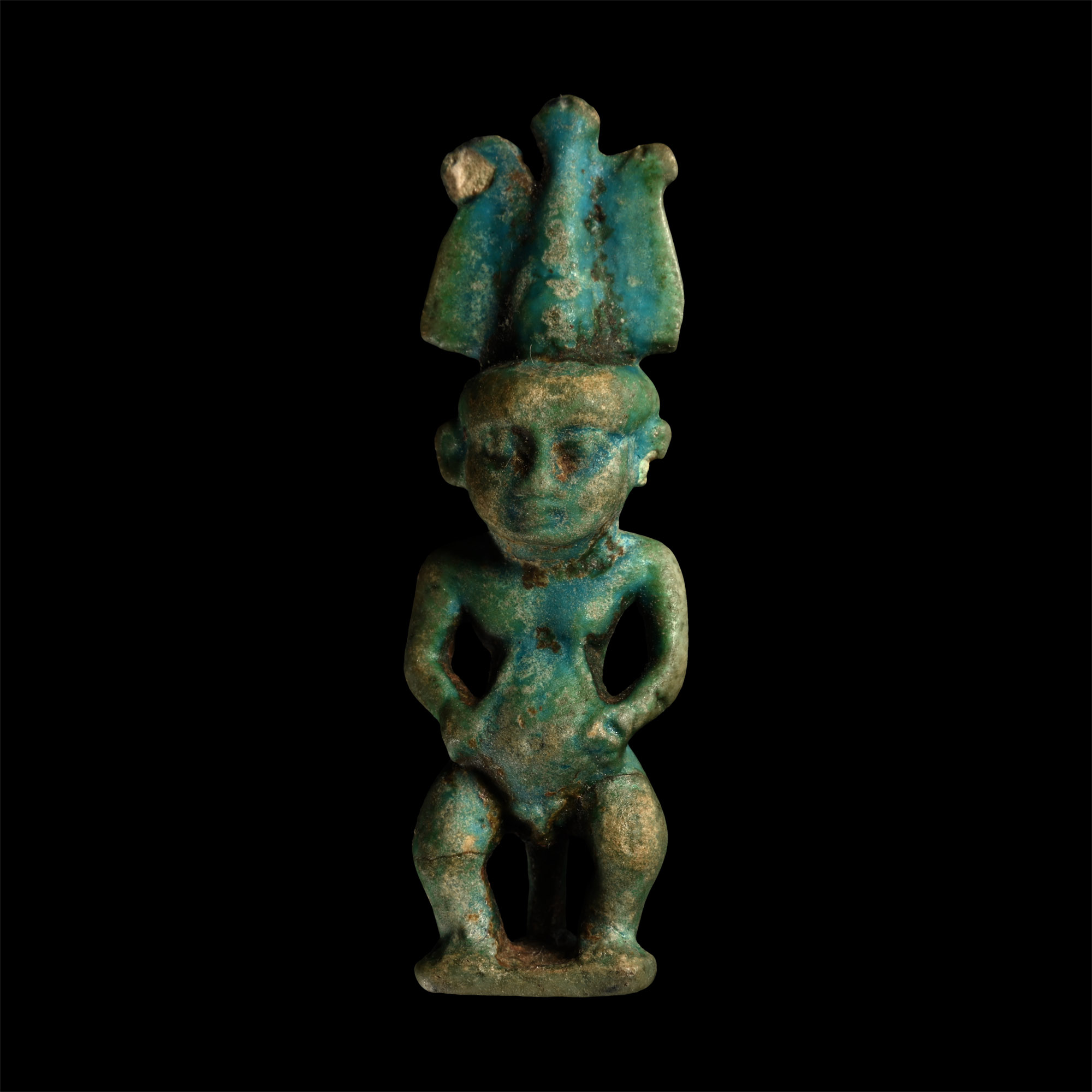
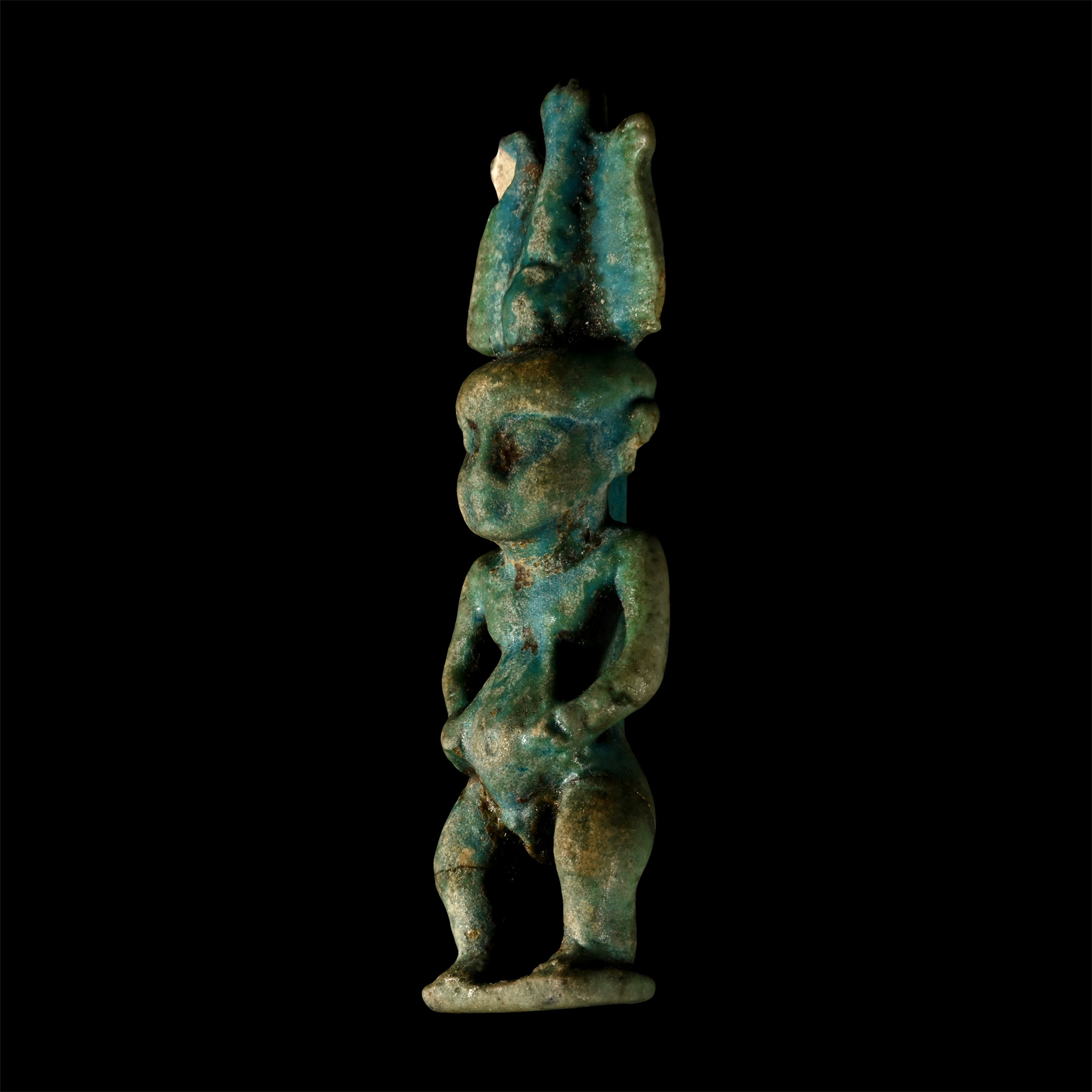
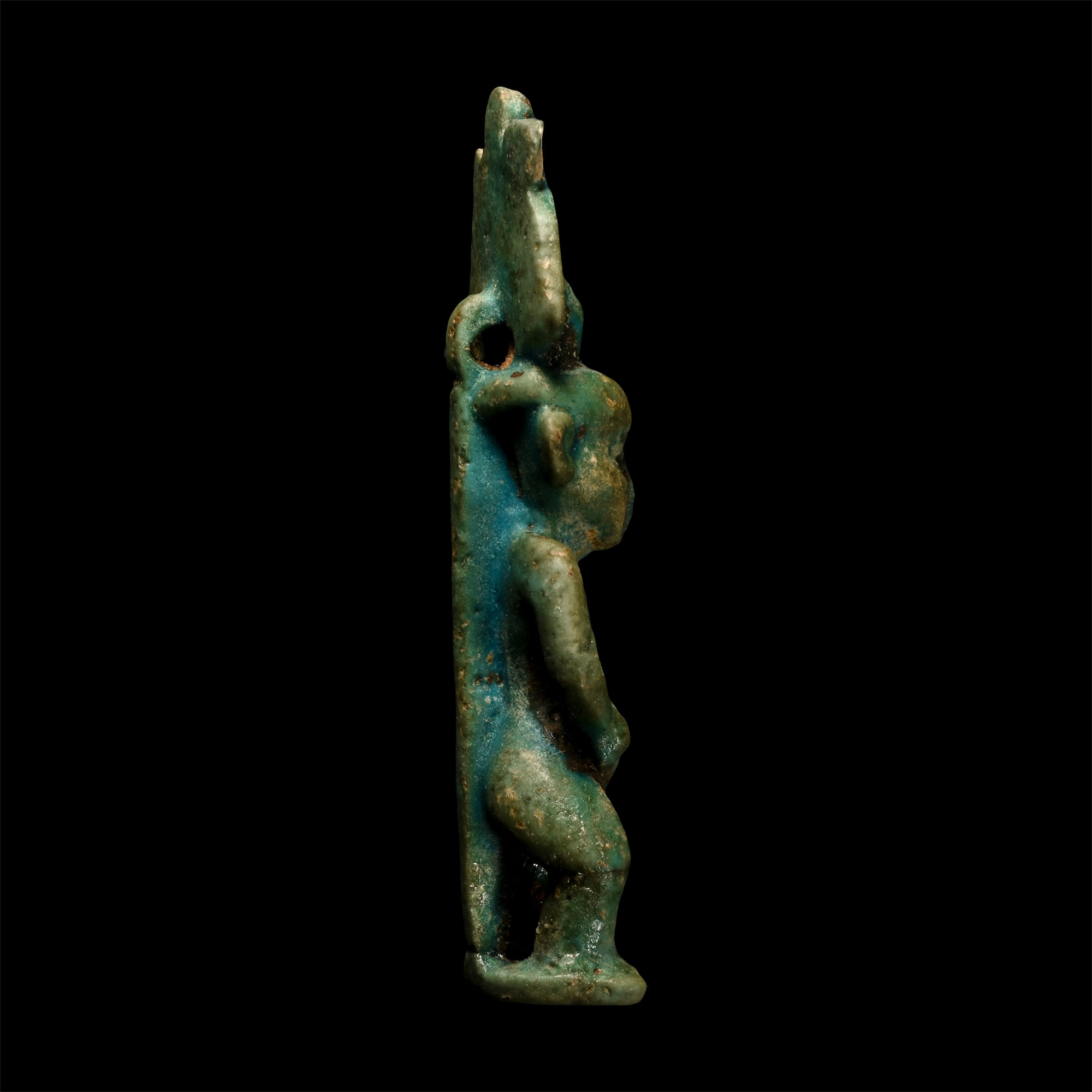
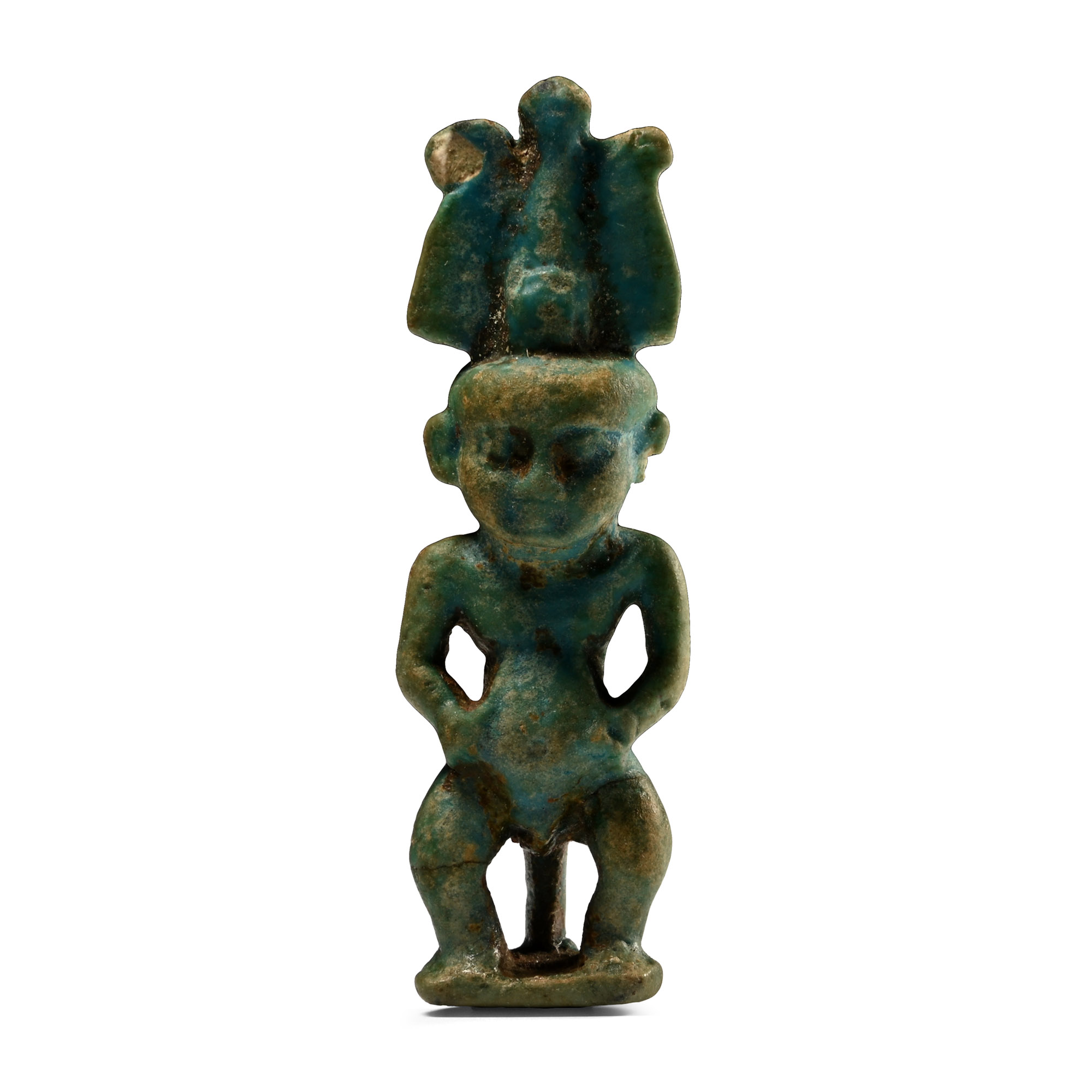
Egyptian Blue Glazed Pataikos Statuette
THIRD INTERMEDIATE PERIOD, 1069-702 B.C.
2 7/8 in. (13.68 grams, 73 mm).
Modelled in the round standing nude on a D-shaped base with atef crown, dorsal pillar with loop.
ProvenanceAcquired on the German art market, 1989-1995.
with The Museum Gallery, 19 Bury Place, London, WC1, UK, 1998-2003.
Property of a London based academic, 2003 to present.
This lot is accompanied by an illustrated lot declaration signed by the Head of the Antiquities Department, Dr Raffaele D'Amato.
Cf. Dasen, V., Dwarfs in Ancient Egypt and Greece, Oxford, 1993, pl. 8, no. 2a, for a Pataikos with a similar crown
FootnotesHerodotus mentions Pataikos as a dwarf-like representation of Ptah, although the ancient Egyptian name of the god remains unclear. These diminutive amulets symbolise Ptah’s immense magical power, which serves to protect the wearer from dangerous creatures such as snakes and crocodiles. The role of the deity in the funerary sphere is explained in Spell 164 of the Book of the Dead, where Pataikos is used to protect the deceased’s heart from enemy attacks and the putrefaction of the body. The atef crown worn by this example, clearly links the figure to the underworld god, Osiris.
CONDITIONTimeLine Auctions follows a vetting process to ensure the authenticity and legality of all items, reinforcing our commitment to integrity and responsible trading. Each antiquity, antique, and coin lot undergoes thorough examination by a vetting committee of at least ten external specialists, professional trade association members, scientists, and archaeologists: Our Vetting Process
AUCTIONS:
TimeLine is a leading auction house specialising in antiquities, ancient art, collectables, natural history, coins, medals, and books. Our auctions offer museums, collectors, historians, and enthusiasts the opportunity to acquire unique and historically significant pieces.
LOT 0412
Egyptian Blue Glazed Pataikos Statuette
Estimate £600 - 800€700 - 930 (for guidance only)$810 - 1,080 (for guidance only)
-
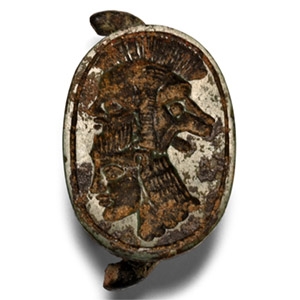
Phoenician Green Stone Scarab with Three-Headed Gryllos
6th-4th century B.C.Sold for (Inc. bp): £2,730
With carapace detailing to the convex face; underside with gryllos of a bearded male, a slender female and a boar. 6.94 grams, 28 mm
Ex collection of the late Mr S. M., London, UK, 1970-1990s. This lot has been checked against the Interpol Database of stolen works of art and is accompanied by a search certificate number no.12635-234910. This lot has been cleared against the Art Loss Register database, and is accompanied by an illustrated lot declaration signed by the Head of the Antiquities Department, Dr Raffaele D'Amato.
Grylli motifs usually combine various human and animal heads, sometimes including animal legs. -
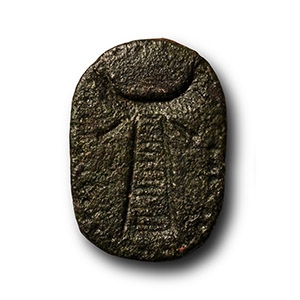
Phoenicio-Egyptian Dark Green Stone Scarab
Circa 9th-8th century B.C.Estimate: £200 - 280 (+bp*)
Opening Bid: £111
With textured carapace, bull-horned column to the reverse, possibly a symbol of Tanit. 3.94 grams, 15 mm
From the property of the late Mr SM, London, UK, 1969-1999. This lot is accompanied by an illustrated lot declaration signed by the Head of the Antiquities Department, Dr Raffaele D'Amato.
The widespread adoption of the scarab, both as a symbol linked to the concept of rebirth, and in its function as a seal, exemplifies the extent of Egyptian influence on Phoenician culture, from its origins in the Levant to its spread across the Mediterranean. -
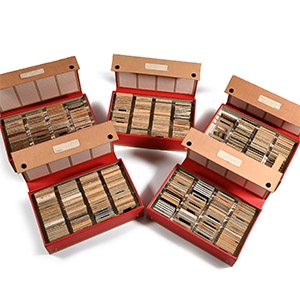
Historic Collection of 725 Slides of Archaeological Sites and Artefacts Including Other Sites in Egypt
1960s-1980s A.D.Sold for (Inc. bp): £650
Housed in five linen-covered boxes, covering general Egyptian sites, religion, Gods of Amun and Osiris, minor gods, environment, boats, and Book of the Dead etc. 4.44 kg total, 26.5 x 16.5 x 6.5 cm each box
Property of archaeologist Stephanie Gee, N.W. London, UK, 1960s-1980s. This lot is accompanied by an illustrated lot declaration signed by the Head of the Antiquities Department, Dr Raffaele D'Amato.
Stephanie Gee was a prominent archaeologist who took part in several expeditions in Egypt. She was a trusted assistant to the British-Australian archaeologist Veronica Seton-Williams, who excavated in Egypt, Britain, and the Near East. Stephanie also took part in the Tell El-Farâ'în expeditions of 1965-1968, and assisted Seton-Williams with preparing the 1966 expedition report. Their collaboration continued and Stephanie helped with the manuscript of Seton-Williams’ book ‘The Road to El-Aguzein’, a narrative account of her life that was first published in 1988.
