
Loading, please wait...
LOT 0046
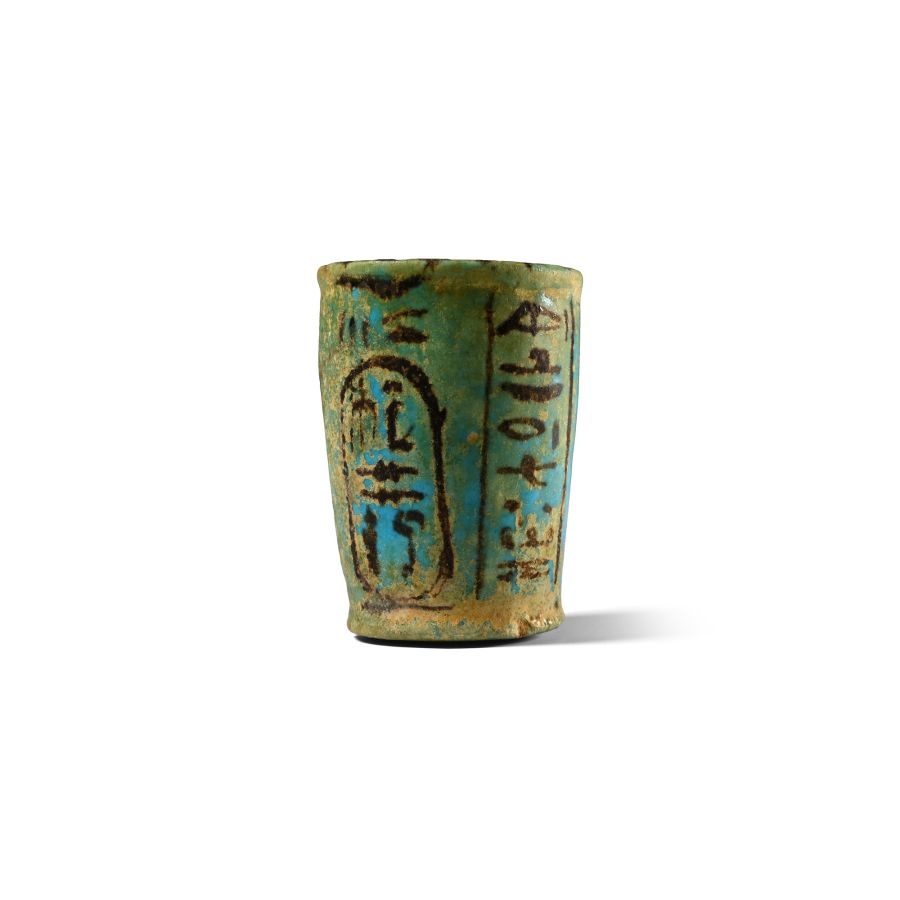
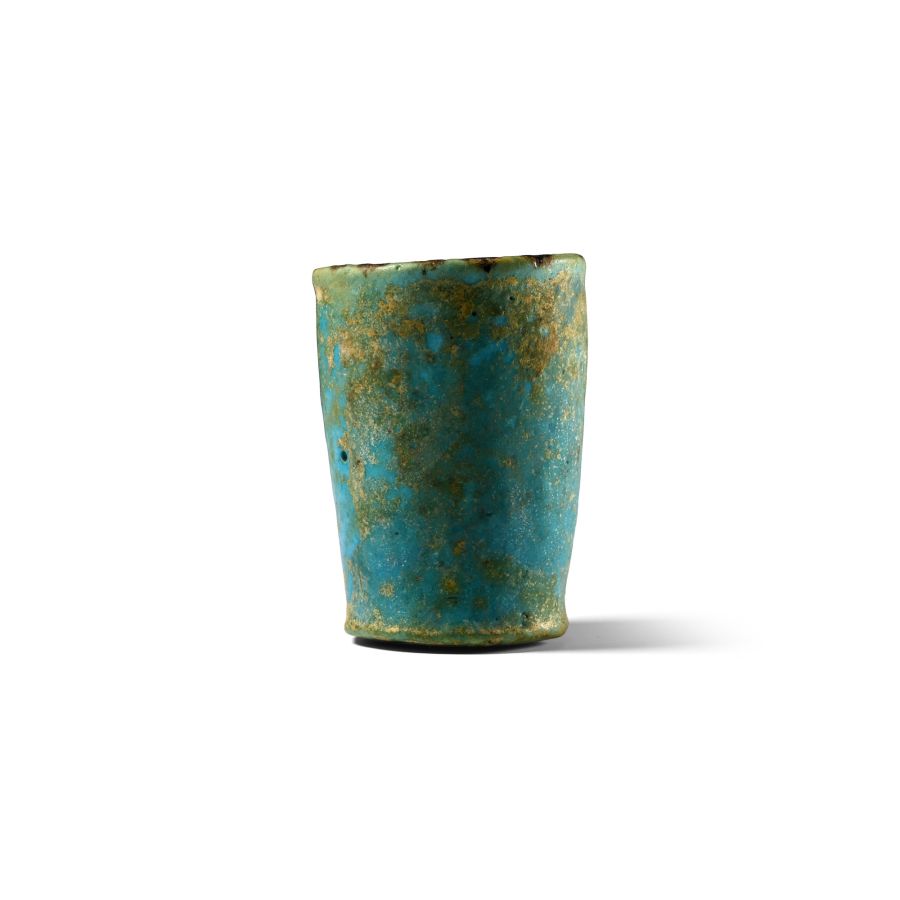
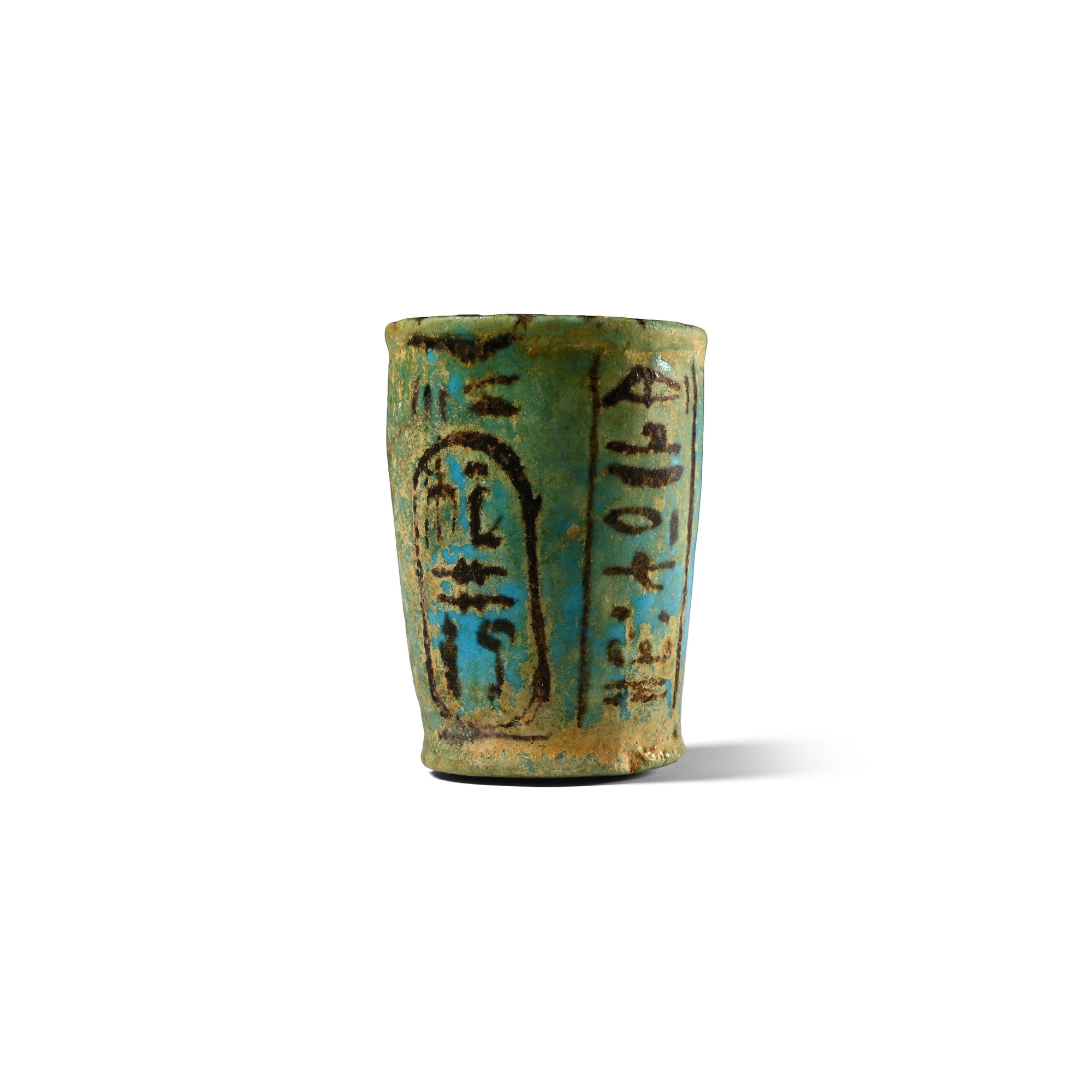
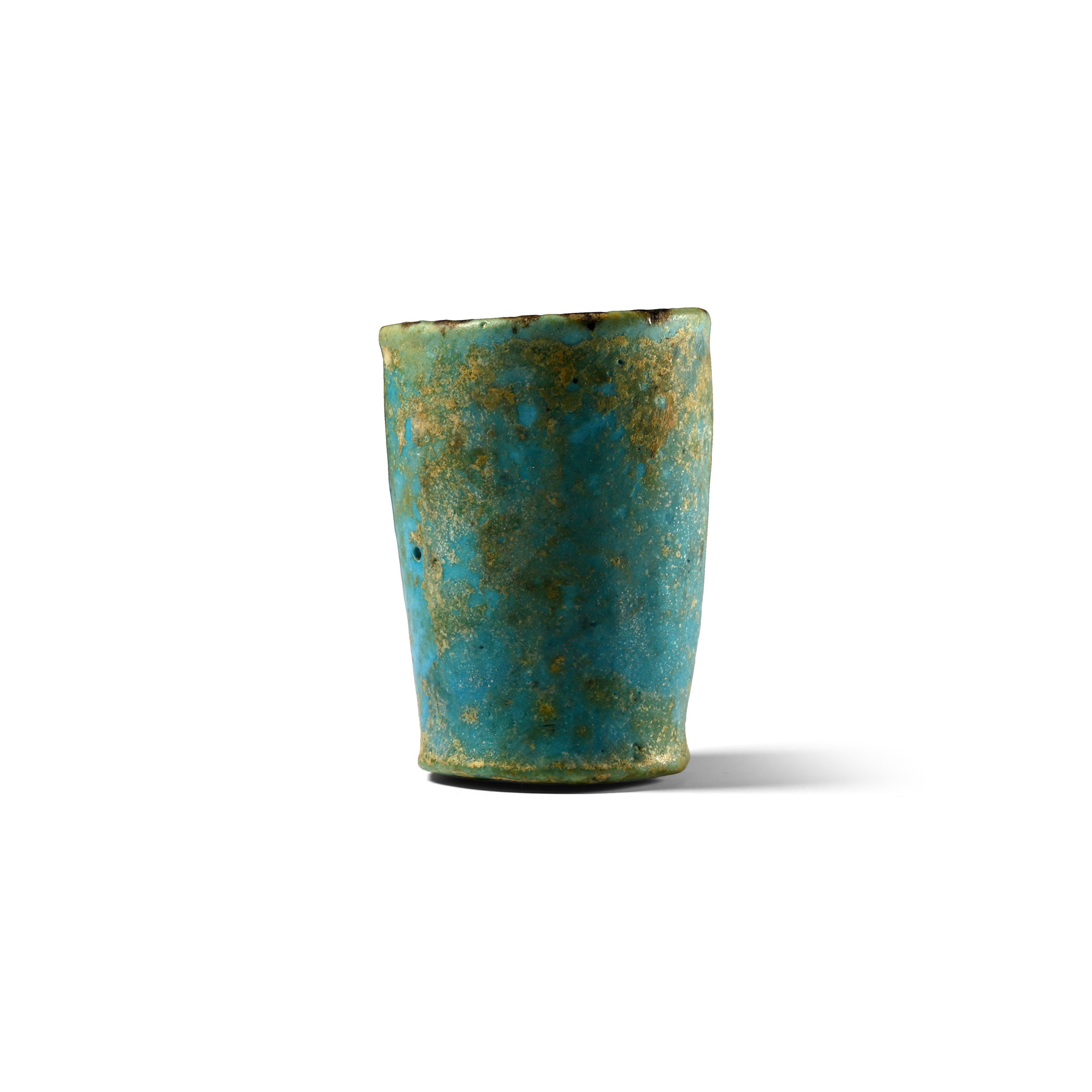
Egyptian Blue Glazed Libation Cup of Ramesses III
NEW KINGDOM, 20TH DYNASTY, CIRCA 1183-1152 B.C.
2 1/8 in. (50 grams, 53 mm).
Ritual cup with sides tapering towards the base; the black glazed rectangular panel containing two columns of text: 'Lord of Appearances, Ramesses ruler of Heliopolis (Ramses heqa Iwnw) given life, beloved of Osiris, Lord of Rosetau'.
Provenancewith Hoshigaoka Gallery Co. Ltd, Japan.
Private collection, London, acquired from the above on the 26th September 1981.
This lot has been checked against the Interpol Database of stolen works of art and is accompanied by a search certificate number no.12637-235085.
This lot is accompanied by an illustrated lot declaration signed by the Head of the Antiquities Department, Dr Raffaele D'Amato.
TimeLine Auctions follows a vetting process to ensure the authenticity and legality of all items, reinforcing our commitment to integrity and responsible trading. Each antiquity, antique, and coin lot undergoes thorough examination by a vetting committee of at least ten external specialists, professional trade association members, scientists, and archaeologists: Our Vetting Process
AUCTIONS:
TimeLine is a leading auction house specialising in antiquities, ancient art, collectables, natural history, coins, medals, and books. Our auctions offer museums, collectors, historians, and enthusiasts the opportunity to acquire unique and historically significant pieces.
-
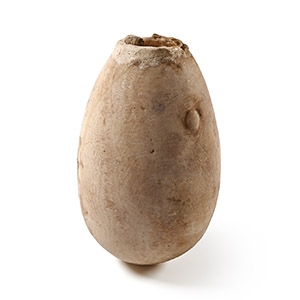
Egyptian Alabaster Alabastron
7th-6th century B.C.Sold for (Inc. bp): £156
With an ovoid body and two small lug handles to the upper body. 121 grams, 72 mm
Acquired in the mid 1980s-1990s. Private collection, Switzerland, thence by descent. Private collection, since the late 1990s. This lot is accompanied by an illustrated lot declaration signed by the Head of the Antiquities Department, Dr Raffaele D'Amato.
The name by which we know the vessel in question comes directly from its name in Greek— alábastron —which itself was derived from Egyptian, although It is difficult to say whether the name in Egyptian first applied to the type of vessel or to the stone used to make it. Pliny (NH 36.12, 37.54) includes an alabastrites or alabastritis from Alabastrum near Thebes in Egypt among his description of stones, and Theophrastus (On Stones, 1.6) an alabastrítes, also from near Thebes. Ptolemy (Geography, 4.5) even mentions an alabastrites mons, a mountain of alabaster, in the same vicinity. The prototype of the alabastron shape with two lug handles first appeared in Egypt at the end of the Middle Kingdom and continued in use with slight variations through New Kingdom times. After an apparent hiatus in the use of the shape at the end of the Late Bronze Age, it appeared again in the second half of the eighth century in a form more similar to our specimen and became common by the 26th Dynasty. -
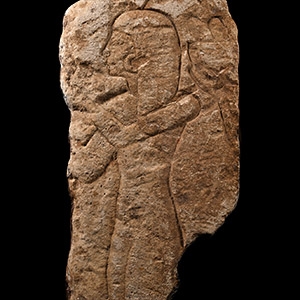
Egyptian Limestone Relief Fragment with Female Figure
New Kingdom, 18th Dynasty, circa 1295 B.C.Estimate: £4,000 - 6,000 (‡+bp*)
Opening Bid: £2,000
Showing a female figure as part of a procession, carrying a loaf of bread, a second offerant behind her; mounted on a custom-made display stand. 3.12 kg total, 42 cm high including stand
From the estate of the late Professor Dr E. Bernardo Streiff, Geneva; a distinguished collection of antiquities formed during the 1950s-1970s. with Galerie Rhéa, Zurich, Switzerland. This lot has been checked against the Interpol Database of stolen works of art and is accompanied by a search certificate number no.12625-236383. This lot has been cleared against the Art Loss Register database, and is accompanied by an illustrated lot declaration signed by the Head of the Antiquities Department, Dr Raffaele D'Amato.
Professor Dr E. Bernardo Streiff (1911-2001) was a prominent Swiss physician and academic based in Geneva, best known for his contributions to medical science as well as his deep passion for ancient art and antiquities. Over the course of several decades, particularly between the 1950s and 1970s, Professor Streiff assembled a highly regarded private collection of antiquities, reflecting both scholarly discernment and aesthetic sensitivity. His interests focused on the art and material culture of the ancient Mediterranean, with a particular emphasis on Greek, Etruscan, and Roman objects. A connoisseur guided by academic rigour, Dr Streiff maintained close ties with museums, galleries, and archaeological experts of his time. Many pieces from his collection were acquired from leading European dealers and fairs, and are notable for their quality, provenance, and condition. Following his passing, objects from the Streiff collection have appeared in respected sales and exhibitions, recognised for their integrity and the refined eye of the collector behind them. -
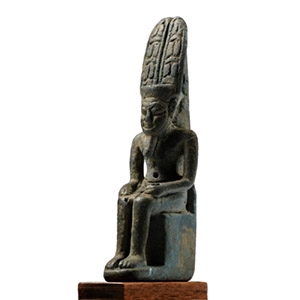
Egyptian Blue Amulet of Amun
Late Period, 26th Dynasty, circa 664-525 B.C.Estimate: £2,000 - 3,000 (+bp*)
Opening Bid: £1,000
The god modelled seated on a throne with a dorsal pillar, hands resting on his knees, wearing a short kilt and a two-plume feather crown; mounted on a wooden stand. 15.75 grams total, 71 mm including stand
with Charles Ede Ltd, London, UK. Private collection, London, UK, acquired from the above on 12 July 1994. Accompanied by a copy of the Charles Ede invoice. This lot has been checked against the Interpol Database of stolen works of art and is accompanied by a search certificate number no.12632-235078. This lot has been cleared against the Art Loss Register database, and is accompanied by an illustrated lot declaration signed by the Head of the Antiquities Department, Dr Raffaele D'Amato.
The amulet of the god Amun served both religious and protective purposes in ancient Egypt. Amun, a major deity associated with creation, kingship, and hidden power. Wearing an amulet bearing Amun’s image or name was believed to invoke his divine protection, grant strength, and confer favour or legitimacy. Such amulets were also placed among burial goods to ensure the deceased was protected and guided in the afterlife.
