
Loading, please wait...
LOT 0026
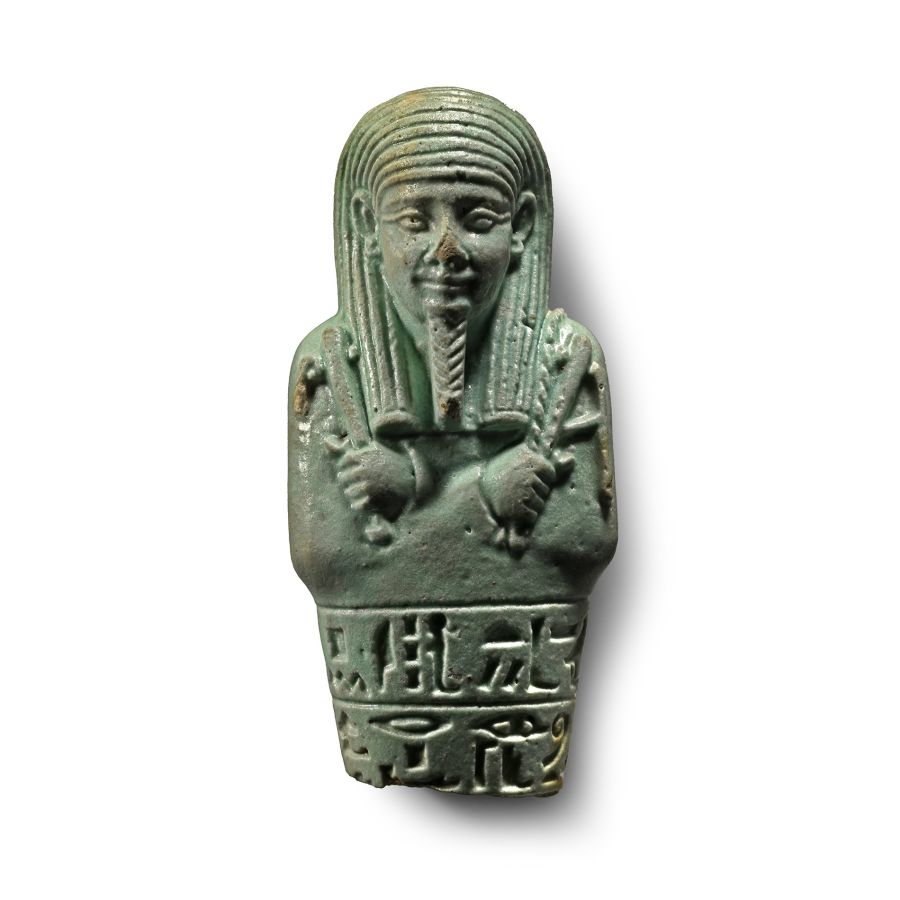
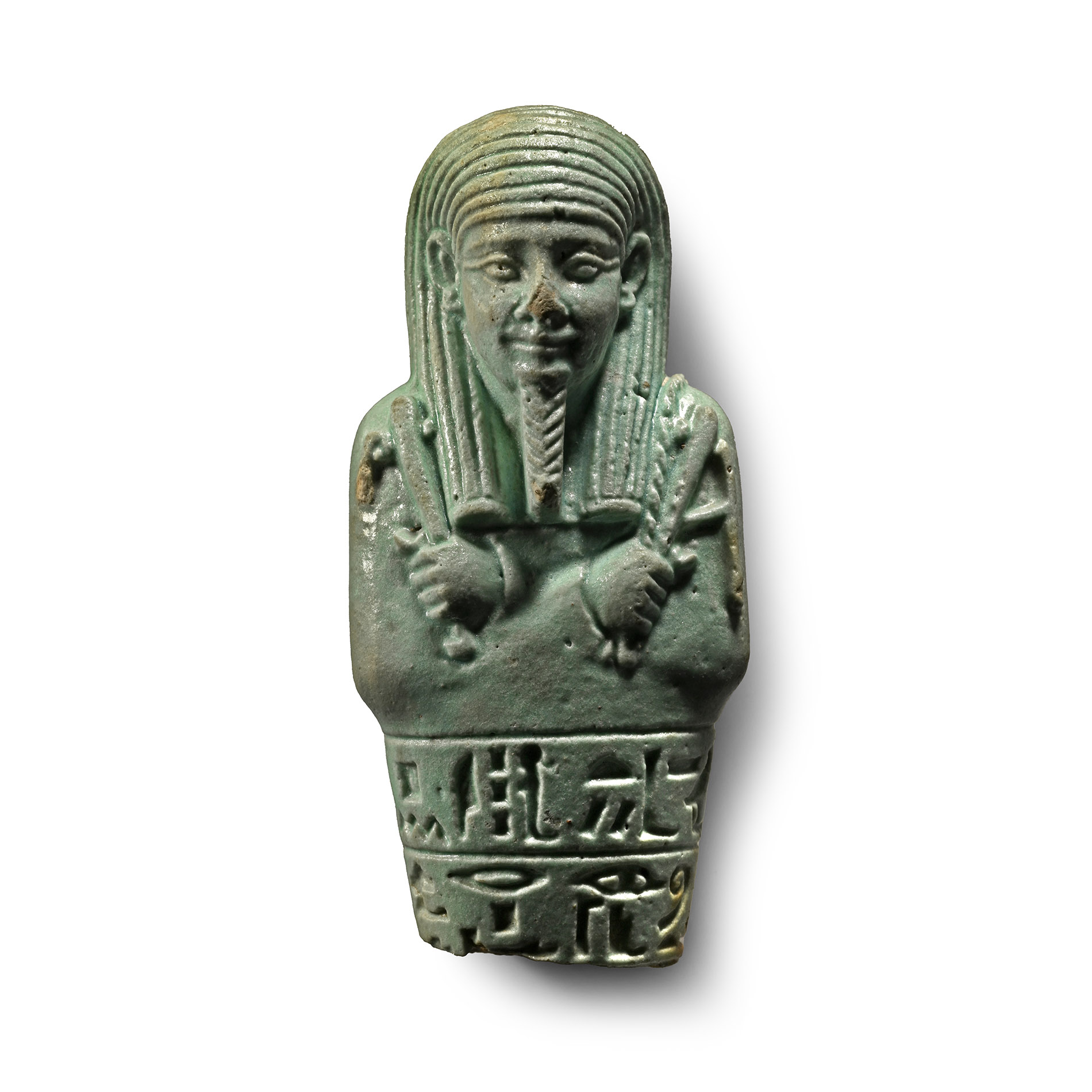
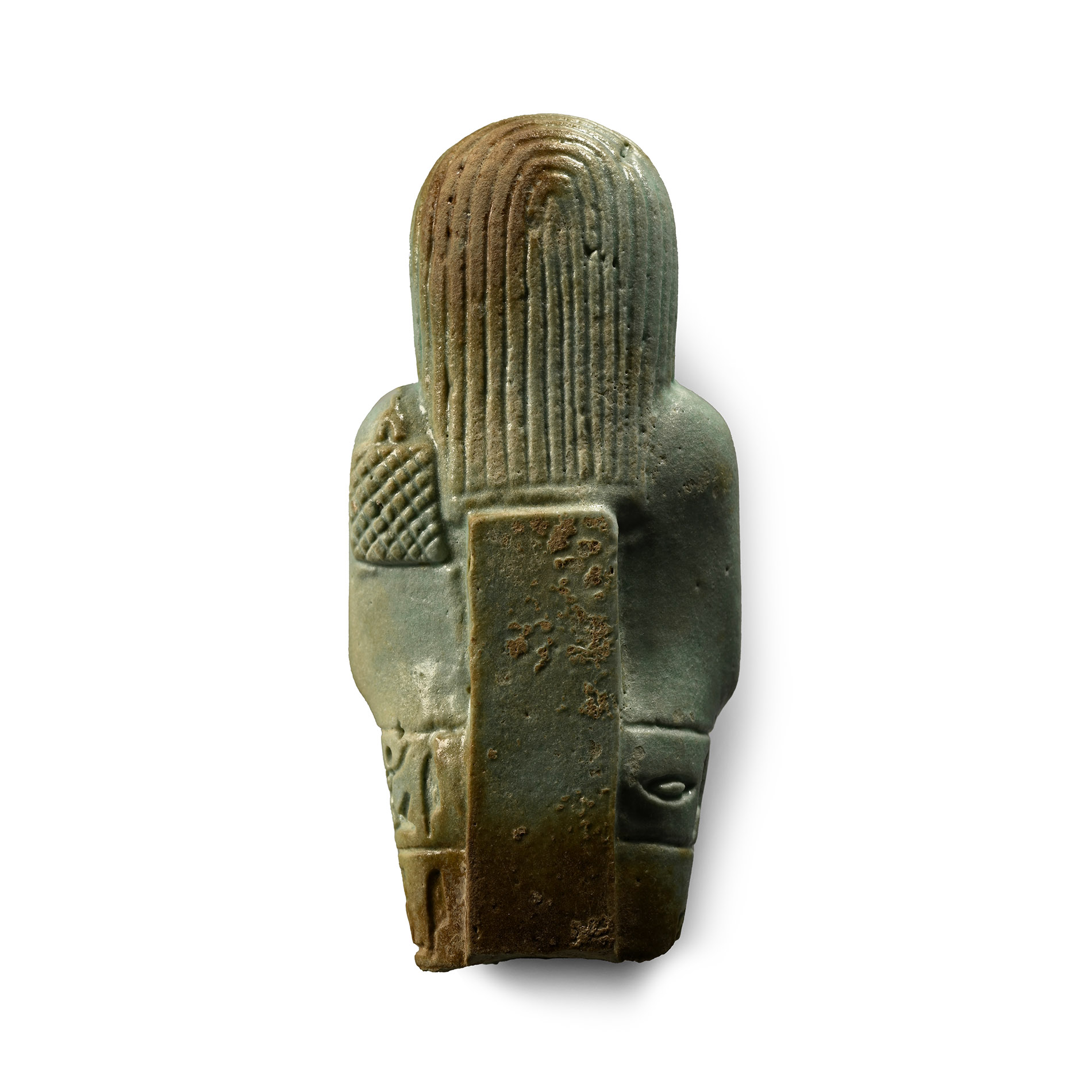
Egyptian Blue Glazed Hieroglyphic Shabti Fragment
SAITE PERIOD, 26TH DYNASTY, 664-525 B.C.
3 1/2 in. (96 grams, 90 mm).
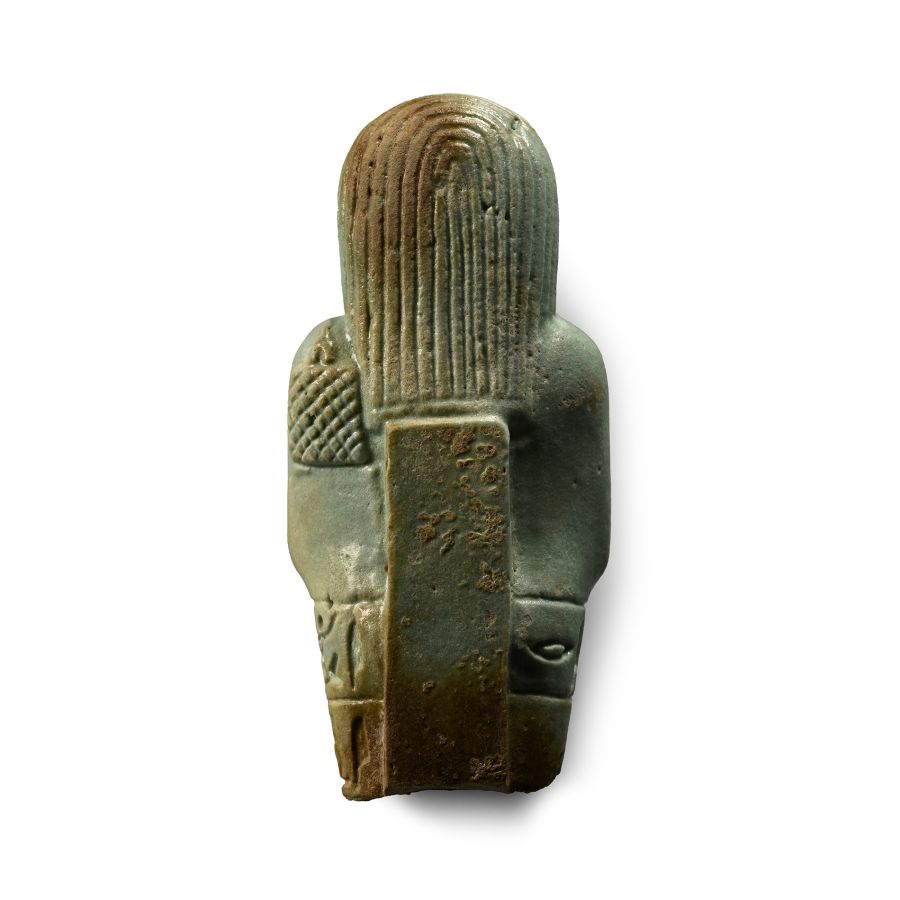
Pale blue composition with detailed texture to the headcloth, pick and hoe held at the shoulders with cord supporting the seed bag over the shoulder; the lower body with two bands of crisp hieroglyphic text remaining.
ProvenanceAcquired on the German art market, 1989-1995.
with The Museum Gallery, 19 Bury Place, London, WC1, UK, 1998-2003.
Property of a London based academic, 2003-present.
Although the individual's name is lost, his titles: 'member of the elite' and 'mayor/prince/governor', indicate his high status.
CONDITIONTimeLine Auctions follows a vetting process to ensure the authenticity and legality of all items, reinforcing our commitment to integrity and responsible trading. Each antiquity, antique, and coin lot undergoes thorough examination by a vetting committee of at least ten external specialists, professional trade association members, scientists, and archaeologists: Our Vetting Process
AUCTIONS:
TimeLine is a leading auction house specialising in antiquities, ancient art, collectables, natural history, coins, medals, and books. Our auctions offer museums, collectors, historians, and enthusiasts the opportunity to acquire unique and historically significant pieces.
-
Egyptian Faience Bead Collection
New Kingdom-Late Period, circa 1550-332 B.C.Sold for (Inc. bp): £52
Mainly tubular, annular and oblate types in various colours. 61 grams total, 64 mm
Acquired from Ancient & Oriental, circa 1987. Ian Wilkinson collection, Nottinghamshire, UK, formed since 1985.
The faience of the New Kingdom period is frequently decorated with an expanded palette of red, black, and yellow. This polychrome decoration was often accomplished by inlaying one colour of paste onto another. -
Egyptian Carved Stone Scarab
1st millennium B.C.Estimate: £500 - 700 (+bp*)
Opening Bid: £250
With textured carapace and detailed head and legs; underside blank. 159 grams, 63 mm
Acquired on the German art market, 1989-1995. with The Museum Gallery, 19 Bury Place, London, WC1, UK, 1998-2003. Property of a London based academic, 2003-present. -
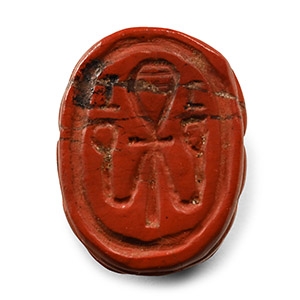
Egyptian Orange Jasper Scarab
New Kingdom, 1550-1069 B.C.Sold for (Inc. bp): £286
Carved with design to the underside of a central ankh symbol flanked by stylised rearing cobras. 1.52 grams, 13 mm
From an early 20th century collection.
