
Loading, please wait...
LOT 0476
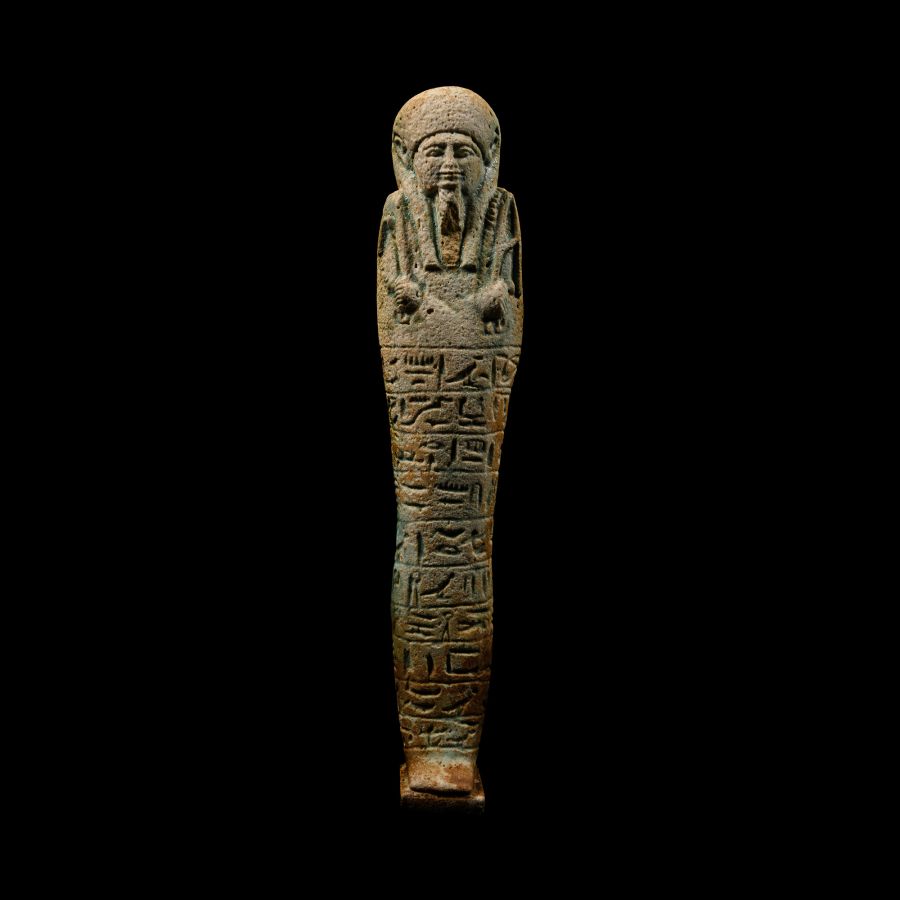
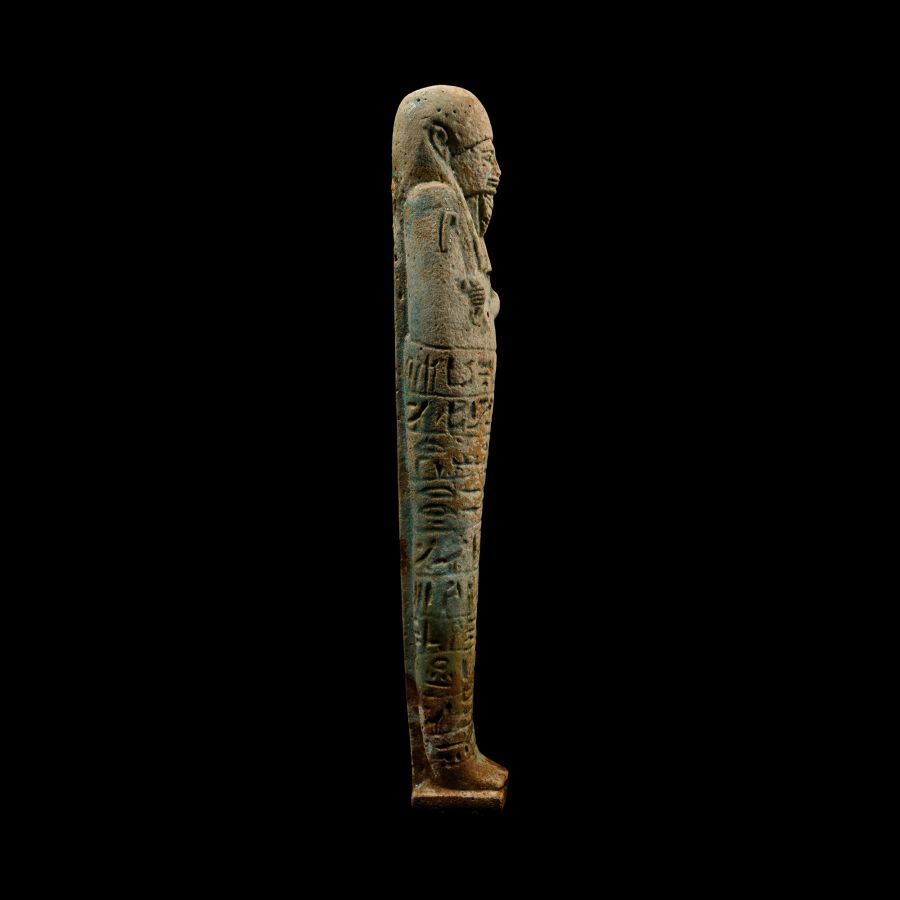
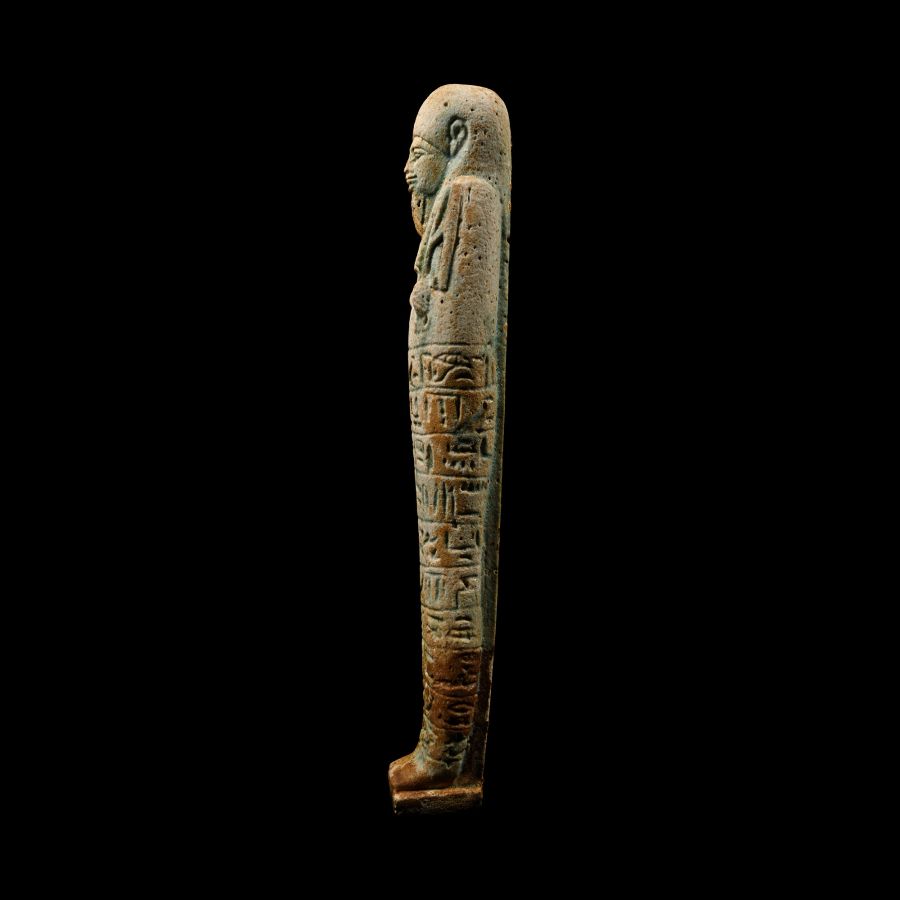
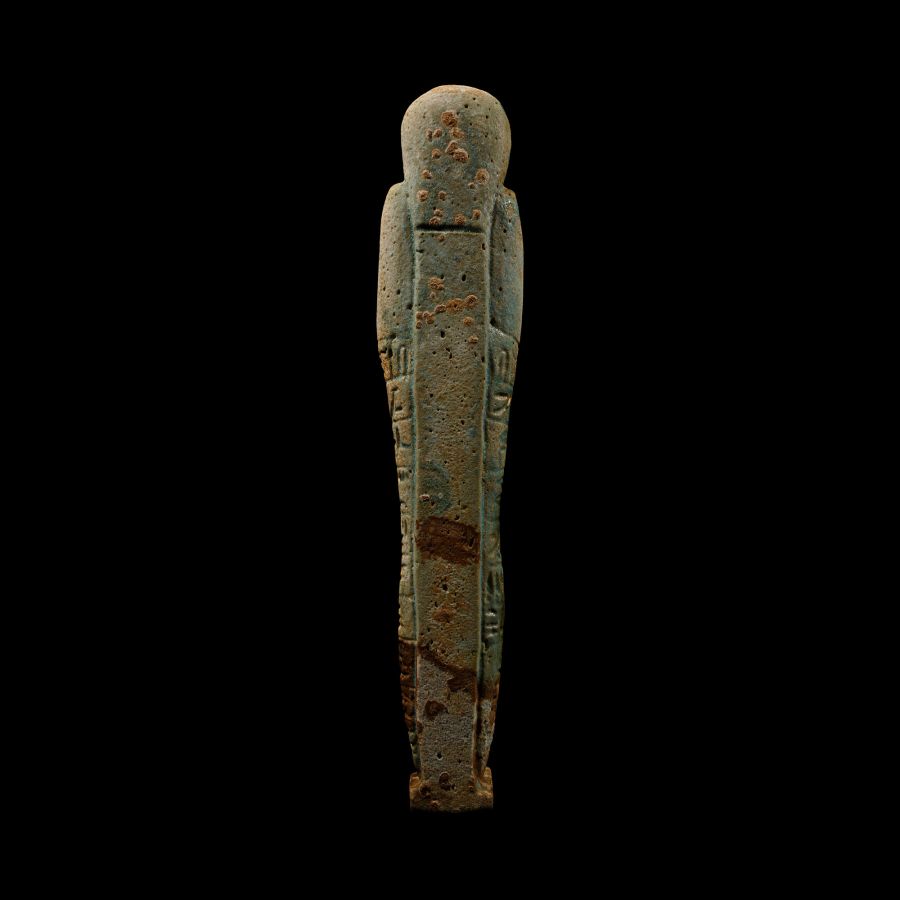
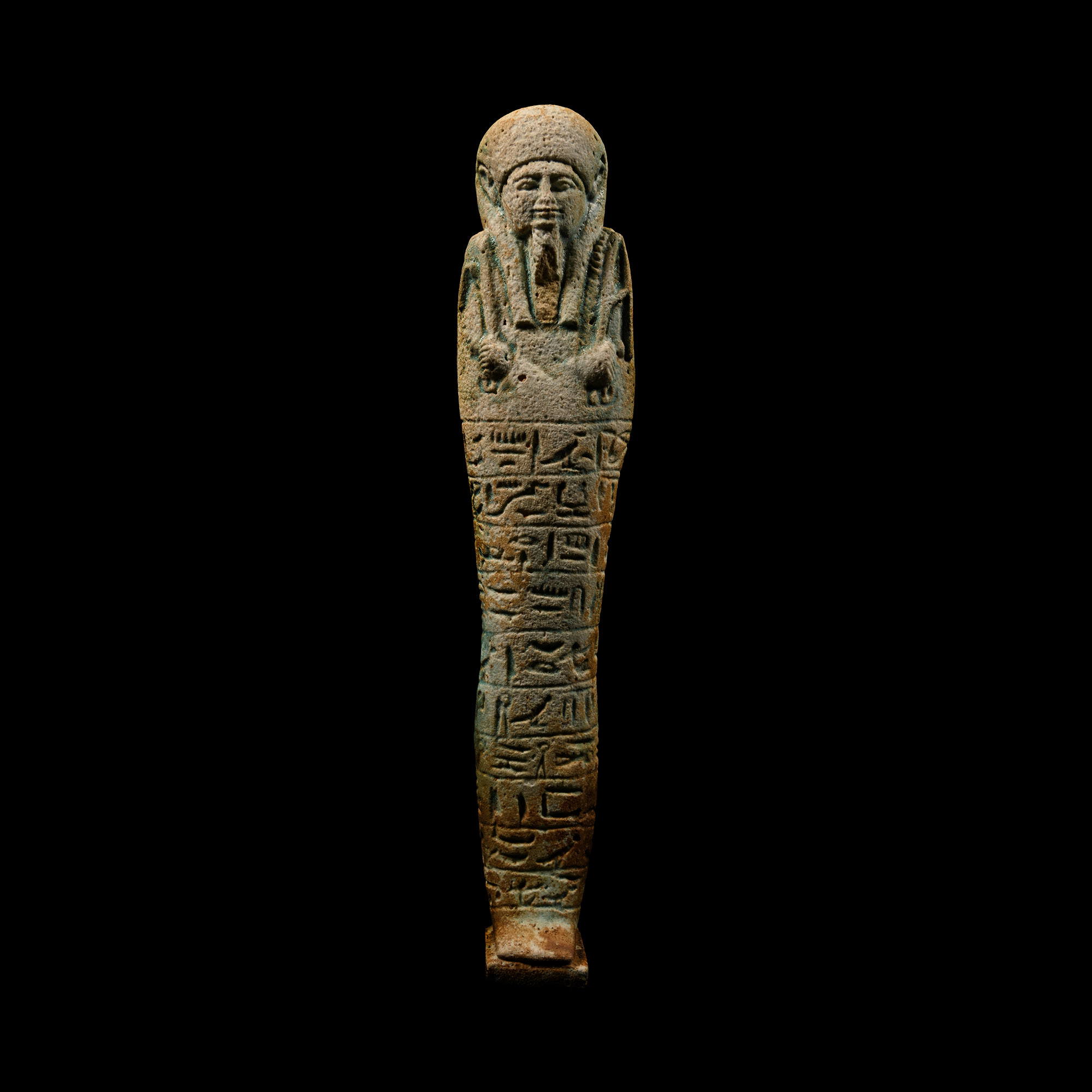
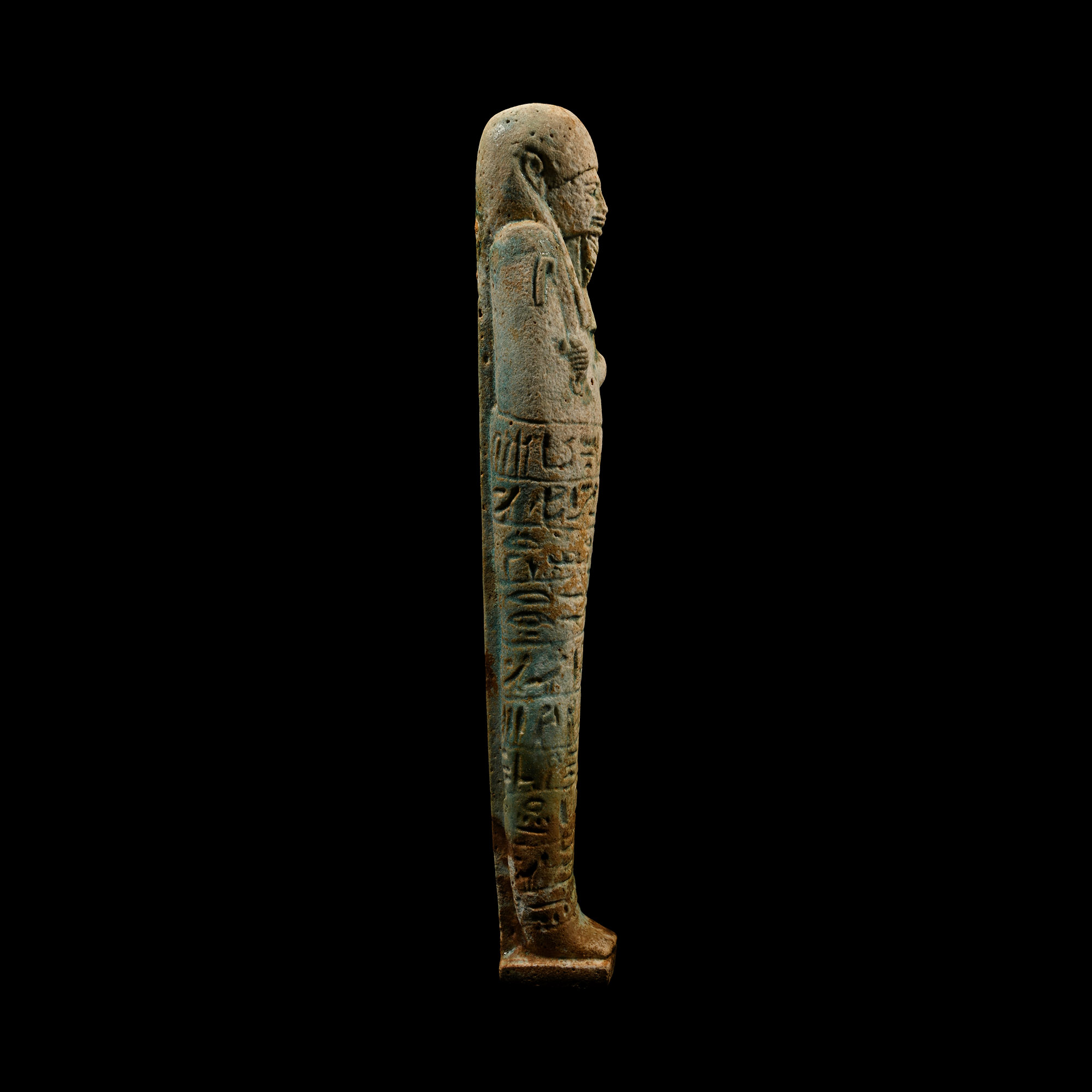
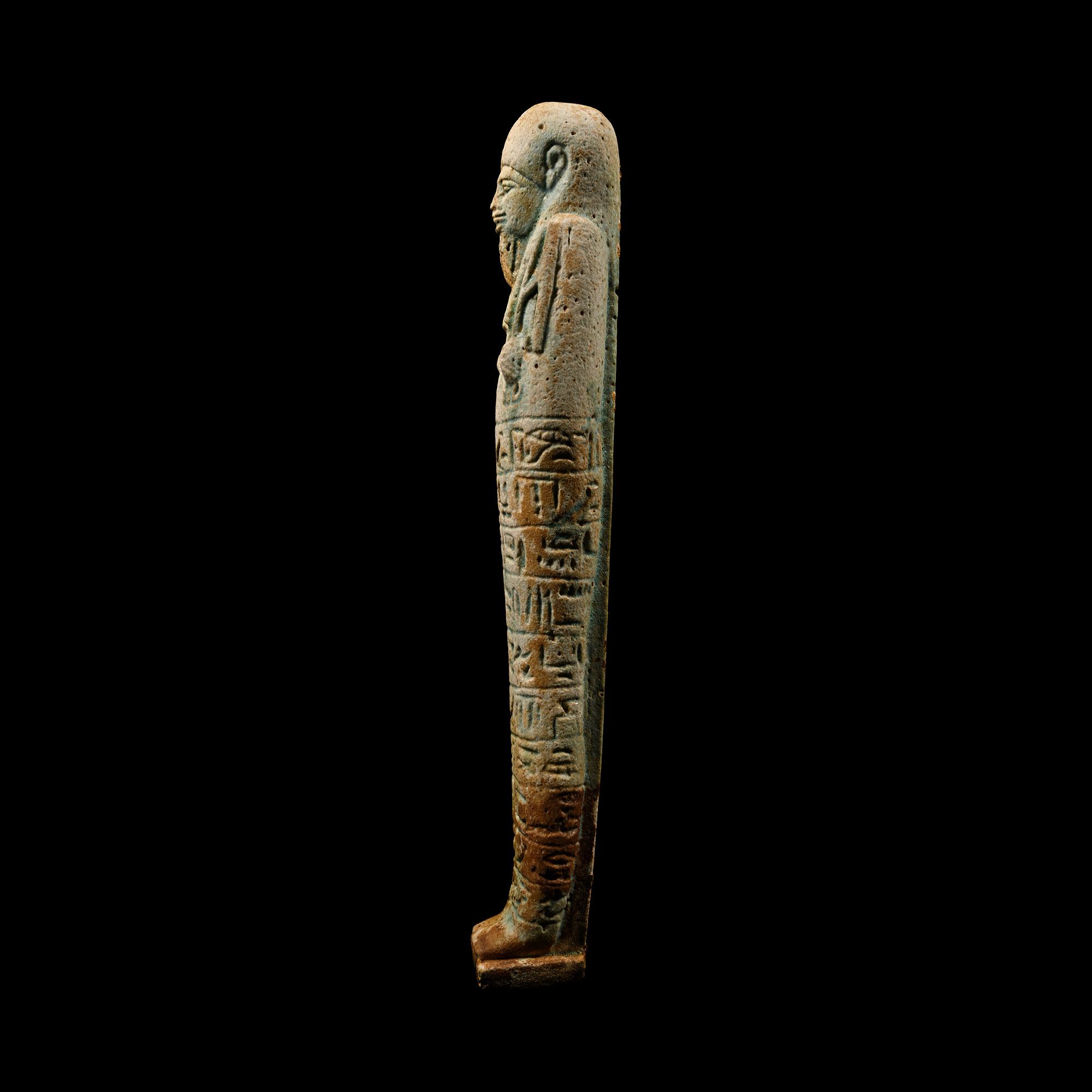
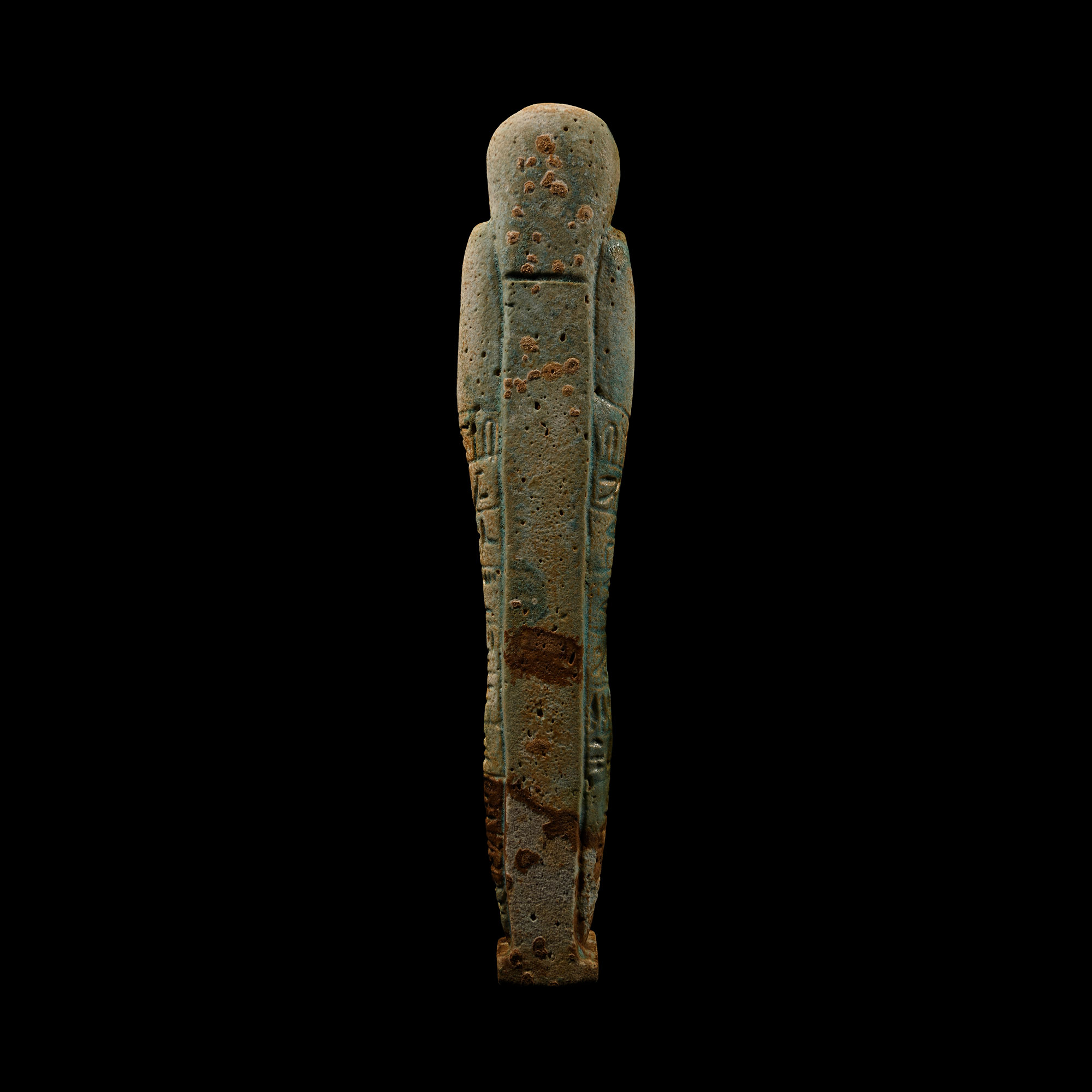
Egyptian Blue Glazed Hieroglyphic Shabti for Ta-Amun
SAITE PERIOD, 26TH DYNASTY, 664-525 B.C. OR LATER
7 in. (137 grams, 17.8 cm).
Slender columnar shabti featuring a dorsal pillar, with ten rows of hieroglyphic text on the lower body beginning with the dedication 'The illuminated one, the Osiris priest Ta-Amun born of Ta-seh-nebty' ( sḥḏ wsỉr ḥm nṯr TꜢ-I͗mn ms (n) TꜢ-sḥ-nbty); the features of the small face are finely modelled, including a long, plaited false beard and a heavy lappet wig; the arms are crossed, with hands holding a pick and a hoe, along with a cord for a seed bag.
ProvenanceAcquired on the German art market, 1989-1995.
with The Museum Gallery, 19 Bury Place, London, WC1, UK, 1998-2003.
Property of a London based academic, 2003-present.
This lot is accompanied by an illustrated lot declaration signed by the Head of the Antiquities Department, Dr Raffaele D'Amato.
Cf. Schneider, H.D. Shabtis. An Introduction to the History of Ancient Egyptian Funerary Statuettes with a Catalogue of the Collection of Shabtis in the National Museum of Antiquities at Leiden, Vol.3, Leiden, 1977, p. 57, no. 5.3.1.2, for a similar Late Period shabti with a heavy lappet wig.
CONDITIONTimeLine Auctions follows a vetting process to ensure the authenticity and legality of all items, reinforcing our commitment to integrity and responsible trading. Each antiquity, antique, and coin lot undergoes thorough examination by a vetting committee of at least ten external specialists, professional trade association members, scientists, and archaeologists: Our Vetting Process
AUCTIONS:
TimeLine is a leading auction house specialising in antiquities, ancient art, collectables, natural history, coins, medals, and books. Our auctions offer museums, collectors, historians, and enthusiasts the opportunity to acquire unique and historically significant pieces.
LOT 0476
Egyptian Blue Glazed Hieroglyphic Shabti for Ta-Amun
Estimate £1,200 - 1,700€1,390 - 1,970 (for guidance only)$1,620 - 2,300 (for guidance only)
-
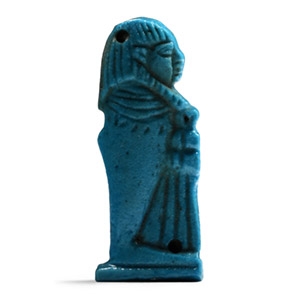
Egyptian Turquoise Glazed Faience Amulet of Imsety
Late Period, circa 664-332 B.C.Sold for (Inc. bp): £468
Flat-backed depiction of Imsety, one of the four sons of Horus, wearing a finely detailed tripartite wig, a broad collar, and holding a length of folded cloth. 3.66 grams, 36 mm
with Ancient World Arts, New York, USA. Private collection, London, UK, acquired from the above in 1994. This lot is accompanied by an illustrated lot declaration signed by the Head of the Antiquities Department, Dr Raffaele D'Amato.
The Four Sons of Horus were deities responsible for protecting the deceased's internal organs. The human-headed Imsety protected the liver, the baboon-headed Hapy protected the lungs, the jackal-headed Duamutef protected the stomach, and the falcon-headed Qebehsenuef protected the intestines. Amulets depicting these deities were placed within the mummy wrappings. -
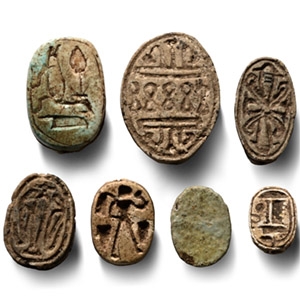
Egyptian Mixed Scarab and Scaraboid Collection
2nd-1st millennium B.C.Estimate: £500 - 700 (+bp*)
Opening Bid: £250
Comprising (from left to right, top to bottom): 1) a scarab with an oval border containing a goose, nefer(?), and a reed leaf; 2) a scarab with an oval border featuring a triple lotus flower motif at the top and bottom, with a middle row of floral bundles; 3) a scaraboid with a long oval border containing a cross pattern incorporating scrolls, coiled cords, and floral elements; 4) a scarab with an oval border featuring a hes-jar flanked by two cobras; 5) a scarab with a standing male figure holding a sceptre/mace and a flail, flanked by two highly stylised rearing cobras; 6) a plain scarab; 7) and a scarab with an oval border containing the name Amun-Re, a neb symbol, and a lotus flower. 13 grams total, 11-23 mm
From the collection of a gentleman, acquired on the London art market in the 1990s. This lot is accompanied by an illustrated lot declaration signed by the Head of the Antiquities Department, Dr Raffaele D'Amato. -
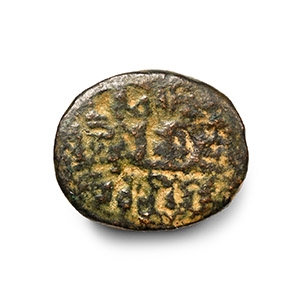
Phoenician Inscribed Bronze Scaraboid Seal
Late 1st millennium B.C.Sold for (Inc. bp): £52
Plain domed body pierced longitudinally, inscribed underside. 8.9 grams, 17 mm
Ex London, UK, gentleman, 1990. This lot is accompanied by an illustrated lot declaration signed by the Head of the Antiquities Department, Dr Raffaele D'Amato.
Although it is difficult to make out for certain, the outer design appears to be composed of the 'a-n-r' hieroglyphs. The signs do not form a word and are thought to have been a decorative device used by Asiatic scarab makers, employing recognisably Egyptian hieroglyphs.
