
Loading, please wait...
LOT 0488
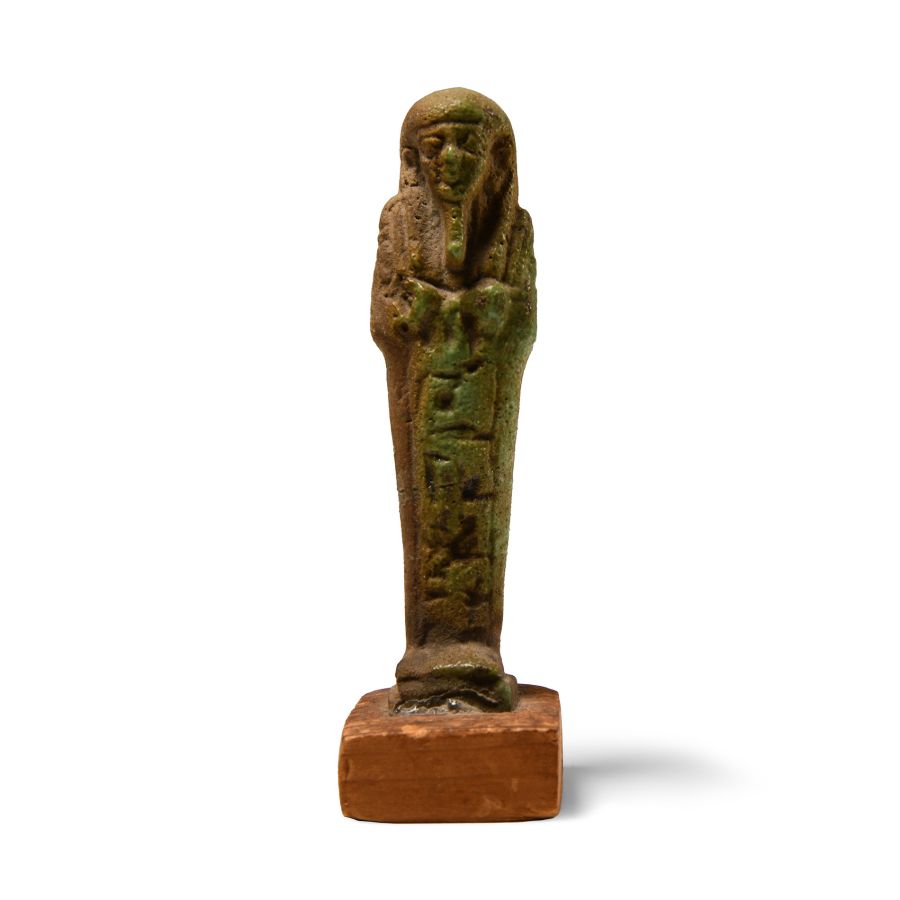
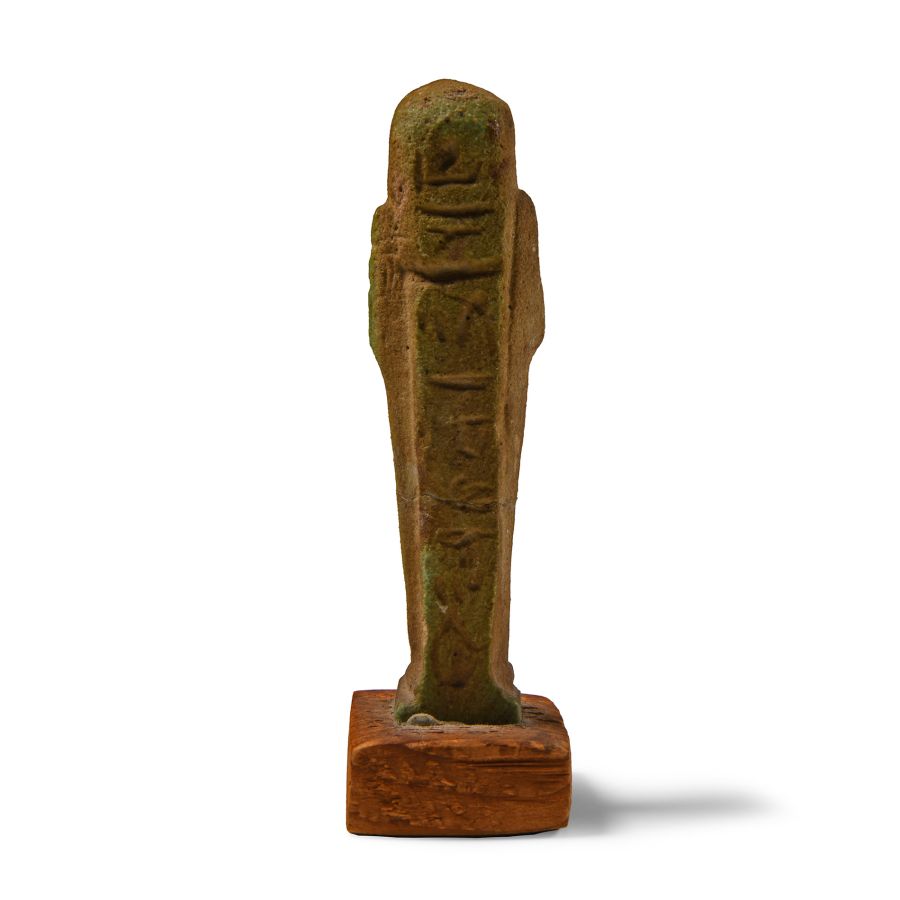
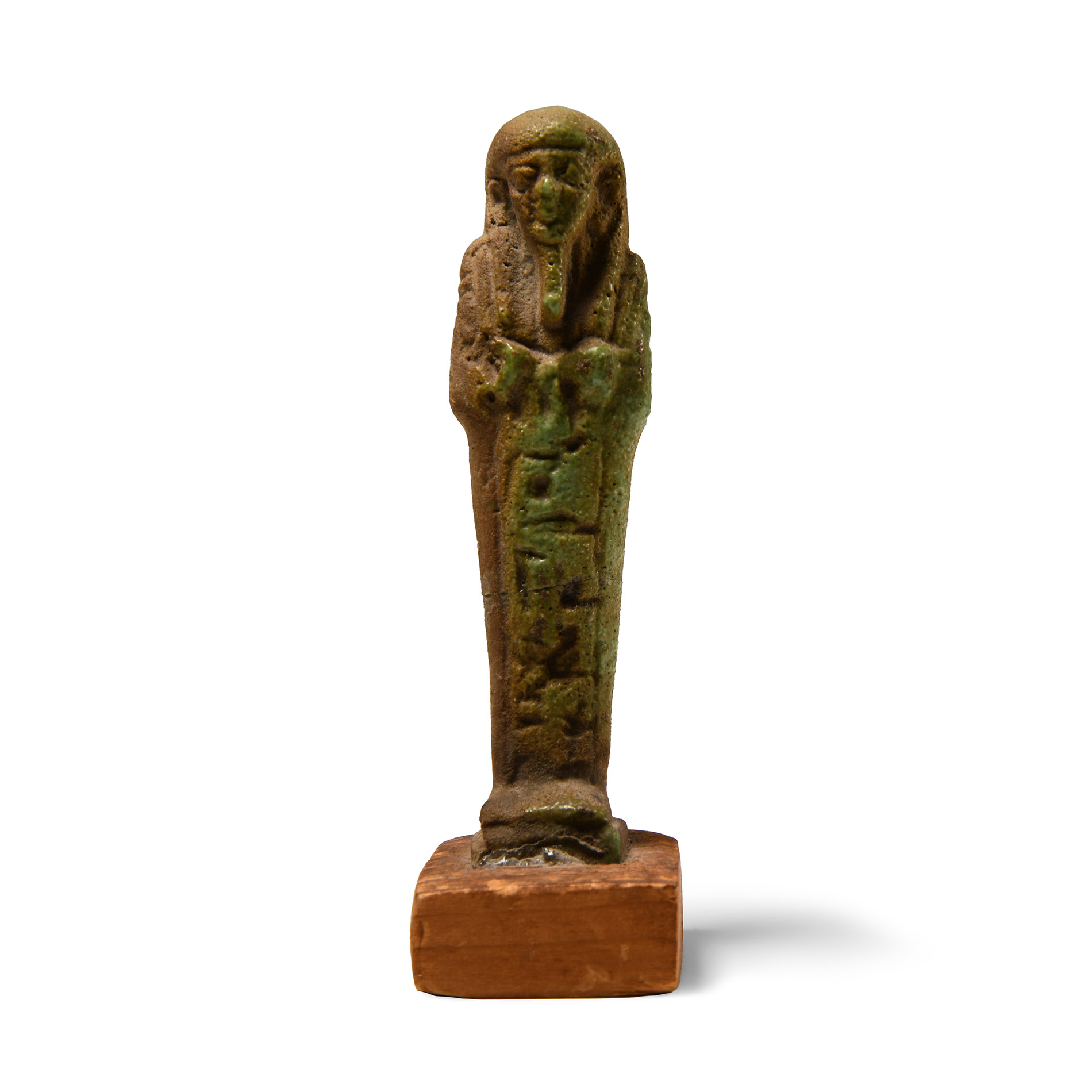
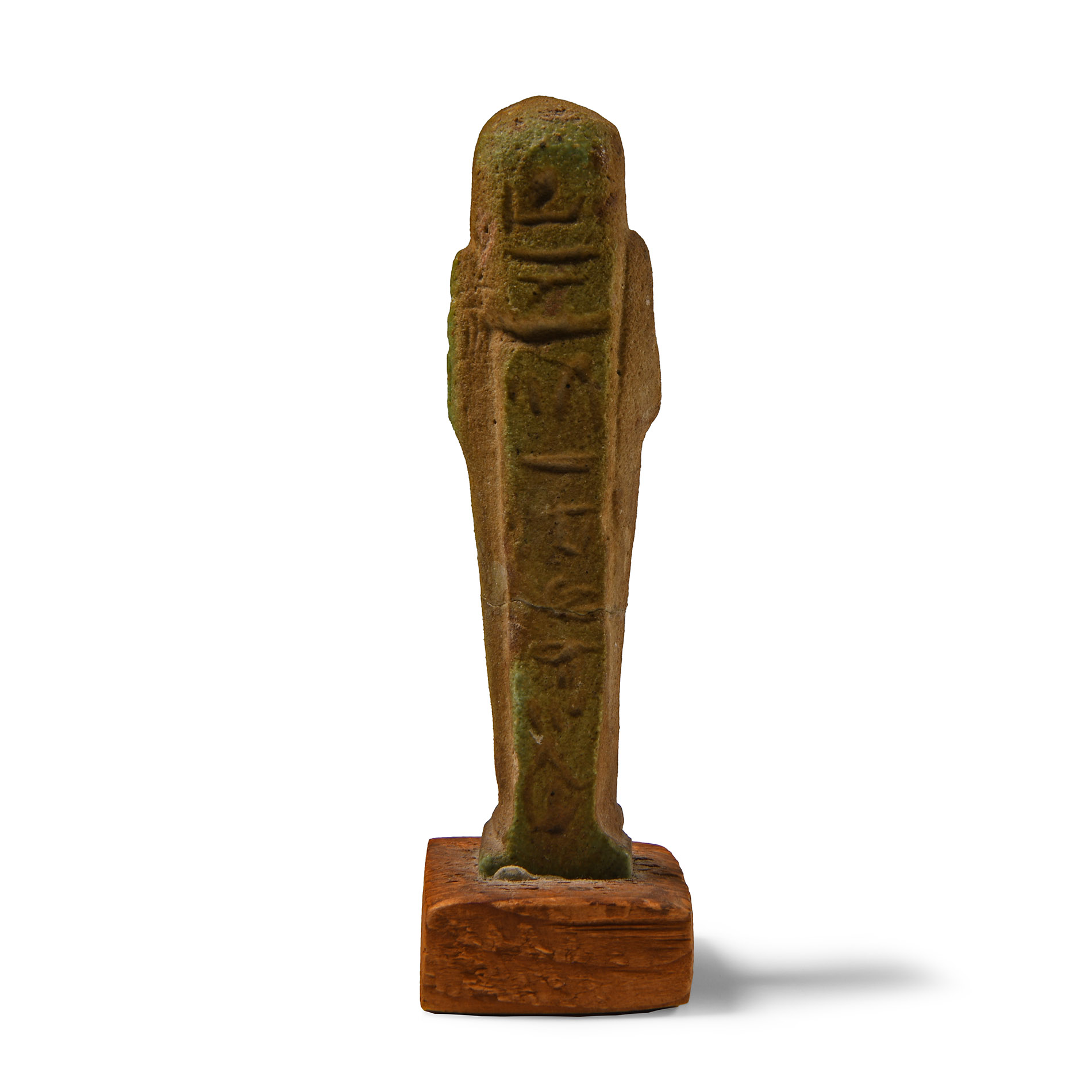
Egyptian Blue Glazed Hieroglyphic Shabti for Akhet
27TH-30TH DYNASTY 525-343 B.C.
4 1/2 in. (48 grams total, 11.4 cm including stand).
Olive-green with dorsal pillar, false beard and agricultural tools; vertical band of hieroglyphic text to the lower body and another to the dorsal pillar.
ProvenanceAcquired in Egypt by Lieutenant James Alexander Goodman in the 1920s.
Thence by descent to his grandson.
Lieutenant Goodman served in the 4th Battalion Welsh Regiment during World War I and saw action in Palestine during the capture of Bethlehem, (for which he won an MC). After the war, he setup a business selling Fordson trucks and tractors in Alexandria, Egypt. A keen antiquarian, he collected ancient objects during his time in Alexandria and when he visited the pyramids at Giza. After his first marriage failed, he returned to the UK in the early 1930s. On his death in 1959 he passed his small collection of Egyptian objects on to his second wife, Ruby Goodman. On Ruby’s death in 1994, they were left to their second daughter, Rosemary Johnson, (née Goodman), and are currently in the possession of her son.
CONDITIONTimeLine Auctions follows a vetting process to ensure the authenticity and legality of all items, reinforcing our commitment to integrity and responsible trading. Each antiquity, antique, and coin lot undergoes thorough examination by a vetting committee of at least ten external specialists, professional trade association members, scientists, and archaeologists: Our Vetting Process
AUCTIONS:
TimeLine is a leading auction house specialising in antiquities, ancient art, collectables, natural history, coins, medals, and books. Our auctions offer museums, collectors, historians, and enthusiasts the opportunity to acquire unique and historically significant pieces.
-
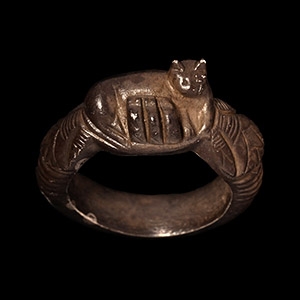
Romano-Egyptian Silver Ring with Bastet and Kittens
Roman Period, 30 B.C.-323 AD.Sold for (Inc. bp): £1,235
D-section hoop with lotus flowers on the shoulders, bezel formed as a reclining cat and three kittens. 15.21 grams, 28.80 mm overall, 17.01 mm internal diameter (approximate size British N, USA 6 1/2, Europe 13.72, Japan 13)
Ex London, UK collection, 1990s.
The cat was sacred to Bastet, a protective mother goddess and the daughter of the sun god Re. When shown with kittens, as here, Bastet's maternal role as a fierce protector of offspring is emphasised. -
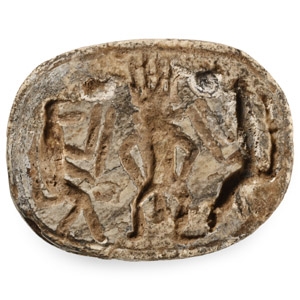
Egyptian Hardstone Scarab with Bes
Late Period, 664-332 B.C.Sold for (Inc. bp): £208
Plano-convex in section with detailed obverse, the underside with the figure of Bes flanked by adoring baboons and sun disks. 10.7 grams, 31 mm
Ex London, UK collection, 1990s.
Bes became one of ancient Egypt's most popular apotropaic deities from the New Kingdom onwards. Despite his somewhat fearful appearance, Bes was the patron and protector of pregnant women and children and believed to protect the wearer from snakes. The depiction of baboons flanking Bes with their arms raised before the sun disk was a common feature on temple wall reliefs. In ancient Egyptian religious literature, baboons heralded the dawn and, thus, the rebirth of the sun. -
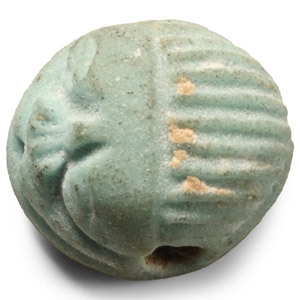
Phoenician Faience Scarab with Face
6th-4th century B.C.Sold for (Inc. bp): £98
Discoid scarab with plain reverse, stylised human face. 0.55 grams, 10 mm
From the Fadel family collection, London, UK, 1970s.
