
Loading, please wait...
LOT 0453
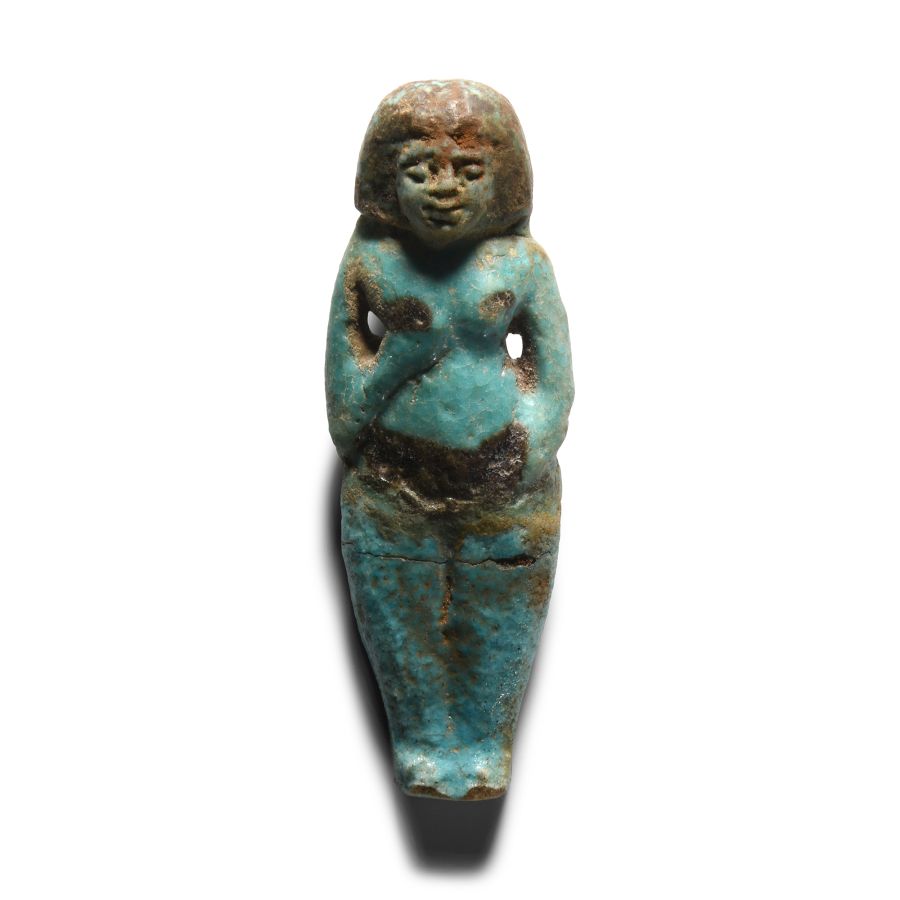
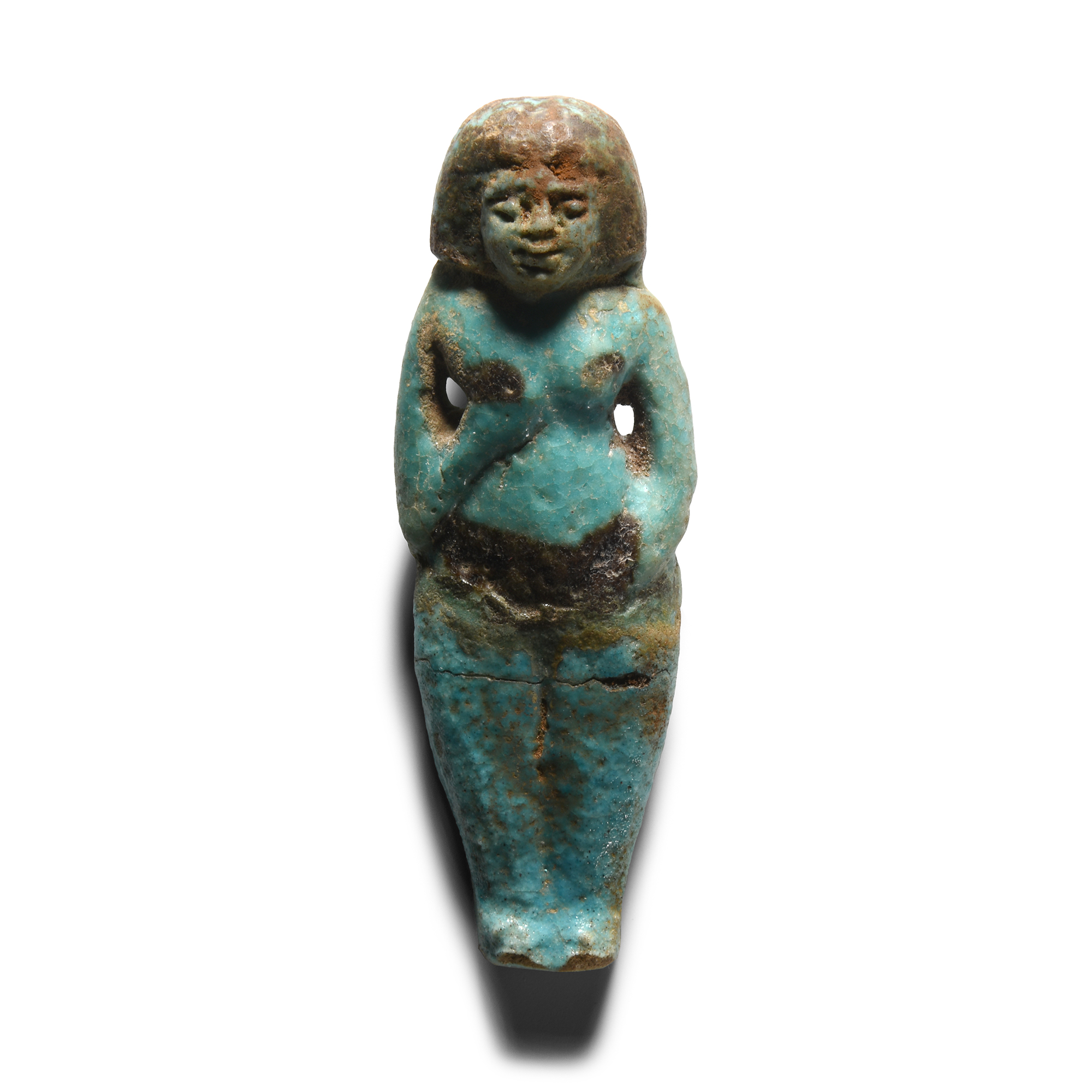
Egyptian Blue-Glazed Female Figure
LATE PERIOD, 664-332 B.C.
3 3/8 in. (24.6 grams, 85 mm).
Wearing a short wig, with right hand to breast holding a sash that hangs over the shoulder and left arm at the side; with a broad girdle; the wig, nipples, and girdle in black; suspension loop behind head.
ProvenanceFrom the vendor's grandfather's collection, formed in the 1950s; thence by family descent circa 1974.
CONDITIONTimeLine Auctions follows a vetting process to ensure the authenticity and legality of all items, reinforcing our commitment to integrity and responsible trading. Each antiquity, antique, and coin lot undergoes thorough examination by a vetting committee of at least ten external specialists, professional trade association members, scientists, and archaeologists: Our Vetting Process
AUCTIONS:
TimeLine is a leading auction house specialising in antiquities, ancient art, collectables, natural history, coins, medals, and books. Our auctions offer museums, collectors, historians, and enthusiasts the opportunity to acquire unique and historically significant pieces.
-
.jpg)
Egyptian Faience Bead Necklace String with Large Bes Amulet
Late Period, 664-332 B.C.Estimate: £600 - 800 (+bp*)
Opening Bid: £300
Restrung using mainly annular and tubular beads, with four larger oblate beads; central feature a large (5cm) Bes pendant, the god standing on a plinth and wearing an elaborate headdress. 18 grams, 56 cm
From the vendor's grandfather's collection, formed in the 1950s; thence by family descent circa 1974.
Bes became one of ancient Egypt's most popular apotropaic deities from the New Kingdom onwards. Despite his rather fearful appearance, Bes was the patron and protector of pregnant women and children. He was also believed to provide protection from snakes. -
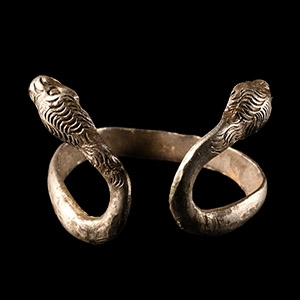
Egyptian Silver Double-Headed Snake Ring
Roman Period, 30 B.C.-323 A.D.Sold for (Inc. bp): £1,040
With bezel formed as two addorsed snake-head finials. 2.81 grams, 19.75 mm overall, 16.44 mm internal diameter (approximate size British L, USA 5 3/4, Europe 11.24, Japan 10)
Ex German art market, 2000s. Acquired from an EU collector living in London. From the collection of Surrey, UK, gentleman. -
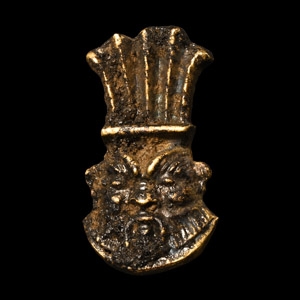
Egyptian Gold Bes Amulet
Late New Kingdom-Third Intermediate Period, 1070-900 B.C.Sold for (Inc. bp): £1,235
Mask of Bes with tall plumed headdress, vertical bar to the reverse. 3.6 grams, 18 mm
From an early 20th century French collection.
Bes became one of ancient Egypt's most popular apotropaic deities from the New Kingdom onwards. Despite his rather fearful appearance, Bes was the patron and protector of pregnant women and children. He was also believed to provide protection from snakes.
