
Loading, please wait...
LOT 0420
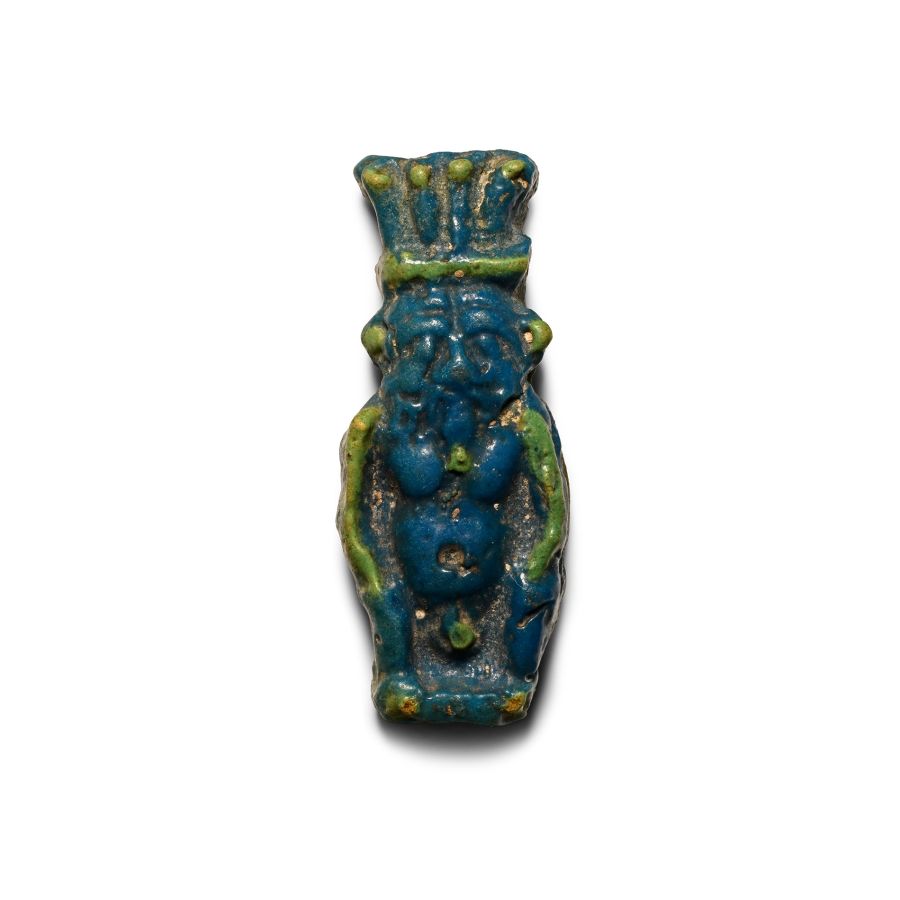
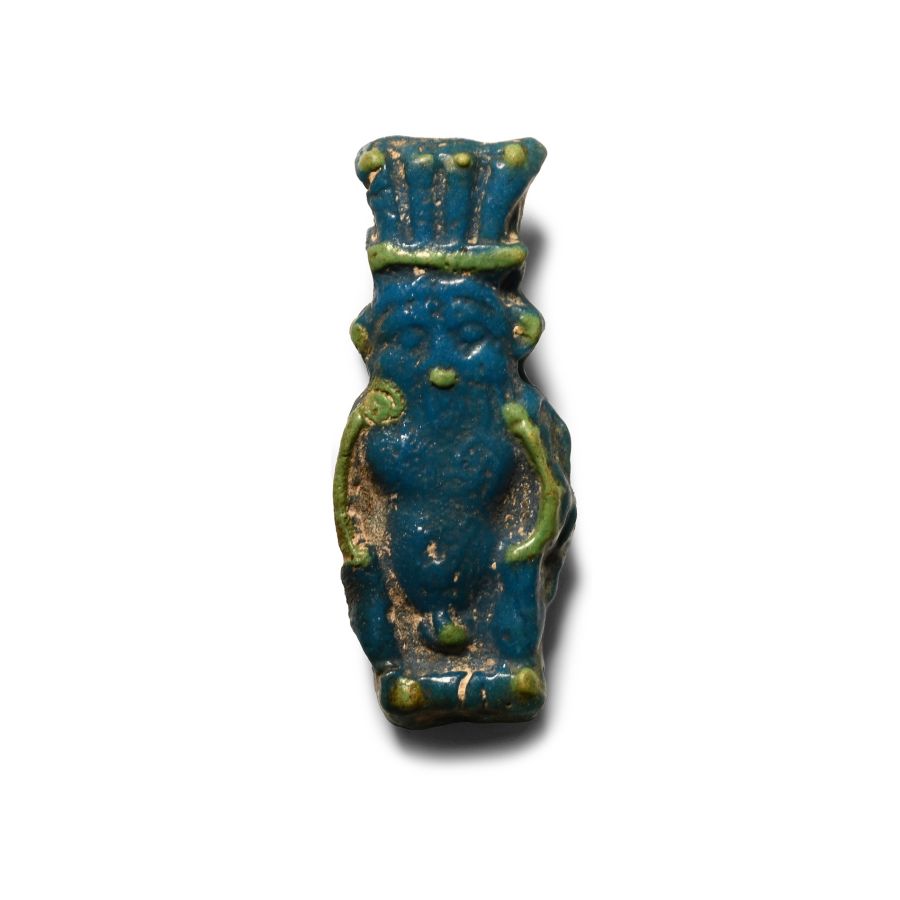
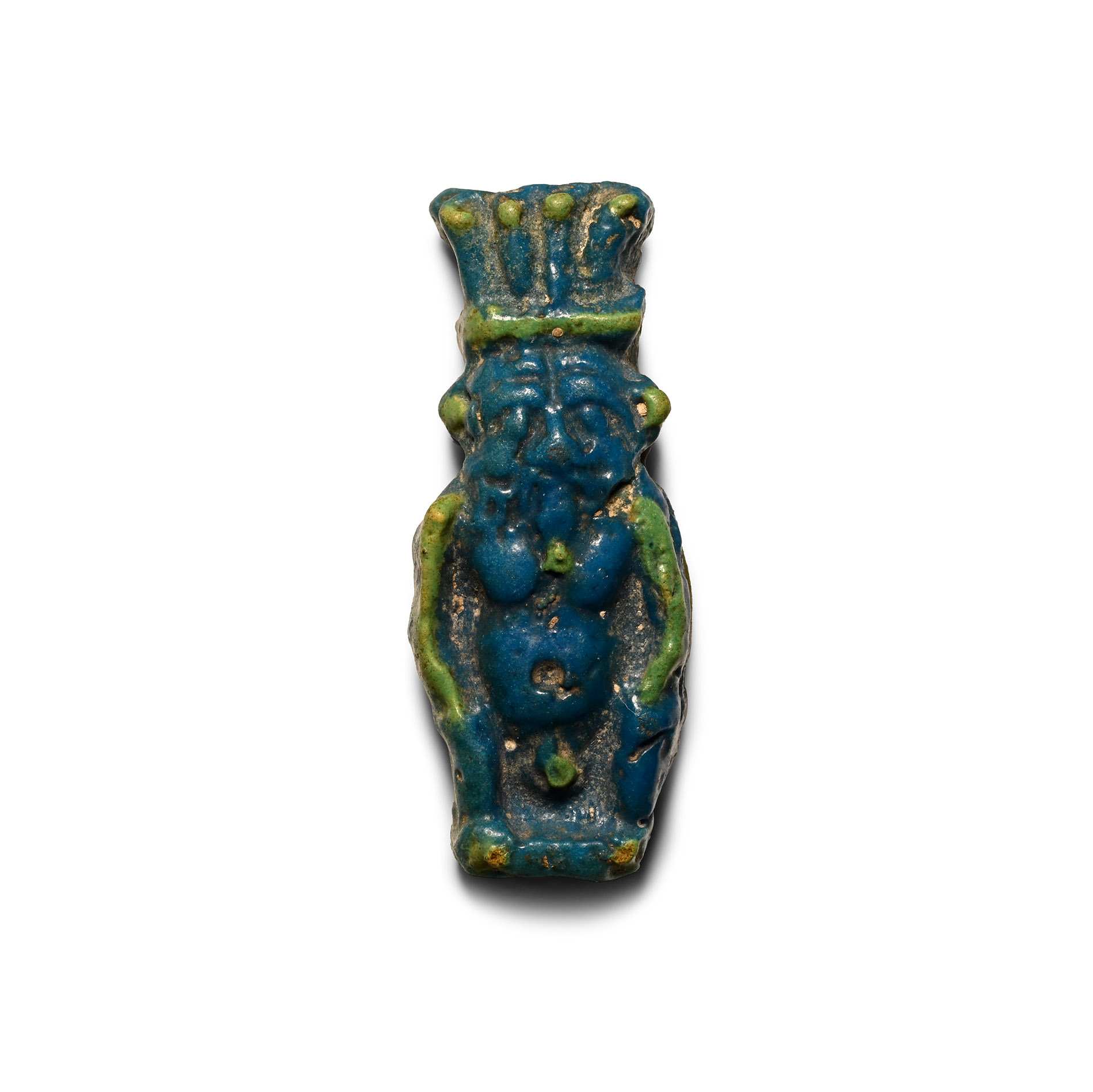
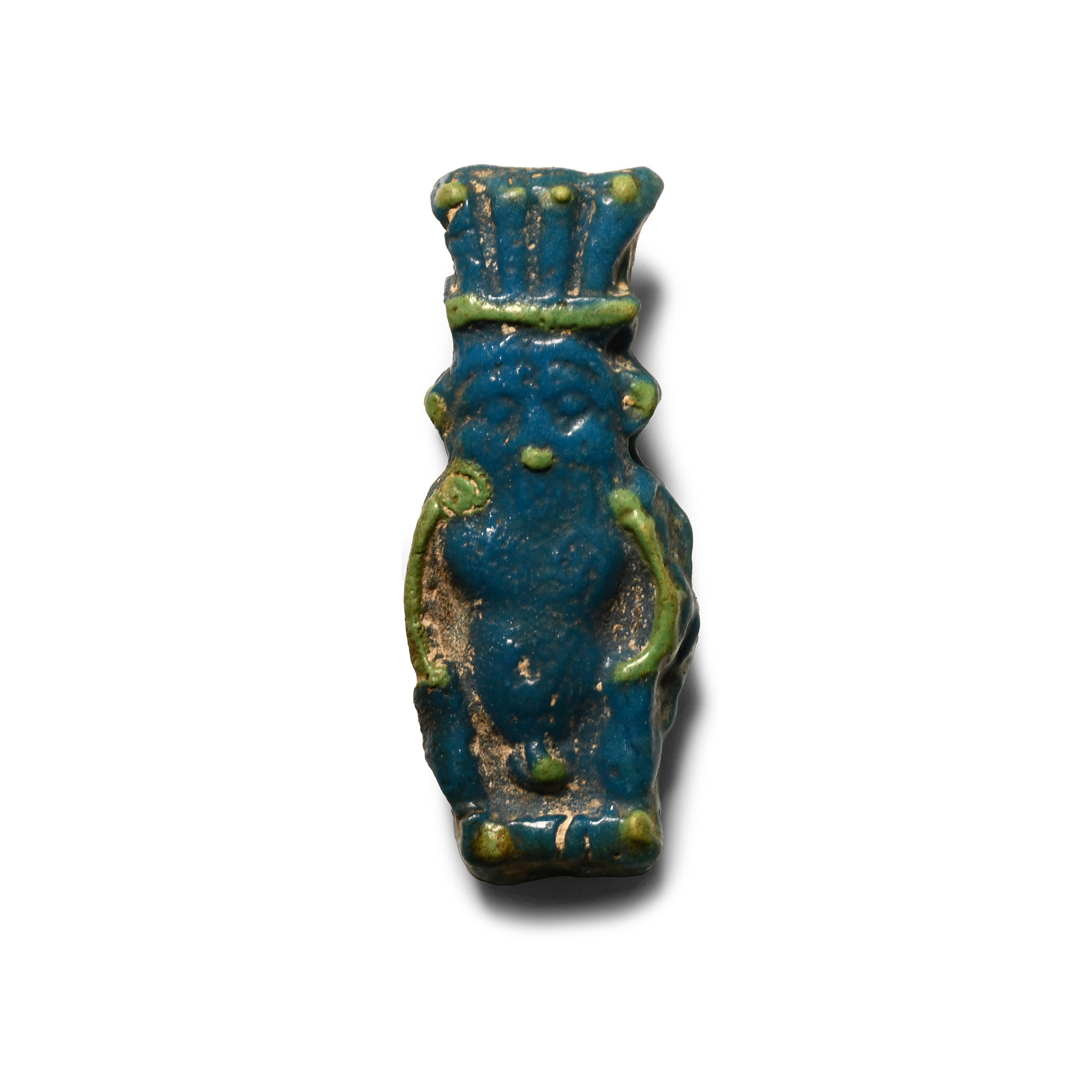
Egyptian Blue-Glazed Amulet of Bes
PTOLEMAIC PERIOD, 332-30 B.C.
1 3/4 in. (8.2 grams, 46 mm).
Faience amulet of the god Bes with his body of a dwarf, leonine head, and feather headdress; with a bright blue satin glaze and raised accents in yellow, modelled similarly on both sides; pierced through the neck for suspension
ProvenanceFrom the P.C. collection, 1990s.
Ex London gallery.
Property of a Bristol, UK, gentleman.
Cf. Tinius, I., Altägypten in Braunschweig. Die Sammlungen des Herzog Anton Ulrich-Museums und des Städtischen Museums, Wiesbaden, 2011, pp.133-134, no. 226, for a similarly styled and decorated figure.
FootnotesBes became one of ancient Egypt's most popular apotropaic deities from the New Kingdom onwards. Despite his somewhat fearful appearance, Bes was the patron and protector of pregnant women and children. He was also believed to protect from snakes.
CONDITIONTimeLine Auctions follows a vetting process to ensure the authenticity and legality of all items, reinforcing our commitment to integrity and responsible trading. Each antiquity, antique, and coin lot undergoes thorough examination by a vetting committee of at least ten external specialists, professional trade association members, scientists, and archaeologists: Our Vetting Process
AUCTIONS:
TimeLine is a leading auction house specialising in antiquities, ancient art, collectables, natural history, coins, medals, and books. Our auctions offer museums, collectors, historians, and enthusiasts the opportunity to acquire unique and historically significant pieces.
LOT 0420
Egyptian Blue-Glazed Amulet of Bes
Estimate £200 - 300€230 - 350 (for guidance only)$270 - 410 (for guidance only)
-
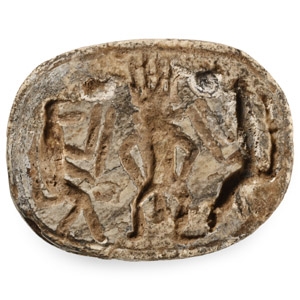
Egyptian Hardstone Scarab with Bes
Late Period, 664-332 B.C.Sold for (Inc. bp): £208
Plano-convex in section with detailed obverse, the underside with the figure of Bes flanked by adoring baboons and sun disks. 10.7 grams, 31 mm
Ex London, UK collection, 1990s.
Bes became one of ancient Egypt's most popular apotropaic deities from the New Kingdom onwards. Despite his somewhat fearful appearance, Bes was the patron and protector of pregnant women and children and believed to protect the wearer from snakes. The depiction of baboons flanking Bes with their arms raised before the sun disk was a common feature on temple wall reliefs. In ancient Egyptian religious literature, baboons heralded the dawn and, thus, the rebirth of the sun. -
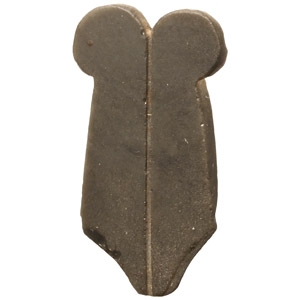
Egyptian Hardstone Double Plume Amulet
Late Period, 664-332 B.C.Estimate: £250 - 350 (+bp*)
Opening Bid: £125
Carved with integral loop to the reverse; old inked collector's reference 'ES716'. 2.58 grams, 27 mm
with Hotel des Ventes, Drouot, Paris, France. From the collection of Mr H. Naudy, Paris, France. Acquired at between 2004-2010. Property of a French collector.
This ancient amulet represents two ostrich feathers or shuty. Interestingly, these feathers were also present on the Atef crown of Osiris, the god of the afterlife and the dead. This suggests the amulet was believed to imbue the wearer with Osiris' divine power and protection. -
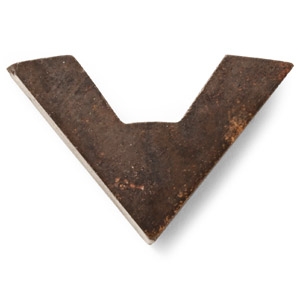
Egyptian Hardstone Architectural Amulet
Late Period, 664-332 B.C.Estimate: £250 - 350 (+bp*)
Opening Bid: £125
Amuletic model of a stonemason's plummet. 2.38 grams, 25 mm
with Hotel des Ventes, Drouot, Paris, France. From the collection of Mr H. Naudy, Paris, France. Acquired at between 2004-2010. Property of a French collector.
The stonemason’s plumb bob amulet symbolised integrity, moral uprightness, emotional equilibrium, and balance.
