
Loading, please wait...
LOT 0567
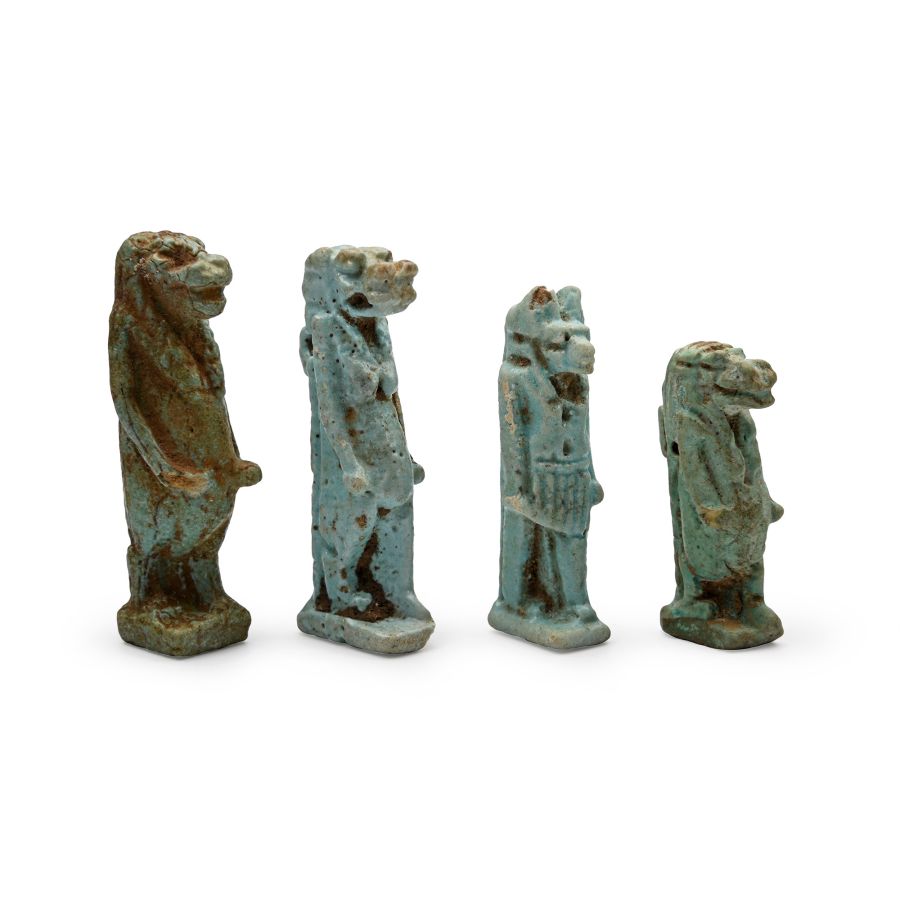
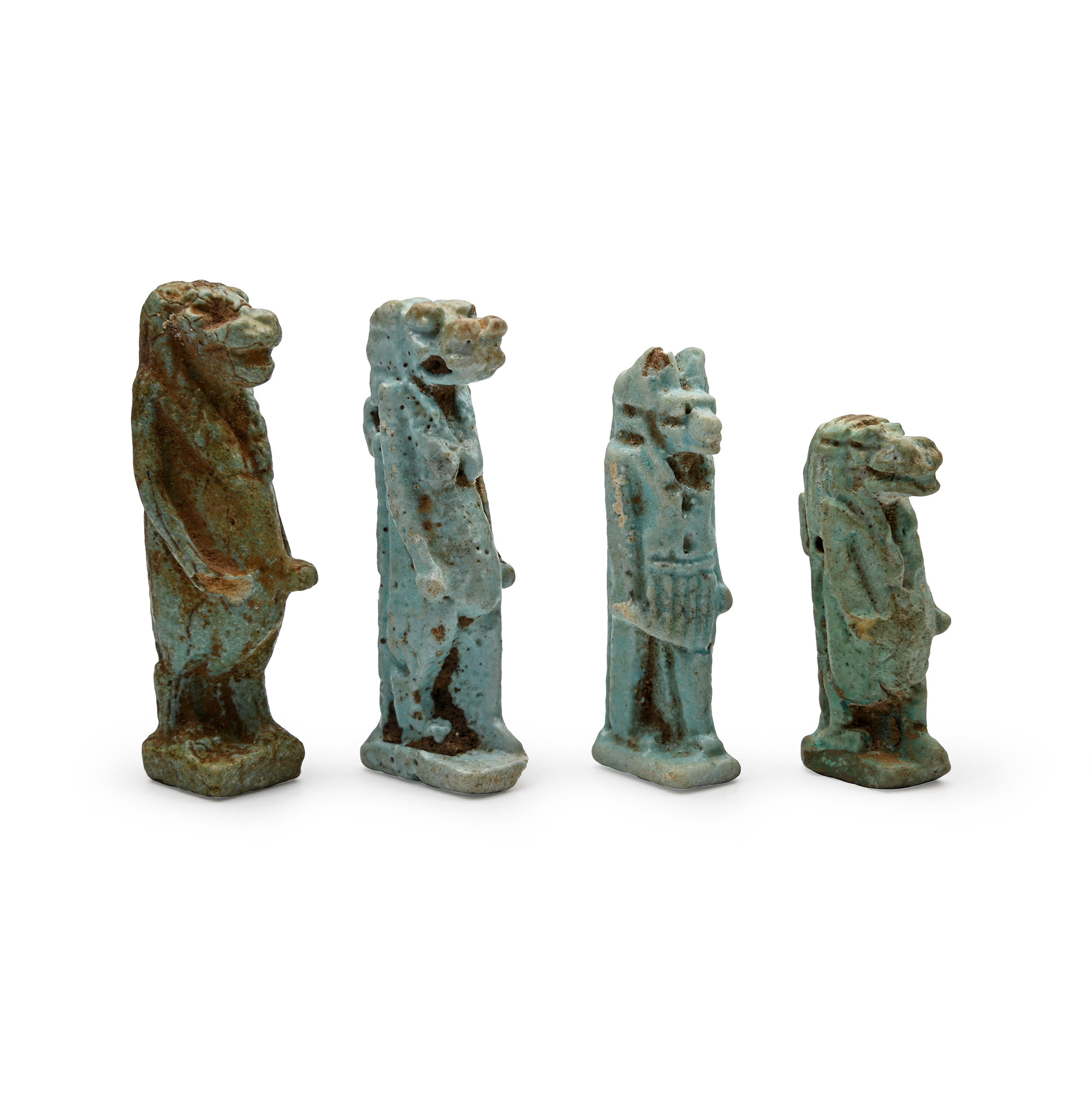
Egyptian Blue Glazed Amulet Collection
LATE PERIOD, 664-332 B.C.
1 1/4 - 1 3/4 in. (20 grams total, 31-43.6 mm).
Group of four amuletic figural pendants, each standing with dorsal pillar: three examples of Taweret with hippopotamus-head and one of Anubis with jackal-head. [4]
Provenancewith Archaeologia, Switzerland, before 1983.
Ex private North American collection.
London private collection, 2016.
TimeLine Auctions follows a vetting process to ensure the authenticity and legality of all items, reinforcing our commitment to integrity and responsible trading. Each antiquity, antique, and coin lot undergoes thorough examination by a vetting committee of at least ten external specialists, professional trade association members, scientists, and archaeologists: Our Vetting Process
AUCTIONS:
TimeLine is a leading auction house specialising in antiquities, ancient art, collectables, natural history, coins, medals, and books. Our auctions offer museums, collectors, historians, and enthusiasts the opportunity to acquire unique and historically significant pieces.
-
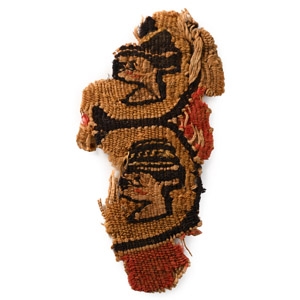
Egyptian Coptic Textile Fragment
Circa 5th-6th century A.D.Sold for (Inc. bp): £78
Small fragment of a garment in yellow, green and red wool, S torsion, embroidered with female heads wearing high propoloma. 10 grams total including package, 76 mm
Acquired 1970s-1996. Property of a North American collector. London collection, 2016.
This fragment was most likely part of a tapestry medallion with symbolic figures, likely linked to the Christian cult or, perhaps, to the Dionysian iconography. These figures could surround Tyche (a city's patron deity) or a figure of Christ or Saints. -
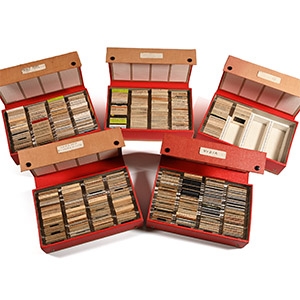
Historic Collection of 801 Slides of Archaeological Sites in Egypt
1960s-1980s A.D.Sold for (Inc. bp): £910
Housed in five linen-covered boxes, covering Saqqara, Mereruka, Nubia, Middle Egypt, Thebes, Gebel, Tuna, Tutankhamun of the Valley of the Kings, Eighteenth Dynasty, and Abydos etc. 4.31 kg total, 26.5 x 16.5 x 6.5 cm each box
Property of archaeologist Stephanie Gee, N.W. London, UK, 1960s-1980s.
Stephanie Gee was a prominent archaeologist who took part in several expeditions in Egypt. She was a trusted assistant to the British-Australian archaeologist Veronica Seton-Williams, who excavated in Egypt, Britain, and the Near East. Stephanie also took part in the Tell El-Farâ'în expeditions of 1965-1968, and assisted Seton-Williams with preparing the 1966 expedition report. Their collaboration continued and Stephanie helped with the manuscript of Seton-Williams’ book ‘The Road to El-Aguzein’, a narrative account of her life that was first published in 1988. -
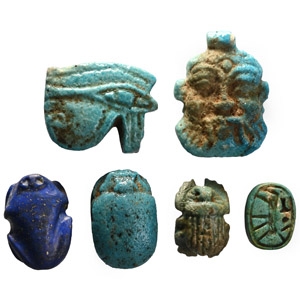
Egyptian Faience Amulet and Scarab Group
Late-Ptolemaic Period, circa 664-30 B.C.Estimate: £600 - 800 (+bp*)
Opening Bid: £300
Comprising: a Bes head amulet, a frog amulet, a wedjat, an amuletic plaque, and two scarabs. 19.8 grams total, 15-29 mm
From the collection of a gentleman, acquired on the London art market in the 1990s.
