
Loading, please wait...
LOT 0455
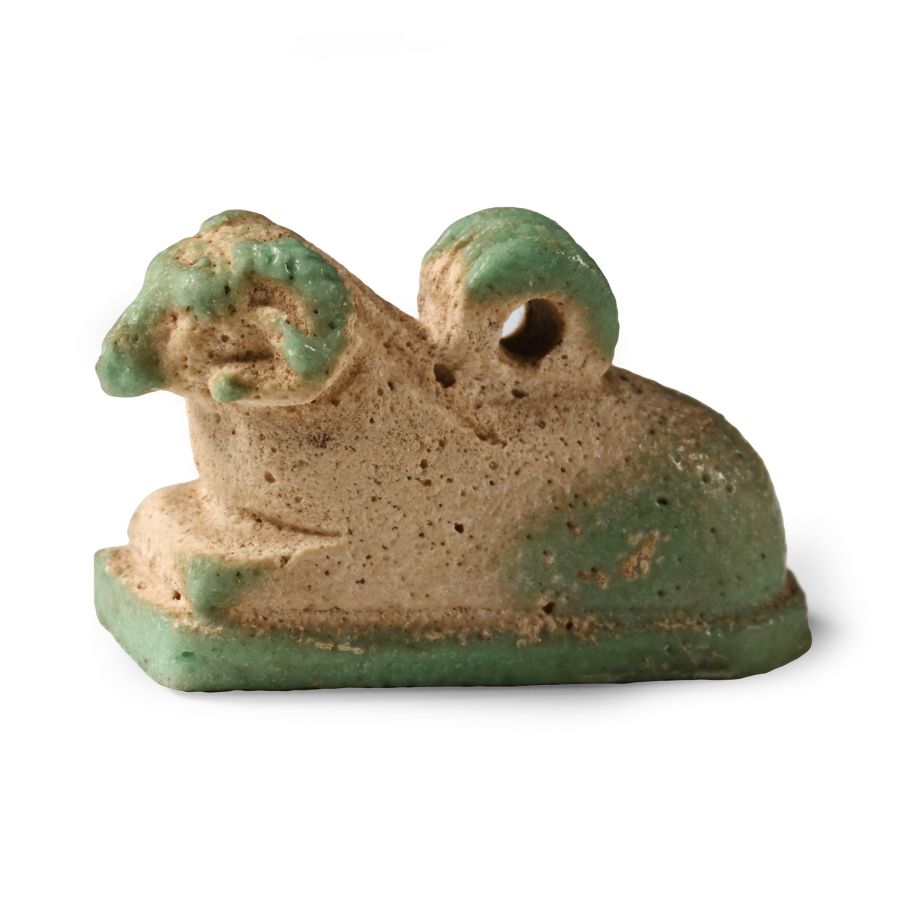
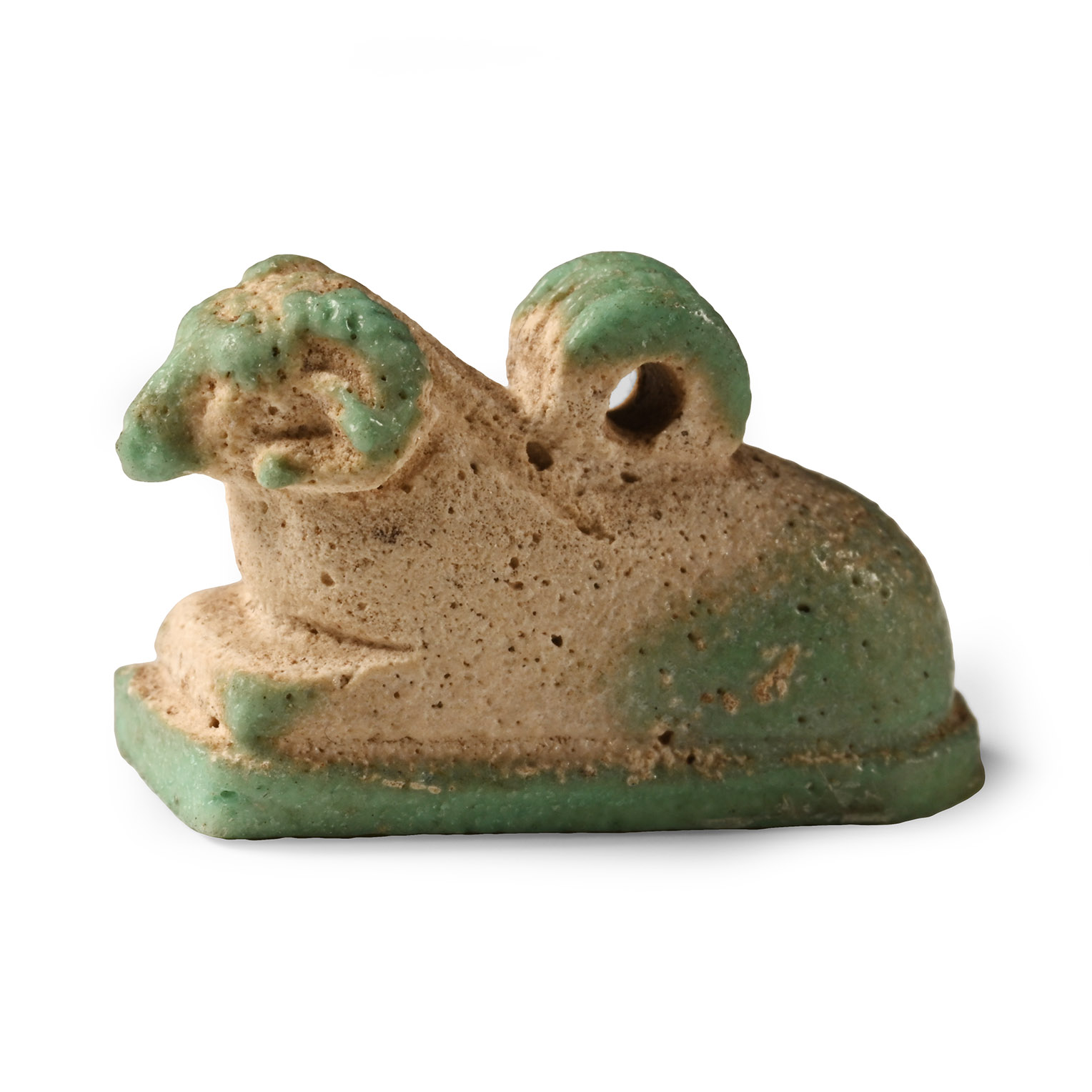
Egyptian Blue Faience Ram Amulet
LATE PERIOD, 664-332 B.C.
1 in. (2.15 grams, 23 mm).
Modelled resting on a tongue-shaped base with ribbed suspension loop. [No Reserve]
ProvenanceFrom the collection of Doctor Girard, a collector for over 60 years.
with Hotel des Ventes de Clermont-Ferrand, 22 May 2017.
Property of a French collector.
Cf. Andrews, C., Amulets of Ancient Egypt, London, 1994, pl.28(a).
FootnotesVarious gods were depicted in the form of rams. The downturned horns on this amulet indicate that the ram is a representation of Amun. The ram was symbolically linked to concepts of revival and fecundity. Eventually, it became associated with Osiris and was recognised as the god's soul or ba.
CONDITIONTimeLine Auctions follows a vetting process to ensure the authenticity and legality of all items, reinforcing our commitment to integrity and responsible trading. Each antiquity, antique, and coin lot undergoes thorough examination by a vetting committee of at least ten external specialists, professional trade association members, scientists, and archaeologists: Our Vetting Process
AUCTIONS:
TimeLine is a leading auction house specialising in antiquities, ancient art, collectables, natural history, coins, medals, and books. Our auctions offer museums, collectors, historians, and enthusiasts the opportunity to acquire unique and historically significant pieces.
-
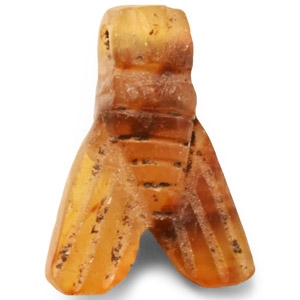
Egyptian Hardstone Fly Amulet
Late Period, 664-332 A.D.Sold for (Inc. bp): £117
With linear detailing to body and wings, pierced at the neck. 0.38 grams, 12 mm
From the H.N. collection, Milton Keynes, Berkshire, UK, 1990s.
Fly amulets were believed to protect against insect bites and ward off flying creatures through apotropaic magic. Additionally, the pharaoh would give gold fly-shaped pendants as military awards to recognise the bravery and persistence of soldiers in battle. -
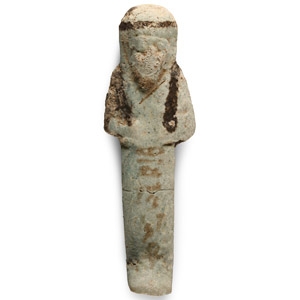
Egyptian Faience Hieroglyphic Shabti For Djed-Bastet-iuef-ankh
Third Intermediate Period, 1069-702 B.C.Sold for (Inc. bp): £156
With pale blue surface and applied black detailing to hair, seed-bag and tools; faint hieroglyphs to lower body giving the dedication 'The Osiris, Djed-Bastet-iuef-ankh'. 18.9 grams, 80 mm
From a UK collection in the 1990s. Property of a Cambridgeshire, UK, gentleman. -
.jpg)
Egyptian Carnelian Poppy Head Amulet
New Kingdom, 18th Dynasty, 1550-1292 B.C.Sold for (Inc. bp): £104
Polished and with integral pierced suspension loop. 0.53 grams, 13 mm
UK gallery, early 2000s.
